March 13, 2026

The Price of Love and the limits of a parallel society

Declan J. Ganley
More
Related
Min read
share

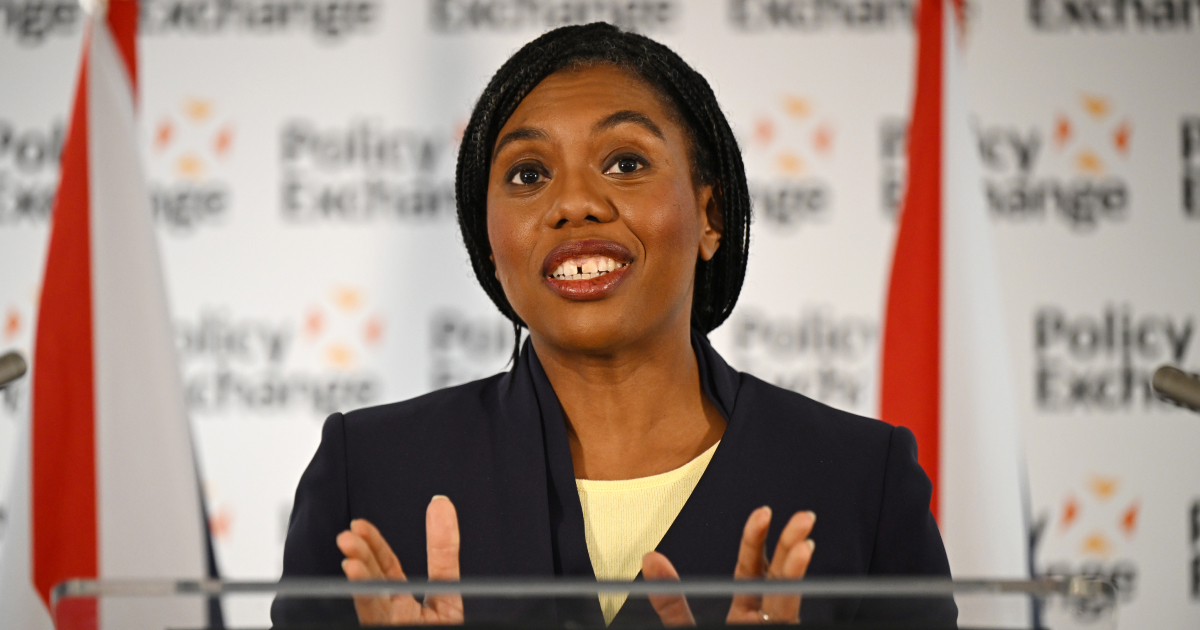
Earlier this month, I watched a recording of Conservative Party leader Kemi Badenoch’s Policy Exchange speech on integration. It was one of the better political speeches I had heard in quite a long time. I may not summarise it fairly here, but it raised the question: what is a nation state, a country, if not a place with defined borders, common laws, mores and accepted boundaries of manners and behaviour? Long term, can you have a safe, thriving and successful country if some part of its people wish to operate an entirely different set of laws, mores and accepted boundaries of manners and behaviour? Could we even call such a paradox a single society? Or is it more like Schrödinger’s country, a hidden parallel realm that both exists and does not, thriving in superposition until the box is opened and the incompatible realities collide?

Schrödinger’s cat is a notable thought experiment from quantum physics, devised by physicist Erwin Schrödinger in 1935 to illustrate the bizarre nature of quantum superposition. Imagine a cat sealed inside a box with a vial of poison, a radioactive atom and a mechanism that releases the poison only if the atom decays, a random quantum event with a 50 per cent chance. According to quantum theory, until someone opens the box and observes the outcome, the atom is in a superposition: both decayed and not decayed at the same time. Thus, the cat is simultaneously alive and dead. It is not magic; it is a way to highlight how quantum particles can exist in multiple states until measured or ‘observed’, at which point the superposition collapses into one definite reality. In the context of a nation, this metaphor captures a ‘Schrödinger’s country’: a parallel society or system that coexists in uneasy overlap with the host nation, both integrated and separate, harmonious and conflicting, until scrutiny or crisis forces a collision, revealing the true state.

The timing of Badenoch’s speech coincided with my reaching the final few chapters of The Price of Love, an eye-opening book by Sabatina James about her experiences as a young Pakistani-European woman forced to live in an entirely different system while also living, being educated and working in Europe. While I am not a book reviewer, it is a story of violently coerced first-cousin marriage, of virtual imprisonment, of spiritual battle and of the sacrificial path of conversion to the Catholic faith and, yes, integration. It also details the separate way of life and law that, she writes, permits child marriage, rape, human trafficking, kidnapping, serfdom and murder in the form of ‘honour killings’. It is the most raw, honest and heart-stirring, frustration-inducing account of a young woman trapped in an alien system at odds with, and rejecting, the system that it in turn seeks to reside within. It is a conflict in which symbiosis is the least likely of outcomes, much like the quantum enigma of a country within a country, unobserved yet exerting its influence until observation forces a reckoning.

In his summary of the book, Cardinal Robert Sarah has this to say: ‘The Price of Love is a gripping and at times graphic wake-up call to the West. It is urgent and utterly essential that this call is heard clearly and understood thoroughly before it is too late.’ Robert Royal, author of The Martyrs of the New Millennium, wrote: ‘This book will open your eyes to realities that many of us almost wilfully choose not to see.’

The personal account delivered in the book is so powerful and so important that I am going to self-censor here. Not because the editors of this magazine would want to stop me from writing anything I cared to write, but because, once you read it, you will more than likely understand.

Before I read The Price of Love, I have to admit that, while perhaps I was not being wilfully blind, I had not really been watching much. It is the confidence and assurance that comes from being blessed to have been raised in a society that was, and to a large extent still is, ‘swimming in a Christian ocean’, even if it is not aware it is in it, far less of how it got there in the first place. This book has changed whatever complacency remained. Suffice it to say, I cannot recommend it highly enough. Take Cardinal Sarah’s word for it and read The Price of Love before it is too late – and before the superposition collapses, revealing whether Schrödinger’s country was there all along.
Earlier this month, I watched a recording of Conservative Party leader Kemi Badenoch’s Policy Exchange speech on integration. It was one of the better political speeches I had heard in quite a long time. I may not summarise it fairly here, but it raised the question: what is a nation state, a country, if not a place with defined borders, common laws, mores and accepted boundaries of manners and behaviour? Long term, can you have a safe, thriving and successful country if some part of its people wish to operate an entirely different set of laws, mores and accepted boundaries of manners and behaviour? Could we even call such a paradox a single society? Or is it more like Schrödinger’s country, a hidden parallel realm that both exists and does not, thriving in superposition until the box is opened and the incompatible realities collide?

Schrödinger’s cat is a notable thought experiment from quantum physics, devised by physicist Erwin Schrödinger in 1935 to illustrate the bizarre nature of quantum superposition. Imagine a cat sealed inside a box with a vial of poison, a radioactive atom and a mechanism that releases the poison only if the atom decays, a random quantum event with a 50 per cent chance. According to quantum theory, until someone opens the box and observes the outcome, the atom is in a superposition: both decayed and not decayed at the same time. Thus, the cat is simultaneously alive and dead. It is not magic; it is a way to highlight how quantum particles can exist in multiple states until measured or ‘observed’, at which point the superposition collapses into one definite reality. In the context of a nation, this metaphor captures a ‘Schrödinger’s country’: a parallel society or system that coexists in uneasy overlap with the host nation, both integrated and separate, harmonious and conflicting, until scrutiny or crisis forces a collision, revealing the true state.

The timing of Badenoch’s speech coincided with my reaching the final few chapters of The Price of Love, an eye-opening book by Sabatina James about her experiences as a young Pakistani-European woman forced to live in an entirely different system while also living, being educated and working in Europe. While I am not a book reviewer, it is a story of violently coerced first-cousin marriage, of virtual imprisonment, of spiritual battle and of the sacrificial path of conversion to the Catholic faith and, yes, integration. It also details the separate way of life and law that, she writes, permits child marriage, rape, human trafficking, kidnapping, serfdom and murder in the form of ‘honour killings’. It is the most raw, honest and heart-stirring, frustration-inducing account of a young woman trapped in an alien system at odds with, and rejecting, the system that it in turn seeks to reside within. It is a conflict in which symbiosis is the least likely of outcomes, much like the quantum enigma of a country within a country, unobserved yet exerting its influence until observation forces a reckoning.

In his summary of the book, Cardinal Robert Sarah has this to say: ‘The Price of Love is a gripping and at times graphic wake-up call to the West. It is urgent and utterly essential that this call is heard clearly and understood thoroughly before it is too late.’ Robert Royal, author of The Martyrs of the New Millennium, wrote: ‘This book will open your eyes to realities that many of us almost wilfully choose not to see.’

The personal account delivered in the book is so powerful and so important that I am going to self-censor here. Not because the editors of this magazine would want to stop me from writing anything I cared to write, but because, once you read it, you will more than likely understand.

Before I read The Price of Love, I have to admit that, while perhaps I was not being wilfully blind, I had not really been watching much. It is the confidence and assurance that comes from being blessed to have been raised in a society that was, and to a large extent still is, ‘swimming in a Christian ocean’, even if it is not aware it is in it, far less of how it got there in the first place. This book has changed whatever complacency remained. Suffice it to say, I cannot recommend it highly enough. Take Cardinal Sarah’s word for it and read The Price of Love before it is too late – and before the superposition collapses, revealing whether Schrödinger’s country was there all along.

subscribe to
the catholic herald

Continue reading your article with a subscription.
Read 5 articles with our free plan.
Subscribe

subscribe to the catholic herald today

Our best content is exclusively available to our subscribers. Subscribe today and gain instant access to expert analysis, in-depth articles, and thought-provoking insights—anytime, anywhere. Don’t miss out on the conversations that matter most.
Subscribe