
March 4, 2026

Five lessons on Catholic fatherhood I learned from my Dad

David Hahn
More
Related
Min read
share

There are doubtless many ways to be a good Catholic father – perhaps as many as there are fathers. I have had the wonderful, albeit limited, experience of knowing one such father. I do not lay claim to an undiscovered secret wisdom, but I hope I can share here a little of what my Dad gave me growing up, and what he gives me to this day. Here are five things I learned from my Dad about being a Catholic father.

  1. People do not care how much you know until they know how much you care: take an interest in your children.
My Dad repeated one principle many times in my upbringing: before I shared what I knew, I should first take an interest in the person I was speaking to. There was an occasion in Rome that illustrates this. We were in the lobby of our hotel when a group of seminarians was passing outside. One of them spotted Dad and, stopping the group, brought them all inside. Naturally, there was some awkwardness, but it was quickly eased by my Dad engaging them in simple conversation about who they were and where they were from. He did not know much about the region of their country – could they share more? In a few moments, this group of nervous strangers felt confident and at ease.

There were many similar occasions. Sometimes on planes – often with people who had no faith or interest in theology – but who would take an interest in what my Dad said because he showed a real interest in them. This was as true for me as for the stranger. I cared very much about what my father thought because I knew how much my father cared about me. I hope to demonstrate similar care – taking my children on walks, throwing a baseball or a disc, taking time out of my busy day just to have a chat – so that my children know I care and learn to care about what I know.

  1. Right relations are more important than simply being right: take responsibility for your own mistakes and repair what you can.

Parents quarrel with their children. It is not impious to say this is true of all parents, or at least that all parents occasionally fall into conflict.

After conflict, my father has always apologised. I remember one occasion when we had a heated conversation. Voices were raised and it ended with a harsh word and a slammed bedroom door. My pride has no trouble now admitting that I was, in fact, in the wrong. Not two minutes after this exchange, there was a soft knock on my recently slammed bedroom door and in came my Dad, now with a softened expression and an apology for his temper.

It seems proper to write about one of my father’s shortcomings to highlight what I take to be one of his greatest strengths: the strength to acknowledge when he had gone wrong, even if, as in this case, he was in the right. The strength to mend relationships over self-satisfaction. He showed me how to apologise and mean it. He demonstrated this best by his frequent use of Confession and, if I needed it myself, he would do everything he could to help me get there. Knowing how to apologise to others and to God continues to serve me well in my relationships with my siblings, my friends and my spouse. I sincerely hope I can give such a gift to my children through my behaviour.

  1. Custody of the face: control how you react to the things you dislike and disagree with; your children are watching.

I attended a school called St Gregory the Great Academy. It had the privilege of offering a diversity of liturgical traditions – Melkite, Ruthenian, Ordinariate and Tridentine – to the students for the enrichment of their faith. I was blessed by this experience and remain grateful for it. However, in my adolescence, it also had the effect of disenchanting my ordinary Masses at home. I became combative and easily annoyed. There was seldom a Novus Ordo from which I emerged without some criticism to level at the celebrant, his homily or the lack of liturgical accoutrements.

My negativity was not met head-on by my Dad. He did not dismiss the real deficiencies I observed, but neither did he join in criticising them. Instead, his actions invited me to take a different perspective. I noticed that, unlike me, he did not have his head raised, eyes scrutinising each facet of the liturgy. He had his head bowed in prayer. He did not grimace at every little thing that irked him. He maintained custody of his face. He was more grateful for the chance to partake in the divine feast than eager to be a critic.

Liturgy does matter – but what my Dad showed me was that God mattered more. He showed me this by his self-restraint. The right way to enter into the Mass, and even into tradition, was with joy and gratitude that such a gift should be given to one so unworthy. If there was anything truly out of place at the Mass, anything that did not deserve to be there, surely it was me.

  1. Do not buy into your own hype: always keep perspective.

Another virtue my father demonstrated is humility. In effect, he showed me how to keep oneself in perspective. I remember one day, as a child, feeling jealous of my friends. I told my Dad how much smarter, more athletic and more talented they were. He listened patiently. He then took me into the garden and pulled up a blade of grass. He showed it to me and said that comparing ourselves to each other is like one blade of grass comparing itself to another. In light of the distance from the sun, their height is almost nothing. A Catholic ought not to concern himself with comparing himself to his brothers, but rather with comparing himself to Christ.

If my Dad keeps an eye on his successes or failures, he always keeps the other eye on Christ. He sees the blade of grass and he sees the sun. This is something I hope to model for my own children: how to keep perspective.

  1. Prioritise prayer: let your children see what you value.

The last thing my Dad has taught me is perhaps the most important. While kindness, making amends, self-control and humility are important, I have learned that the thing you put first is prayer. Each morning I know where to find my Dad: in the living room, saying his prayers. I may add that my mother can be found in the adjacent room doing the same. It was a wonderful gift growing up to know that my parents were friends with God, that they took time to know Him and learn His voice. Above all the rest, it is the gift I am most anxious to provide for my own children.

If you do not already have a habit of daily prayer, I invite you to begin – even for only ten or fifteen minutes. I do not say this as someone long disciplined in the practice, but rather as an observer of those who are and as a follower.

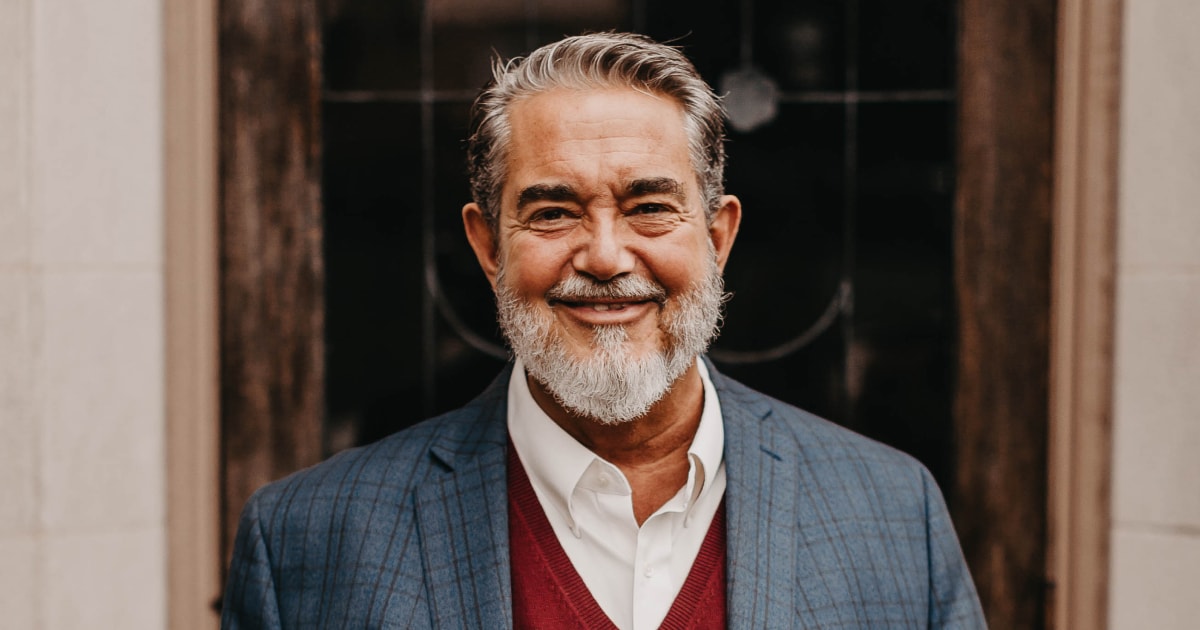
Men, this is how we will lead our families to heaven: when we show our children how much they matter to us; when we acknowledge our faults and apologise for them; when we demonstrate patient self-restraint; when we keep perspective on our divine calling; and when we make meeting with God the most important part of our day. These are a few things I have learned from my Dad, Scott Hahn. By God’s grace, I hope they are of some aid.

There are doubtless many ways to be a good Catholic father – perhaps as many as there are fathers. I have had the wonderful, albeit limited, experience of knowing one such father. I do not lay claim to an undiscovered secret wisdom, but I hope I can share here a little of what my Dad gave me growing up, and what he gives me to this day. Here are five things I learned from my Dad about being a Catholic father.

  1. People do not care how much you know until they know how much you care: take an interest in your children.
My Dad repeated one principle many times in my upbringing: before I shared what I knew, I should first take an interest in the person I was speaking to. There was an occasion in Rome that illustrates this. We were in the lobby of our hotel when a group of seminarians was passing outside. One of them spotted Dad and, stopping the group, brought them all inside. Naturally, there was some awkwardness, but it was quickly eased by my Dad engaging them in simple conversation about who they were and where they were from. He did not know much about the region of their country – could they share more? In a few moments, this group of nervous strangers felt confident and at ease.

There were many similar occasions. Sometimes on planes – often with people who had no faith or interest in theology – but who would take an interest in what my Dad said because he showed a real interest in them. This was as true for me as for the stranger. I cared very much about what my father thought because I knew how much my father cared about me. I hope to demonstrate similar care – taking my children on walks, throwing a baseball or a disc, taking time out of my busy day just to have a chat – so that my children know I care and learn to care about what I know.

  1. Right relations are more important than simply being right: take responsibility for your own mistakes and repair what you can.

Parents quarrel with their children. It is not impious to say this is true of all parents, or at least that all parents occasionally fall into conflict.

After conflict, my father has always apologised. I remember one occasion when we had a heated conversation. Voices were raised and it ended with a harsh word and a slammed bedroom door. My pride has no trouble now admitting that I was, in fact, in the wrong. Not two minutes after this exchange, there was a soft knock on my recently slammed bedroom door and in came my Dad, now with a softened expression and an apology for his temper.

It seems proper to write about one of my father’s shortcomings to highlight what I take to be one of his greatest strengths: the strength to acknowledge when he had gone wrong, even if, as in this case, he was in the right. The strength to mend relationships over self-satisfaction. He showed me how to apologise and mean it. He demonstrated this best by his frequent use of Confession and, if I needed it myself, he would do everything he could to help me get there. Knowing how to apologise to others and to God continues to serve me well in my relationships with my siblings, my friends and my spouse. I sincerely hope I can give such a gift to my children through my behaviour.

  1. Custody of the face: control how you react to the things you dislike and disagree with; your children are watching.

I attended a school called St Gregory the Great Academy. It had the privilege of offering a diversity of liturgical traditions – Melkite, Ruthenian, Ordinariate and Tridentine – to the students for the enrichment of their faith. I was blessed by this experience and remain grateful for it. However, in my adolescence, it also had the effect of disenchanting my ordinary Masses at home. I became combative and easily annoyed. There was seldom a Novus Ordo from which I emerged without some criticism to level at the celebrant, his homily or the lack of liturgical accoutrements.

My negativity was not met head-on by my Dad. He did not dismiss the real deficiencies I observed, but neither did he join in criticising them. Instead, his actions invited me to take a different perspective. I noticed that, unlike me, he did not have his head raised, eyes scrutinising each facet of the liturgy. He had his head bowed in prayer. He did not grimace at every little thing that irked him. He maintained custody of his face. He was more grateful for the chance to partake in the divine feast than eager to be a critic.

Liturgy does matter – but what my Dad showed me was that God mattered more. He showed me this by his self-restraint. The right way to enter into the Mass, and even into tradition, was with joy and gratitude that such a gift should be given to one so unworthy. If there was anything truly out of place at the Mass, anything that did not deserve to be there, surely it was me.

  1. Do not buy into your own hype: always keep perspective.

Another virtue my father demonstrated is humility. In effect, he showed me how to keep oneself in perspective. I remember one day, as a child, feeling jealous of my friends. I told my Dad how much smarter, more athletic and more talented they were. He listened patiently. He then took me into the garden and pulled up a blade of grass. He showed it to me and said that comparing ourselves to each other is like one blade of grass comparing itself to another. In light of the distance from the sun, their height is almost nothing. A Catholic ought not to concern himself with comparing himself to his brothers, but rather with comparing himself to Christ.

If my Dad keeps an eye on his successes or failures, he always keeps the other eye on Christ. He sees the blade of grass and he sees the sun. This is something I hope to model for my own children: how to keep perspective.

  1. Prioritise prayer: let your children see what you value.

The last thing my Dad has taught me is perhaps the most important. While kindness, making amends, self-control and humility are important, I have learned that the thing you put first is prayer. Each morning I know where to find my Dad: in the living room, saying his prayers. I may add that my mother can be found in the adjacent room doing the same. It was a wonderful gift growing up to know that my parents were friends with God, that they took time to know Him and learn His voice. Above all the rest, it is the gift I am most anxious to provide for my own children.

If you do not already have a habit of daily prayer, I invite you to begin – even for only ten or fifteen minutes. I do not say this as someone long disciplined in the practice, but rather as an observer of those who are and as a follower.

Men, this is how we will lead our families to heaven: when we show our children how much they matter to us; when we acknowledge our faults and apologise for them; when we demonstrate patient self-restraint; when we keep perspective on our divine calling; and when we make meeting with God the most important part of our day. These are a few things I have learned from my Dad, Scott Hahn. By God’s grace, I hope they are of some aid.

subscribe to
the catholic herald

Continue reading your article with a subscription.
Read 5 articles with our free plan.
Subscribe

subscribe to the catholic herald today

Our best content is exclusively available to our subscribers. Subscribe today and gain instant access to expert analysis, in-depth articles, and thought-provoking insights—anytime, anywhere. Don’t miss out on the conversations that matter most.
Subscribe