January 7, 2026
January 6, 2026

Stranger Things: a villain worthy of better heroes

Min read
share

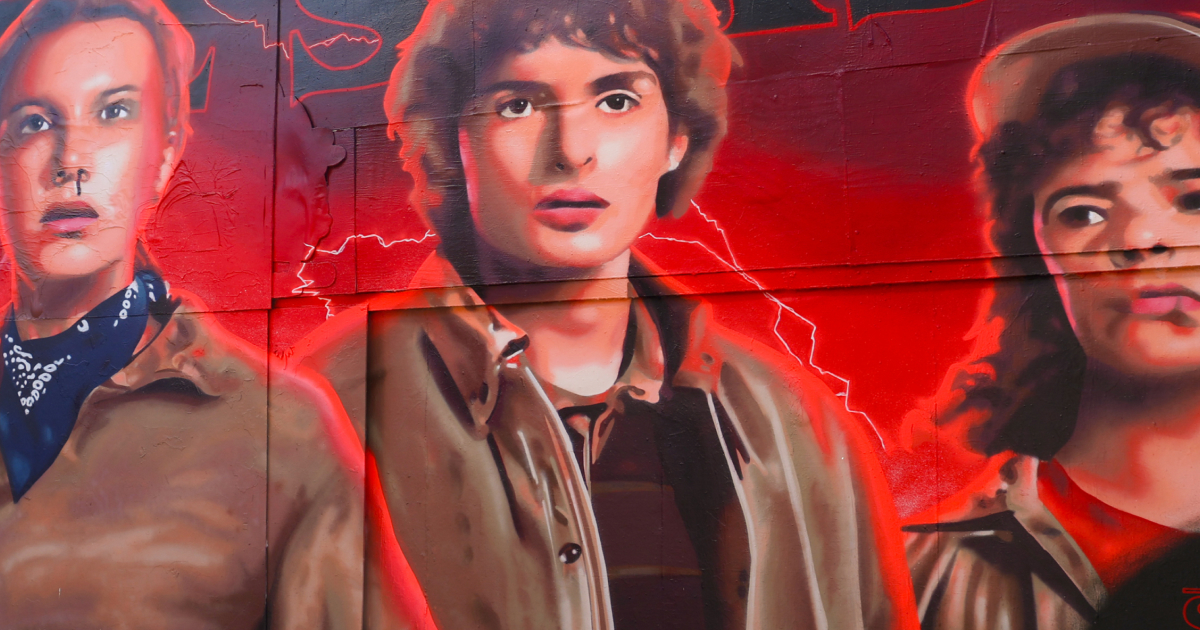
Last week, as the earth finished its rotation round the sun, Netflix was flooded by Stranger Things fans who tuned in for the greatly anticipated final episode. As can be expected for a show with such mass fandom, the final volumes, which were drip-fed to audiences since November, have been the source of intense critique, with viewers lamenting excessive plot armour, shaky scripting, plot holes the size of Hawkins, and the controversial choice to frame much of the narrative around a character’s coming-out story.

However, underlying all the many legitimately criticisable elements of the show lay a story of serious moral depth. A show which, like many previous successful franchises, tapped into the great archetypal narrative of good versus evil. In doing so, be it consciously or otherwise, the Duffer brothers can be seen to borrow a range of Christian imagery and language to elevate their storyline and characters. Ultimately, it is here that the great highs and lows of this show and its conclusion can be found, not on its surface details, but in the story being told beneath.

“For we are not contending against flesh and blood, but against the principalities, against the powers, against the world rulers of this present darkness, against the spiritual hosts of wickedness in the heavenly places.” Ephesians 6:12

Paul’s words of caution to the church in Ephesus seem an obvious inspiration to the Duffer brothers. Since Will Byers first went missing in the Upside Down nine years ago, we were immediately confronted with the impact a shadowy other realm was having on this small American town. What remained predominantly a mystery for the first three seasons began opening up in the fourth, with more characters visiting it and battles even taking place there. Central to this expansion was the introduction in season four of Vecna, aka Henry Creel, aka One, aka Mr Whatsit, who we later find out is the source, by blood transfusion, of Eleven’s power.

Whilst born into the world an ordinary child, Henry becomes possessed in his early adolescence by an extraterrestrial mist known as the Mind Flayer, which seeks to conquer the Earth. Rather than resisting the Mind Flayer’s will, a surely impossible task for a child, he has his mind formed by it, convinced of the irredeemable brokenness of the world, and thus chooses not only to partner with it but, in his own words, to become one with it. Curiously, the language Vecna employs to communicate his mission is not annihilationist. Instead, he claims to be in pursuit of a kind of redemption for the fallen world. In this, much like the hall of mirrors which is the Upside Down, Vecna’s character is offered to us as a distorted Christ, Antichrist, or Satan figure, a theme which is further manifested both in language and in deed.

We see this most clearly in the fifth episode of season five, where Vecna is seated in the living room of his parents’ house, joined by the twelve children he coercively groomed and then abducted to help save the world. In his monologue, he informs his young disciples of an evil darkness that is spreading across the whole world and threatening their families. “But”, Henry announces, “I believe I have found a way to defeat this darkness.” Now pacing around the room, the villain reveals his plan to unite earth with the far-off world of the Mind Flayer, a world he describes as “much like ours, only good. Free of monsters and darkness. It is the light.” Concluding his plan, he then preaches: “As the light reaches the darkness, the light will expel the darkness,” thus saving their loved ones and making them heroes.

The biblical riffing in this scene, where he, the Antichrist, is framed between his twelve disciples, preparing them for his work to dispel darkness with light and bring about an eschatological uniting of heaven, the abyss, and earth, is both detailed and potent, and adds a brilliant maniacal depth to the villain’s already terrifying character.

Prior to this scene, one of the most direct comparisons between Vecna and Satan can be seen in the way he chooses to combat his opponents. Whilst having immense capabilities to inflict physical harm, Vecna’s attacks often begin in the mind. Utilising his victims’ deepest fears and trauma, Vecna pushes his prey to act irrationally and risk themselves or the group. Be it taunting Max and Nancy with visions of previous deaths, revealing to Hopper Eleven’s plan to sacrifice herself, or convincing Will he will be shunned for coming out as gay, Vecna’s manipulation of fear for his own purposes merits him a share in the title “father of lies”. This is further underscored by how the characters overcome his grip on them. “Perfect love casts out fear”, we read in First John; such is the key to their freedom.

This imagery adopted for Vecna’s character comes full circle in his death. Out of all the characters, it is not the three with psychic powers, nor those armed to the teeth with guns and flamethrowers, who deliver the final blow. Instead, in an act of poetic brilliance, the Duffer brothers choose Joyce, the primary maternal figure since season one. In this powerful scene, Joyce wields her axe over the choking and immobilised Vecna and proceeds to decapitate him. In light of all the other elements, one cannot help but interpret this as a mirroring of the protoevangelium spoken by God to the serpent in Genesis, where he declared of the woman: “She shall crush your head.”

Such powerful imagery, tied together with his complex back story, immense psychokinetic powers, and terrifying figure, leaves Vecna with the potential to be one of the all-time great villains. And yet, as we shall see, a villain in many respects is only as good as his heroes allow him to be. It is here, if anywhere, that you could be forgiven for thinking he failed.

“Greater love has no man than this, that a man lay down his life for his friends.” John 15:13

Throughout the show’s nine years on screen, what it truly lacked was the sacrificial death of major characters. Whilst flirted with at the end of season three, with the apparent death of Jim Hopper, Hawkins’ chief of police and adoptive father of Eleven, even that was reversed the following season for a side quest to the USSR. Instead, the best the Duffer brothers could offer for the first four seasons were the deaths of beloved side characters Bob Newby, Billy Hargrove, and Eddie Munson.

The problem here is that in a story grounded in an archetypal narrative of good against evil, where the fate of the world is at stake, ultimate sacrifice feels a necessary element to communicate both the scale of the threat and the radical nature of the characters’ response. Without it, viewers are left with a show where the chief villain and his demonic minions are apparently strong enough to overthrow the US Army and bring about a planetary collision, but somehow incapable of harming any of the lead characters, most of whom are children. Or, in other words, an episode of Scooby-Doo. This is where critiques of excessive plot armour are felt most. It is understandable, even expected, that the main cast should be resistant to the attacks of their enemy in order to progress a plotline. However, in its excesses, the risk is not only that you end up with a show with more leads than it knows what to do with, but that you undermine its entire moral foundation as well.

Entering the final season, there was much anticipation as to which of the Hawkins Fellowship would be granted their Boromir moment. With over a dozen main characters to choose from, surely there would be one who could fall to the sword, both as an act demonstrating Vecna’s strength and to further motivate their friends. But alas, they do not.

One might argue that this role was fulfilled in the final sacrifice by Eleven, who escaped back into the Upside Down just as the dark matter was destroyed in a final heroic act preventing the cycle of violence from continuing. However, the objective of this sacrifice was to spare the world from a different threat, the US Government, which intended to capture and use her as a weapon against the Soviets. As such, it can hardly be said to strengthen the credibility of their primary enemy’s threat. Not to mention the fact that the Duffer brothers seemingly allow room for her still to be alive. For what it is worth, I do not believe this to be the case.

This gap, then, in the battle against Vecna is glaring and unfortunate. It presented itself as a perfect potential ending for characters such as Robin, Jonathan, Steve, or Nancy, all of whose characters struggled to develop beyond season four, and whose concluding arcs left the viewer wanting more. Not more in terms of detail, but more emotional substance that would have come alongside a hero’s death. Ultimately, in a battle of light versus darkness, love versus evil, to lose this greatest, most powerful, and most universally recognised expression of love feels to me a cardinal sin of storytelling, a sin they have been loudly, and rightly, criticised for.

Coming to the end of such a show will never not be bittersweet. At its peak, the storyline was among the most entertaining television had to offer, and yet where previous seasons demonstrated steady improvement in narrative, shock, production, and character development, it is disappointing to feel the finale took a step down on all these fronts. Most of all, it is a shame to see a show which understood so well the power of the villain archetype fail, in many ways, to present its heroes with this same force.
Last week, as the earth finished its rotation round the sun, Netflix was flooded by Stranger Things fans who tuned in for the greatly anticipated final episode. As can be expected for a show with such mass fandom, the final volumes, which were drip-fed to audiences since November, have been the source of intense critique, with viewers lamenting excessive plot armour, shaky scripting, plot holes the size of Hawkins, and the controversial choice to frame much of the narrative around a character’s coming-out story.

However, underlying all the many legitimately criticisable elements of the show lay a story of serious moral depth. A show which, like many previous successful franchises, tapped into the great archetypal narrative of good versus evil. In doing so, be it consciously or otherwise, the Duffer brothers can be seen to borrow a range of Christian imagery and language to elevate their storyline and characters. Ultimately, it is here that the great highs and lows of this show and its conclusion can be found, not on its surface details, but in the story being told beneath.

“For we are not contending against flesh and blood, but against the principalities, against the powers, against the world rulers of this present darkness, against the spiritual hosts of wickedness in the heavenly places.” Ephesians 6:12

Paul’s words of caution to the church in Ephesus seem an obvious inspiration to the Duffer brothers. Since Will Byers first went missing in the Upside Down nine years ago, we were immediately confronted with the impact a shadowy other realm was having on this small American town. What remained predominantly a mystery for the first three seasons began opening up in the fourth, with more characters visiting it and battles even taking place there. Central to this expansion was the introduction in season four of Vecna, aka Henry Creel, aka One, aka Mr Whatsit, who we later find out is the source, by blood transfusion, of Eleven’s power.

Whilst born into the world an ordinary child, Henry becomes possessed in his early adolescence by an extraterrestrial mist known as the Mind Flayer, which seeks to conquer the Earth. Rather than resisting the Mind Flayer’s will, a surely impossible task for a child, he has his mind formed by it, convinced of the irredeemable brokenness of the world, and thus chooses not only to partner with it but, in his own words, to become one with it. Curiously, the language Vecna employs to communicate his mission is not annihilationist. Instead, he claims to be in pursuit of a kind of redemption for the fallen world. In this, much like the hall of mirrors which is the Upside Down, Vecna’s character is offered to us as a distorted Christ, Antichrist, or Satan figure, a theme which is further manifested both in language and in deed.

We see this most clearly in the fifth episode of season five, where Vecna is seated in the living room of his parents’ house, joined by the twelve children he coercively groomed and then abducted to help save the world. In his monologue, he informs his young disciples of an evil darkness that is spreading across the whole world and threatening their families. “But”, Henry announces, “I believe I have found a way to defeat this darkness.” Now pacing around the room, the villain reveals his plan to unite earth with the far-off world of the Mind Flayer, a world he describes as “much like ours, only good. Free of monsters and darkness. It is the light.” Concluding his plan, he then preaches: “As the light reaches the darkness, the light will expel the darkness,” thus saving their loved ones and making them heroes.

The biblical riffing in this scene, where he, the Antichrist, is framed between his twelve disciples, preparing them for his work to dispel darkness with light and bring about an eschatological uniting of heaven, the abyss, and earth, is both detailed and potent, and adds a brilliant maniacal depth to the villain’s already terrifying character.

Prior to this scene, one of the most direct comparisons between Vecna and Satan can be seen in the way he chooses to combat his opponents. Whilst having immense capabilities to inflict physical harm, Vecna’s attacks often begin in the mind. Utilising his victims’ deepest fears and trauma, Vecna pushes his prey to act irrationally and risk themselves or the group. Be it taunting Max and Nancy with visions of previous deaths, revealing to Hopper Eleven’s plan to sacrifice herself, or convincing Will he will be shunned for coming out as gay, Vecna’s manipulation of fear for his own purposes merits him a share in the title “father of lies”. This is further underscored by how the characters overcome his grip on them. “Perfect love casts out fear”, we read in First John; such is the key to their freedom.

This imagery adopted for Vecna’s character comes full circle in his death. Out of all the characters, it is not the three with psychic powers, nor those armed to the teeth with guns and flamethrowers, who deliver the final blow. Instead, in an act of poetic brilliance, the Duffer brothers choose Joyce, the primary maternal figure since season one. In this powerful scene, Joyce wields her axe over the choking and immobilised Vecna and proceeds to decapitate him. In light of all the other elements, one cannot help but interpret this as a mirroring of the protoevangelium spoken by God to the serpent in Genesis, where he declared of the woman: “She shall crush your head.”

Such powerful imagery, tied together with his complex back story, immense psychokinetic powers, and terrifying figure, leaves Vecna with the potential to be one of the all-time great villains. And yet, as we shall see, a villain in many respects is only as good as his heroes allow him to be. It is here, if anywhere, that you could be forgiven for thinking he failed.

“Greater love has no man than this, that a man lay down his life for his friends.” John 15:13

Throughout the show’s nine years on screen, what it truly lacked was the sacrificial death of major characters. Whilst flirted with at the end of season three, with the apparent death of Jim Hopper, Hawkins’ chief of police and adoptive father of Eleven, even that was reversed the following season for a side quest to the USSR. Instead, the best the Duffer brothers could offer for the first four seasons were the deaths of beloved side characters Bob Newby, Billy Hargrove, and Eddie Munson.

The problem here is that in a story grounded in an archetypal narrative of good against evil, where the fate of the world is at stake, ultimate sacrifice feels a necessary element to communicate both the scale of the threat and the radical nature of the characters’ response. Without it, viewers are left with a show where the chief villain and his demonic minions are apparently strong enough to overthrow the US Army and bring about a planetary collision, but somehow incapable of harming any of the lead characters, most of whom are children. Or, in other words, an episode of Scooby-Doo. This is where critiques of excessive plot armour are felt most. It is understandable, even expected, that the main cast should be resistant to the attacks of their enemy in order to progress a plotline. However, in its excesses, the risk is not only that you end up with a show with more leads than it knows what to do with, but that you undermine its entire moral foundation as well.

Entering the final season, there was much anticipation as to which of the Hawkins Fellowship would be granted their Boromir moment. With over a dozen main characters to choose from, surely there would be one who could fall to the sword, both as an act demonstrating Vecna’s strength and to further motivate their friends. But alas, they do not.

One might argue that this role was fulfilled in the final sacrifice by Eleven, who escaped back into the Upside Down just as the dark matter was destroyed in a final heroic act preventing the cycle of violence from continuing. However, the objective of this sacrifice was to spare the world from a different threat, the US Government, which intended to capture and use her as a weapon against the Soviets. As such, it can hardly be said to strengthen the credibility of their primary enemy’s threat. Not to mention the fact that the Duffer brothers seemingly allow room for her still to be alive. For what it is worth, I do not believe this to be the case.

This gap, then, in the battle against Vecna is glaring and unfortunate. It presented itself as a perfect potential ending for characters such as Robin, Jonathan, Steve, or Nancy, all of whose characters struggled to develop beyond season four, and whose concluding arcs left the viewer wanting more. Not more in terms of detail, but more emotional substance that would have come alongside a hero’s death. Ultimately, in a battle of light versus darkness, love versus evil, to lose this greatest, most powerful, and most universally recognised expression of love feels to me a cardinal sin of storytelling, a sin they have been loudly, and rightly, criticised for.

Coming to the end of such a show will never not be bittersweet. At its peak, the storyline was among the most entertaining television had to offer, and yet where previous seasons demonstrated steady improvement in narrative, shock, production, and character development, it is disappointing to feel the finale took a step down on all these fronts. Most of all, it is a shame to see a show which understood so well the power of the villain archetype fail, in many ways, to present its heroes with this same force.

share

subscribe to the catholic herald today

Our best content is exclusively available to our subscribers. Subscribe today and gain instant access to expert analysis, in-depth articles, and thought-provoking insights—anytime, anywhere. Don’t miss out on the conversations that matter most.
Subscribe