When Les Murray received an honorary D Litt degree from the University of New England in 1990, he began his acceptance speech in an unusual way. He said that he only spoke in prose when the occasion would not allow him to speak in verse. He was, as this confession revealed, a natural poet; in fact, I would suggest, a supernatural poet. His poetic instinct was not only born in his mind and heart: it lay deeply imbedded in his soul. His recent death as Australia’s unofficial poet laureate has been widely lamented. Yet few of the obituaries have highlighted a crucial part of his life and character – that he was a deeply religious and sacramental poet. His poems have long formed part of the daily reading of a priest-friend of mine, who has found they supply both spiritual and intellectual nourishment. Les Murray’s ancestry was Scottish and he was baptised into the family faith in his hometown Presbyterian church in Bunyah, on the mid-north coast of New South Wales. He converted to Catholicism in 1964, at the age of 26. Various factors entered into this momentous decision. I first met him in Sydney in the late 1970s, and quickly came to realise that his entry into the Catholic Church was a process of development and completion, not of reversal and denial. On a personal level, he had Catholic friends in his early years who impressed him with their surprising blend of faith and humour. As he once noted: “They could laugh at the most sacred things and not dismiss them. They could be loyal while laughing. This struck me as a wonderful liberation.” A second influence was his poetic sensibility, which opened his gaze to the divine life of the Incarnation of Christ. He had a profound responsiveness to images and the sacredness of words, which paved the way, in his germinating Catholic imagination, for a sense of sacramental reality – of the visible embodying the invisible; of the material being fulfilled in the spiritual; of the Word made Flesh, so that language itself became a channel of divine communion, not just an instrument of human communication. He faced no difficulty in accepting the reality of Christ’s presence in the Eucharist. I remember attending Mass with him at the Hornsby Cathedral in Sydney in 2015, the morning after he had visited the city’s Campion College for a poetry reading to students, and the ease with which he participated in the sacred ceremony. As he recalled in 1994, 30 years after his conversion: “I was fascinated by the idea of the Eucharist. It absolutely wowed me. Anybody who’s interested in imagery has to be interested in that type of fusion, metaphor taken all the way to identity.” His sense of the power of the Eucharist was physical and immediate. In The Boys Who Stole the Funeral (1980), an extraordinary novel presented in poetic form, he described the Eucharist as the “food that solves the world”. In another part of this novel-poem, he captured the nature of our present-day civilisational crisis. His vision of the future of our culture was vivid, even apocalyptic, as he saw it falling back into a horrible and bloodstained barbarism:
3:00 PM
The apocalyptic vision of my friend Les Murray
when les murray received an honorary d litt degree from the university of new england in 1990, he began his acceptance speech in an unusual ...
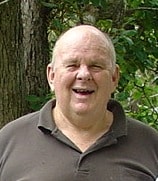
Karl Schmude

6 min read



Already a subscriber? Sign in
5freearticles every month
Continue reading with a free account. No card needed.
- Five free articles every thirty days, on any device you sign in on
- The Catholic Herald newsletter, every morning
- Subscribe whenever you like for everything: every article and the magazine

subscribe to the catholic herald today
Our best content is exclusively available to our subscribers. Subscribe today and gain instant access to expert analysis, in-depth articles, and thought-provoking insights—anytime, anywhere. Don’t miss out on the conversations that matter most.
Subscribe