


August 20, 2026

The art of offending gracefully

David Hahn
More
Related
Min read
share

Among the host of challenges that a modern secular society poses, not least is knowing when and how to speak the truth in ordinary conversation. The Catholic intellectual tradition offers a useful way of thinking through this problem, particularly through the virtues of truthfulness, affability and modesty, together with what St Josemaría Escrivá calls naturalness.

Speaking the truth in ordinary conversation does not refer only to apologetics, but to the more common practice of sharing frankly what we believe in public settings as Catholics. This might involve something as public and impersonal as social media or something more intimate, like chatting with a friend over coffee. Each has its own pitfalls.

Online, there is a temptation to be more abrasive than we would be in person. There is a certain sense in which we feel immune from the consequences that ordinarily follow from undignified speech. Behind a screen, it is remarkably easy to forget that there is another human being on the other side of the argument. In public, however, the temptation can be reversed. We may become so guarded that we avoid speaking frankly about what we believe even to friends, uncertain of who might be listening or whether someone might take offence.

As a somewhat stereotypical American, and somewhat disagreeable by nature, I find sharing what I believe publicly quite easy. Even I, however, have begun to experience some hesitancy in an increasingly aggressive secular environment.

One evening, a friend and I were having a lively conversation in a pub about his interest in the Catholic faith when we were abruptly interrupted by a woman who informed us that she, like many others who came to that pub, did so for relaxation and enjoyment, and had no interest in hearing such upsetting conversation. She did not wait for our reply. We had apparently violated the etiquette of secular doctrine, and she was merely informing us of our heresy.

Setting aside the logical inconsistency of objecting to an unwelcome moral opinion by imposing one’s own moral preferences upon strangers, there was something true and challenging in what she said. At least in theory, we ought to be mindful of the people who hear us and of the impression we give them – the kind of example we are setting in their minds of what Catholics look like.

But this raises a more difficult question: how much should politeness govern the free exchange of ideas? A simple fact of being Catholic in a secular culture is that our beliefs will sometimes be offensive. The Christian cannot make the avoidance of offence his highest principle. But neither should he take offence as evidence of his own virtue. When circumstances demand that we speak the truth faithfully, how do we offend gracefully?

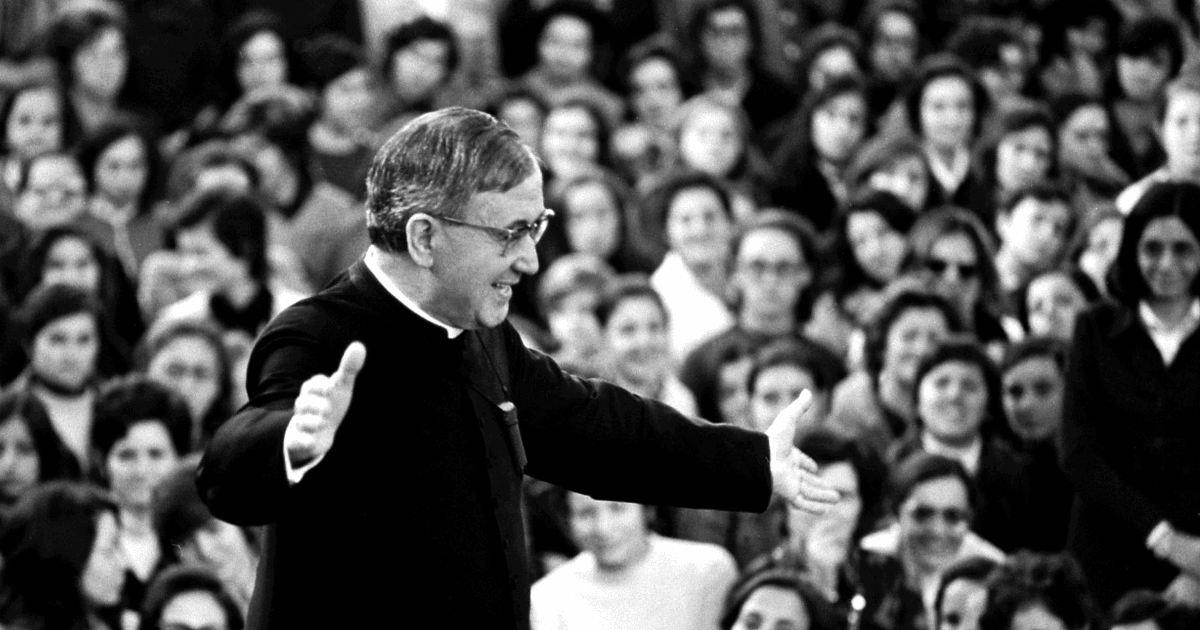
This is where St Josemaría Escrivá’s discussion of naturalness becomes particularly helpful. For Escrivá, naturalness does not mean blending in with our surroundings or concealing the faith. Rather, it means allowing the Christian life to become so deeply our own that it is expressed naturally, without affectation.

“Naturalness,” he writes, “has nothing to do with coarseness, or being shabby or doing things poorly, or being bad-mannered.” There is no virtue in making oneself disagreeable and then calling one’s disagreeableness Christian courage. Part of being a natural Christian is being polite. But politeness does not mean making it one’s aim never to give offence.

Elsewhere, Escrivá asks what happens when Christian life clashes with a pagan environment. He writes: “Undoubtedly your life will clash with theirs; and that contrast – faith confirmed by works! – is exactly the naturalness I ask of you.” It is worth emphasising, however, that such a clash is not necessary to Christian living, but neither is it a failure of it. We can find both the absence of conflict and the presence of it in the life of Christ and in the lives of the saints.

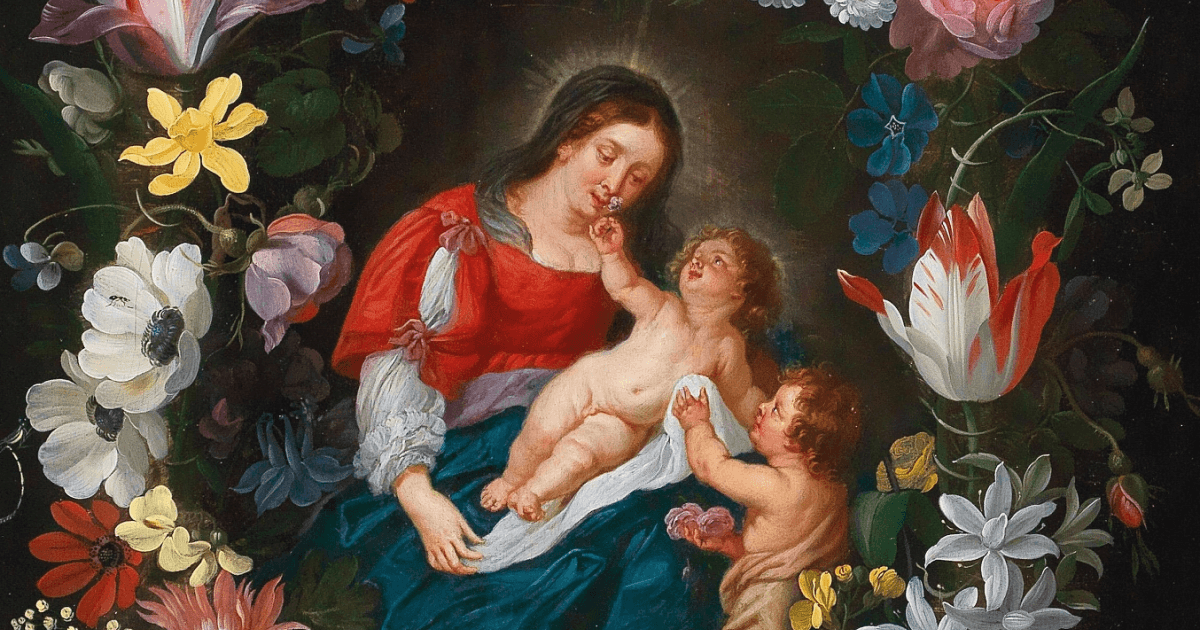
This is why Escrivá can point to the Blessed Virgin Mary, who passed unnoticed as one more woman among those of her town. Her holiness was not a performance. Nor was St Joseph, the craftsman and silent guardian of Christ, a man constantly announcing his own virtue. Neither sought to make himself conspicuous. Yet neither arranged his life around avoiding the notice or displeasure of others. Naturalness, then, should not be confused with conformity.

The deeper framework can be found in St Thomas Aquinas’s treatment of truthfulness, affability and modesty. Truthfulness governs our obligation to represent things as they are, both in our speech and in our conduct. Affability, or what we might more ordinarily call friendliness, governs our ordinary dealings with other people: we should ordinarily be pleasant and agreeable companions rather than needlessly antagonistic ones. Modesty governs our outward manner, restraining us from coarseness, vulgarity and excess.

These virtues correct one another. Truthfulness without affability can become bluntness. Affability without truthfulness can become harmful conformity. Modesty without courage can become timidity. And a distorted idea of naturalness can become either an excuse for bad manners or a justification for hiding one’s faith.

Aquinas is particularly helpful because he recognises that truth can sometimes cause sadness. The fact that something we say displeases another person does not, by itself, make our speech unfriendly. There are occasions when fidelity to truth necessarily produces discomfort. The Christian’s task is therefore not to eliminate every unpleasant consequence of speaking honestly, but to ensure that the unpleasantness comes from the truth rather than from our manner of delivering it. This is as true when speaking privately with someone as it is in a public setting.

This distinction is increasingly important in a culture where offence is often treated as proof that someone has done something wrong. It is entirely possible to be offended by something true. It is equally possible to say something true in an unnecessarily offensive way.

The Catholic answer lies between these extremes. We should not become the sort of people who conceal what we believe whenever the conversation becomes uncomfortable. But neither should we become people who relish the discomfort of others as evidence of our own courage. We should speak plainly, but not coarsely; confidently, but without arrogance; politely, without compromising the truth.

If we can naturally exhibit the virtues of truthfulness, affability and modesty, then when our faith gives offence, we can at least be confident that the offence comes from the truth rather than from our manner of presenting it.

Continue reading with a free account

Create a free account to read up to five articles each month
Create free account

You have # free articles remaining this month.

Subscribe to get unlimited access.
Sign up

subscribe to the catholic herald today

Our best content is exclusively available to our subscribers. Subscribe today and gain instant access to expert analysis, in-depth articles, and thought-provoking insights—anytime, anywhere. Don’t miss out on the conversations that matter most.
Subscribe