


August 15, 2026

The Assumption: difficulties, answers and faith

Fr Dwight Longenecker
More
Related
Min read
share

In my own journey from American fundamentalism to the Catholic Church I once got into an argument with a robust Franciscan about the dogma of the Immaculate Conception of the Blessed Virgin Mary. After exhausting him with my nit-picking arguments he heaved a great sigh and rolled his eyes and retorted: “Well, we believe the Immaculate Conception because the pope tells us to.”

In other words, the bottom line was Church authority, not particular points of argumentation.

Some years later I engaged in an email discussion about the Virgin with an old college friend named David. While I had moved through Anglicanism to the Catholic Church, David got stuck in the Episcopal Church of the USA. Given our shared fundamentalist background, we were both fairly handy with the scriptures and David had done his homework on Catholic beliefs. Eventually our discussion developed into a book manuscript published as Our Lady?

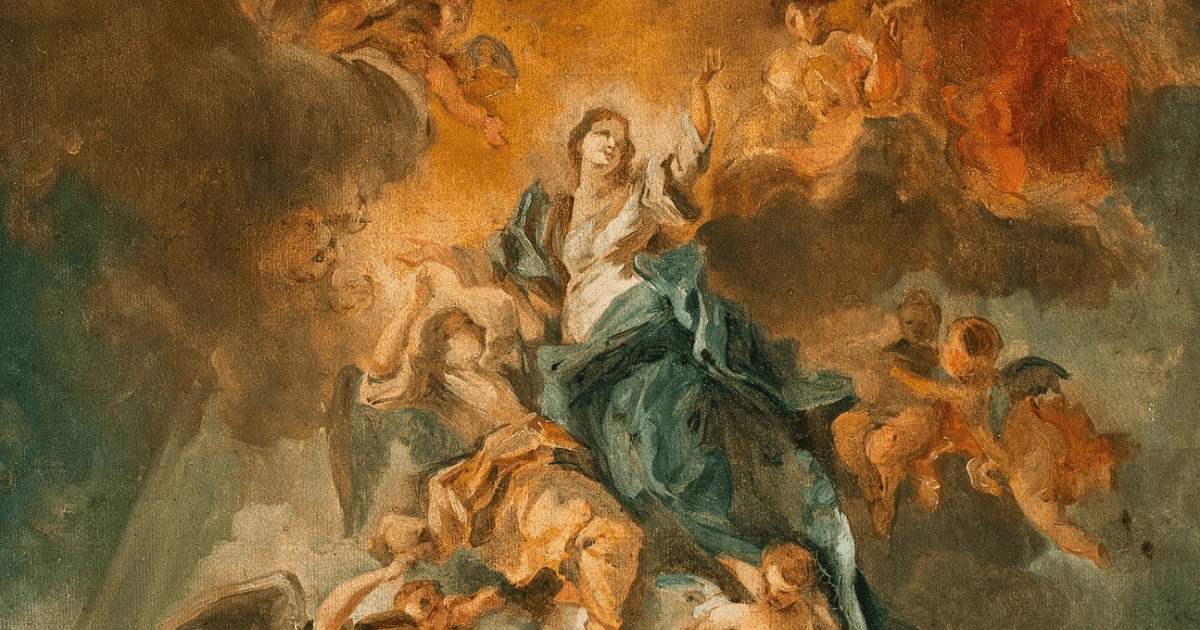
From an apologetics point of view our chapter on the Assumption of the Blessed Virgin Mary was the most troublesome because, from a purely biblical and historical point of view, the dogma of the Assumption of the Blessed Virgin Mary is rather shaky.

The first problem is that there is no reference to the Assumption in the New Testament or in any 1st- or 2nd-century Christian writings. The earliest narratives are the various Transitus Mariae, or “Passing of Mary”, stories – legendary apocryphal texts from the 4th–5th centuries.

When I pointed to them as early evidence David politely replied: “Perhaps, but not that early. 5th and 6th centuries? Come now, the New Testament and the early Church Fathers are either silent or explicitly uncertain. So, in the late 4th century Epiphanius of Salamis surveyed the possibilities, and stated that no one knew whether Mary died or what happened to her body.”

On the absence of Mary’s relics as evidence, David was not particularly impressed: “There are no known relics of St Joseph’s body and his alleged tomb in Jerusalem is empty like Mary’s. Shall we conclude that he also was assumed body and soul into heaven and if not, why not?”

He then went on to point out the spectacular and obviously legendary nature of the 5th-century texts. For example, before her dormition, an angel presents the Virgin with a palm branch from the Tree of Life in paradise, the Apostles are miraculously and instantaneously whisked from their various missionary outposts to attend the Virgin’s deathbed and Jesus and the angels appear to take her up to glory.

David and I were both unwilling to dismiss the possibility of miracles, and David did admit that the Old Testament examples of Enoch (Gen 5:24), Elijah (2 Kings 2:11) and the Jewish tradition of Moses being assumed set an allowable precedent for a bodily assumption, but the silence of the New Testament, the late date of the apocryphal texts and their legendary flavour weren’t easy.

Furthermore, although there was belief in some form of assumption/dormition in the early centuries, it only gradually spread in the East and later in the West. There was no universal or early consensus and the fact that it was defined as dogma nearly 1,900 years after the alleged event made it a stretch.

Then there are other problems. We really know next to nothing about the history of the Virgin’s whereabouts after her presence at Pentecost – and even that is contested. (She is mentioned with the Apostles in the Upper Room in Acts 1:12-14, but in the Pentecost passage in the next chapter her presence is only implied.)

Some ancient traditions propose that she accompanied the Apostle John to Ephesus and ended her earthly life there. But the popularity of the Ephesus tradition dates to the 19th-century visions of Anne Catherine Emmerich and the house of Mary in Ephesus only dates to a discovery in 1891 by a French priest.

Earlier traditions place her dormition and burial in Jerusalem. The Benedictine Abbey of the Dormition in Jerusalem marks the site of her falling asleep, while the empty tomb of Mary is near the Garden of Gethsemane and is under the stewardship of the Greek Orthodox and Armenians.

Even the event itself is not without controversy. Did the Virgin die before her body was assumed or was she assumed without passing the portal of physical death? The Eastern Orthodox say the latter. The Latin Church remains open minded. Thus the wording in the 1950 definition Munificentissimus Deus: “we pronounce, declare, and define it to be a divinely revealed dogma: that the Immaculate Mother of God, the ever Virgin Mary, having completed the course of her earthly life, was assumed body and soul into heavenly glory.”

The definition goes on to state that belief in the Assumption is not optional. So, for those who like a bit more substance to their dogmas, how does one navigate the difficulties? The paucity and late date of evidence must be acknowledged. The Assumption of the Blessed Virgin Mary is an article of faith. We take it as divinely revealed through the authority of the Church.

However, in affirming this, I do remember a guide in Jerusalem explaining some of the more apparent difficulties thusly:

“After Pentecost the Virgin went to Ephesus with St John. Then they returned together for the Council of Jerusalem in the year 46. The other Apostles also returned for the Council of Jerusalem. While they were all together in the Upper Room (close by Dormition Abbey) Mary fell asleep and was buried in the family tomb near the Garden of Gethsemane. Then, when St Thomas arrived late for the Council he doubted the account of the assumption and visited Mary’s tomb only to find it empty. The apparitions of the Blessed Virgin down the centuries support the belief that she was given a unique transition to heaven and that she still acts as an intermediary between heaven and earth.”

The guide’s speculative version neatly encapsulates and harmonises the various early narratives – and the rest we accept “because the pope tells us to!”

Fr Longenecker’s conversion story There and Back Again: A Somewhat Religious Odyssey is published by Ignatius Press.

Continue reading with a free account

Create a free account to read up to five articles each month
Create free account

You have # free articles remaining this month.

Subscribe to get unlimited access.
Sign up

subscribe to the catholic herald today

Our best content is exclusively available to our subscribers. Subscribe today and gain instant access to expert analysis, in-depth articles, and thought-provoking insights—anytime, anywhere. Don’t miss out on the conversations that matter most.
Subscribe



