At nearly 102, Irene Zlotnicki still kneels to receive Holy Communion. Raised in a nominally Anglican family in the North of England, her eldest brother died as a baby during the First World War after a bomb blast shattered the windows of the house where the family was staying. Another older brother is now deceased, while her younger brother has just turned 100.
She later entered the Catholic Church and has spent decades reflecting on faith, history and the meaning of life.
Now living in Bradford-on-Avon with her daughter and son-in-law, Irene looks back on a life that spans the Second World War, Vatican II and the dramatic transformation of Britain’s religious landscape.
She remains a voracious reader of all things theological – most recently John Bergsma and Brant Pitre’s A Catholic Introduction to the Bible: The Old Testament – and a strident avoider of modern technology.
What was your upbringing like?
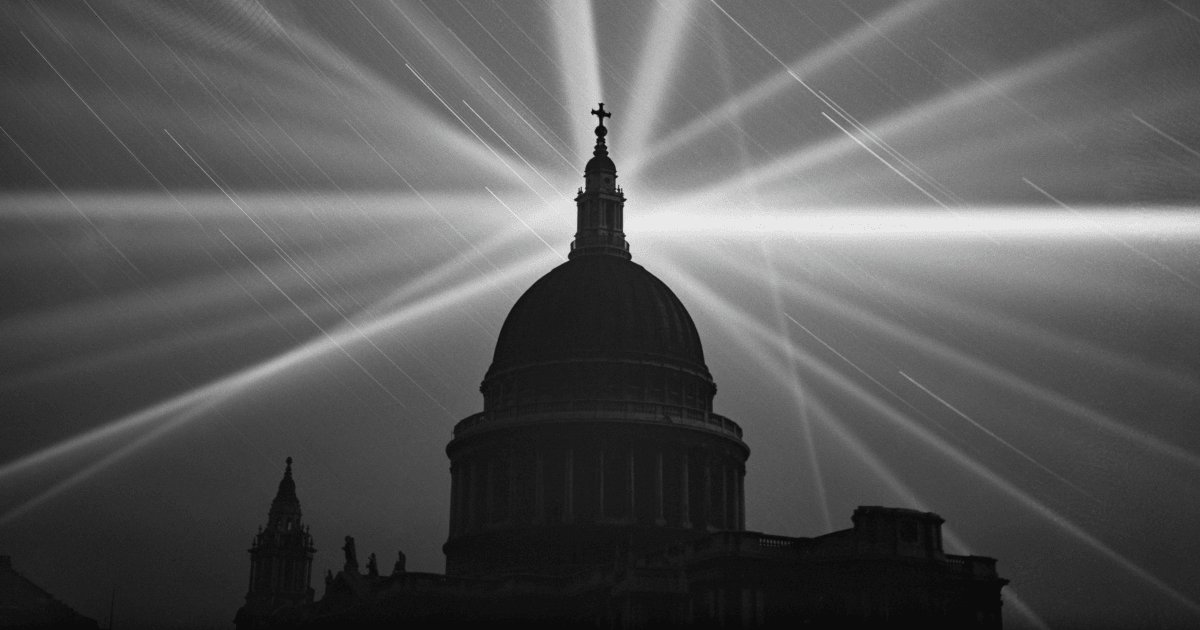
“I was born in 1924 in the North of England in a poor family in a steel town. I was 15 when the war started, and by that time I was already a rebel; I’d become an agnostic when I was about 12. When I was 18 I went to a training college (you weren’t allowed to go to university in the war), and a friend and I started teaching in London. One Sunday, around Easter 1945, the rockets – doodlebugs, we used to call them – had nearly ceased firing, so we decided to risk it and go exploring around London. We ended up meeting at Marble Arch to listen to the speakers, and we were turning to leave when we saw a man getting onto a platform, and he had a beard. Absolutely nobody had beards in those days, so we turned back to watch and we stood there for three and a quarter hours. He was a brilliant speaker. That experience of turning back to a man with a beard changed our lives. You could say that God makes silk purses out of sow’s ears.”
Who was the speaker?
“His name was Frederick Lohr. He had German parents, but was born in England. The news had just come out about the Germans killing six million Jews, which was unbelievable when you first heard it. He was a pacifist anarchist, which to us was wonderful, because we were what we thought were rebels; but we were just half-baked socialists. And so we stood and listened, and we kept going back every Sunday. He started his own group called the London Forum. He pledged to find out the deeper reasons for why six million Jews had been killed, and he was a master of the Socratic method.
“You could say that the experience of being part of the Forum was one of shedding identifications. Even without knowing it, we all find security in certain identifications. That’s our fig leaf – something that’s lasted longer than ourselves, seems more stable, or whatever. I never was very identified with my family, or the nation, or my profession, but I was with evolution, and that was the hardest for me to shed. But eventually everyone who stayed in the Forum found themselves to be a tabula rasa, a clean slate.”
What did this shedding of identifications lead to in your case?
“I thought I wanted to change the world when I joined the Forum, but how can you change the world when you don’t know what the meaning of life is? So I stayed in that group for many years, until Frederick died quite young. And that whole experience was what brought me into the Catholic Church. A lot of people from the Forum entered the Church, although that was never its aim. The goal was to bring you to understanding through questioning, and many ‘Forumites’ (as we called them) preferred questioning to finding an answer.”
Did you grow up in a Christian household?
“Yes, but my mother was a spiritualist, which drove me mad. I was baptised in the Church of England. My mother didn’t know what to call me; she couldn’t agree with my father. So, on the way to church, she thought my name had better be June. But when she got to church and the vicar asked her what name, she didn’t say June. She used to tell me this as a child, you see… she never knew why she said Irene – she didn’t even particularly like the name! And then years later, when I became a Catholic, I bought a daily missal and there was June 28: the feast of St Irenaeus.”
Do you think there was a widespread loss of faith that came about as a result of the First World War?
“I should say so, yes. A lot of people thought: how can there be a God if all these horrible things are happening? They didn’t really seek an answer, though.”
What was it like coming of age in the middle of the Second World War?
“It was awful. Fifteen to 21 was my wartime, just when I was hoping to go abroad and do all sorts of things. It was all spoiled. Our London college was evacuated to Cardiff at one point, but there were bombings in Cardiff as well. And so I feel great sympathy for everyone around the world who are under bombs night and day. This is not warfare; it’s state terrorism. There aren’t men going out with bows and arrows just killing each other. That’s bad enough. But now you can just stay in your armchair and press a button and send a drone. It’s unbelievable.”
Were you expected to be involved in the war effort?
“Yes, but I never was really. I wasn’t a pacifist, but we used to see a thousand bombers going over each night, and you would hear about Dresden and places like that. And you would think about how these were just ordinary people, so why were we dropping bombs on them? I never wanted to join in with that.”
Do you have any particularly vivid memories of the war ending?
“I think I was on the Isle of Wight on holiday at the time. The news came in about the dropping of the atom bombs. I knew very little about them, but I knew enough to see that this marked a division in world history. And the thought of dropping those two bombs on cities when you could have dropped them on a mountain instead to frighten Japan into surrender… There’s this ferocity in human nature. But we can only say that it’s also in ourselves if we look closely enough.”
How did you meet your husband?
“At the Forum. He was Jewish, a refugee from Germany, and we became friends and got married. I had already become a Catholic in 1947. He entered the Church later. We married in Spain in 1951 to evade his parents.”
Was becoming a Catholic in the 1940s a fashionable thing to do?
“In a way, you could say it was very fashionable. It was the heyday of Newman’s ‘second spring’. Schools and churches were springing up all over England. It breaks my heart now to think churches are closing down as fast as they opened up back then. Just in one lifetime we’ve seen this reversal.”
What was your experience of the liturgical changes implemented in the aftermath of Vatican II?
“I was the chairman of our parish council in Harrow at the time of the changes, and I introduced a motion to one of our meetings that we should keep the Latin Mass as one of our Sunday Masses each week. That way if people wanted the old Mass, there was an option there. Only one other person in the parish voted with me, and it wasn’t the priest. So you could see from the beginning that people weren’t going to accept the old way of doing things. They should have read St Edmund Campion’s Brag! In my opinion, the Council was hijacked. The reforms never came in as they were intended. The Mass was supposed to remain in Latin, celebrated ad orientem, with traditional music. It’s also true that there were a lot of abuses in the old Mass. I knew one priest who said the old Mass in twelve and a half minutes. Sometimes the clergy were very unapproachable.”
What does the Mass mean to you?
“Well, the best thing I ever did in my life was enter the Church. Even before I was a Catholic, when I had begun questioning things, I once heard somebody say that if we knew what the Mass was, we would never miss one. I don’t know why but that went straight through my ears into my heart. And apart from one holiday in all these years, I’ve always been to daily Mass. I’ve tried not to miss one. But now I can’t quite manage it all the time.”
What do you think of England today compared to 90 years ago?
“We’re an absolute disgrace, whereas the Muslims actually dress decently. But Heaven help us if they implement Sharia law. Just think that at the Battle of Lepanto people were actually dying to keep Muslims out of Europe. I’m not saying we shouldn’t look after them once they’re here; of course we should, it’s hospitality. But I think we should be, well, we should be more Christian. And then we would invite them in and convert them. St Francis of Assisi tried to do that. But there’s no hope of that at the moment. We’ve got to convert ourselves first.”
When you were young, was there a sense that everyone goes to church, or had that already changed?
“No, no. Everyone professed to be Christian, but even then there was often a ‘hatch, match and dispatch’ attitude, where church was reserved for baptisms, weddings and funerals. Like now, there were people who only went at Christmas and Easter.”
Even in the 1930s, was there already a sense that England was experiencing a religious decline?
“Definitely, yes. England is a strange country. I mean, think of St Augustine of Canterbury and the care with which England was fostered. And you think of the 13th century – that’s a century I’d have loved to live in. All churches were being built throughout England, and everything was moving forward, and care was taken. I’m not saying it was perfect, because there was terrible cruelty, even with Catholics. Nevertheless, there was faith, and care given by God. I think He’s still giving us that care. Look at Newman, the greatest gift to the modern era. And Teresa Higginson with her love of the Sacred Head, the Seat of Divine Wisdom. And then Chesterton, CS Lewis and so forth. But these days America is the spearhead, with Scott Hahn and others. I think any recovery we’re going to see will come from there.”
Would you say that getting old is a lonely process? Especially when you’ve outlived most of your friends and family, is that a lonely experience or do you learn to accept it?
“I haven’t noticed it being lonely, especially since it just happens so gradually. The prayer list grows ever longer, but you just accept it, especially if you’re a Catholic. I don’t know how people accept these things when they don’t believe. I just can’t imagine. If this life is all there is, it’s totally unjust. Look at the different situations in which people are born, and the way they die. It’s not as if there’s a fairy-tale ending. Some people have no chances, they come from a dysfunctional family, they’re not taught any true religion, and they die young. Dostoyevsky used to be our great author when we were in the Forum, and he would make this point. Think of Ivan in The Brothers Karamazov, who says, ‘I’ll hand back my entrance ticket.’ Ivan was an unbeliever.”
If it isn’t too personal a question, how do you feel about death? It seems that there’s a natural fear of death, but as Christians we also view it with hope.
“We’re always joking about it. When Andrew [her son-in-law] hears my sneezes, he says they’re so loud that they’ll blow him down the garden. He says I couldn’t possibly die until I’m 117. But I could, of course. Getting up in the morning is dreadfully difficult, and the winters are very difficult. But no, I think God has prevented me from worrying about death. I used to, of course, in the war.”
The thought of Heaven seems, on one level, very appealing, but in another sense rather daunting. There’s something about the idea of eternity that can feel quite overwhelming.
“When I think of the Four Last Things at night, my mind bounces off death. However hard I try, I can’t stay a long time thinking of death, even though I’m trying to. And then the judgement. Well, yes, I can think about that. That’s pretty awful. But Heaven… I think, well, God is infinite. The only reason He created us was because the infinite love that He has wasn’t infinite enough for Him, so He wanted to create creatures who would love Him and be loved by Him. And surely, if He’s infinite, that will keep us occupied for more than eternity. So it doesn’t daunt me at all. If I had to live on my own without God, I suppose it would. Well, how would I fill my days? But with God there, I’m sure He’s able to provide.”
Do you have any life advice for younger readers?
“Follow the truth – but make sure it’s not pinned on the end of your nose.”

.png)