


December 12, 2025
December 12, 2025

The Bomb that tried to destroy Our Lady of Guadalupe

Min read
share

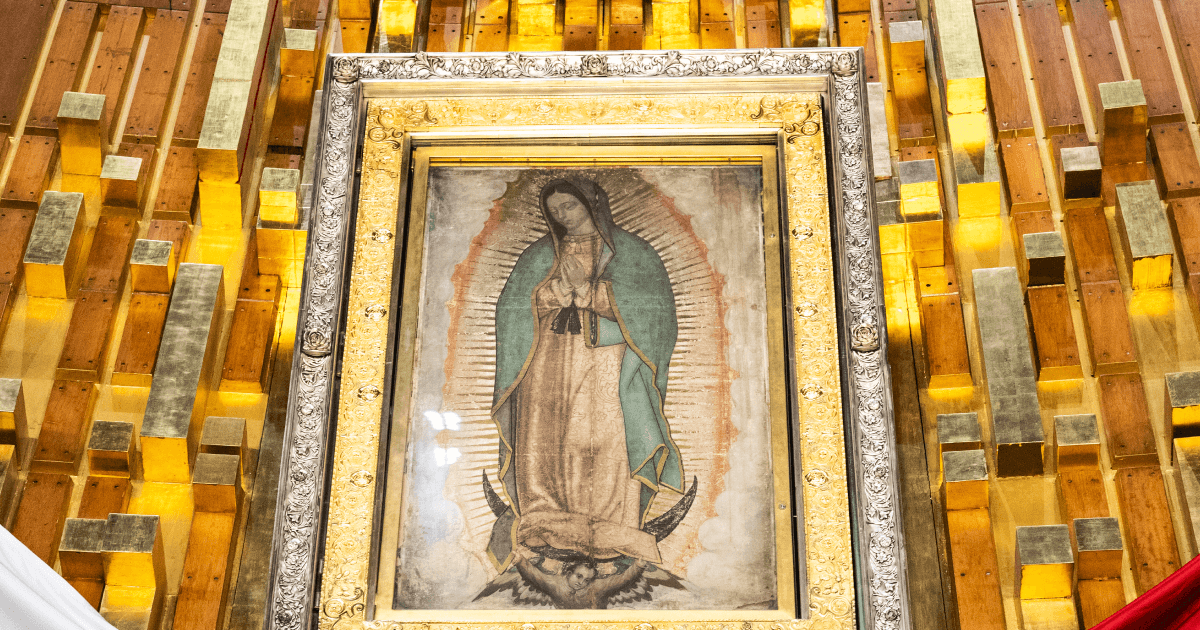
Today, the 12th of December, is the feast of Our Lady of Guadalupe. It is one of the most widely venerated images in the Catholic world, as millions of pilgrims prepare to honour the patroness of the Americas. The date marks the anniversary of the 1531 apparition on the hill of Tepeyac, Mexico, where Saint Juan Diego was given the miraculous image of Our Lady of Guadalupe on his tilma, a traditional Mexican cloak. 

The image of Our Lady is preserved in the Basilica of Our Lady of Guadalupe in Mexico City and continues to attract huge numbers. According to the National Catholic Register, more than 20 million pilgrims visit the site annually, making it the most frequented Catholic shrine in the world.
The story of the apparition has long been central to Mexican Catholic identity. The image’s symbolism, particularly the black ribbon at the Virgin’s waist representing pregnancy, has been interpreted as a message of maternal protection and hope. The image has also become closely tied to the history of Mexico itself, especially during the Cristeros Wars.

For many, the importance of Our Lady of Guadalupe is found in her constant presence through centuries of upheaval. Our Lady of Guadalupe has stood the test of time with the Church, even as the world around her has changed. The image represents a mother who has watched over her people from generation to generation, enduring revolutions, persecutions, and political turmoil, and who continues to wait for the day when her children might return to her with the trust given to their earthly mothers.

One such example of her intercession occurred 107 years ago, when the image became the target of a bomb attack during a period of rising hostility between the Mexican state and the Catholic Church. On 14 November 1921, a man named Luciano Pérez Carpio, a Freemason, entered the basilica carrying a bouquet of flowers within which he had concealed a bomb. Carpio was an employee of the Private Secretariat of the Presidency, and the attack occurred amid escalating tensions over the anti-clerical provisions of the 1917 Constitution.

At the time, Catholic education had been banned, religious were barred from teaching, and all public acts of worship, including processions, were prohibited. Surveillance of clergy increased, while open expressions of devotion risked arrest. Anti-Catholic sentiment within the government grew sharply, setting the stage for the violent persecution that would follow. President Plutarco Elías Calles, who came to power in 1924, intensified enforcement of these laws and later authorised the execution of Blessed Miguel Pro.

The 1921 bomb was set off about 10:30 in the morning. The dynamite shattered the windows throughout the basilica, destroyed the altar rail and damaged the marble steps of the altar, the brass candlesticks, and the Sacred Image of our Crucified Lord, which fell to the ground and was left bent.

The attack on the basilica became one of several incidents that signalled the scale of the confrontation to come. Our Lady of Guadalupe, already a potent national symbol since the time of the apparition, took on added significance during these years. The image of the Virgin, traditionally seen as carrying the unborn Christ, has long been associated with themes of protection, dignity, and motherhood.

The bending of the cross was widely seen as the Son shielding his Mother, an expression of unconditional love, with Christ absorbing the force intended for her. Our Lady represents the fullness of life, and in a movement almost circular in its symbolism, the Lord protected the one who first bore him.

While the circumstances of the 1921 attack belonged to a specific political moment, incidents targeting churches and religious symbols continue to be reported even in the West. According to the United States Conference of Catholic Bishops, at least 408 incidents have occurred across 43 states and the District of Columbia since May 2020. These include vandalism, arson attempts, and damage to statues and altars, and even the desecration of the Blessed Sacrament.

However, as with the failure of Carpio’s attack and the subsequent collapse of efforts to eradicate public expressions of faith in Mexico, the righteous shall always prevail. Even if persecuted, the survival of the image, untouched by the explosion, remains a sign of hope to the Church and shows her continuity throughout time.

Today, the 12th of December, is the feast of Our Lady of Guadalupe. It is one of the most widely venerated images in the Catholic world, as millions of pilgrims prepare to honour the patroness of the Americas. The date marks the anniversary of the 1531 apparition on the hill of Tepeyac, Mexico, where Saint Juan Diego was given the miraculous image of Our Lady of Guadalupe on his tilma, a traditional Mexican cloak. 

The image of Our Lady is preserved in the Basilica of Our Lady of Guadalupe in Mexico City and continues to attract huge numbers. According to the National Catholic Register, more than 20 million pilgrims visit the site annually, making it the most frequented Catholic shrine in the world.

The story of the apparition has long been central to Mexican Catholic identity. The image’s symbolism, particularly the black ribbon at the Virgin’s waist representing pregnancy, has been interpreted as a message of maternal protection and hope. The image has also become closely tied to the history of Mexico itself, especially during the Cristeros Wars.

For many, the importance of Our Lady of Guadalupe is found in her constant presence through centuries of upheaval. Our Lady of Guadalupe has stood the test of time with the Church, even as the world around her has changed. The image represents a mother who has watched over her people from generation to generation, enduring revolutions, persecutions, and political turmoil, and who continues to wait for the day when her children might return to her with the trust given to their earthly mothers.

One such example of her intercession occurred 107 years ago, when the image became the target of a bomb attack during a period of rising hostility between the Mexican state and the Catholic Church. On 14 November 1921, a man named Luciano Pérez Carpio, a Freemason, entered the basilica carrying a bouquet of flowers within which he had concealed a bomb. Carpio was an employee of the Private Secretariat of the Presidency, and the attack occurred amid escalating tensions over the anti-clerical provisions of the 1917 Constitution.

At the time, Catholic education had been banned, religious were barred from teaching, and all public acts of worship, including processions, were prohibited. Surveillance of clergy increased, while open expressions of devotion risked arrest. Anti-Catholic sentiment within the government grew sharply, setting the stage for the violent persecution that would follow. President Plutarco Elías Calles, who came to power in 1924, intensified enforcement of these laws and later authorised the execution of Blessed Miguel Pro.

The 1921 bomb was set off about 10:30 in the morning. The dynamite shattered the windows throughout the basilica, destroyed the altar rail and damaged the marble steps of the altar, the brass candlesticks, and the Sacred Image of our Crucified Lord, which fell to the ground and was left bent.

The attack on the basilica became one of several incidents that signalled the scale of the confrontation to come. Our Lady of Guadalupe, already a potent national symbol since the time of the apparition, took on added significance during these years. The image of the Virgin, traditionally seen as carrying the unborn Christ, has long been associated with themes of protection, dignity, and motherhood.

The bending of the cross was widely seen as the Son shielding his Mother, an expression of unconditional love, with Christ absorbing the force intended for her. Our Lady represents the fullness of life, and in a movement almost circular in its symbolism, the Lord protected the one who first bore him.

While the circumstances of the 1921 attack belonged to a specific political moment, incidents targeting churches and religious symbols continue to be reported even in the West. According to the United States Conference of Catholic Bishops, at least 408 incidents have occurred across 43 states and the District of Columbia since May 2020. These include vandalism, arson attempts, and damage to statues and altars, and even the desecration of the Blessed Sacrament.

However, as with the failure of Carpio’s attack and the subsequent collapse of efforts to eradicate public expressions of faith in Mexico, the righteous shall always prevail. Even if persecuted, the survival of the image, untouched by the explosion, remains a sign of hope to the Church and shows her continuity throughout time.

share

subscribe to the catholic herald today

Our best content is exclusively available to our subscribers. Subscribe today and gain instant access to expert analysis, in-depth articles, and thought-provoking insights—anytime, anywhere. Don’t miss out on the conversations that matter most.
Subscribe