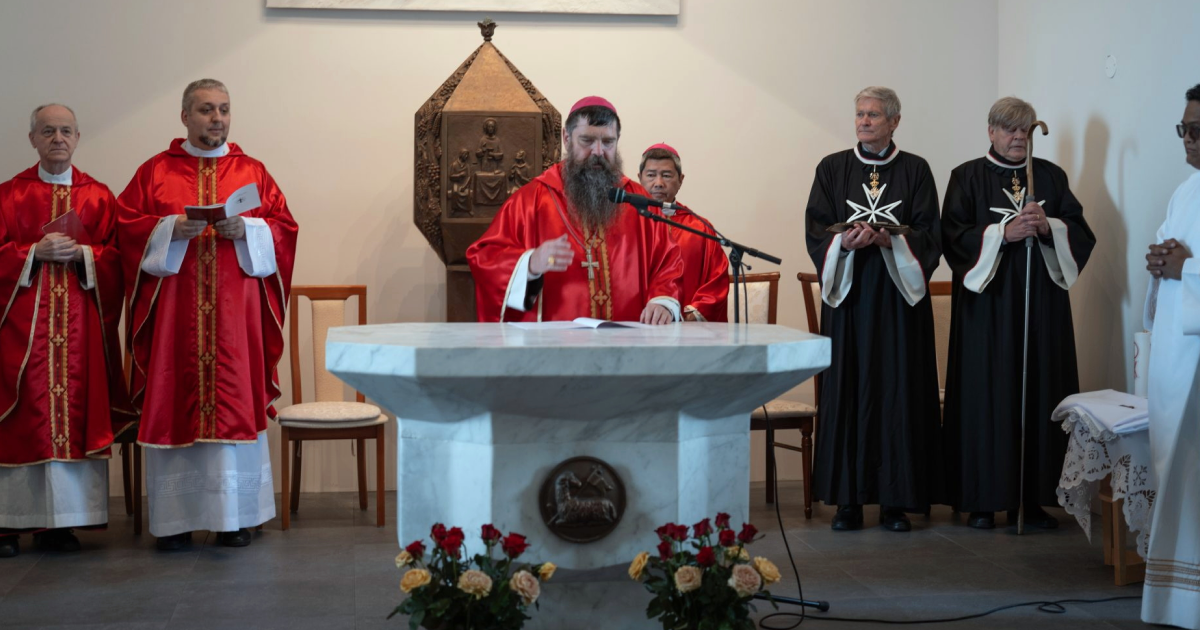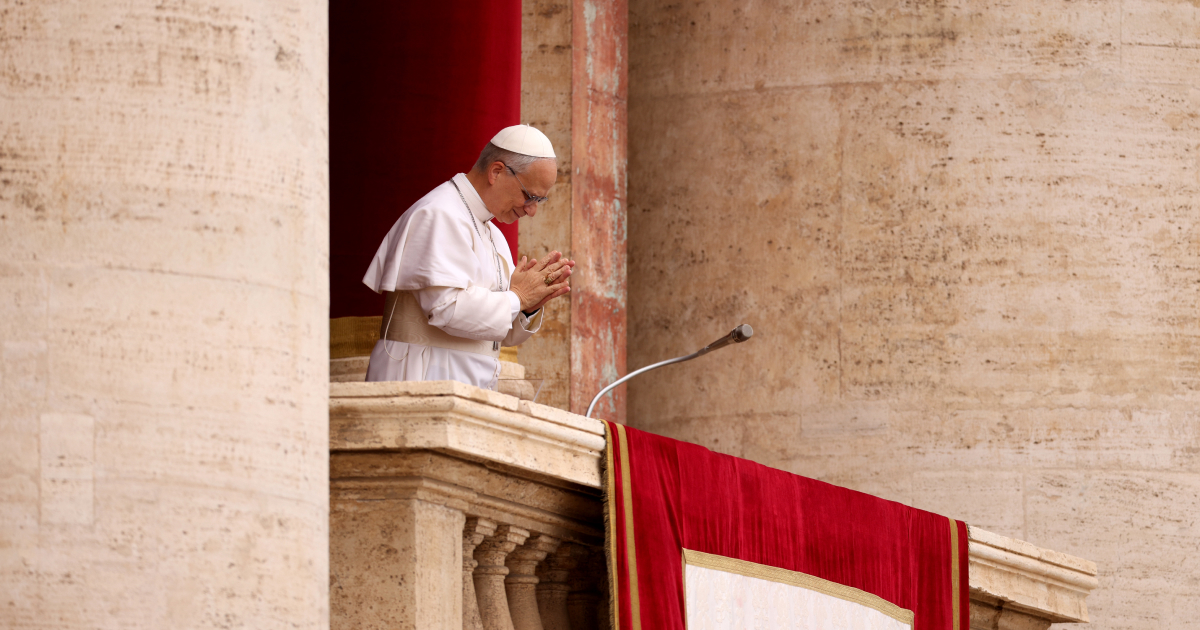


What connects a renowned Benedictine reformer, the first Cistercian pope and a 21st-century American pop singer? St Bernard of Clairvaux, Pope Eugene III and Gracie Abrams may appear an unlikely triumvirate at a dinner party. Choosing the right soundtrack might be a struggle. Yet each figure, totemic in his or her own field, plays a surprising but effective role in the sermons of the week-long Lenten retreat preached by the popular Norwegian Bishop Erik Varden to Pope Leo XIV and the assembled members of the Roman Curia at the Vatican.
Eclectic yet edifying, the Lenten spiritual exercises shared by the Cistercian prelate summon spiritual insight from the lives and writings of a startling range of classic and contemporary individuals. Preached in the Pauline Chapel of the Apostolic Palace across the final week of February, the sermons were guided by a central theme of ‘Illuminated by a Hidden Glory’. The cycle of 11 sermons explores the hopes and fears of our Lenten struggle, grounded in our human need for the merciful grace of God’s love, which can transform our lives and transfigure our reality.
Given his relative youth and public prominence, the choice of Bishop Erik Varden to lead the papal Lenten retreat is a notable one. The 51-year-old Norwegian Catholic prelate has followed a remarkable spiritual and ecclesiastical path. Born to a non-practising Lutheran family in Sarpsborg, Norway, the young Erik Varden read theology at the University of Cambridge, where he became a Catholic. Subsequently, Varden entered Mount St Bernard Abbey, a Trappist monastery in Leicestershire, where he was ordained a priest in 2011. He served as the first non-British and non-Irish abbot of Mount St Bernard Abbey between 2013 and 2019, and oversaw the foundation of the first British Trappist beer production, named Tynt Meadow.
Appointed by Pope Francis to the long-vacant see of Trondheim in 2019, Bishop Varden has attained international theological acclaim for his spiritual writings, especially his books The Shattering of Loneliness (2018) and Chastity: Reconciliation of the Senses (2023). Although coming from a Benedictine background, there is a certain Augustinian flavour to his theological insight, not least in the affective depth of his work and his consistent sensitivity to human desire, disillusionment and dependence on God’s healing grace. This might help to explain his choice as Lenten spiritual guide for an Augustinian Pope.
While readers are encouraged to spend time with the full cycle of sermons, available in excerpts online and set to be published later this year, there are particular reflections from the programme worth highlighting for a wider audience.
First, Sermon 10, ‘On Consideration’, contains an illuminating injunction from St Augustine on the joyful bearing of ecclesial office. Here we encounter Pope Eugene III, a fellow Cistercian monk to whom St Bernard of Clairvaux wrote On Consideration, which treated the trials and tribulations facing papal administration. Having repeated St Bernard’s advice on the importance of choosing good men, placing temporal affairs in the right order and seeking the glory of God first, Bishop Varden closes his sermon with a fond quotation from a memorable dictum of St Augustine: ‘Bear your own load to the end. If you love it, it will be light. If you hate it, it will be heavy.’
Secondly, Bishop Varden strikes a remarkable balance of love and truth in his perceptive critique of the recurrent temptations among those in the Church towards prideful ambition and perverse corruption.
In Sermon 5, ‘Splendour of Truth’, Bishop Varden warns his papal and curial audience of the persistence of temptation on this earth, referencing the words of St Bernard: ‘I would have you warned: no one lives on earth without temptation; if one is relieved of one, let him surely expect another.’ Focusing on the temptation to prideful ambition, Bishop Varden describes such attractions as an ‘alienation of the mind’ and ‘a form of insanity [which] makes it ridiculous in any instantiation, but especially so when it occurs in persons given to a state of selfless service’.
Similarly, Sermon 6, ‘The Fall of Thousands’, sees open and honest engagement with the grim reality of corruption within the Church and within the lives of the people of the Church. Recognising that ‘the worst crisis of the Church has been brought on, not by secular opposition, but by ecclesiastical corruption’, Bishop Varden raises the puzzling and profound question of how and why different religious individuals, orders and initiatives can both bear fruit and wreak havoc. Without settling for any easy answers, Bishop Varden acknowledges the reality of both spiritual warfare, which can be particularly fierce towards great spiritual projects, and the sovereignty of human freedom, which means we are still responsible for our actions even in the midst of temptation and distraction.
Against the background of sadly all-too-common scandals involving the private vices and scandals of revered founders of renowned Catholic institutions, from Jean Vanier and L’Arche to Fr Marcial Maciel and the Legionaries of Christ, there is some very perceptive analysis here of the realities of these situations. If our spiritual life and our physical and affective lives are not properly integrated, then ‘there is a danger that spiritual exposure will seek physical and affective release, and that such instances of release are rationalised as if they were, somehow, spiritual themselves, more elevated from the misdemeanours of ordinary mortals’. Indeed, ‘the integrity of a spiritual teacher will be attested by his conversation, but not only; it will be evidenced as much by his online habits, his comportment at table or at the bar, his freedom with regard to others’ adulation’.
Lastly, in his final Sermon 11, ‘To Communicate Hope’, there is a beautiful reflection on the possibility of Christian hope, even as we become ever more aware of our personal and social wounds. Surveying our cultural landscape of lament and longing, Bishop Varden observes that the ‘consciousness of being wounded permeates our times like a smoky mist’. Unexpectedly, he chooses to cite a YouTube recording of a live performance by the American singer Gracie Abrams of her song ‘Camden’ at a concert in Madrid. Quoting her melancholic lyrics, Bishop Varden describes a ‘piercing sadness that borders on, perhaps touches, despair’. Although Bishop Varden admits that ‘teenage Weltschmerz [world-weariness] is nothing new’, he is struck by how even the young female audience of Abrams know all the words to a song of ‘hopelessness before an ever-present menace’.
How, then, to navigate our cultural sadness, apathy and despair? Bishop Varden identifies two typical approaches in our modern world: either wear our wounds as ‘markers of identity’, often leading to a ‘perversely self-satisfied despair’; or ‘airbrush wounds’ as ‘freak occurrences, met with harshness’. Missing from much of our cultural conversation around suffering, however, is the Cross. According to the logic of the world, and the chorus of her music, suffering must either be escaped at all costs or embraced as all-consuming. Yet there is a middle way, a via media. As Bishop Varden shared with Pope Leo and his collaborators, ‘the Cross lets us own reality while it affirms the non-finality of wounds, which can be healed and become sources of healing’. Christianity offers a response to suffering beyond wallowing in anguish or wishing it away; through union with the suffering of Christ on the Cross, our wounds can be witnessed, tended and redeemed.
Speaking before Pope Leo XIV and his colleagues from across the Roman Curia, Bishop Erik Varden shared a wealth of spiritual insight, ripe for the Lenten journey and still fruitful thereafter. Indeed, his writings are slowly becoming spiritual classics, much in the mould of the poetic and heartfelt theologies of figures such as Thomas Merton and Henri Nouwen. Perhaps fittingly for such an occasion, Bishop Varden’s episcopal motto reads Coram fratribus intellexi (Latin for ‘understanding with my brothers’). In the serene surroundings of the Apostolic Palace in Rome, his sermons helped to chart a course of understanding through the struggles and sanctifications of living a good Lent and a good life.