May 24, 2026

The Christian duty to be less informed

Luke Collins
More
Related
Min read
share

We have all now had the experience. A clip circulates online. The framing is plausible. It confirms what many people already suspect. Within hours, thousands of people are reacting to something they have not fully seen, from someone they have not fully heard, in a context they do not know. Then, much later, comes the qualification, the missing context, the longer recording, the correction that travels only a fraction as far as the original outrage. As Swift put it, “Falsehood flies, and the Truth comes limping after it.”

There is a lesson here, and it is not merely that everyone should be a little more careful online. We are entering a world in which seeing is no longer believing, hearing is no longer believing, and even a video clip must be treated as a kind of argument rather than straightforward evidence. It has been selected, framed, cut, captioned and served to us with a purpose. That purpose may be honest, or it may not be; either way, the clip does not simply show us something, it wants us to react.

Some say that we are entering a post-truth age, but it may be more accurate to say that we are returning to the normal condition of mankind. For most of history, men did not live in a world of searchable archives, instant corrections, full transcripts and professionalised newsrooms. They lived amid rumour, gossip, partisan pamphlets, forged letters, official lies, unreliable messengers and stories that had acquired three new details by the time they reached the next village.

The difference now is not that falsehood exists. The difference is that falsehood can be manufactured instantly, dressed in the clothes of truth, and sent round the world before a sensible man has finished his breakfast. AI will make this worse, of course. The internet was already a machine for distributing half-truths; AI gave it a factory.

Pope Leo XIV put the matter well when he warned journalists against the “ancient art of lying” and described good journalism as a “bulwark of civility against the quicksand of approximation and post-truth”. That phrase matters because it recognises both the novelty and the age of the problem. Pope Francis made precisely this point in his 2018 message on fake news. The first false report, he suggested, was the serpent’s temptation of Eve: not a crude denial, but a distortion, a malicious reframing, a use of partial truth against Truth itself. He wrote that “there is no such thing as harmless disinformation”. Catholics should take that seriously, because we are very good at noticing lies told by our enemies and rather less good at noticing lies that serve our side.

The doctored clip, the misleading headline, the out-of-context papal quotation, the fake statistic, the screenshot with no source: if it confirms our view of the world, we are inclined to be generous. We call it “basically true”. We say it “makes an important point”. We share it because the other side does worse. But Catholics do not have permission to lie for the truth, nor do we have permission to be careless because the error is convenient. A falsehood does not become pious because it embarrasses a liberal bishop, a progressive journalist, a secular politician or anyone else we dislike. It remains a falsehood.

There is, however, another temptation: the belief that the answer to all this is to become infinitely informed. To read more, follow more, watch more, verify more, refresh more, subscribe to more newsletters, keep 10 tabs open and treat every world event as a personal responsibility. This too is a trap.

There is something false about the modern piety of “staying informed”. In practice it often means surrendering the soul to a stream of distant provocations. A man reads about a war he does not understand, a court case he has not followed, a synod document he has not read, an American controversy he cannot affect, a viral clip whose provenance he has not checked, and a scandal whose details will change three times before lunch. He emerges not wiser, but more irritated.

The internet flatters us by making every event feel close. It puts Rome, Westminster, Washington, Gaza, X/Twitter, YouTube, TikTok and the parish WhatsApp group into the same nervous system. The result is not catholicity, but indigestion. We were not made to metabolise the whole world.

This is where the much-abused phrase ordo amoris is actually useful. It briefly escaped into American politics early last year when JD Vance invoked it and was promptly denounced for doing so. Whatever one thinks of his application, the underlying Christian instinct is sound enough: love must be ordered. We owe love to all men, but not in the same way, not with the same immediacy and not through the same duties. A man has obligations to his wife and children that he does not have to a stranger on the other side of the world, regardless of what Peter Singer says. He has duties to his parish, his household, his neighbours, his country and his work which cannot simply be dissolved into a vague concern for mankind at large.

Charity begins with the person in front of you. Duty begins with the thing actually entrusted to you. The truth is not served by a man neglecting his wife, his children, his prayers, his work and his parish because he is busy forming strong opinions about matters he cannot verify and cannot influence. Of course this does not mean Catholics should become ignorant, incurious or parochial in the stupid sense. Some men must know more than others because their responsibilities require it. A journalist must investigate, a bishop must govern, a politician must deliberate, a father must know what threatens his household, a teacher must not be naive about the world into which his pupils are growing. But most of us should be far more honest about the difference between acquiring knowledge and engaging with agitprop.

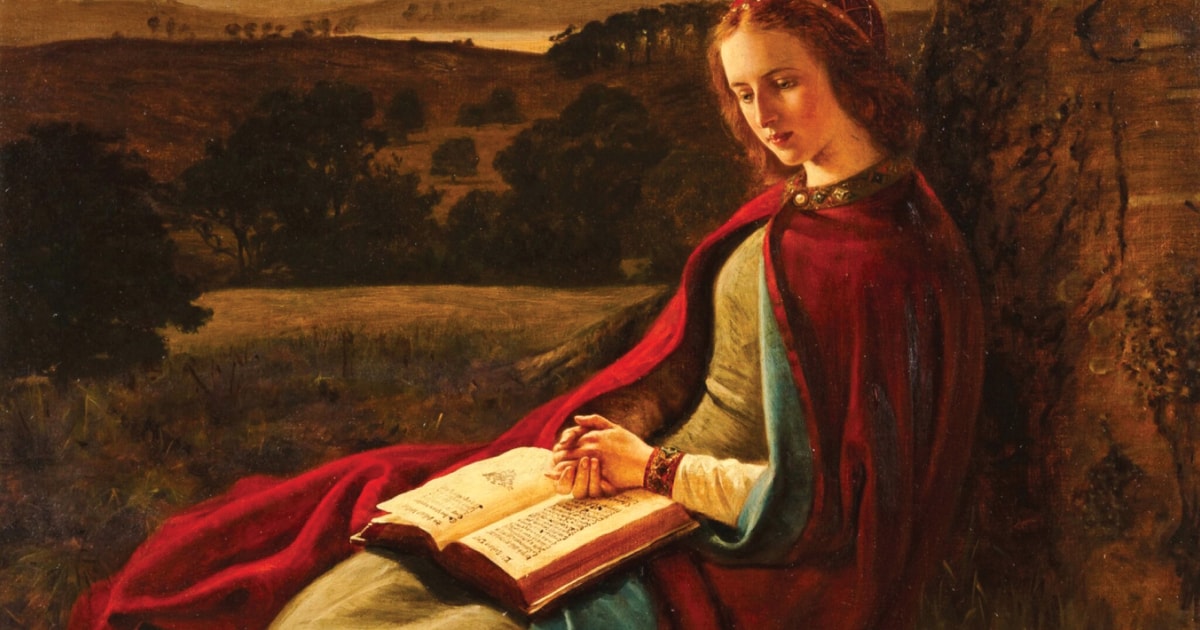
Pope Leo’s recent defence of books is helpful here. Speaking to the Vatican Publishing House on 7 May, he said that the book is an “opportunity to think”, and that in the digital age the physical book reminds us of the need for thought, reflection and study. Reading, he said, “nourishes the mind” and forms a critical sense, guarding us against ideological shortcuts.

That is exactly the point. The opposite of online falsehood is not simply online fact-checking, necessary though that sometimes is. The deeper antidote is a mind trained to move more slowly, to weigh claims, to follow an argument, and to sit with reality rather than consume impressions of it. Books resist the nervous tempo of the feed. They do not flash, interrupt, notify, flatter or enrage. They ask for attention, and attention is one of the first casualties of the post-truth age.

A man who cannot read a book will struggle to judge a headline. A mind formed by fragments will eventually mistake fragments for the whole.

There is an old Chinese image in the Tao Te Ching of the ideal life: to live in one’s own village, close enough to the next that one might faintly hear its chickens and dogs across the fields, and yet never feel the need to go there. One need not take Laozi as a political guide to see that there is wisdom in this image; there is a peace in not making every distant noise one’s own business.

The Christian answer to post-truth is therefore not to become an amateur intelligence analyst, hunched over a screen, decoding every clip and chasing every rumour, but to recover the ordinary virtues that have been lost in the digital age: restraint, patience and the humility to admit that not every controversy requires our intervention. We should refuse convenient lies, avoid sharing what we have not checked, prefer the primary source to the viral summary, read more slowly, react less quickly, and be especially wary of anything that gives us the delicious pleasure of anger. Before we click, share or denounce, we might ask a simpler question: will knowing this help me discharge a duty, or will it merely give me the pleasure of contempt?

Above all, we should recover the dignity of not having an opinion.

Continue reading with a free account

Create a free account to read up to five articles each month
Create free account

You have # free articles remaining this month.

Subscribe to get unlimited access.
Sign up

subscribe to the catholic herald today

Our best content is exclusively available to our subscribers. Subscribe today and gain instant access to expert analysis, in-depth articles, and thought-provoking insights—anytime, anywhere. Don’t miss out on the conversations that matter most.
Subscribe