

January 23, 2026
January 23, 2026

The anniversary of Roe’s fall and the future of the pro-life moral imagination

Min read
share

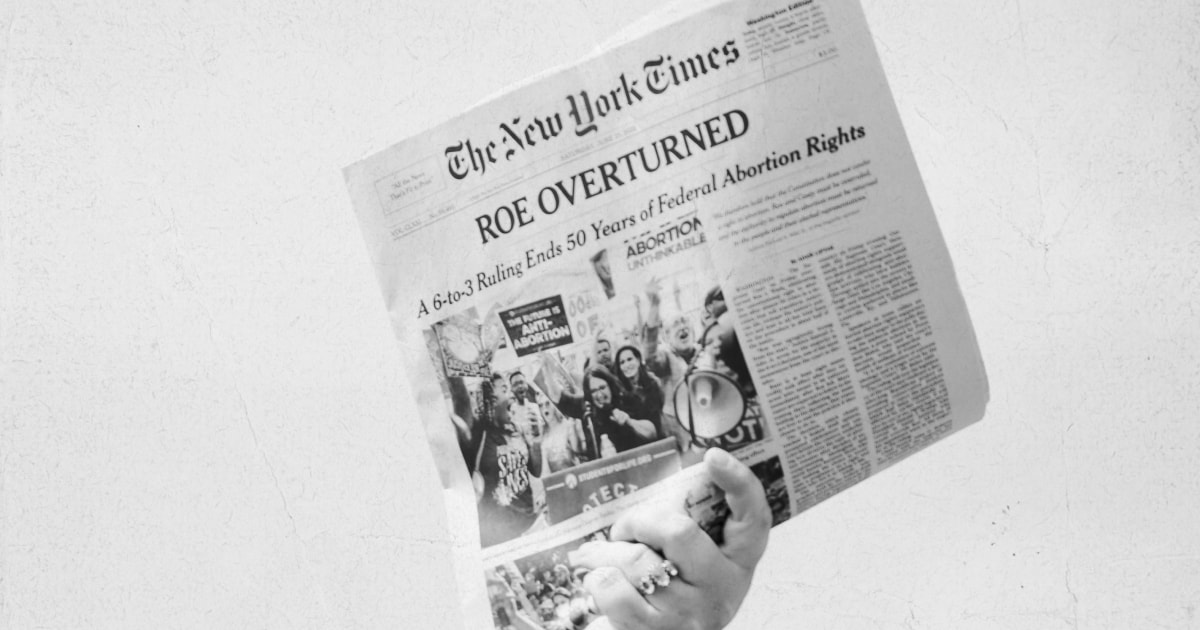
Every January, Catholic communities across America prepare for the familiar rhythm of pro-life events that culminate in the March for Life. The pattern offers predictable activity amid cultural turbulence, although this year brings a more subdued atmosphere. Four years have passed since Dobbs overturned Roe, and the anniversary now carries a tone that feels less like celebration and more like a sober inventory of what has emerged. The Court returned the issue of life in the womb to the states, and the states quickly revealed the condition of their imaginations. The anniversary therefore invites a wider consideration of the nation’s moral horizon.

Many spoke of Roe’s reversal as though it would recalibrate the national conscience. Dobbs certainly altered the legal terrain, although its deeper consequence was the exposure of something more troubling. It revealed a crisis of imagination that shapes how Americans understand life, responsibility, and love. Dobbs thus functions less as a conclusion and more as an entry point into a long season of cultural contest. Jurisprudence restrains injustice, but it cannot form virtue, and formation in virtue has grown scarce.

Evidence of this scarcity appears in the rapid rise of chemical abortion. Once the legal fight shifted to the states, the abortion industry embraced a pharmaceutical strategy that requires minimal infrastructure and limited accountability. The entire process unfolds within private spaces, revealing the culture’s preference for solitude over solidarity. A woman confronts a moment of profound moral gravity, yet often in isolation. This shift shows how thoroughly autonomy has displaced communal responsibility.

The loneliness epidemic is intertwined with this development. Adults accustomed to thin relationships often regard permanent claims with unease. An unexpected pregnancy, which earlier generations understood as a summons toward deeper commitment, now appears as a threat to a fragile emotional equilibrium. A society shaped by isolation loses the capacity to imagine interdependence as a gift. In such a state, John Paul II noted in Evangelium Vitae that “people inevitably reach the point of rejecting one another. Everyone else is considered an enemy from whom one has to defend oneself. Thus society becomes a mass of individuals placed side by side, but without any mutual bonds.” The abortion question therefore becomes inseparable from the collapse of social bonds, since a diminished imagination fosters fear rather than welcome.

Family structures show similar strain. Many young adults have witnessed instability throughout their formative years and rarely observe marriages marked by trust or households characterised by stability. Their imaginations lack the patterns that inspire confidence in family life. Since imagination depends upon visible models, it becomes difficult for this generation to envision parenthood as a joyful vocation worthy of sacrifice. Dobbs did nothing to heal this crisis, because such repair requires evangelisation rather than adjudication.

The dominance of screens has further shaped a generation that interprets reality through digital architecture rather than sacramental vision. Screens teach that life can be revised, deleted, curated, and reorganised according to preference, which weakens any sense of permanence. A child resists such expectations, arriving with a presence that cannot be managed or edited. An imagination shaped by screens struggles to cultivate reverence for the embodied world. Matter loses meaning, and relationships lose weight. Sacramental vision becomes unintelligible unless intentional engagement with reality is learned.

The anniversary of Dobbs therefore demands more than policy analysis. Pro-life advocates may feel tempted to frame the next phase of the movement primarily as a sequence of legislative campaigns. Legislation matters, but it cannot supply the moral grammar through which citizens interpret their own lives. A culture unable to imagine responsibility will not sustain laws that encourage responsibility. Citizens vote according to what they love, and they love according to what they imagine. The future of the movement thus depends upon recovering John Paul II’s exhortation that “a genuine and effective commitment to life in all its aspects requires the patient work of education and the spread of a mentality capable of welcoming life as a gift.”

Another cultural force complicates this renewal. Modern autonomy narratives promise a vision in which the individual stands as the sole architect of identity and destiny. Within this vision, pregnancy appears as an intrusion that disrupts personal design. The rhetoric following Dobbs exposed the fragility of this worldview. Many citizens spoke as though the decision constituted an existential catastrophe. Their reactions revealed the anxiety that emerges when self-sovereignty encounters the reality of dependence and mutual obligation. This tension continues to shape public discourse.

Catholic communities must therefore resist any temptation toward complacency or triumphalism. Roe’s fall was real, yet the culture now displays a widespread rejection of what many assumed would follow. Meaningful victory requires the conversion of hearts, imaginations, and communities. Evangelisation remains indispensable. Parishes must offer spaces where young families encounter communities that embody generosity. Homilies must articulate compelling visions of life that challenge prevailing narratives. Catechesis must insistently present the human person as one who receives existence from God rather than constructs it according to social preference.

Pro-life work must also address the alienation that shapes modern life. The movement needs to present the family as a place of communion where the vulnerable find shelter. It needs to demonstrate communities that practise shared responsibility. It needs to help the lonely encounter belonging through the Church’s sacramental life. These elements rebuild the social imagination through which laws are ultimately sustained.

As the United States enters another season of midterm elections, it becomes tempting to view Dobbs through the narrow lens of electoral strategy. Such an approach misses the gravity of the moment. We stand at the beginning of a new chapter rather than the close of an old one. The anniversary offers Catholics an opportunity for gratitude, but gratitude must lead to action. A society that struggles to imagine the goodness of life will require sustained witness. It will require families who offer generosity as a countercultural sign. It will require communities shaped by grace rather than algorithms.

The future of the pro-life movement therefore rests upon the renewal of moral imagination. Only hearts capable of seeing truth will defend the vulnerable with courage. Dobbs opened the door. Evangelisation must lead the way forward.

Every January, Catholic communities across America prepare for the familiar rhythm of pro-life events that culminate in the March for Life. The pattern offers predictable activity amid cultural turbulence, although this year brings a more subdued atmosphere. Four years have passed since Dobbs overturned Roe, and the anniversary now carries a tone that feels less like celebration and more like a sober inventory of what has emerged. The Court returned the issue of life in the womb to the states, and the states quickly revealed the condition of their imaginations. The anniversary therefore invites a wider consideration of the nation’s moral horizon.

Many spoke of Roe’s reversal as though it would recalibrate the national conscience. Dobbs certainly altered the legal terrain, although its deeper consequence was the exposure of something more troubling. It revealed a crisis of imagination that shapes how Americans understand life, responsibility, and love. Dobbs thus functions less as a conclusion and more as an entry point into a long season of cultural contest. Jurisprudence restrains injustice, but it cannot form virtue, and formation in virtue has grown scarce.

Evidence of this scarcity appears in the rapid rise of chemical abortion. Once the legal fight shifted to the states, the abortion industry embraced a pharmaceutical strategy that requires minimal infrastructure and limited accountability. The entire process unfolds within private spaces, revealing the culture’s preference for solitude over solidarity. A woman confronts a moment of profound moral gravity, yet often in isolation. This shift shows how thoroughly autonomy has displaced communal responsibility.

The loneliness epidemic is intertwined with this development. Adults accustomed to thin relationships often regard permanent claims with unease. An unexpected pregnancy, which earlier generations understood as a summons toward deeper commitment, now appears as a threat to a fragile emotional equilibrium. A society shaped by isolation loses the capacity to imagine interdependence as a gift. In such a state, John Paul II noted in Evangelium Vitae that “people inevitably reach the point of rejecting one another. Everyone else is considered an enemy from whom one has to defend oneself. Thus society becomes a mass of individuals placed side by side, but without any mutual bonds.” The abortion question therefore becomes inseparable from the collapse of social bonds, since a diminished imagination fosters fear rather than welcome.

Family structures show similar strain. Many young adults have witnessed instability throughout their formative years and rarely observe marriages marked by trust or households characterised by stability. Their imaginations lack the patterns that inspire confidence in family life. Since imagination depends upon visible models, it becomes difficult for this generation to envision parenthood as a joyful vocation worthy of sacrifice. Dobbs did nothing to heal this crisis, because such repair requires evangelisation rather than adjudication.

The dominance of screens has further shaped a generation that interprets reality through digital architecture rather than sacramental vision. Screens teach that life can be revised, deleted, curated, and reorganised according to preference, which weakens any sense of permanence. A child resists such expectations, arriving with a presence that cannot be managed or edited. An imagination shaped by screens struggles to cultivate reverence for the embodied world. Matter loses meaning, and relationships lose weight. Sacramental vision becomes unintelligible unless intentional engagement with reality is learned.

The anniversary of Dobbs therefore demands more than policy analysis. Pro-life advocates may feel tempted to frame the next phase of the movement primarily as a sequence of legislative campaigns. Legislation matters, but it cannot supply the moral grammar through which citizens interpret their own lives. A culture unable to imagine responsibility will not sustain laws that encourage responsibility. Citizens vote according to what they love, and they love according to what they imagine. The future of the movement thus depends upon recovering John Paul II’s exhortation that “a genuine and effective commitment to life in all its aspects requires the patient work of education and the spread of a mentality capable of welcoming life as a gift.”

Another cultural force complicates this renewal. Modern autonomy narratives promise a vision in which the individual stands as the sole architect of identity and destiny. Within this vision, pregnancy appears as an intrusion that disrupts personal design. The rhetoric following Dobbs exposed the fragility of this worldview. Many citizens spoke as though the decision constituted an existential catastrophe. Their reactions revealed the anxiety that emerges when self-sovereignty encounters the reality of dependence and mutual obligation. This tension continues to shape public discourse.

Catholic communities must therefore resist any temptation toward complacency or triumphalism. Roe’s fall was real, yet the culture now displays a widespread rejection of what many assumed would follow. Meaningful victory requires the conversion of hearts, imaginations, and communities. Evangelisation remains indispensable. Parishes must offer spaces where young families encounter communities that embody generosity. Homilies must articulate compelling visions of life that challenge prevailing narratives. Catechesis must insistently present the human person as one who receives existence from God rather than constructs it according to social preference.

Pro-life work must also address the alienation that shapes modern life. The movement needs to present the family as a place of communion where the vulnerable find shelter. It needs to demonstrate communities that practise shared responsibility. It needs to help the lonely encounter belonging through the Church’s sacramental life. These elements rebuild the social imagination through which laws are ultimately sustained.

As the United States enters another season of midterm elections, it becomes tempting to view Dobbs through the narrow lens of electoral strategy. Such an approach misses the gravity of the moment. We stand at the beginning of a new chapter rather than the close of an old one. The anniversary offers Catholics an opportunity for gratitude, but gratitude must lead to action. A society that struggles to imagine the goodness of life will require sustained witness. It will require families who offer generosity as a countercultural sign. It will require communities shaped by grace rather than algorithms.

The future of the pro-life movement therefore rests upon the renewal of moral imagination. Only hearts capable of seeing truth will defend the vulnerable with courage. Dobbs opened the door. Evangelisation must lead the way forward.

subscribe to
the catholic herald

Continue reading your article with a subscription.
Read 5 articles with our free plan.
Subscribe
share

subscribe to the catholic herald today

Our best content is exclusively available to our subscribers. Subscribe today and gain instant access to expert analysis, in-depth articles, and thought-provoking insights—anytime, anywhere. Don’t miss out on the conversations that matter most.
Subscribe