


The Pope Who Would Be King
by David Kertzer, Random House, 512pp, £25
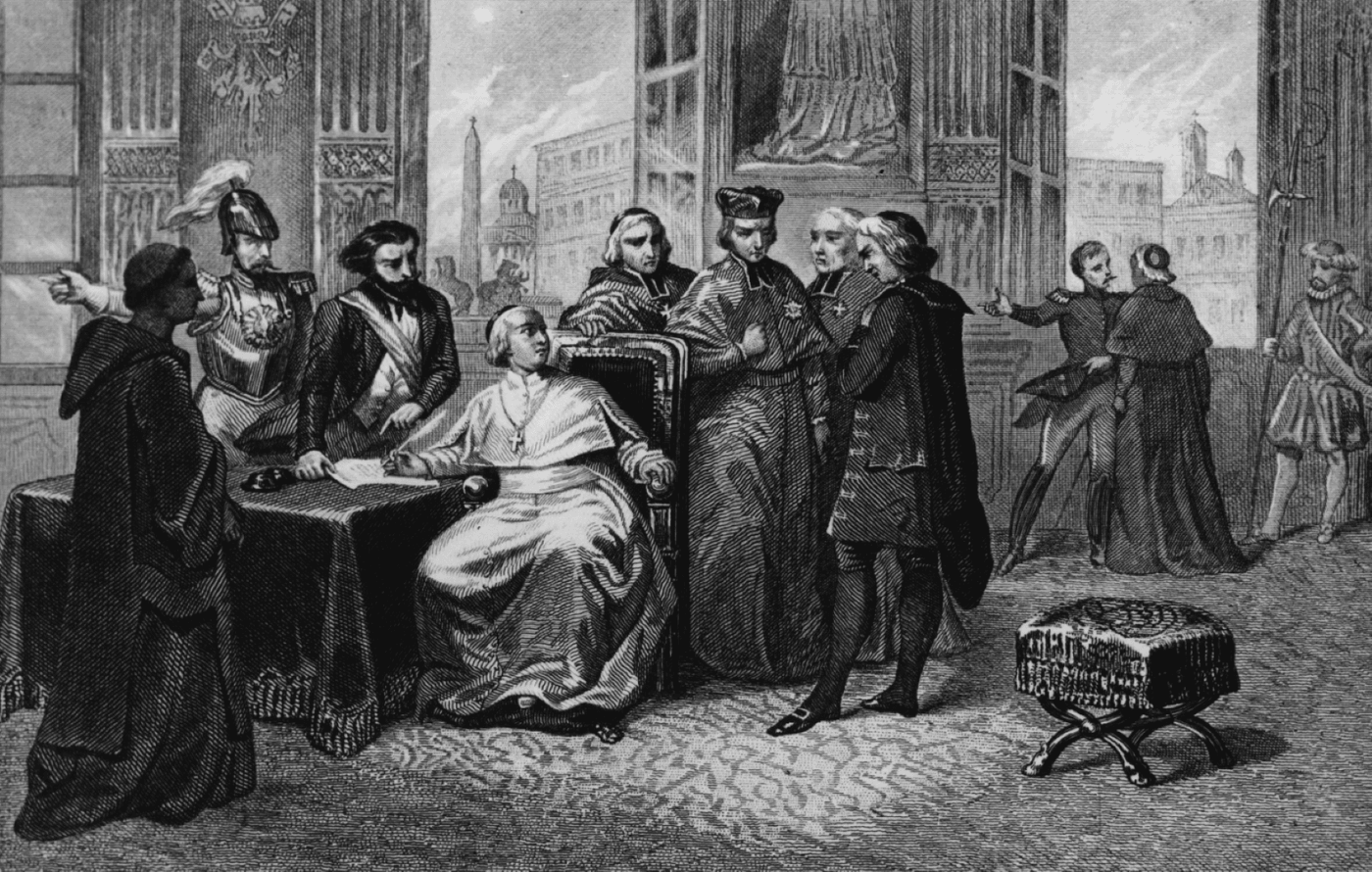
For a 21st-century English Catholic, stepping into the world described in David Kertzer’s new book is to enter a landscape as unfamiliar as it is shocking. Though this work describes events in the mid-19th century, the character of the papacy, which is its subject, seems utterly remote.
Towards the end of the story of Pius IX’s struggle to maintain a theocracy, Kertzer reminds us that in 1864 Pius issued the encyclical Quanta cura. Among other things this stipulated that no Catholic could believe in freedom of speech, of the press or of religion. Catholics were told they must believe that the pope should be the absolute ruler of a state of his own. Just as well, perhaps, that it wasn’t until six years later, in 1870, that Pius cajoled a Vatican Council, the first for 350 years, into endorsing his view that the Church’s very survival depended on a proclamation of papal infallibility. Pius’s reign seems to mark a decisive battle between the Ancien Régime and the modern world.