March 31, 2026

The quiet Catholic revival in a Scottish university town

Andrew Cusack
More
Related
Min read
share

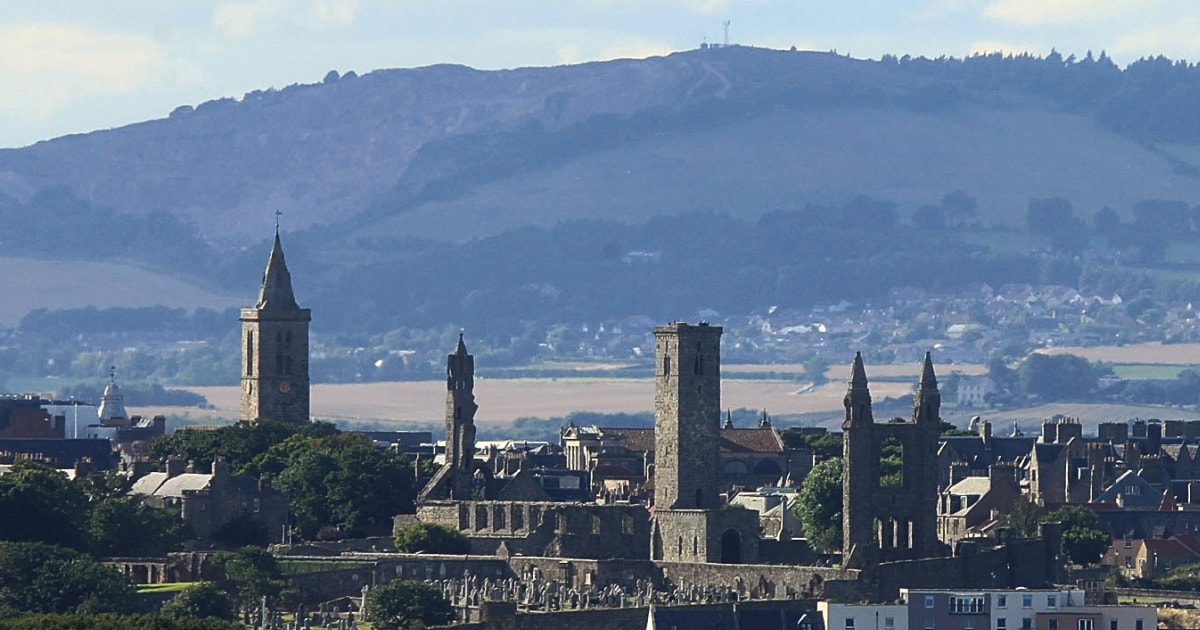
Even within the Union, Scotland likes to do its own thing. For centuries a different legal system and state religion have marked its distinction from its southern neighbour – differences only augmented once the Scottish Parliament was reconvened in 1999. That same year, the composer James MacMillan ruffled the feathers of Scotland’s presiding liberal elite by calling out the ongoing anti-Catholic bigotry he argued was still pervasive in parts of Scottish society. The reaction to his remarks showed the Catholic Church has occupied an uneasy position within Scottish society.

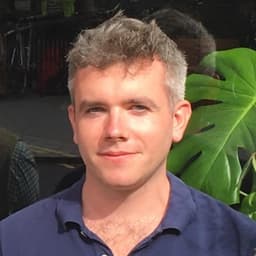
As anecdotal and statistical reports from across the western world are showing a ‘quiet revival’ in interest in Christianity more broadly and Catholicism specifically, I spoke with Monsignor Patrick Burke, the parish priest of St James Church and Catholic chaplain to the University of St Andrews, to discuss how – or even whether – this revival is happening in Scotland and how the Church is responding.

“It’s definitely happening, but it’s got nothing to do with us,” Monsignor Burke reported. “God knows we – priests, laity – have done everything we can to destroy the Church but nonetheless there is a perceptible interest, a turning towards Catholic Christianity.”

Monsignor Burke is well placed to describe the trend, combining the care of a geographic parish of ordinary Scottish Catholics with the enthusiasm and fervour of one of the best-established Catholic university chaplaincies in the United Kingdom. After Oxford and Cambridge, St Andrews is believed to have produced the highest number of priestly and religious vocations per capita of any major British university. Born in Africa and raised in England, Father Patrick was one of these vocations, studying theology at the university before moving on to the Scots College in Rome to pursue his vocation to the priesthood. After a doctorate from the Gregorian and serving in local parishes in Scotland, he was called to the Vatican in 2005 to work in the Congregation for the Doctrine of the Faith where he remained until 2014.

The evidence of growing numbers of catechumens entering the Church is widespread, according to Father Patrick: “I’m in touch with many priests from all over the world – America, Australia, Spain, Italy, South Africa – and wherever you go, people are saying the same thing.”

What is striking is the extent to which the phenomenon has reached even a place as small and self-contained – if sometimes a little self-important – as St Andrews. “I’ve been a priest for 35 years. I’ve never experienced anything like this,” Burke said. “I have people coming every week – every Sunday. I can’t keep up with it; it’s most of the work I do now.” The demand is such that the parish has had to divide its instruction: “We have so many that we need two RCIA groups.” Recalling a recent meeting of priests, he reports that even the Scots Borders town of Galasheils is receiving six converts this year, when zero or one had been the norm.

The mix of those arriving resists any simplistic sociological explanation or easy pigeon-holing. “It’s across all backgrounds,” he said. “Men and women, baptised and unbaptised, scientists and artists, from all ethnic backgrounds. I don’t think you can reduce it to any one class or category.”

Nor, he adds, is the claim that this is simply a male phenomenon quite right. “What is significant is that young men are part of it,” the priest continues. “In previous religious revivals, men have not typically been so involved. The fact that there are so many men is noticeable.”

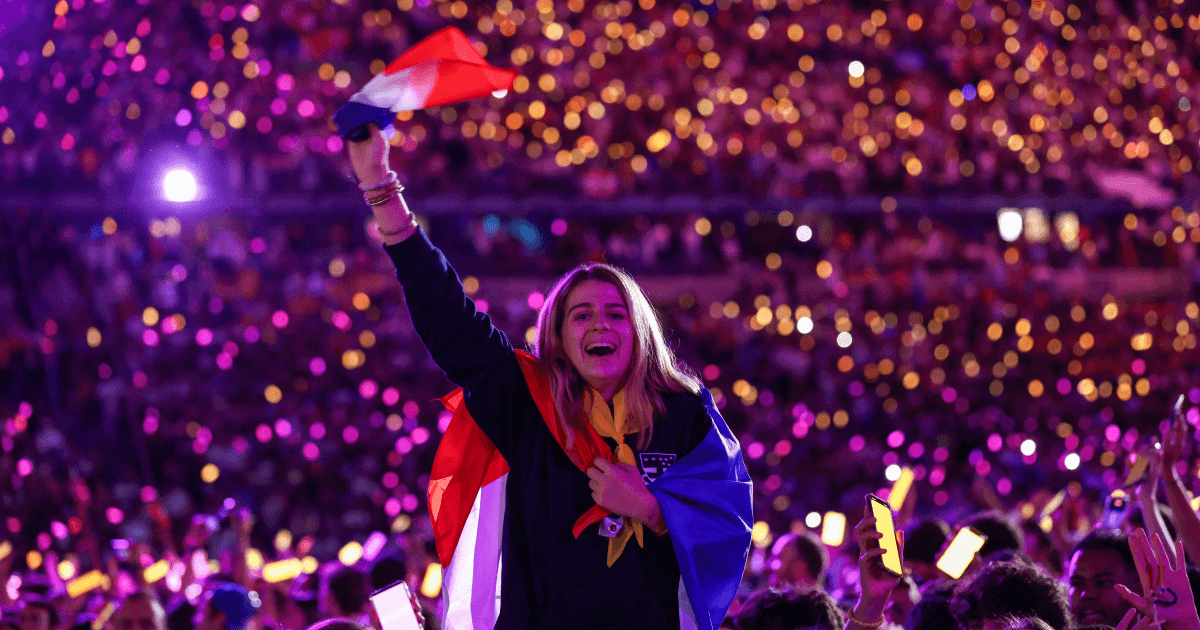
Among those without any prior religious background, Burke detects “a search for something more meaningful than they find in contemporary culture… a search for truth beyond the ephemeral glitter.” These are alienated outsiders, but the opposite. “They are ordinary young people, fully immersed in modernity, and yet they sense the hollowness of the contemporary world. They are looking for something more solid and more permanent.”

That search often takes on a distinctly historical aspect. “There is a desire to come into contact with tradition and history… to be in continuity,” he said. The prevailing assumption that the present moment represents the apex of human enlightenment strikes many of them as unconvincing. “The narrative of perpetual progress leaves young people sceptical. So there is a desire to reach back to what is being dismissed.”

For those who arrive from within Christianity, the trajectory is slightly different but not unrelated. “Among the baptised, many feel that non-Catholic denominations have surrendered to modern relativism,” Burke observed. “Quite a lot are Anglicans… seeking the fullness of Christian tradition they feel the Anglican Communion has at least partially abandoned.” Others come from evangelical backgrounds: “They have a strong belief in Scripture and in Christ, but they sense a lack of the sacramental.” Across these groups, one element recurs with surprising consistency. “The Mass is an important factor.”

It would be tempting to interpret this in purely social terms: a generation in search of community in an atomised age. Burke does not deny that element, but he resists making it the only determining factor. “There is undoubtedly a desire for community… but I would challenge the idea that that is all it is,” he said. “Fundamentally… there is a desire for truth, for transcendence, and for God.”

The routes by which individuals arrive are varied. Some have, in effect, already made up their minds before ever setting foot in a parish hall. “There is certainly a group who have discovered Catholic Christianity on the internet and are already convinced,” Burke said. “For them, RCIA is simply a process.” He speaks with particular admiration of the online evangelists who have shaped this cohort. “I cannot praise enough the work of people like Bishop Barron and Fr Mike Schmitz and others. They will never realise the effect they have had – it is enormous… They have done incredible work for God.”

Others arrive with questions rather than conclusions – often highly specific theological ones. Still others come in a more tentative fashion, drawn first by experience rather than by argument. “They are brought to Mass by friends… intrigued by something they cannot yet articulate,” he said. “They experience something, they are attracted, and then they want to know more.”

All of this sits uneasily with the way the phenomenon has sometimes been reported. “There is a quiet revival,” Burke acknowledged, but he is wary of overstatement. “The media over-egged it… like a small medical trial being reported as a cure for cancer.” Still, he insists, the underlying reality should not be dismissed. “I am not prepared to say what we are experiencing is not real,” he said. “Every priest I speak to is saying the same thing.”

That said, the chaplain cautions that this is no Milvian Bridge moment with the Roman Empire converting. “There are 13,000 students in this university,” he points out. “42 are becoming Catholic.”

What’s also noticeable is the absence of the once-omnipresent Church of Scotland from this phenomenon. “With sadness, I would say the Church of Scotland has almost no foothold in this generation,” Burke said. “It simply does not have a presence… that is extraordinary, and very sad.” The result is that the current movement, such as it is, appears to be flowing in particular directions. “It seems fundamentally towards Catholic Christianity,” he said, with “some towards Orthodoxy” and, in parallel, continued vitality among evangelical and non-denominational congregations.

Underlying this movement is a yearning for rootedness. “If you want that tradition… you go towards Catholicism, or possibly Orthodoxy,” Burke said. “The only other alternative is evangelicalism.” The older denominational structures like the Church of Scotland appear to exert little pull.

Sir James MacMillan’s warnings of Scotland’s shameful anti-Catholicism are now more than a quarter-century old. Burke suggests it has changed rather than vanished.  “The traditional bastions of anti-Catholic bigotry are no longer as strong,” he said. “Where it is tangible – I am told by the students – is in the lecture halls, where wokery rules; where it seems acceptable to make anti-Catholic jibes and anti-Catholic statements.” Students, he reports, encounter a casual dismissal of Catholic belief as beyond the bounds of respectable opinion.

At the same time, the intellectual conditions in which such attitudes once flourished have shifted. “The democratisation of media has made a huge difference,” Monsignor Burke reports. “Young people now have access to material that earlier generations did not. Many have grown up with a standard anti-Christian narrative – but then reach a point where they begin to question it. Because of the internet, they can investigate for themselves. Some encounter serious and thoughtful material, which draws them in.”

One secular explanation that has been offered is that this generation is simply ill at ease with uncertainty and seeks refuge in fixed answers. Burke is unconvinced. “To say this is just an insecure generation is an oversimplification,” he said. What he sees instead is a more active scepticism directed at the culture itself. “People are saying: ‘You tell me Christianity is nonsense – I don’t believe you.’” What follows is not retreat but further digging, investigation, and, in some cases, embracing the Catholic faith.

The social consequences faced by these converts are, by Monsignor Burke’s account, relatively mixed. “Where there is difficulty, it tends to come from parents of my generation, who are uncomfortable with their children becoming Catholic.” He insists this is far from the sectarian hostility of an earlier era, but more a clash of moral assumptions instead of confessional tribalisms. “Many middle-class, middle-aged people simply assume those teachings are absurd, and are shocked when their children begin to embrace them. Some react quite strongly – angry, upset – but they are a minority.”

By the Monsignor’s own admission, it would be a mistake to interpret the sprigs of growth at St Andrews as a sign of some new institutional or cultural confidence on the part of Catholicism. “To be honest, I think the Church has been badly battered. That is why I don’t think this has anything to do with our own efforts.” Rather, he argues, it is “a movement of the Spirit – and also something in the wider cultural moment” that is taking place in Scotland – and indeed elsewhere – “despite the weakness and weariness of the Church here”.

For all this, what remains with him is less analysis than impression. “I am overwhelmed, as an old man, by the goodness, piety and sweetness of these young people,” he said. At the student Mass in St Andrews, he finds the church “packed week after week… with young people eager to learn about Jesus, about Scripture, about God.” There is nothing outwardly unusual about them. “They are normal young people – falling in love, travelling the world, intelligent, lively – and yet they are also looking for God.”

“That,” he said, “is what overwhelms me. And it is a great encouragement.”

Even within the Union, Scotland likes to do its own thing. For centuries a different legal system and state religion have marked its distinction from its southern neighbour – differences only augmented once the Scottish Parliament was reconvened in 1999. That same year, the composer James MacMillan ruffled the feathers of Scotland’s presiding liberal elite by calling out the ongoing anti-Catholic bigotry he argued was still pervasive in parts of Scottish society. The reaction to his remarks showed the Catholic Church has occupied an uneasy position within Scottish society.

As anecdotal and statistical reports from across the western world are showing a ‘quiet revival’ in interest in Christianity more broadly and Catholicism specifically, I spoke with Monsignor Patrick Burke, the parish priest of St James Church and Catholic chaplain to the University of St Andrews, to discuss how – or even whether – this revival is happening in Scotland and how the Church is responding.

“It’s definitely happening, but it’s got nothing to do with us,” Monsignor Burke reported. “God knows we – priests, laity – have done everything we can to destroy the Church but nonetheless there is a perceptible interest, a turning towards Catholic Christianity.”

Monsignor Burke is well placed to describe the trend, combining the care of a geographic parish of ordinary Scottish Catholics with the enthusiasm and fervour of one of the best-established Catholic university chaplaincies in the United Kingdom. After Oxford and Cambridge, St Andrews is believed to have produced the highest number of priestly and religious vocations per capita of any major British university. Born in Africa and raised in England, Father Patrick was one of these vocations, studying theology at the university before moving on to the Scots College in Rome to pursue his vocation to the priesthood. After a doctorate from the Gregorian and serving in local parishes in Scotland, he was called to the Vatican in 2005 to work in the Congregation for the Doctrine of the Faith where he remained until 2014.

The evidence of growing numbers of catechumens entering the Church is widespread, according to Father Patrick: “I’m in touch with many priests from all over the world – America, Australia, Spain, Italy, South Africa – and wherever you go, people are saying the same thing.”

What is striking is the extent to which the phenomenon has reached even a place as small and self-contained – if sometimes a little self-important – as St Andrews. “I’ve been a priest for 35 years. I’ve never experienced anything like this,” Burke said. “I have people coming every week – every Sunday. I can’t keep up with it; it’s most of the work I do now.” The demand is such that the parish has had to divide its instruction: “We have so many that we need two RCIA groups.” Recalling a recent meeting of priests, he reports that even the Scots Borders town of Galasheils is receiving six converts this year, when zero or one had been the norm.

The mix of those arriving resists any simplistic sociological explanation or easy pigeon-holing. “It’s across all backgrounds,” he said. “Men and women, baptised and unbaptised, scientists and artists, from all ethnic backgrounds. I don’t think you can reduce it to any one class or category.”

Nor, he adds, is the claim that this is simply a male phenomenon quite right. “What is significant is that young men are part of it,” the priest continues. “In previous religious revivals, men have not typically been so involved. The fact that there are so many men is noticeable.”

Among those without any prior religious background, Burke detects “a search for something more meaningful than they find in contemporary culture… a search for truth beyond the ephemeral glitter.” These are alienated outsiders, but the opposite. “They are ordinary young people, fully immersed in modernity, and yet they sense the hollowness of the contemporary world. They are looking for something more solid and more permanent.”

That search often takes on a distinctly historical aspect. “There is a desire to come into contact with tradition and history… to be in continuity,” he said. The prevailing assumption that the present moment represents the apex of human enlightenment strikes many of them as unconvincing. “The narrative of perpetual progress leaves young people sceptical. So there is a desire to reach back to what is being dismissed.”

For those who arrive from within Christianity, the trajectory is slightly different but not unrelated. “Among the baptised, many feel that non-Catholic denominations have surrendered to modern relativism,” Burke observed. “Quite a lot are Anglicans… seeking the fullness of Christian tradition they feel the Anglican Communion has at least partially abandoned.” Others come from evangelical backgrounds: “They have a strong belief in Scripture and in Christ, but they sense a lack of the sacramental.” Across these groups, one element recurs with surprising consistency. “The Mass is an important factor.”

It would be tempting to interpret this in purely social terms: a generation in search of community in an atomised age. Burke does not deny that element, but he resists making it the only determining factor. “There is undoubtedly a desire for community… but I would challenge the idea that that is all it is,” he said. “Fundamentally… there is a desire for truth, for transcendence, and for God.”

The routes by which individuals arrive are varied. Some have, in effect, already made up their minds before ever setting foot in a parish hall. “There is certainly a group who have discovered Catholic Christianity on the internet and are already convinced,” Burke said. “For them, RCIA is simply a process.” He speaks with particular admiration of the online evangelists who have shaped this cohort. “I cannot praise enough the work of people like Bishop Barron and Fr Mike Schmitz and others. They will never realise the effect they have had – it is enormous… They have done incredible work for God.”

Others arrive with questions rather than conclusions – often highly specific theological ones. Still others come in a more tentative fashion, drawn first by experience rather than by argument. “They are brought to Mass by friends… intrigued by something they cannot yet articulate,” he said. “They experience something, they are attracted, and then they want to know more.”

All of this sits uneasily with the way the phenomenon has sometimes been reported. “There is a quiet revival,” Burke acknowledged, but he is wary of overstatement. “The media over-egged it… like a small medical trial being reported as a cure for cancer.” Still, he insists, the underlying reality should not be dismissed. “I am not prepared to say what we are experiencing is not real,” he said. “Every priest I speak to is saying the same thing.”

That said, the chaplain cautions that this is no Milvian Bridge moment with the Roman Empire converting. “There are 13,000 students in this university,” he points out. “42 are becoming Catholic.”

What’s also noticeable is the absence of the once-omnipresent Church of Scotland from this phenomenon. “With sadness, I would say the Church of Scotland has almost no foothold in this generation,” Burke said. “It simply does not have a presence… that is extraordinary, and very sad.” The result is that the current movement, such as it is, appears to be flowing in particular directions. “It seems fundamentally towards Catholic Christianity,” he said, with “some towards Orthodoxy” and, in parallel, continued vitality among evangelical and non-denominational congregations.

Underlying this movement is a yearning for rootedness. “If you want that tradition… you go towards Catholicism, or possibly Orthodoxy,” Burke said. “The only other alternative is evangelicalism.” The older denominational structures like the Church of Scotland appear to exert little pull.

Sir James MacMillan’s warnings of Scotland’s shameful anti-Catholicism are now more than a quarter-century old. Burke suggests it has changed rather than vanished.  “The traditional bastions of anti-Catholic bigotry are no longer as strong,” he said. “Where it is tangible – I am told by the students – is in the lecture halls, where wokery rules; where it seems acceptable to make anti-Catholic jibes and anti-Catholic statements.” Students, he reports, encounter a casual dismissal of Catholic belief as beyond the bounds of respectable opinion.

At the same time, the intellectual conditions in which such attitudes once flourished have shifted. “The democratisation of media has made a huge difference,” Monsignor Burke reports. “Young people now have access to material that earlier generations did not. Many have grown up with a standard anti-Christian narrative – but then reach a point where they begin to question it. Because of the internet, they can investigate for themselves. Some encounter serious and thoughtful material, which draws them in.”

One secular explanation that has been offered is that this generation is simply ill at ease with uncertainty and seeks refuge in fixed answers. Burke is unconvinced. “To say this is just an insecure generation is an oversimplification,” he said. What he sees instead is a more active scepticism directed at the culture itself. “People are saying: ‘You tell me Christianity is nonsense – I don’t believe you.’” What follows is not retreat but further digging, investigation, and, in some cases, embracing the Catholic faith.

The social consequences faced by these converts are, by Monsignor Burke’s account, relatively mixed. “Where there is difficulty, it tends to come from parents of my generation, who are uncomfortable with their children becoming Catholic.” He insists this is far from the sectarian hostility of an earlier era, but more a clash of moral assumptions instead of confessional tribalisms. “Many middle-class, middle-aged people simply assume those teachings are absurd, and are shocked when their children begin to embrace them. Some react quite strongly – angry, upset – but they are a minority.”

By the Monsignor’s own admission, it would be a mistake to interpret the sprigs of growth at St Andrews as a sign of some new institutional or cultural confidence on the part of Catholicism. “To be honest, I think the Church has been badly battered. That is why I don’t think this has anything to do with our own efforts.” Rather, he argues, it is “a movement of the Spirit – and also something in the wider cultural moment” that is taking place in Scotland – and indeed elsewhere – “despite the weakness and weariness of the Church here”.

For all this, what remains with him is less analysis than impression. “I am overwhelmed, as an old man, by the goodness, piety and sweetness of these young people,” he said. At the student Mass in St Andrews, he finds the church “packed week after week… with young people eager to learn about Jesus, about Scripture, about God.” There is nothing outwardly unusual about them. “They are normal young people – falling in love, travelling the world, intelligent, lively – and yet they are also looking for God.”

“That,” he said, “is what overwhelms me. And it is a great encouragement.”

subscribe to
the catholic herald

Continue reading your article with a subscription.
Read 5 articles with our free plan.
Subscribe

subscribe to the catholic herald today

Our best content is exclusively available to our subscribers. Subscribe today and gain instant access to expert analysis, in-depth articles, and thought-provoking insights—anytime, anywhere. Don’t miss out on the conversations that matter most.
Subscribe