

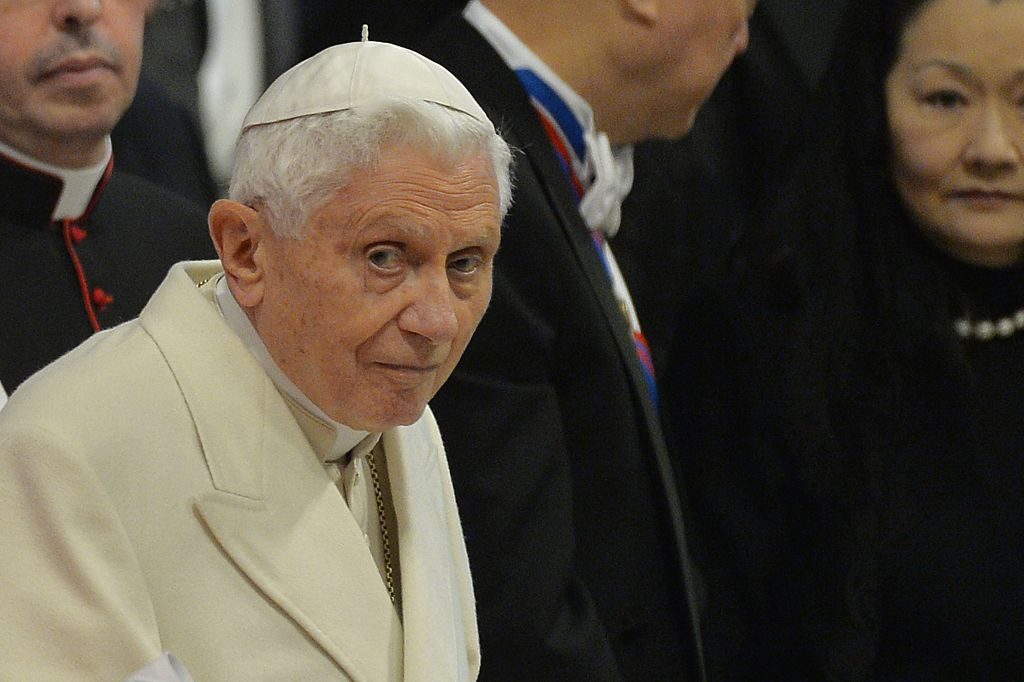
Pope Emeritus Benedict’s new authorised biography is published today in Germany and it sounds like a cracker – at least from the reports. He says that he has fallen victim to “a malignant distortion of reality” during his pontificate. One of those malignant distortions he has in mind is the assertion that there’s a standoff between him and his successor. Not so, he says. The friendship between himself and Pope Francis has “not merely endured, but grown”. It won’t put paid to the rumours about there being two courts in the Vatican. But it should help. The reactions to his writing from his fellow German theologians is plainly a sore point; it is, he says, “so misguided and ill-willed I would prefer not to speak of it”. He’s right. Two obvious examples come to mind. One is the extraordinary reaction to the article he wrote in the journal Communio in 2018, Grace and Vocation without Remorse, on the Covenant between God and the people of Israel, the Jews - and whether that covenant has been superseded by the new covenant with the whole of humanity in Christ. The gist of the argument is that the original is indestructible, but it has, for Christians, been fulfilled in Christ and the new covenant. This cuts right to the heart of Jewish-Christian dialogue. Actually, it cuts right to the heart of Christian identity. Christians do understand the Old Testament, the Hebrew scriptures, as being fulfilled in Christ; Jews, obviously, do not. If Christians didn’t believe this – based on the words of Christ, they wouldn’t be Christians. Which hasn’t stopped the pope emeritus from getting into trouble from the usual quarters. See The Guardian today. The other time he got into trouble was in respect of the address he gave at Regensburg, which dealt with the Hebrew and Greek strands of Christian tradition, but also touched on the thorny issue of violence in Islam, by reference to an historic dialogue involving a Byzantine emperor. It is impossible, I would say, to read the actual text (few of Benedict’s critics do) and say it is unfair or untrue or wilfully divisive. The pope indeed went out of his way to put a distance between the original rhetoric of his source and contemporary views. No matter; he was still willfully misunderstood. But the most inflammatory material from the new book is his observations about contemporary mores. In what is already the most quoted bit of the book, he observes:
3:30 PM
The reaction to Benedict's 'dictatorship' comments just proves his point
The humanist ideologies have taken over the culture, and it's not a worldview that welcomes dissent
Melanie McDonagh

4 min read



Already a subscriber? Sign in
5freearticles every month
Continue reading with a free account. No card needed.
- Five free articles every thirty days, on any device you sign in on
- The Catholic Herald newsletter, every morning
- Subscribe whenever you like for everything: every article and the magazine


subscribe to the catholic herald today
Our best content is exclusively available to our subscribers. Subscribe today and gain instant access to expert analysis, in-depth articles, and thought-provoking insights—anytime, anywhere. Don’t miss out on the conversations that matter most.
Subscribe



