
March 22, 2026

The return of wonder

Dominic Perrem
More
Related
Min read
share

The first play I attended was in a school hall. I was very young, but I remember the sight of the players, mostly children, pressing their faces against the stage curtain to get a glimpse of the audience, and a boy in the front row slapping their noses. I am unsure whether this was a ‘breaking the fourth wall’ moment, but the scene has always stayed with me.

Children love the dramatic, and have more or less mastered the art of performance ab initio. There is a desire to play out something within their everyday lives and express what is true, good, joyful or tragic. It runs quite deep in the heart, for some of them, to deliver moving speeches for offended justice. We hear calls for the right punishment, normally of sinful siblings, and who could not be moved? I have never doubted that many good barristers and lawyers would also have made decent actors. You can spot a great orator, no doubt, from a young age; I am sure Cicero got his sister into all kinds of trouble.
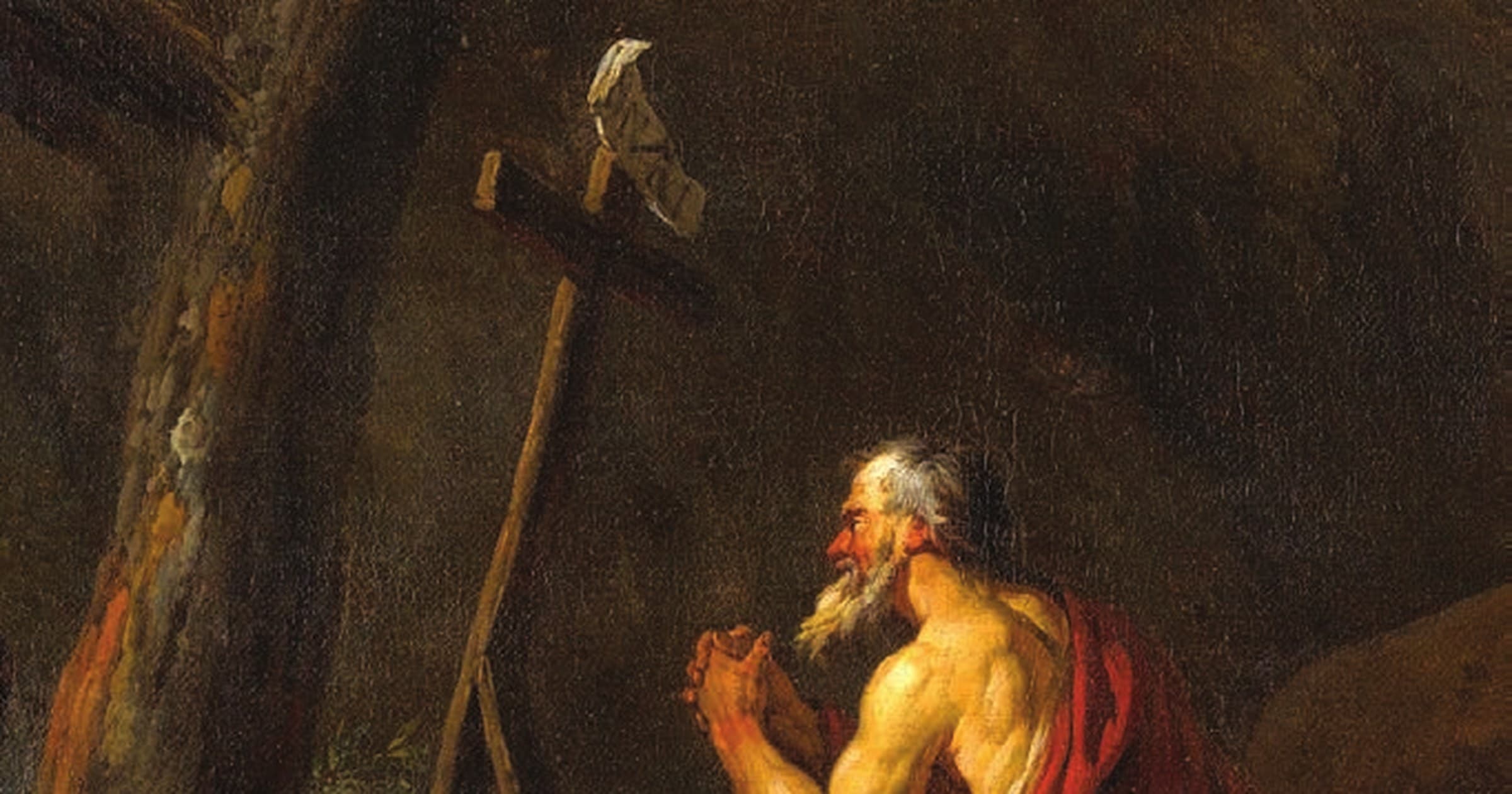
Great drama and poetry are an act of uncovering truth. We might say that this is the project of our lives; not some form of ‘self-discovery’, but a participation in revelation. Think of the men of science who established the Royal Society, wishing to uncover the systematic realities of the hidden and complex created world or, today, the engineer who works to uncover the best and most natural solution to the question of flight. It is unsurprising that the most efficient design of an airplane wing is taken from nature. We seem to be at our best when discovering what is true, and are able to reveal what is hidden and waiting to be known by all.

Now, when we watch a play, the players are representing that invisible world, which we all know. Note that CS Lewis chooses to have his divine person, Aslan, singing Narnia into being, as a work of artistic creation. Students of the classics spend a great deal of time with poetry and drama; all great philosophical civilisations employ these to address their deepest longings and questions. Plays such as Oedipus Rex, far from being mere psychological drama, stand as warnings to the society in which real people lived, just as the comedies of antiquity made humour from lived reality and political figures.

It is natural, then, that the god, the deus ex machina, will always appear for the Greeks, as this is the fundamental expression of settled truth for them. For how can the great drama hit home for us if God cannot speak clearly, and with authority? Consider that the Holy Mass, at its heart, is like this: God speaking clearly through Himself, in the love of Trinitarian relationship; the Son offering his whole self, taking His place at the seat of judgement over us through His triumph. It is more than a mere play: it is reality itself, which is what so confuses those outside the Church. The truth is both symbolic and actual, and the drama is reality itself.

I hope those who are reading this and are outside the Church do not mind me saying, then, that it is the loss of this greatest drama in the West which has done the greatest damage. It leads us to the loss of our capacity to wonder, to have a settled truth, and receive assurance of God speaking to us in a universal way. Shakespeare knew this very well; his new man, Hamlet, must now ‘Doubt that the sun doth move’, and is forced to consider, on behalf of us all, a new reductive individualism that must re-create its own understanding of the world and, naturally, God’s designs. This is probably why Hamlet cannot be surpassed for us today as a perfect summation of the predicament we are in. We have to ask if we are ‘to be, or not to be’. The question leads nowhere, of course, only to the grim contemplation of death and taxes – staring at Horatio’s skull.

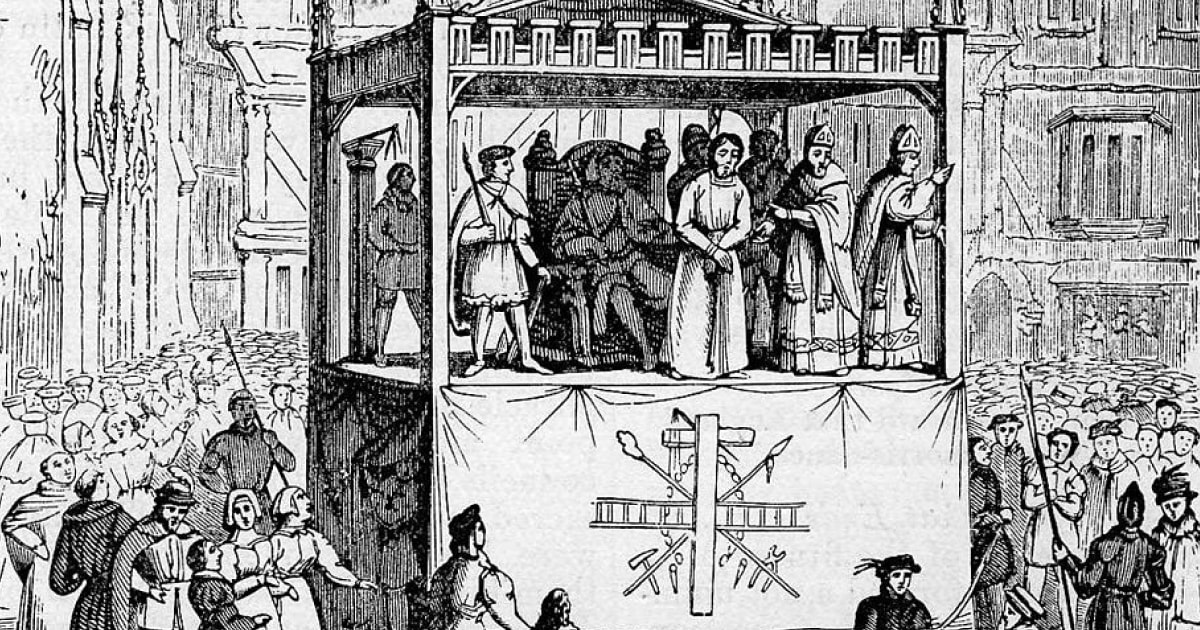
It is important to consider, then, that we can point to forms of dramatic expression, written for and by an entirely Catholic population, which speak of a very different and happier world. They were performed in town squares by guildsmen and ordinary folk: the medieval mystery plays. My favourite is Crucifixio Christi, written in York around 1460. The Pinners Guild, who were responsible for nails, play out a story as Roman soldiers nailing Christ to the Cross. They fumble around trying to stretch the body to get Him on. Then, the Cross does not fit well into the hole in the ground, and needs to be wedged. Christ only speaks twice, to forgive them, and recite a version of O vos omnes, from the liturgy of Holy Saturday: ‘Byholdes myn heede, myn handis, and my feete’. The pinners are unmoved by Christ, and merely point out that he prattles on too much.

These plays are carefree and humorous, speaking on behalf of a world of popular devotion, familiarity and faith, where we enact the sacred truths in earthy, familiar ways. The guildsmen, playing out their own trade, enact the terrible reality of the Passion and articulate Christ’s astonishing forgiveness as a shared, settled reality to the whole town. The plays allow the community to journey through the lives of saints, scripture, heaven, hell and judgement. They resonate with shared faith and, of course, with sacred liturgy. In stark contrast to the world of today, God is present and powerful, and we are foolish and fallen. We play out, in humour, our fallen state, and rest in the assurance of God’s sovereignty.

Now, this seems alien to us, just as Hamlet’s wordy self-examination resonates with us. In studying Shakespeare, we are encouraged to think of him as a mere modernist, exploring topics of great depth. But we should read him again as a Catholic whose poetry speaks of a loss of identity, a collapse of any certainty, and the exploration of a terrible new world in which settled realities are thrown away. I feel certain that the Bard, watching popular devotion be ransacked, smashed and removed from his homeland, was doing his best to tell the story of that loss in some of his poetry.

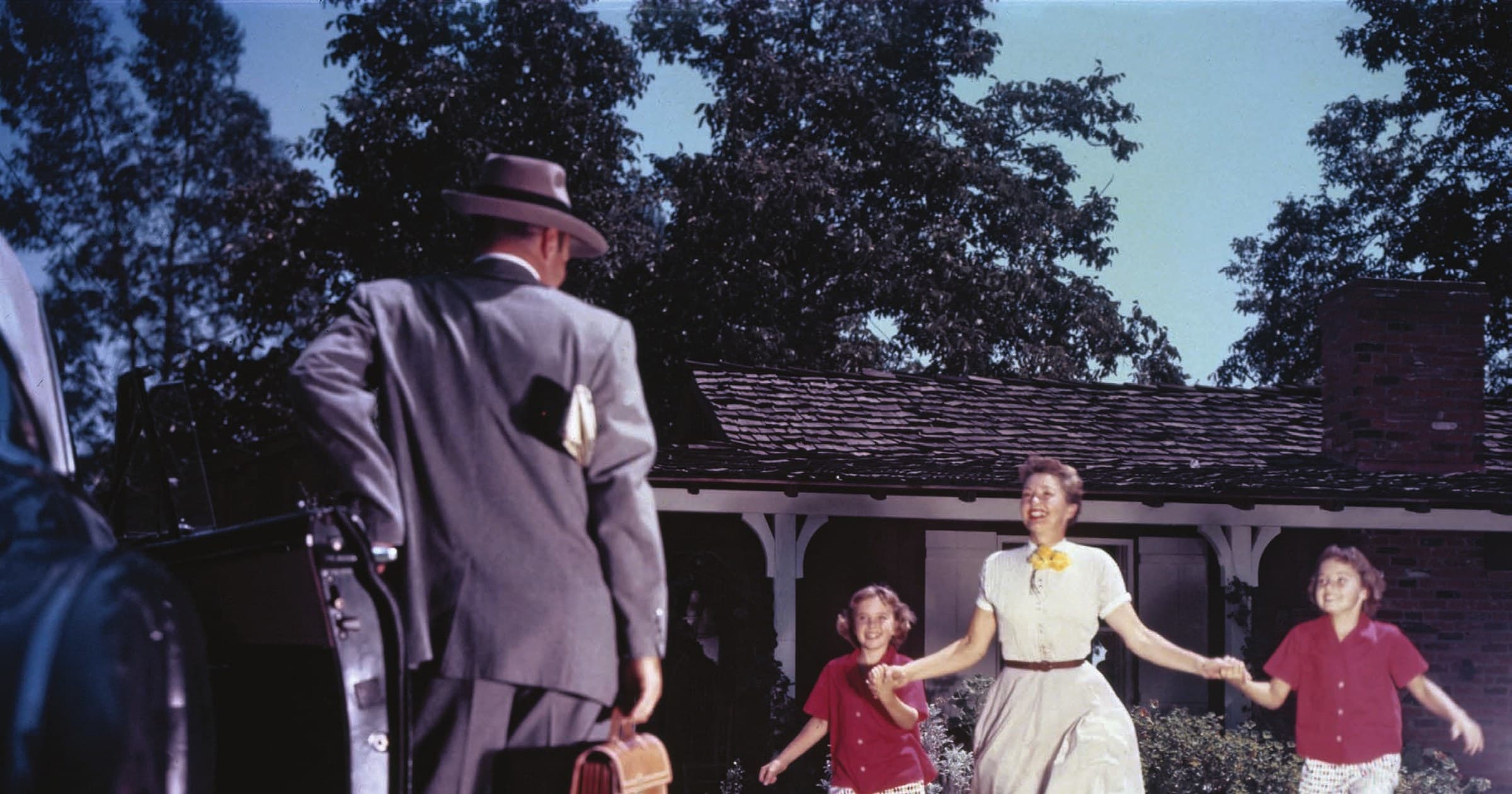
Whether or not you agree, consider how ‘entertainment’ has now become mere dramatisation of the everyday, played out with increasing indifference to a tired and disconnected audience. We are witnessing the collapse of anything akin to what we may wish to call ‘wonder’, or a delight in created things, or artistic things. Poetry disappears, and there is no reason to create a drama, apart from endless diversion. We may talk of technological saturation, or the loss of reading and imagination. We should rather look at the bankruptcy of truth and certainty.

Naturally, the genres of fantasy and created mythology are still with us, but live on as ghosts with no meaning. With no settled truth, there are no more stories and archetypes. The heroes and the villains of the deeper reality, Heaven and Hell, Good and Evil, are replaced by tales of human alienation and terror, or mere political ideas in the present, dreary moment. You may have noticed that villains themselves are disappearing and, with them, anything amounting to humour and wit.

I would rather be able to laugh, as we once did, at our own fallenness, and be assured of the first and last things, as I ought to be. I would rather constantly consider Heaven and Hell, as I should, than be stuck in the unanswerable trap of my own limited senses, wondering how I might re-create meaning from shallow experience.

But this is what gives me hope. Our Catholic forbears knew well their place, and the world wishes, in the West, to rediscover it. We are beginning to realise, I think, that actual wonder and enchantment at what can be imagined must start with a shared faith in what is hidden, and waiting to be revealed. If we can once again settle down into the universal truths, and the confidence in Mother Church, all else will follow. Plays, poetry and creativity that speak about true things; wonder at Creation, God, Christ, the dramatic tales of the saints, the incredibly silly fallen nature of man, the remarkable persistence of God’s love for us, will return. But also the exciting creativity that flows forth in the assurance of what is true, and the discovery of new excitement, and new stories. I feel certain that the future, then, as we move to a deeper belief and return to what we once knew, should be bright and, we hope, truly wonderful.

The first play I attended was in a school hall. I was very young, but I remember the sight of the players, mostly children, pressing their faces against the stage curtain to get a glimpse of the audience, and a boy in the front row slapping their noses. I am unsure whether this was a ‘breaking the fourth wall’ moment, but the scene has always stayed with me.

Children love the dramatic, and have more or less mastered the art of performance ab initio. There is a desire to play out something within their everyday lives and express what is true, good, joyful or tragic. It runs quite deep in the heart, for some of them, to deliver moving speeches for offended justice. We hear calls for the right punishment, normally of sinful siblings, and who could not be moved? I have never doubted that many good barristers and lawyers would also have made decent actors. You can spot a great orator, no doubt, from a young age; I am sure Cicero got his sister into all kinds of trouble.
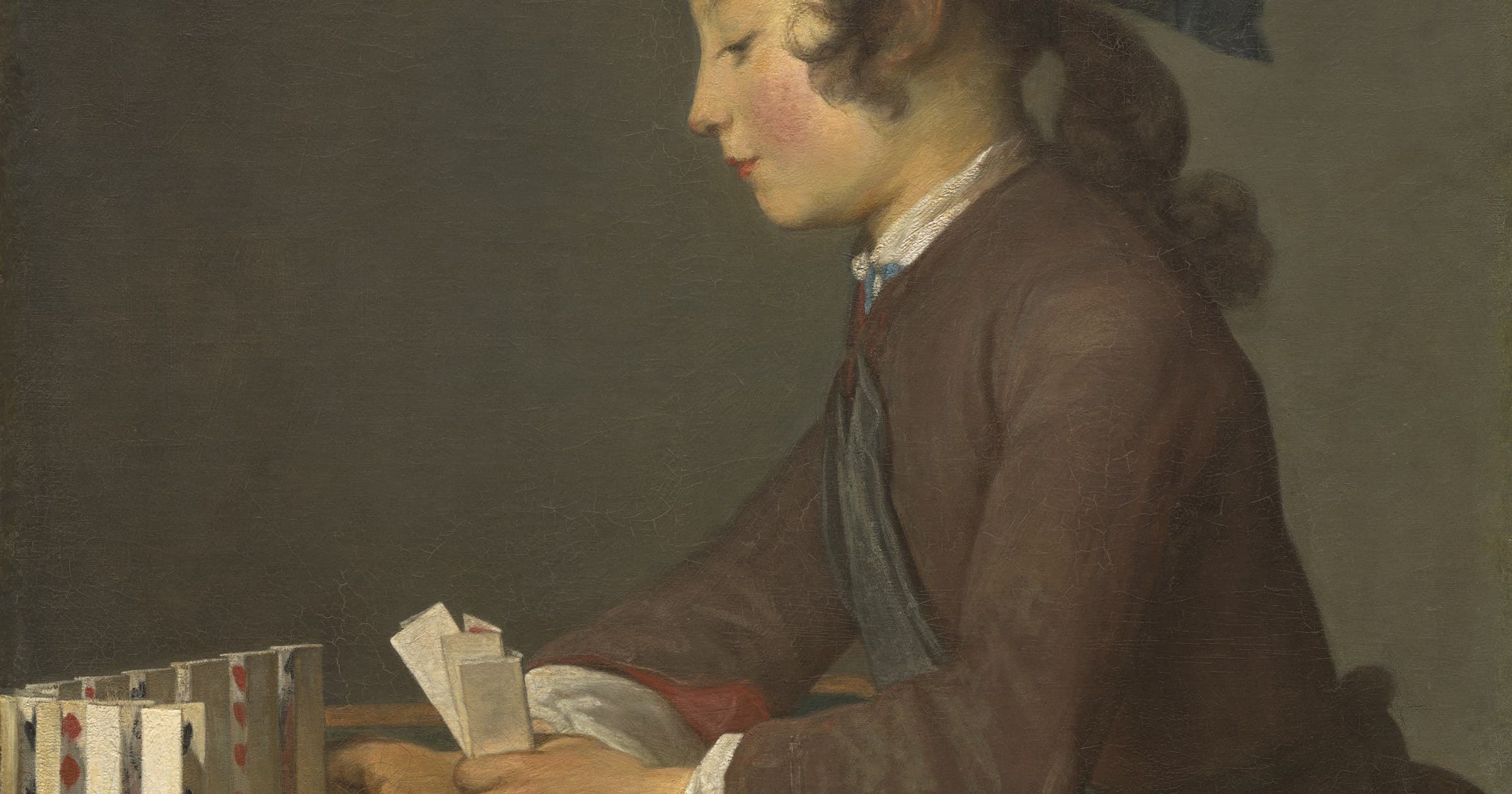
Great drama and poetry are an act of uncovering truth. We might say that this is the project of our lives; not some form of ‘self-discovery’, but a participation in revelation. Think of the men of science who established the Royal Society, wishing to uncover the systematic realities of the hidden and complex created world or, today, the engineer who works to uncover the best and most natural solution to the question of flight. It is unsurprising that the most efficient design of an airplane wing is taken from nature. We seem to be at our best when discovering what is true, and are able to reveal what is hidden and waiting to be known by all.

Now, when we watch a play, the players are representing that invisible world, which we all know. Note that CS Lewis chooses to have his divine person, Aslan, singing Narnia into being, as a work of artistic creation. Students of the classics spend a great deal of time with poetry and drama; all great philosophical civilisations employ these to address their deepest longings and questions. Plays such as Oedipus Rex, far from being mere psychological drama, stand as warnings to the society in which real people lived, just as the comedies of antiquity made humour from lived reality and political figures.

It is natural, then, that the god, the deus ex machina, will always appear for the Greeks, as this is the fundamental expression of settled truth for them. For how can the great drama hit home for us if God cannot speak clearly, and with authority? Consider that the Holy Mass, at its heart, is like this: God speaking clearly through Himself, in the love of Trinitarian relationship; the Son offering his whole self, taking His place at the seat of judgement over us through His triumph. It is more than a mere play: it is reality itself, which is what so confuses those outside the Church. The truth is both symbolic and actual, and the drama is reality itself.

I hope those who are reading this and are outside the Church do not mind me saying, then, that it is the loss of this greatest drama in the West which has done the greatest damage. It leads us to the loss of our capacity to wonder, to have a settled truth, and receive assurance of God speaking to us in a universal way. Shakespeare knew this very well; his new man, Hamlet, must now ‘Doubt that the sun doth move’, and is forced to consider, on behalf of us all, a new reductive individualism that must re-create its own understanding of the world and, naturally, God’s designs. This is probably why Hamlet cannot be surpassed for us today as a perfect summation of the predicament we are in. We have to ask if we are ‘to be, or not to be’. The question leads nowhere, of course, only to the grim contemplation of death and taxes – staring at Horatio’s skull.

It is important to consider, then, that we can point to forms of dramatic expression, written for and by an entirely Catholic population, which speak of a very different and happier world. They were performed in town squares by guildsmen and ordinary folk: the medieval mystery plays. My favourite is Crucifixio Christi, written in York around 1460. The Pinners Guild, who were responsible for nails, play out a story as Roman soldiers nailing Christ to the Cross. They fumble around trying to stretch the body to get Him on. Then, the Cross does not fit well into the hole in the ground, and needs to be wedged. Christ only speaks twice, to forgive them, and recite a version of O vos omnes, from the liturgy of Holy Saturday: ‘Byholdes myn heede, myn handis, and my feete’. The pinners are unmoved by Christ, and merely point out that he prattles on too much.

These plays are carefree and humorous, speaking on behalf of a world of popular devotion, familiarity and faith, where we enact the sacred truths in earthy, familiar ways. The guildsmen, playing out their own trade, enact the terrible reality of the Passion and articulate Christ’s astonishing forgiveness as a shared, settled reality to the whole town. The plays allow the community to journey through the lives of saints, scripture, heaven, hell and judgement. They resonate with shared faith and, of course, with sacred liturgy. In stark contrast to the world of today, God is present and powerful, and we are foolish and fallen. We play out, in humour, our fallen state, and rest in the assurance of God’s sovereignty.

Now, this seems alien to us, just as Hamlet’s wordy self-examination resonates with us. In studying Shakespeare, we are encouraged to think of him as a mere modernist, exploring topics of great depth. But we should read him again as a Catholic whose poetry speaks of a loss of identity, a collapse of any certainty, and the exploration of a terrible new world in which settled realities are thrown away. I feel certain that the Bard, watching popular devotion be ransacked, smashed and removed from his homeland, was doing his best to tell the story of that loss in some of his poetry.

Whether or not you agree, consider how ‘entertainment’ has now become mere dramatisation of the everyday, played out with increasing indifference to a tired and disconnected audience. We are witnessing the collapse of anything akin to what we may wish to call ‘wonder’, or a delight in created things, or artistic things. Poetry disappears, and there is no reason to create a drama, apart from endless diversion. We may talk of technological saturation, or the loss of reading and imagination. We should rather look at the bankruptcy of truth and certainty.

Naturally, the genres of fantasy and created mythology are still with us, but live on as ghosts with no meaning. With no settled truth, there are no more stories and archetypes. The heroes and the villains of the deeper reality, Heaven and Hell, Good and Evil, are replaced by tales of human alienation and terror, or mere political ideas in the present, dreary moment. You may have noticed that villains themselves are disappearing and, with them, anything amounting to humour and wit.

I would rather be able to laugh, as we once did, at our own fallenness, and be assured of the first and last things, as I ought to be. I would rather constantly consider Heaven and Hell, as I should, than be stuck in the unanswerable trap of my own limited senses, wondering how I might re-create meaning from shallow experience.

But this is what gives me hope. Our Catholic forbears knew well their place, and the world wishes, in the West, to rediscover it. We are beginning to realise, I think, that actual wonder and enchantment at what can be imagined must start with a shared faith in what is hidden, and waiting to be revealed. If we can once again settle down into the universal truths, and the confidence in Mother Church, all else will follow. Plays, poetry and creativity that speak about true things; wonder at Creation, God, Christ, the dramatic tales of the saints, the incredibly silly fallen nature of man, the remarkable persistence of God’s love for us, will return. But also the exciting creativity that flows forth in the assurance of what is true, and the discovery of new excitement, and new stories. I feel certain that the future, then, as we move to a deeper belief and return to what we once knew, should be bright and, we hope, truly wonderful.

subscribe to
the catholic herald

Continue reading your article with a subscription.
Read 5 articles with our free plan.
Subscribe

subscribe to the catholic herald today

Our best content is exclusively available to our subscribers. Subscribe today and gain instant access to expert analysis, in-depth articles, and thought-provoking insights—anytime, anywhere. Don’t miss out on the conversations that matter most.
Subscribe