

At the end of 2024 the Cambridge Dictionary added the words and phrases the ick, skibidi, delulu, face journey and tradwife to its lexicon. The move was deemed necessary because they had entered into common parlance and therefore were needed for someone to understand the English language.
If the Catholic dictionary were to update itself at the end of 2025, it might include the word tradismatic. It may not be quite as much of an internet trend as the ick, but it certainly describes a growing spirituality among Catholics. As the name suggests, tradismatic is a mix of two dominant liturgical expressions of the twenty-first century: “trad” representing traditionalist, and “ismatic” representing charismatic.
The traditionalists, over whom much ink has been spilt on social media, hold onto the faith as it was before the liturgical reforms of the 1960s. Seen in their droves attending the chapels of the Priestly Fraternity of Saint Peter and the Institute of Christ the King, the men don suits and hold their breviaries, whilst the women wear elegant mantillas whose colour denotes marital status (in case needed: black for married, white for single).
Their liturgical preference is the 1962 Missal, or — if you are a real rad-trad — you might go back to the pre-1955 reforms. The priest at Masses attended by traditionalists faces ad orientem, meaning to the East and away from the congregation, and the Tridentine Mass celebrated is characterised by a reverence and awe for the mystery taking place. The faithful make regular use of the confessional, and if they do not, will not present themselves for Holy Communion, which is received kneeling and on the tongue.
The Welsh word hiraeth, which denotes a sense of longing for a culture and identity of a past which may never have been experienced, is a useful expression to sum up what traditionalists are looking for. Traditionalists seek a time when the faith was the cornerstone of existence and seeped into all aspects of life, giving a sense of moral certainty. They are notably young and react against the fast-paced culture around them which fills silence with pocket-sized screens and replaces virtue with vice. Through the archaic liturgical celebrations of another era in history, they enter into the eternal mysteries and escape the failings of modernity which they, as the first generation raised on iPhones, feel most acutely.
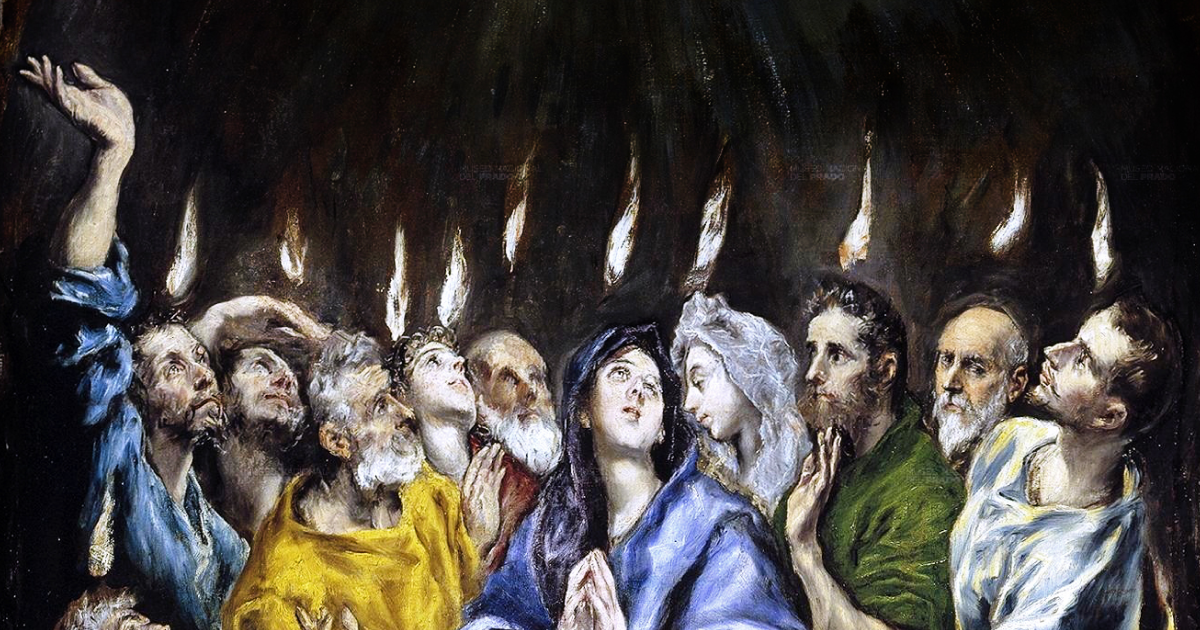
Charismatic worship is based on a liturgical expression which can feel less ancient. Guitars, worship music borrowed from Protestant musicians, and the priest facing pro populo (towards the people) are all characteristic of the lively worship services enjoyed by those who adhere to its spirituality. However, worshippers believe that in their practice they are really harking back to apostolic times, particularly the writing of St Paul, which in 1 Corinthians 12:8–10 mentions the gifts of “faith, expression of knowledge, expression of wisdom, miracles, speaking in tongues, interpretation of tongues, prophecy, discernment of spirits, and healing”. Alongside reception of the sacraments, charismatic worship may also include healing services, prophecies and ecumenical worship. But most of all the group is characterised by an openness to the Holy Spirit and His gifts.
In 2013 it was thought that the movement had over 160 million members. Today, in the Anglosphere, it feels as though its energy may have dissipated somewhat. Younger generations of Catholics seem increasingly attached to more reverent worship and reluctant to embrace the guitars and drumkits which already feel like they belong to a previous era.
However, charismatic worship does seem to enjoy increasing popularity in other parts of the world, particularly in the African and South American contexts, where joyful worship seems suited to the more vibrant cultures. Here, the battle against Protestant takeover is particularly acute, so borrowing their worship style whilst maintaining Catholic teaching and sacramentality is especially prudent.
Traditionalist and charismatic beliefs may at first sight appear to be at opposite ends of a liturgical spectrum, unlikely bedfellows fighting their own very different corners.
But what is central to both movements is an unshakeable insistence on, and belief in, the truths of Catholicism and that the sacraments are an encounter with the person of Jesus. As Clement Harrold has written in First Things, “in a Church where 70 percent of the faithful no longer believe in the Real Presence, legitimate differences between charismatics and ‘trads’ pale in comparison to the differences that separate orthodoxy from heterodoxy.” Thus many no longer find a contradiction in practising both spiritualities, since in both they find a serious expression of the faith.
That is not to say that an ordinary Novus Ordo Mass cannot express the same truths. Jesus is as present in both — a certainty of the Catholic faith. But, on occasion, a certain lack of seriousness seems to have infested parts of mainstream Catholicism, where the religion is relegated to a convenient story which props up vague middle-class values such as “family” and “solidarity”.
Both traditionalists and charismatics reject such notions. Catholicism is not a quaint family custom carried on for the sake of continuity; indeed, in many cases it was not passed on at all and had to be actively sought. It is evidence of a decision to make markedly different choices than the secular trends of the age, to reject the world around them and to embrace a life which will likely mean professional and social sacrifices. Therefore, for it to be anything less than serious would be a gross reduction of its significance. Tradismatics find both traditionalist and charismatic expressions of their faith appealing because the same seriousness runs through the veins of both spiritualities.
Whilst it may seem contradictory, if the Church is to find relevance in the world, it is best not to seek worldly relevance. Tradismatics, armed with the Mass of the ages and the gifts of the Holy Spirit, need not bend to the trends of the age. And rooted in a sincere love for the Lord and his sacraments, we will likely be seeing more of them in the coming years.