

March 11, 2026

The triumph of sentimentality in the Church of England

Fr Dwight Longenecker
More
Related
Min read
share

Just over thirty years ago I was serving as a priest in the Church of England. At that time the debate over the ordination of women to the priesthood had reached its climax. I was vicar of two rural parishes on the Isle of Wight and the bitter conflict raged at every level in the Church – within families, in parochial church councils, deanery synods, diocesan synods and finally in the Church’s ruling body, the General Synod.

There were arguments to be made from both sides from theology, Sacred Scripture, psychology, sociology and Church history, but in the absence of any agreed terminal authority, the most widely heard arguments in favour of the innovation were of three kinds: pragmatic, political and sentimental.


The pragmatic was perhaps the most convincing of the three: ‘Susie can do the job just as well as a man. We have women doctors, women prime ministers, women in all top professions. Why not clergy?’ The political argument was one of equal rights: ‘Male-only priesthood is patriarchal and oppressive. This is a matter of justice and equal rights!’ Combined with the first two, the sentimental argument seemed to seal the deal with a kiss: ‘You know Susie is a wonderful, prayerful person. She and her husband are such good people! Their children are lovely and she loves knitting and visiting the elderly and walking her two Labradors, Poppy and George! She feels called to priesthood. Who are we to deny her? To reject her is so unkind!’

These arguments won the day, but they did not decide the question. The resulting vote divided the Church of England. Hundreds of clergy and thousands of lay people deserted. Many went to the Catholic Church. Some went to the country club. Many went nowhere at all. In the intervening thirty years the same arguments made for women’s ordination have undermined the Church of England in the ongoing issues of women’s ordination to the episcopate, the acceptance of same-sex relationships and the blessing of same-sex partnerships, but out of all the arguments that might be made, the sentimental argument has triumphed.

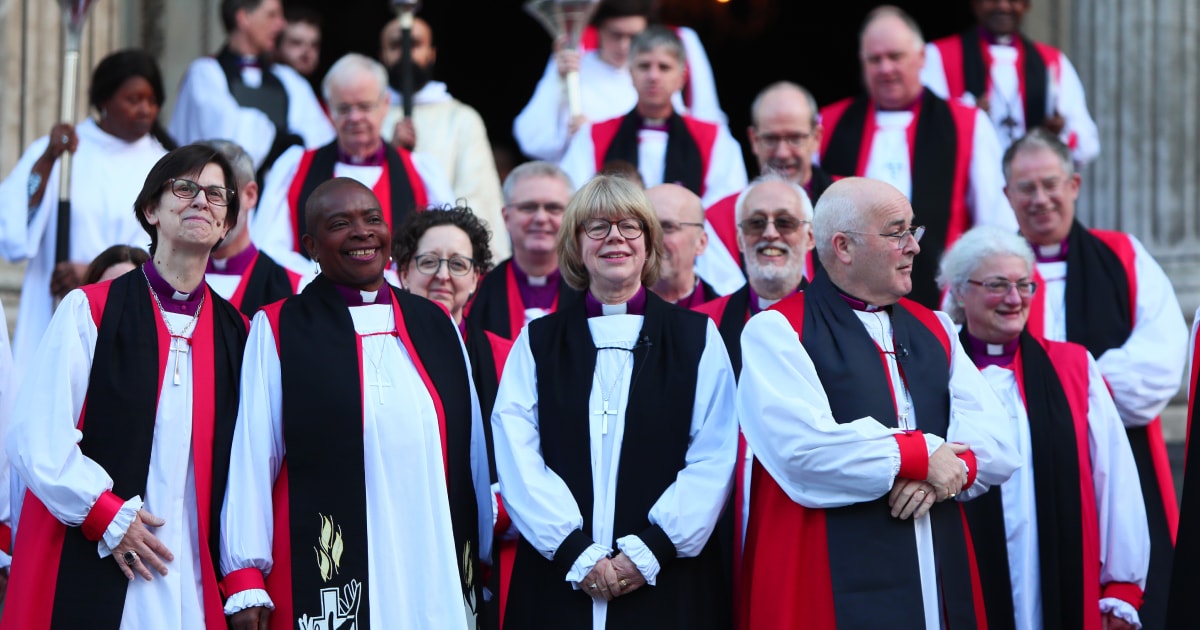
This became obvious in a meeting of the General Synod on 14 February 2025 when Sarah Mullally – then Bishop of London – broke into tears after speaking about the ‘institutional barriers’ and ‘micro-aggressions’ that women in ministry still suffered. The embarrassing breakdown was applauded by the members of Synod, but it reminded me of a courageous lesson in leadership I once heard addressing the difficulties of women and men working together.

It was pointed out that when someone cries they immediately elicit sympathy, and the sympathy they garner will usually help them win their argument. If it is a woman who is crying when debating with a man, it was suggested that it was a form of at least bullying, but perhaps even a subtle form of sexual harassment. The woman was using her tears (and therefore her sex) as a weapon.

The presenter complained that in our rigorous egalitarianism one cannot say the female is the weaker sex, but she is allowed to display her weakness by weeping and therefore eliciting sympathy. Of course, lady bishops do not have a monopoly on playing the victim card in this way. Crybaby bullying is the full house for anyone in our culture who has overweening ambitions combined with a weak argument and a spindly CV.

Just about one year later the General Synod of the Church of England was the stage for another melodramatic tear-jerker. In February of this year the Revd Charlie Bączyk-Bell – a homosexual activist – gave a speech after the members of the General Synod rejected moves towards the blessing of same-sex partnerships. The Revd Bączyk-Bell was furious and angrily blamed the Synod members for hurting him and other homosexual people. His tirade ended in tears and, of course, sympathy for him and his cause.

Far be it from me to dismiss the power of emotion – especially in religion. We are too often afraid of our emotions and err on the side of cool rationality and objective argumentation. Emotion and passion are undoubtedly valuable aspects of the human person and human discourse. Where we draw back, however, is when sentimentality becomes the only argument. It is the spoilt child who stamps his foot and bursts into tears when he does not get his own way. Let arguments be made and made passionately, but let not the argument be nothing but passion.

While I have used examples from the Church of England, it should be obvious that this decline into the swamp of subjective sentimentality is part of a more general descent into relativism. Sentimental victimhood and crybaby bullies are everywhere, and without an agreed, external voice of authority what do individuals in our society have except fragments of increasingly dubious data, subjective opinions and fickle emotions?

The reason the triumph of sentimentality is so dangerous to a stable and prosperous society is that we are unaware of the insidious effect sentimentality has on us. The sweet sympathy one feels when presented with the victim of seeming injustice makes us not only feel sorry for the victim but, even sweeter, feel good about ourselves.

Our sympathetic feelings give us a self-esteem boost – a little surge of self-righteousness like a psychological sugar kick – and like all artificial highs, it can become addictive. We soon love the victim and look for more victims to sympathise with to make ourselves feel even more righteous.

More insidious is the subtle fact that we forget that there are expressions of emotion other than the nice ones. Following on from the tears of victimhood are invariably the tears of frustration and rage, and following on from the emotions of frustration and rage are the feelings of resentment, the plans for revenge and even the actions of violence.

Once we have accepted that our emotions are the only argument, then our emotions become good in our eyes, and once we have accepted that all our emotions are natural and good, we will accept the negative emotions of resentment, rage and lust for revenge as also being not only justified, but good in themselves. Indeed, we will respect the angry activist and if we join their campaign we will soon feel very good about ourselves, and the self-righteousness of the enraged activist is a fearsome thing. From it all forms of radical fanaticism spring.

Thus the memorable line from Yeats’s poem The Second Coming, ‘The best lack all conviction, while the worst are full of passionate intensity’, reminds us of his ultimate stark warning of cultural decay and societal decline: ‘the centre cannot hold’.

Fr Dwight Longenecker is the author of over twenty books and hundreds of articles for various outlets. Browse his books, read his blog and be in touch at dwightlongenecker.com.

Just over thirty years ago I was serving as a priest in the Church of England. At that time the debate over the ordination of women to the priesthood had reached its climax. I was vicar of two rural parishes on the Isle of Wight and the bitter conflict raged at every level in the Church – within families, in parochial church councils, deanery synods, diocesan synods and finally in the Church’s ruling body, the General Synod.

There were arguments to be made from both sides from theology, Sacred Scripture, psychology, sociology and Church history, but in the absence of any agreed terminal authority, the most widely heard arguments in favour of the innovation were of three kinds: pragmatic, political and sentimental.
The pragmatic was perhaps the most convincing of the three: ‘Susie can do the job just as well as a man. We have women doctors, women prime ministers, women in all top professions. Why not clergy?’ The political argument was one of equal rights: ‘Male-only priesthood is patriarchal and oppressive. This is a matter of justice and equal rights!’ Combined with the first two, the sentimental argument seemed to seal the deal with a kiss: ‘You know Susie is a wonderful, prayerful person. She and her husband are such good people! Their children are lovely and she loves knitting and visiting the elderly and walking her two Labradors, Poppy and George! She feels called to priesthood. Who are we to deny her? To reject her is so unkind!’

These arguments won the day, but they did not decide the question. The resulting vote divided the Church of England. Hundreds of clergy and thousands of lay people deserted. Many went to the Catholic Church. Some went to the country club. Many went nowhere at all. In the intervening thirty years the same arguments made for women’s ordination have undermined the Church of England in the ongoing issues of women’s ordination to the episcopate, the acceptance of same-sex relationships and the blessing of same-sex partnerships, but out of all the arguments that might be made, the sentimental argument has triumphed.

This became obvious in a meeting of the General Synod on 14 February 2025 when Sarah Mullally – then Bishop of London – broke into tears after speaking about the ‘institutional barriers’ and ‘micro-aggressions’ that women in ministry still suffered. The embarrassing breakdown was applauded by the members of Synod, but it reminded me of a courageous lesson in leadership I once heard addressing the difficulties of women and men working together.

It was pointed out that when someone cries they immediately elicit sympathy, and the sympathy they garner will usually help them win their argument. If it is a woman who is crying when debating with a man, it was suggested that it was a form of at least bullying, but perhaps even a subtle form of sexual harassment. The woman was using her tears (and therefore her sex) as a weapon.

The presenter complained that in our rigorous egalitarianism one cannot say the female is the weaker sex, but she is allowed to display her weakness by weeping and therefore eliciting sympathy. Of course, lady bishops do not have a monopoly on playing the victim card in this way. Crybaby bullying is the full house for anyone in our culture who has overweening ambitions combined with a weak argument and a spindly CV.

Just about one year later the General Synod of the Church of England was the stage for another melodramatic tear-jerker. In February of this year the Revd Charlie Bączyk-Bell – a homosexual activist – gave a speech after the members of the General Synod rejected moves towards the blessing of same-sex partnerships. The Revd Bączyk-Bell was furious and angrily blamed the Synod members for hurting him and other homosexual people. His tirade ended in tears and, of course, sympathy for him and his cause.

Far be it from me to dismiss the power of emotion – especially in religion. We are too often afraid of our emotions and err on the side of cool rationality and objective argumentation. Emotion and passion are undoubtedly valuable aspects of the human person and human discourse. Where we draw back, however, is when sentimentality becomes the only argument. It is the spoilt child who stamps his foot and bursts into tears when he does not get his own way. Let arguments be made and made passionately, but let not the argument be nothing but passion.

While I have used examples from the Church of England, it should be obvious that this decline into the swamp of subjective sentimentality is part of a more general descent into relativism. Sentimental victimhood and crybaby bullies are everywhere, and without an agreed, external voice of authority what do individuals in our society have except fragments of increasingly dubious data, subjective opinions and fickle emotions?

The reason the triumph of sentimentality is so dangerous to a stable and prosperous society is that we are unaware of the insidious effect sentimentality has on us. The sweet sympathy one feels when presented with the victim of seeming injustice makes us not only feel sorry for the victim but, even sweeter, feel good about ourselves.

Our sympathetic feelings give us a self-esteem boost – a little surge of self-righteousness like a psychological sugar kick – and like all artificial highs, it can become addictive. We soon love the victim and look for more victims to sympathise with to make ourselves feel even more righteous.

More insidious is the subtle fact that we forget that there are expressions of emotion other than the nice ones. Following on from the tears of victimhood are invariably the tears of frustration and rage, and following on from the emotions of frustration and rage are the feelings of resentment, the plans for revenge and even the actions of violence.

Once we have accepted that our emotions are the only argument, then our emotions become good in our eyes, and once we have accepted that all our emotions are natural and good, we will accept the negative emotions of resentment, rage and lust for revenge as also being not only justified, but good in themselves. Indeed, we will respect the angry activist and if we join their campaign we will soon feel very good about ourselves, and the self-righteousness of the enraged activist is a fearsome thing. From it all forms of radical fanaticism spring.

Thus the memorable line from Yeats’s poem The Second Coming, ‘The best lack all conviction, while the worst are full of passionate intensity’, reminds us of his ultimate stark warning of cultural decay and societal decline: ‘the centre cannot hold’.

Fr Dwight Longenecker is the author of over twenty books and hundreds of articles for various outlets. Browse his books, read his blog and be in touch at dwightlongenecker.com.

subscribe to
the catholic herald

Continue reading your article with a subscription.
Read 5 articles with our free plan.
Subscribe

subscribe to the catholic herald today

Our best content is exclusively available to our subscribers. Subscribe today and gain instant access to expert analysis, in-depth articles, and thought-provoking insights—anytime, anywhere. Don’t miss out on the conversations that matter most.
Subscribe