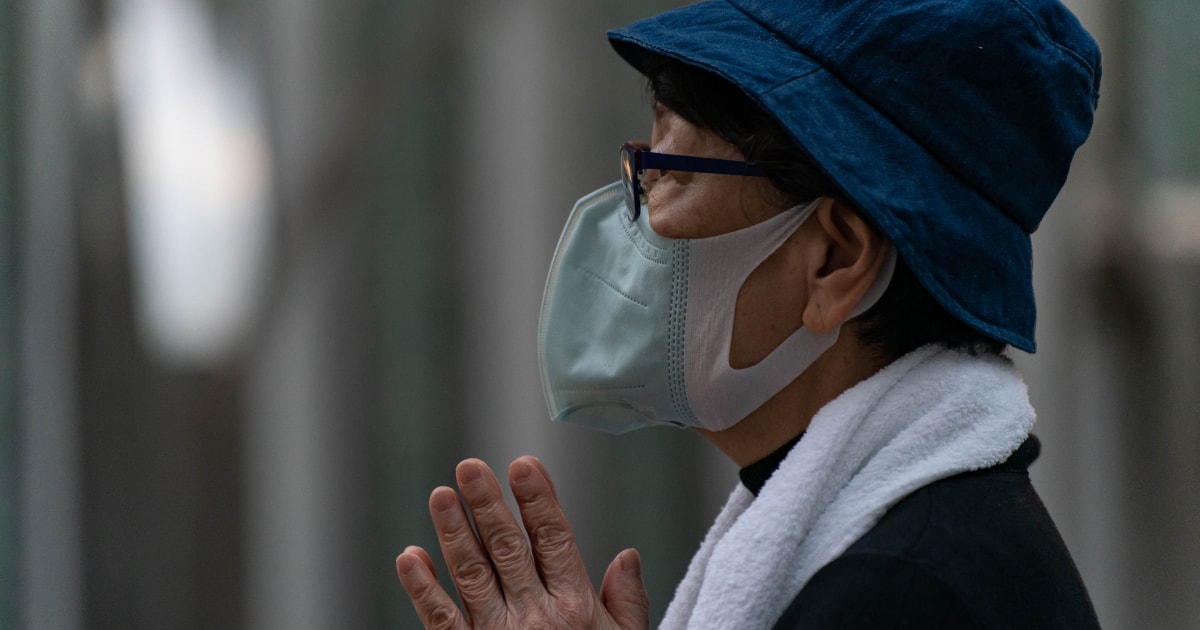
Last week, Human Rights Watch – one of the world’s largest and most respected international human rights organisations – released a report revealing the escalating persecution of Catholics in China.
The fact that this report comes from a secular, not a religious, organisation, and one that covers the full range of human rights issues across the globe, ought to make the Vatican sit up and listen. If the Chinese Communist Party (CCP)’s increasing pressure on Catholics in China has caught the attention of Human Rights Watch, it suggests the situation is serious.
This month marks 10 years since Xi Jinping ordered a campaign of ‘Sinicisation’ of religion. In April 2016, the avowedly atheist CCP held a National Conference on Religious Work – an irony in itself. Xi, who chaired the conference personally, announced a new state policy to ensure that religions ‘adapt themselves to socialist society’. What has become increasingly clear is that the CCP’s aim is to subjugate all forms of religion to its communist ideology.
Xi’s Sinicisation campaign is not merely an effort at what the Church calls ‘inculturation’ – the process of embodying religion within local culture. It is a programme aimed – as this new report puts it – at ‘imposing Chinese Communist Party ideology on religious belief’. It is about controlling, coercing, co-opting and corrupting religion, and ultimately converting it into a tool of the CCP.
Perhaps it is no coincidence that two years after announcing the Sinicisation campaign, Beijing signed an agreement with the Vatican on the appointment of bishops. First agreed in 2018, it has been renewed three times and is currently valid until October 2028.
The Sino-Vatican agreement is problematic on multiple fronts.
First is the secrecy surrounding it. Despite it being renewed three times over the past eight years, the details of the deal remain confidential. In an era of ‘synodality’ in the Church, how about transparency over this concordat?
Second is the fact that Beijing has violated it on multiple occasions.
From what little is known of the deal, it is supposed to mean that Beijing can nominate potential Catholic bishops, but the Pope has a final power of appointment or veto. Yet Beijing has unilaterally installed bishops – in dioceses that are not even recognised by the Vatican.
In late 2022, for example, Chinese authorities installed Bishop John Peng Weizhao as Auxiliary Bishop of Jiangxi, without Rome’s agreement. In 2023, Chinese authorities transferred Bishop Shen Bin from Haimen to lead the Shanghai diocese, the largest in China, without consulting or even informing the Vatican, which learned of the appointment through the media.
Third, the Vatican presumably entered into this agreement in the expectation, or at least the hope, that it would lead to an improvement in religious freedom in China. The truth is that it has had the opposite effect, leading to increased surveillance and repression of Catholics in China.
As Human Rights Watch reports – and as any informed observer of China will say – the CCP regime has ‘tightened ideological control, surveillance, and travel restrictions on the country’s estimated 12 million Catholics’. Furthermore, according to Human Rights Watch, the Sino-Vatican agreement has ‘facilitated repression of Catholics in China’.
The Sinicisation of religion campaign has resulted in places of worship and religious teachings being required to ‘reflect Han-centric Chinese culture and Chinese Communist Party ideology’. This is equally true for Tibetan Buddhists, Uyghur Muslims and Protestant Christians as it is for Catholics – in the case of Uyghur Muslims, the repression has been so severe that it has led to credible charges of genocide.
So, the Pope should be speaking out against this persecution, and for all prisoners of conscience in China. He should call out the arrest of a 22-year-old Chinese student, Tara Zhang Yadi, jailed simply for promoting Tibetan culture and understanding among Chinese students. He should appeal for the release of Protestant Pastor Ezra Jin and members of his Zion Church, all detained last autumn, and consider granting an audience to Pastor Jin’s daughter, Grace Jin Drexel, who is leading the campaign for their release.
Pope Leo should build on his decision to receive the wife and daughter of my friend Jimmy Lai at a General Audience last year, and speak and pray regularly for Jimmy’s release. Perhaps this Sunday he could reference Jimmy’s prison letters, released this past weekend.
One of the most heartbreaking elements of this is that there remain many Catholic bishops, priests and lay faithful loyal to the Vatican in prison in China. In negotiating the Sino-Vatican deal in 2018, a precondition ought to have been the release of jailed Catholic clergy.
Yet many – such as Bishop James Su Zhimin of Baoding, whose fate was the focus of a US congressional inquiry in 2020 – remain disappeared.
The excellent scholar and activist Nina Shea at the Hudson Institute has produced a detailed database of jailed Catholic bishops in China, which should be a starting point for the Vatican and any other institution considering advocacy for their release.
Bishops such as Augustine Cui Tai and Thaddeus Ma Daqin have been detained and restricted from their pastoral duties, and bishops such as Vincent Guo Xijin and Peter Shao Zhumin remain under house arrest.
Much of this is the unfortunate legacy of Pope Francis. As a Jesuit, he had a romantic notion of reviving the role of Matteo Ricci, the 16th-century Jesuit priest who learned Chinese, dressed like a Chinese scholar and embodied ‘inculturation’, gaining influence within the Imperial court to spread the Gospel. But the idea that any pope or Vatican official could penetrate the CCP’s court at Zhongnanhai today in the same way is extremely naive.
Human Rights Watch’s report is a sobering wake-up call. It is written not by a Catholic caught up in the internal debates of the Church, but by a researcher who happens to be a Uyghur and knows injustice when he sees it. Yalkun Uluyol, who has himself experienced persecution, is clear when he says: ‘Pope Leo XIV should urgently review the agreement and press Beijing to end the persecution and intimidation of underground churches, clergy, and worshippers.’
President Trump must use his visit to China next month to raise these concerns, which include the fate of Catholics and Protestants across China, and the imprisonment of individuals such as Jimmy Lai, Pastor Jin and Zhang Yadi. Keir Starmer also has a responsibility to continue to press for the release of Mr Lai, a British citizen, and to raise wider freedom of religion concerns with China at every opportunity. Every Catholic should be praying for justice and freedom for the repressed peoples of China.
The Human Rights Watch report should be widely circulated in parishes and dioceses across the world, and throughout the Vatican, and should be the subject of homilies and intercessions.
Pope Leo has said he has ‘no fear’ of the Trump administration and will go on ‘loudly’ preaching the Gospel message. He should have no fear of China either, because there are few places in the world that need his voice for justice more urgently than China. If the Vatican will not listen to other Catholics on this question, it should hear Yalkun’s cry.
Benedict Rogers is a human rights activist and writer, senior director at Fortify Rights, co-founder and chair of Hong Kong Watch, and author of The China Nexus: Thirty Years In and Around the Chinese Communist Party’s Tyranny


.jpg)