March 11, 2026

The theology of being a godparent

Clement Harrold
More
Related
Min read
share

When I was recently asked to be a godparent, I decided to explore this ancient practice in more detail. Since I felt a little shaky about the theological basis for the Catholic Church’s teaching on infant Baptism, I figured this would be a good place to begin my investigation.

On its surface, infant Baptism seems counterintuitive. Babies obviously cannot formally consent to the sacrament, and in no other part of life is it possible for someone to confess another person’s sins for them. So what makes it legitimate for parents to seek Baptism on their child’s behalf?

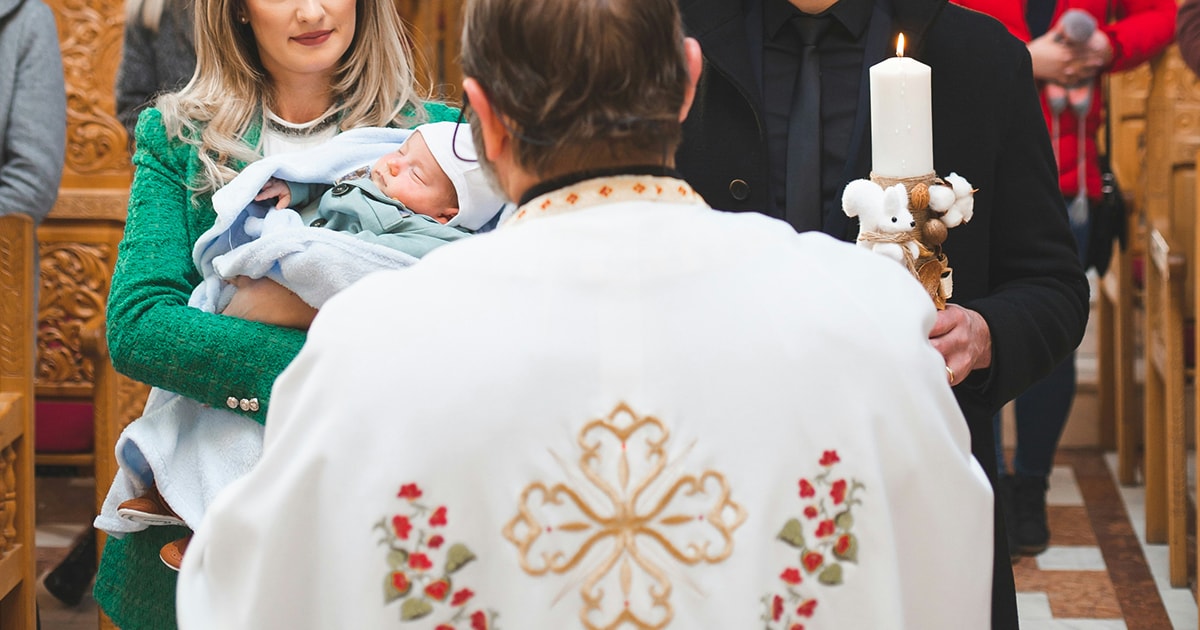
The answer lies in the distinction between Original Sin and actual sin. Actual sins can only be committed by someone who has reached the age of reason, and only that person can make the personal act of contrition required for them to receive forgiveness. Original Sin, by contrast, is a spiritual stain with which we are all born. This stain can be washed from a child’s soul when he or she receives the sacrament of Baptism through the faith of his or her parents and godparents.

In this respect the Church’s practice is not so very different from the Old Testament practice of circumcision. Just as God demanded that baby boys in ancient Israel be circumcised in order to become part of His covenant family, so Christian parents today are expected to baptise their children and thus incorporate them into Christ’s saving work.

The Church also bases her teaching on the New Testament witness more broadly. We might recall the multiple occasions in the Gospels when Jesus heals or exorcises a child following an act of faith on the part of the parents. And when a group of men carry their paralysed friend to Jesus in Capernaum, we are told that ‘when Jesus saw their faith, he said to the paralytic, “My son, your sins are forgiven”’ (Mark 2:5). Presumably the paralytic had some faith of his own; yet it was not his faith alone but the faith of his friends that saved him from his sins.

The New Testament also contains multiple references to entire households receiving Baptism (see Acts 11:14; 16:15, 33; 18:8; 1 Cor 1:16). Nowhere in these texts is there any suggestion that children were excluded from the sacrament. We might also consider the words of St Peter at Pentecost: ‘Repent, and be baptised every one of you in the name of Jesus Christ for the forgiveness of your sins … For the promise is to you and to your children’ (Acts 2:38–39). While this verse does not definitively prove the validity of infant Baptism, it would be a very misleading thing for Peter to say if he were secretly opposed to baptising children.

It is therefore no surprise that the Fathers of the Church are virtually unanimous in endorsing infant Baptism. The great biblical scholar Origen summed up this consensus in the mid-third century: ‘The Church received from the apostles the tradition of giving Baptism even to infants.’ This testimony is echoed by Irenaeus, Augustine, John Chrysostom and many others. For these saints and doctors, it was unthinkable that infant Baptism should be spurned by the God who said, ‘Let the children come to me,’ and who once described the Kingdom of Heaven as belonging to little ones such as these.

So much for infant Baptism. What about godparents? For starters, we should note that the practice of godparenting does not actually appear in the Bible. Instead, it is a tradition that took shape in the early centuries of the Church, as the Christian community quickly perceived the value in assigning spiritual mothers and fathers to the newly baptised. This was especially important for adult converts, who often came from pagan backgrounds and therefore needed to be mentored in the Christian faith. Over time, however, the Church began to encourage the practice of choosing godparents at infant as well as adult baptisms.

Today the requirements for becoming a godparent are laid out in the Code of Canon Law, which uses the more technical language of ‘sponsors’. Canon 774 explains that parents are obliged to form their children in the Christian faith, and that ‘sponsors and those who take the place of parents are bound by an equal obligation’ (§2).

In Canon 872 we are reminded that the baptismal sponsor, or godparent, ‘helps the baptised person to lead a Christian life in keeping with Baptism and to fulfil faithfully the obligations inherent in it’. Canon 873 clarifies that it is only permissible to have one male sponsor or one female sponsor or one of each.

Canon 874 provides additional details on who is eligible to be a baptismal sponsor. The godparent must be a baptised Catholic who has been confirmed and who has received the sacrament of the Eucharist. The godparent must be at least 16 years of age, and they cannot be the mother or father of the person being baptised. Finally, the godparent must be someone in good standing with the Church ‘who leads a life of faith in keeping with the function to be taken on’.

We might note in passing that, per Canons 892–893, the same criteria apply to confirmation sponsors. Moreover, the confirmation sponsor should, when possible, be the same as the baptismal sponsor. It is the special duty of the confirmation sponsor ‘to take care that the confirmed person behaves as a true witness of Christ and faithfully fulfils the obligations inherent in this sacrament’.

Unlike the Code of Canon Law, the Catechism of the Catholic Church does employ the language of godparents. It offers some important advice: ‘For the grace of Baptism to unfold, the parents’ help is important. So too is the role of the godfather and godmother, who must be firm believers, able and ready to help the newly baptized—child or adult on the road of Christian life’ (1255).

The Catechism goes on to note that the task of the godparents is a properly ecclesial function. In other words, godparents reflect the fact that the Church is not a business or a club but rather a family – indeed, a body – in which all the members bear responsibility for one another’s spiritual welfare.

This ecclesial reality should inspire those of us who are (or soon will be) godparents to look to the communion of saints for help and guidance. Here we might pray to St Genevieve, who was raised by her godmother after being orphaned as a child, and who later saved the city of Paris from being ransacked by Attila and his Huns.

In terms of scriptural role models, we find a wonderful example in the figures of Aquila and Priscilla. This missionary couple converted to Christianity and soon became zealous evangelists for the Faith. They were known for opening up their home as a space for Christian worship (see 1 Cor 16:19), and they played a crucial role in catechising Apollos, who would later become a major figure in the early Church (see Acts 18:26).

At one point St Paul affectionately describes Aquila and Priscilla as his ‘fellow workers in Christ Jesus’ (Rom 16:3). Ancient tradition holds that this holy couple were martyred together in Rome, and their feast day is celebrated on July 8. May they stand as guides and intercessors for all of us who have been entrusted with the sacred responsibility of assisting the newly baptised as they begin their walk with Christ.

When I was recently asked to be a godparent, I decided to explore this ancient practice in more detail. Since I felt a little shaky about the theological basis for the Catholic Church’s teaching on infant Baptism, I figured this would be a good place to begin my investigation.

On its surface, infant Baptism seems counterintuitive. Babies obviously cannot formally consent to the sacrament, and in no other part of life is it possible for someone to confess another person’s sins for them. So what makes it legitimate for parents to seek Baptism on their child’s behalf?
The answer lies in the distinction between Original Sin and actual sin. Actual sins can only be committed by someone who has reached the age of reason, and only that person can make the personal act of contrition required for them to receive forgiveness. Original Sin, by contrast, is a spiritual stain with which we are all born. This stain can be washed from a child’s soul when he or she receives the sacrament of Baptism through the faith of his or her parents and godparents.

In this respect the Church’s practice is not so very different from the Old Testament practice of circumcision. Just as God demanded that baby boys in ancient Israel be circumcised in order to become part of His covenant family, so Christian parents today are expected to baptise their children and thus incorporate them into Christ’s saving work.

The Church also bases her teaching on the New Testament witness more broadly. We might recall the multiple occasions in the Gospels when Jesus heals or exorcises a child following an act of faith on the part of the parents. And when a group of men carry their paralysed friend to Jesus in Capernaum, we are told that ‘when Jesus saw their faith, he said to the paralytic, “My son, your sins are forgiven”’ (Mark 2:5). Presumably the paralytic had some faith of his own; yet it was not his faith alone but the faith of his friends that saved him from his sins.

The New Testament also contains multiple references to entire households receiving Baptism (see Acts 11:14; 16:15, 33; 18:8; 1 Cor 1:16). Nowhere in these texts is there any suggestion that children were excluded from the sacrament. We might also consider the words of St Peter at Pentecost: ‘Repent, and be baptised every one of you in the name of Jesus Christ for the forgiveness of your sins … For the promise is to you and to your children’ (Acts 2:38–39). While this verse does not definitively prove the validity of infant Baptism, it would be a very misleading thing for Peter to say if he were secretly opposed to baptising children.

It is therefore no surprise that the Fathers of the Church are virtually unanimous in endorsing infant Baptism. The great biblical scholar Origen summed up this consensus in the mid-third century: ‘The Church received from the apostles the tradition of giving Baptism even to infants.’ This testimony is echoed by Irenaeus, Augustine, John Chrysostom and many others. For these saints and doctors, it was unthinkable that infant Baptism should be spurned by the God who said, ‘Let the children come to me,’ and who once described the Kingdom of Heaven as belonging to little ones such as these.

So much for infant Baptism. What about godparents? For starters, we should note that the practice of godparenting does not actually appear in the Bible. Instead, it is a tradition that took shape in the early centuries of the Church, as the Christian community quickly perceived the value in assigning spiritual mothers and fathers to the newly baptised. This was especially important for adult converts, who often came from pagan backgrounds and therefore needed to be mentored in the Christian faith. Over time, however, the Church began to encourage the practice of choosing godparents at infant as well as adult baptisms.

Today the requirements for becoming a godparent are laid out in the Code of Canon Law, which uses the more technical language of ‘sponsors’. Canon 774 explains that parents are obliged to form their children in the Christian faith, and that ‘sponsors and those who take the place of parents are bound by an equal obligation’ (§2).

In Canon 872 we are reminded that the baptismal sponsor, or godparent, ‘helps the baptised person to lead a Christian life in keeping with Baptism and to fulfil faithfully the obligations inherent in it’. Canon 873 clarifies that it is only permissible to have one male sponsor or one female sponsor or one of each.

Canon 874 provides additional details on who is eligible to be a baptismal sponsor. The godparent must be a baptised Catholic who has been confirmed and who has received the sacrament of the Eucharist. The godparent must be at least 16 years of age, and they cannot be the mother or father of the person being baptised. Finally, the godparent must be someone in good standing with the Church ‘who leads a life of faith in keeping with the function to be taken on’.

We might note in passing that, per Canons 892–893, the same criteria apply to confirmation sponsors. Moreover, the confirmation sponsor should, when possible, be the same as the baptismal sponsor. It is the special duty of the confirmation sponsor ‘to take care that the confirmed person behaves as a true witness of Christ and faithfully fulfils the obligations inherent in this sacrament’.

Unlike the Code of Canon Law, the Catechism of the Catholic Church does employ the language of godparents. It offers some important advice: ‘For the grace of Baptism to unfold, the parents’ help is important. So too is the role of the godfather and godmother, who must be firm believers, able and ready to help the newly baptized—child or adult on the road of Christian life’ (1255).

The Catechism goes on to note that the task of the godparents is a properly ecclesial function. In other words, godparents reflect the fact that the Church is not a business or a club but rather a family – indeed, a body – in which all the members bear responsibility for one another’s spiritual welfare.

This ecclesial reality should inspire those of us who are (or soon will be) godparents to look to the communion of saints for help and guidance. Here we might pray to St Genevieve, who was raised by her godmother after being orphaned as a child, and who later saved the city of Paris from being ransacked by Attila and his Huns.

In terms of scriptural role models, we find a wonderful example in the figures of Aquila and Priscilla. This missionary couple converted to Christianity and soon became zealous evangelists for the Faith. They were known for opening up their home as a space for Christian worship (see 1 Cor 16:19), and they played a crucial role in catechising Apollos, who would later become a major figure in the early Church (see Acts 18:26).

At one point St Paul affectionately describes Aquila and Priscilla as his ‘fellow workers in Christ Jesus’ (Rom 16:3). Ancient tradition holds that this holy couple were martyred together in Rome, and their feast day is celebrated on July 8. May they stand as guides and intercessors for all of us who have been entrusted with the sacred responsibility of assisting the newly baptised as they begin their walk with Christ.

subscribe to
the catholic herald

Continue reading your article with a subscription.
Read 5 articles with our free plan.
Subscribe

subscribe to the catholic herald today

Our best content is exclusively available to our subscribers. Subscribe today and gain instant access to expert analysis, in-depth articles, and thought-provoking insights—anytime, anywhere. Don’t miss out on the conversations that matter most.
Subscribe