


Pope Leo XIV has not revoked Fiducia Supplicans. Nor, it seems, does he wish the Church’s unity to be consumed by the question of same-sex blessings. But his recent comments aboard the papal plane may still prove significant. They suggest not a juridical cancellation of Pooe Francis' controversial 2023 declaration, but a definite narrowing of its practical interpretation.
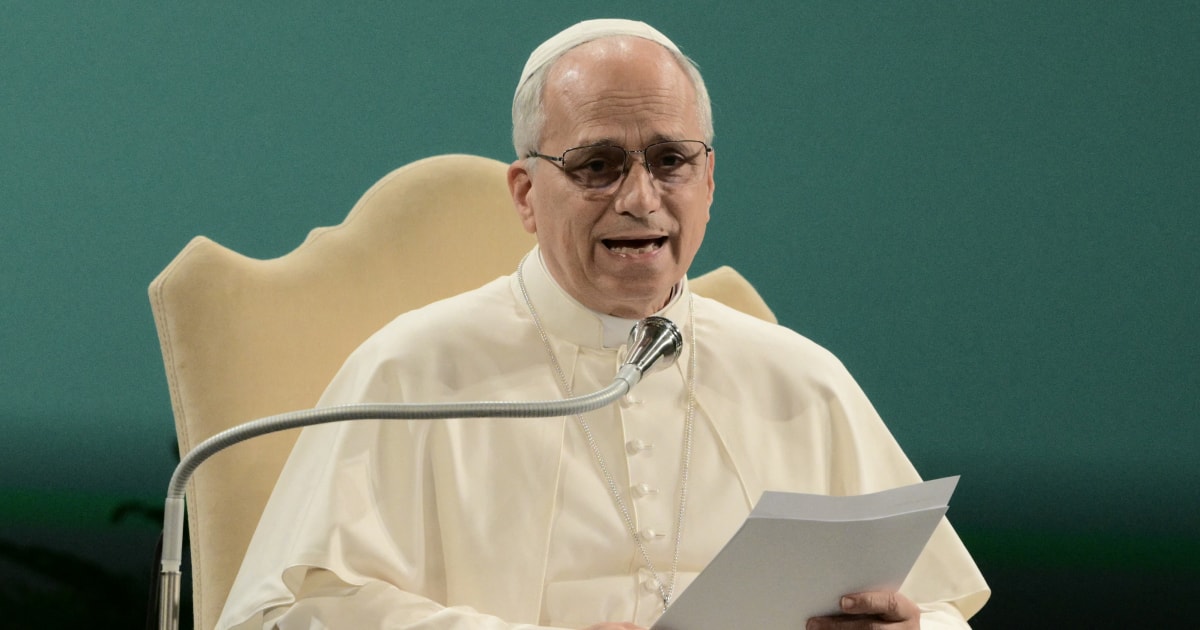
Asked about the blessing of same-sex couples, and specifically about attempts in Germany to produce more formalised guides for such blessings, Leo said the Vatican had already made clear its disagreement with anything going beyond what Pope Francis had allowed. He described that permission in strikingly limited terms: “All people receive blessings.” He added that to go further “can cause more disunity than unity”, and urged Catholics to build unity on Jesus Christ and His teaching.
When Fiducia Supplicans was issued by the Dicastery for the Doctrine of the Faith in December 2023, it insisted that Catholic doctrine on marriage remained unchanged. It ruled out any liturgical rite or blessing resembling a marriage rite, and reaffirmed that marriage is the “exclusive, stable, and indissoluble union between a man and a woman”. Yet it also introduced what it called the “possibility of blessings for couples in irregular situations and for couples of the same sex”, provided these blessings did not validate their status or imply a change in doctrine.
The difficulty was always contained in the phrase: “blessings for couples”. Rome insisted the union was not being blessed. Many readers, including bishops, priests and ordinary Catholics, struggled to see how a blessing requested and received by a couple as a couple could avoid being understood, pastorally and publicly, as some form of recognition of the couple’s relationship.
The confusion was not simply manufactured by the document’s critics, it lay in the tension between two claims: first, that the Church cannot bless a union contrary to the Gospel; second, that a priest may bless “couples” whose relationship is such a union. The declaration tried to solve this by distinguishing between liturgical blessings and spontaneous pastoral blessings. But the pastoral optics were always unstable.
Pope Francis later clarified the intended meaning. Speaking to the Dicastery for the Doctrine of the Faith in January 2024, he said that when a couple approaches spontaneously, “one does not bless the union, but simply the people who have requested it. The union is not blessed, but the people”.
Pope Leo’s latest remarks appear to lean heavily into that clarification. He did not speak of blessing same-sex couples as couples. He spoke of the fact that all people may receive blessings. This shifts the accent away from the contested novelty of Fiducia Supplicans and back towards the traditional pastoral principle that no sinner is beyond the reach of prayer, mercy and grace.
This may be the beginning of a papal policy of containment. Leo has not repudiated Francis. He has not reopened the doctrinal war. He has not invited the Church into another round of polarisation. But he has signalled that the expansive readings of Fiducia Supplicans – especially those that tend towards formalised ceremonies, diocesan protocols, or quasi-ritual blessings – are not the mind of Rome.
That is especially relevant in Germany, where the pressure has long been towards the normalisation of blessings for relationships outside sacramental marriage. The Pope’s objection to “formalised” blessings speaks directly to that context. A spontaneous prayer for persons seeking God’s help is one thing, a Church-approved ceremony that appears to bless a relationship is quite another.
The distinction may seem delicate, even too delicate. But Catholic sacramental and pastoral language often depends on such distinctions. The Church blesses sinners because sinners need grace. She does not bless sin, nor can she bless a relationship in so far as it contradicts the moral order. A pastoral gesture that obscures this distinction ceases to be pastoral, because it ceases to tell the truth.
The real test, therefore, is not whether Fiducia Supplicans remains on the books. It does, at least for now. The test is how it is interpreted and applied. If Leo’s words become the controlling interpretation, then the document’s most disruptive potential may be curbed. Blessings would be understood as prayers for persons, not endorsements of couples; as appeals for conversion and grace, not ecclesial recognition of irregular unions.
That would not satisfy everyone. Progressive Catholics who hoped Fiducia Supplicans would become a stepping stone towards fuller ecclesial recognition of same-sex relationships will find little encouragement in Leo’s caution. Traditional Catholics who wanted a formal repeal will also be disappointed. But the Pope seems to be choosing another path: neither escalation nor repeal, rather restriction by interpretation.
There is a certain Roman logic to this. Documents are not always undone by counter-documents. Sometimes they are absorbed, clarified, limited and gradually placed within a narrower doctrinal frame. Leo may be doing precisely that.
The risk, however, is that ambiguity remains. If Rome wishes to avoid further confusion, it will not be enough to rely on in-flight comments, however revealing. Bishops and priests need a clear juridical and pastoral rule: persons may always be blessed; unions contrary to Catholic teaching may not be blessed; and no public form should suggest otherwise.
For now, Pope Leo has not rewritten Fiducia Supplicans formally. But he may have indicated how he wants it read. And in Rome, that can be almost as important.