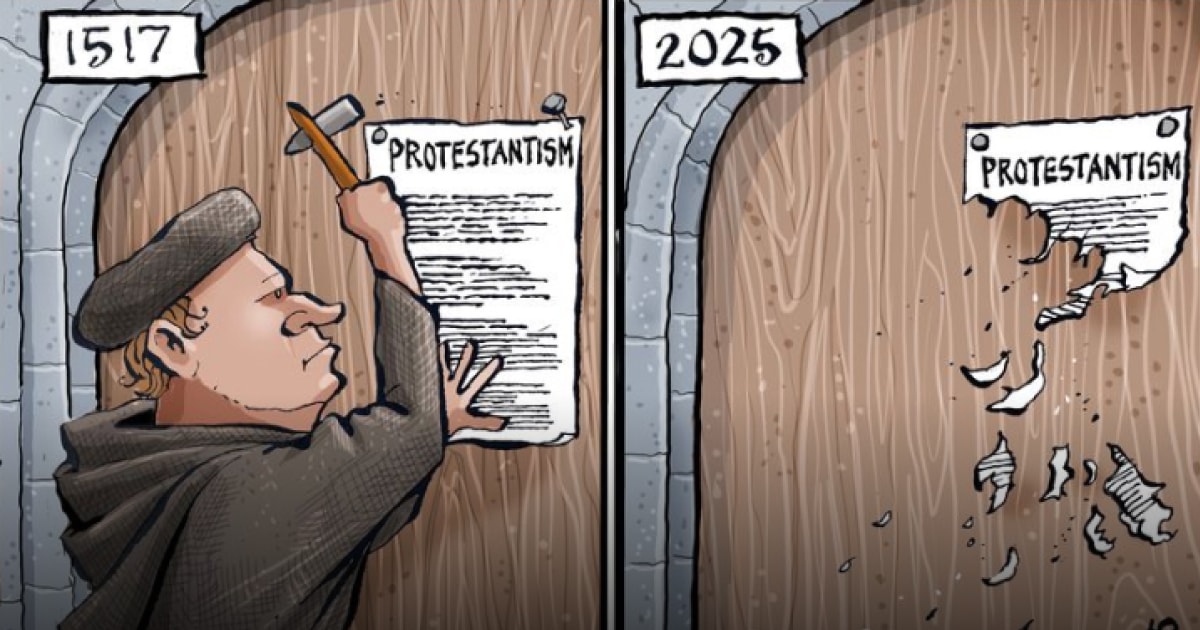






That broad body of Christian belief and practice known to the world as Protestantism originated in Catholic Western Europe in the 16th century, mostly the fruit of the highly original, expansive mind of Martin Luther, and then of the rather narrower and derivative mind of John Calvin. The pivotal doctrine of Protestantism was encapsulated in the easy and elegant slogan: justification by faith alone.
In a Catholic culture in which the passion and death of Jesus on the cross were at the very heart of religious sensibility, Luther's message that Jesus's sacrifice was so overwhelmingly sufficient that nothing else was required from Christians but faith in it found a very ready hearing. Even today, if Luther's rhetoric on this topic is heard as rhetoric, it is nothing more than a fervent proclamation of the gospel, of the good news of salvation. It was, and is, when the rhetoric is mistaken for logic that the moral hazard peeps out and the doctrinal difficulties creep in. For where Luther's logic took him was on a quest for complete certainty about his own spiritual standing with God, and "faith alone", he concluded, could confer the certainty "above all certainty", that you had the grace of God. And this faith conferred grace so certainly that, if you weren't certain you did have grace, then you definitely didn't. It had to be faith "alone", without any human contribution on the believer's part, because, as Luther well knew, fallen human beings were deeply flawed, shot through with sinfulness and utterly unreliable. "All men are liars" (omnis homo mendax, Ps. 115:11) was among his favourite biblical tags. If our own works or actions played any part in our salvation, then the certainty of grace that he sought and inculcated could never be attained. Faith alone.