

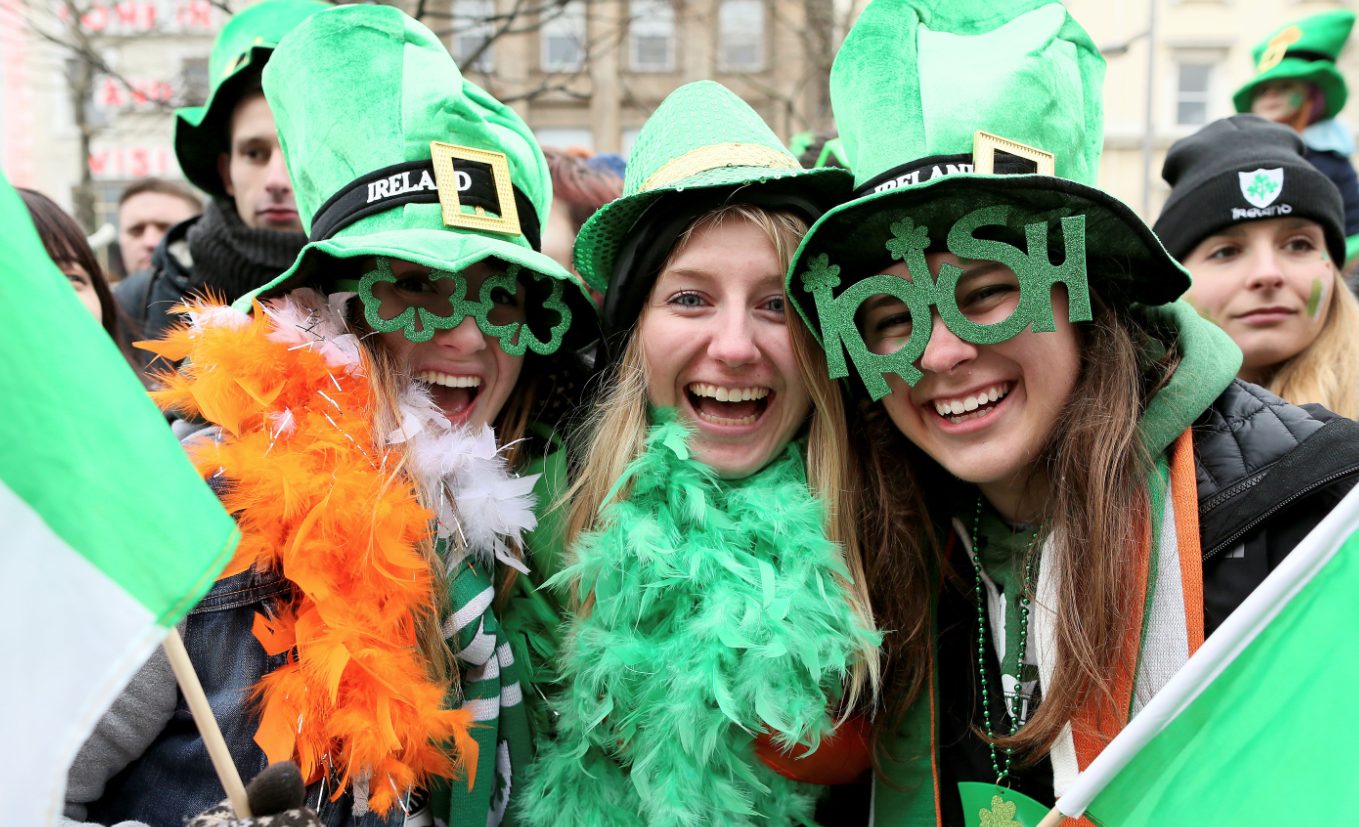
It’s St Patrick’s Day next week and many of the traditional events will be either cancelled or reduced, because of the Covid-19 situation. Street parades in Dublin and Cork have been called off. And I’ve heard some people in Ireland breathe a sigh of relief that Paddy’s Day will be a scaled-down event. In latter years, there have been too many images of drunken revelry in the streets. By the end of the day, some of the scenes have become Hogarthian. Meanwhile, the politicians have used the saint’s day to fly abroad for “marketing” purposes, since St Pat is a universally recognised “brand”. His logo – the shamrock – must be worth millions in terms of “brand recognition”. So yes, maybe it’s no bad thing, if St Patrick’s Day is a little more focused on Patrick himself, and a little less on pints of Guinness and silly hats saying “Kiss me, I’m Irish!” There has been a real revival, in recent years, in scholarship studying Patrick and his time – he came to Ireland in about 431-432, first as a slave. There are many legends around Patrick, but modern methods of research, such as carbon-dating, have greatly enhanced knowledge of the early Christian period. Patrick’s most recent biographer, Roy Flechner, has established that Patrick’s father was a Roman citizen of quite high standing, and Patrick grew up in a villa on the west coast of Britain – possibly around Carlisle – “speaking a British dialect”. Patrick was preceded by another Christian missionary, Palladius, who began evangelising: but Patrick completed the job of making Ireland Christian. He also introduced written records. He is even credited with creating an Irish identity. His Christianity “gave Ireland a sense of consciousness of itself”, writes the scholar Kevin Whelan in a study of Irish religion and landscape. Latin became a vernacular: the monasteries flourished, and Irish monks in turn then started evangelising Germany, France, Switzerland and Italy. Patrick gave the Irish the confidence to take on the ancient centres of wisdom, according to Prof Whelan: flushed with Patrician fervour, the Irish challenged “Hebrew, Egyptian, Greek and Roman learning, and even the papacy itself ”. There were 5,529 churches in Ireland in the aftermath of Patrick’s mission. Maybe this is a golden opportunity to leave aside “Paddy’s Day” as a garish party, and turn to the rewarding story of St Patrick, who it is believed died on March 17, probably in 461.
2:46 PM
There's a silver lining to the cancellation of St Patrick's Day parades
Mary Kenny

4 min read



Already a subscriber? Sign in
5freearticles every month
Continue reading with a free account. No card needed.
- Five free articles every thirty days, on any device you sign in on
- The Catholic Herald newsletter, every morning
- Subscribe whenever you like for everything: every article and the magazine


subscribe to the catholic herald today
Our best content is exclusively available to our subscribers. Subscribe today and gain instant access to expert analysis, in-depth articles, and thought-provoking insights—anytime, anywhere. Don’t miss out on the conversations that matter most.
Subscribe



