
April 17, 2026

Transalpine Redemptorists seeking to organise ‘Imperfect General Council’

Niwa Limbu
More
Related
Min read
share

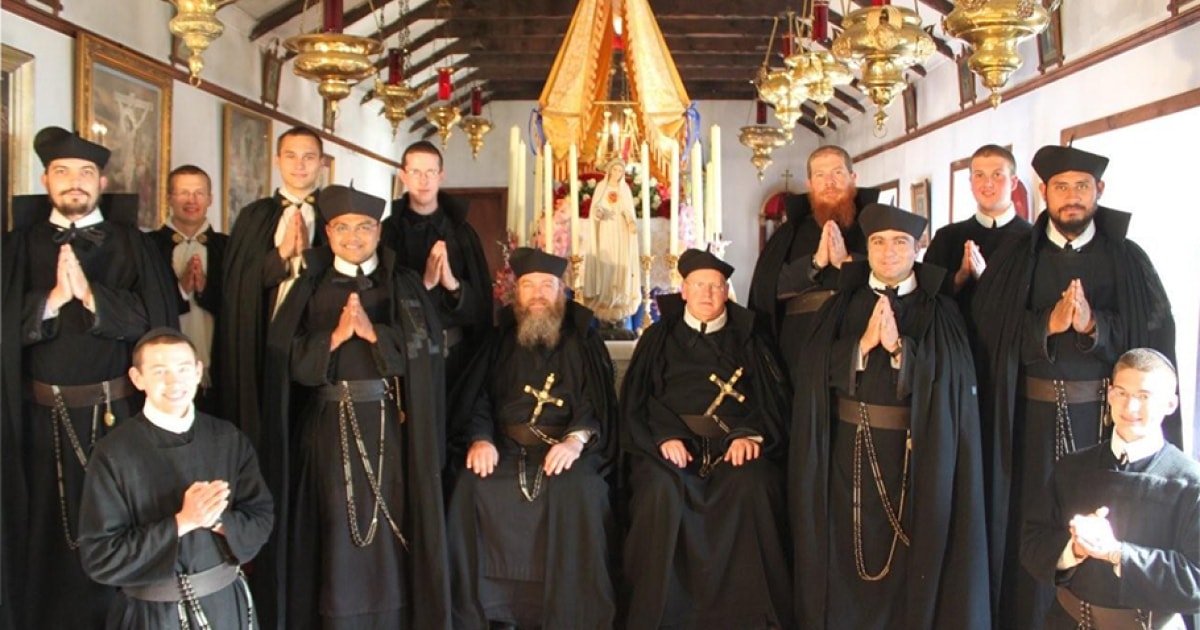
The Sons of the Most Holy Redeemer is working to convene what it calls an “Imperfect General Council”.

The Mother House of the community is in Papa Stronsay in Orkney, Scotland, with a second house in the diocese of Christchurch, New Zealand and a pioneer community in the diocese of Great Falls-Billings, in Montana, USA. After public disputes with Scottish and New Zealand bishops, the community decided to take what it describes as an unusual but historically grounded step in response to a perceived crisis within the Church.
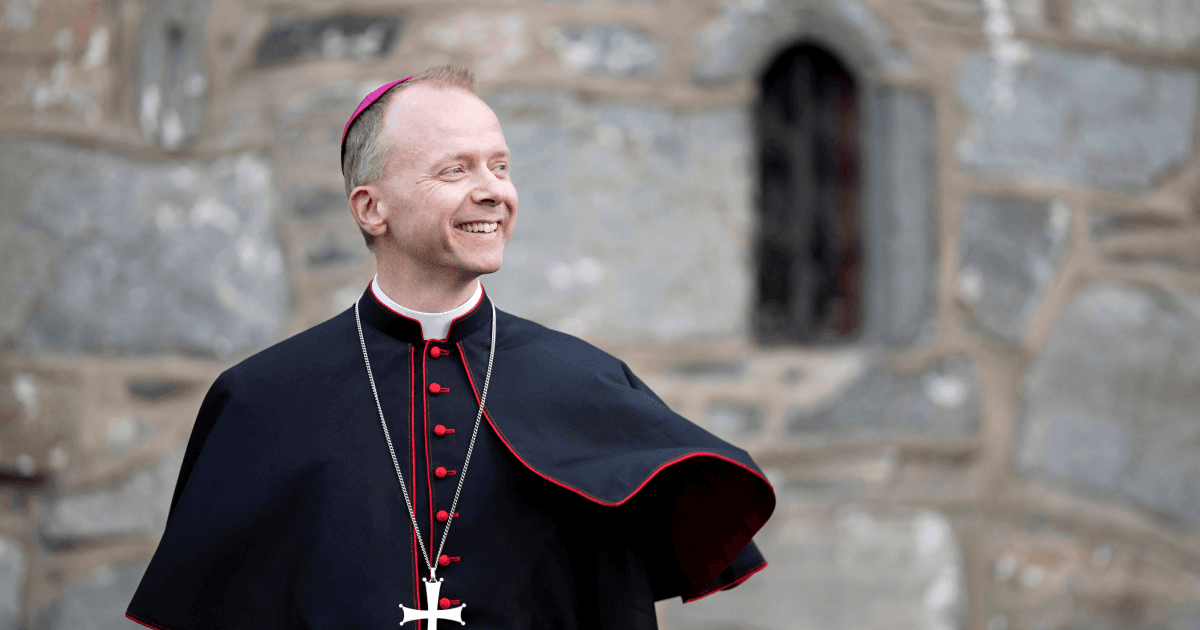
“We are working in our own small way, with our limited manpower, to bring about an Imperfect General Council that will publicly recognise the present Catholic disaster that has no way out but through,” said Fr Michael Mary, head of the Sons of the Most Holy Redeemer, in an interview with The Press on April 10.

He said the proposed gathering would involve bishops acting without papal authority and would seek to represent Catholics who feel marginalised. “There are Catholics all over the world left in ‘Catholic bunkers’ who know what is going on. It is a matter of reaching out to them,” he said. “We are already gathering voices worldwide.”

The Sons of the Most Holy Redeemer, also known as the Transalpine Redemptorists, was founded in 1988 by Fr Michael Mary Sim as a traditional Redemptorist community affiliated with the Society of St Pius X. Originally based at a monastery on the Isle of Sheppey in Kent, the group later moved to France before establishing itself on the island of Papa Stronsay in Scotland in 1999, where it founded the Golgotha Monastery.

From there, the community expanded, publishing a monthly periodical and promoting devotional associations, while also establishing its second monastery in Christchurch in 2007.

In June 2008, the community petitioned the Holy See for reconciliation, a request accepted by Pope Benedict XVI, who declared them to be in “canonical good standing” within the Catholic Church. The motu proprio Summorum Pontificum, which broadened the use of the traditional Latin Mass, was cited as a principal reason for their decision to regularise their status.

Their position was further stabilised in 2012 when Bishop Hugh Gilbert, Bishop of Aberdeen, granted them canonical recognition as a clerical institute of diocesan right. In the years that followed, the community continued to develop, including the ordination of members in Rome and the establishment of additional foundations, among them a presence in Kakahu in New Zealand and an invitation in 2020 to found a monastery in Montana in the United States.

However, the community was expelled from the Christchurch Diocese in July 2024 after allegations, primarily concerning unauthorised exorcism practices. The priests denied any wrongdoing and rejected claims that their ministry had breached Church discipline.

Scrutiny of the group intensified in 2023 after a New Zealand journalistic investigation raised allegations of abuse within the community, including claims that exorcisms had been conducted on children without the approval of the local bishop. Shortly afterwards, Bishop Michael Gielen, Bishop of Christchurch, suspended all exorcisms in the diocese.

On July 13, 2024, the bishop formally disallowed the priests of the community from ministering in the diocese, bringing the dispute to a head and effectively ending their presence there.

Tensions resurfaced in 2025 when the community issued an open letter repudiating what it described as “false shepherds” and criticising recent papal documents, without explicitly declaring the papal office vacant. The statement drew a response from Bishop Hugh Gilbert of Aberdeen, who said it was “incompatible with the Catholic sense of the Church’s unity” and that the diocese “deeply regrets the tone, direction and key elements” of the communication, while maintaining that dialogue remained open.

Fr Michael Mary has pointed to historical precedent in support of the idea, pointing to the crisis of the late medieval Church when rival claimants to the papacy divided Christendom.

“That crisis was resolved within Church structures at the council,” Fr Mary said, referring to the Council of Constance. “There was no way out except to gather a council that represented the worldwide Catholic Church and take measures. This is where we situate ourselves.”

The Council of Constance, held between 1414 and 1418, brought an end to the Western Schism through a series of resignations and depositions and the election of Pope Martin V, restoring unity after years of competing obediences.

Fr Michael Mary indicated that the proposed council would follow a similar principle of gathering bishops to address what he described as a global crisis, though he did not name any participants or provide details of how such a meeting would be convened.

At present, no bishops have publicly associated themselves with the initiative, and no date or location has been announced.

Continue reading with a free account

Create a free account to read up to five articles each month
Create free account

You have # free articles remaining this month.

Subscribe to get unlimited access.
Sign up

subscribe to the catholic herald today

Our best content is exclusively available to our subscribers. Subscribe today and gain instant access to expert analysis, in-depth articles, and thought-provoking insights—anytime, anywhere. Don’t miss out on the conversations that matter most.
Subscribe