

February 12, 2026

Vatican Abuse-and-Coverup Trial: Accuser says he "resigned" himself to abuse

Christopher Altieri
More
Related
Min read
share

“Over the years,” the accuser testified on Wednesday, “I resigned myself. ‘Do what you want,’ I thought, ‘just hurry up and leave, because I want to sleep because I have school tomorrow’.”

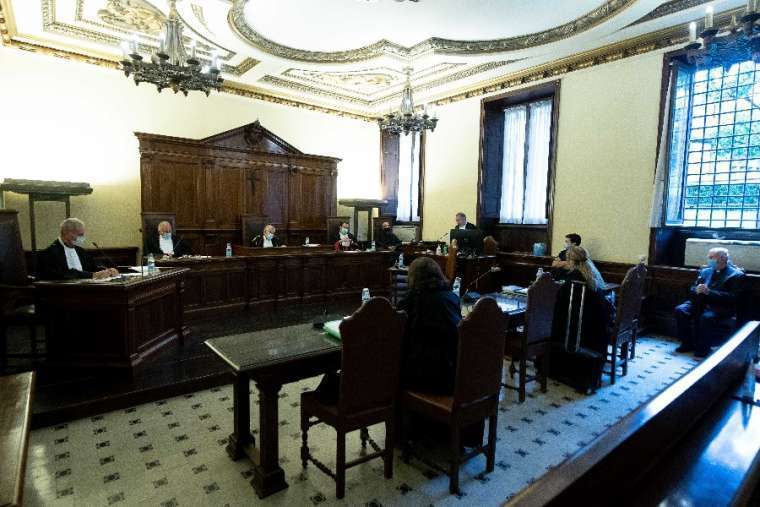
-- Rome -- The accuser in the abuse and coverup trial underway in the criminal court of Vatican City took the stand on Wednesday, testifying for just over three hours during which he gave evidence of repeated abuse at the hands of now-Father Gabriele Martinelli, when both Martinelli and the victim-accuser were minors and students at the St. Pius X preseminary in the Vatican, and to rough treatment from then-rector, Fr. Enrico Radice, who is accused of covering up the abuse.

The witness – identified by his initials, L.G. – offered a detailed account of the facts, which was occasionally at odds with earlier reported claims.

Under oath, L.G. claimed never to have personally seen Martinelli engage in sexual acts with third parties. That claim was at odds with statements in the criminal complaint. “It was known that Martinelli had the propensity to get into bed, at night, in someone else's room,” L.G. said, but he never saw it happen.

L.G. also told the court he never actually suffered abuse in the small bathroom behind the Altar of the Chair in St. Peter’s Basilica – a claim reported by Italy’s muckraking Le Iene television program in 2017 – but not because Martinelli didn’t try.

"Martinelli,” L.G. testified, “had reached the altar,” meaning he had advanced in stature and responsibility. “He came and went, he was responsible for the sacristy,” L.G. explained. “We altar servers were in this corridor behind Bernini’s structure and we weren’t very attentive at Mass,” he went on to say, explaining that they’d talk with each other or stare at their cell phones.

“That time he faced me with his robe open and he was naked underneath,” L.G. told the court, “he invited me to follow him into one of the two bathrooms.” L.G. said he was “shocked” and wondered: “These things even during Mass?”

“I left the corridor,” L.G. testified, “and stood at the altar next to the steps, so that couldn’t tell me, come on over there.”

L.G. also testified that Martinelli tried to abuse him in the third-floor rectory, where the boys would change clothes before Masses in the Basilica. L.G. said that Martinelli would occasionally let himself be found with his pants down – or completely naked – inviting L.G. to perform sexual acts. “He knew my shifts,” L.G. said. “He used to say to me: ‘Come here, let's have a quick one,  come on’.” L.G. said that he managed to “escape” since they occurred during the day.

Fr. Martinelli’s legal counsel, Rita Claudia Baffioni, highlighted the contradictions between L.G.’s statements to prosecutors and his testimony under oath on Wednesday in open court. A picture of a “consensual” relationship was what observers inside the courtroom described as the thrust of Baffioni’s questioning. Some witnesses have in fact spoken of a six-year “relationship” between L.G. and Martinelli.

L.G. tells his story

L.G. testified that the abuse he suffered came to occur regularly: “Two or three times a week,” he told the court – and the kinds of abuse he suffered “evolved” over time.

The first attack was “a direct approach,” L.G. recounted. “ pulled my pants down and started touching my private parts, then masturbated himself. Once finished, he walked away as if nothing had happened. It was a shock, I felt paralyzed.” L.G. claimed that the attacks at first took place in the room he shared with two other preseminary pupils.

Both the court and the lawyers asked L.G. whether he made any attempt to call attention to his danger or otherwise protest while the attacks were underway? L.G. answered that he almost always tried to make noise – by “banging the bedside drawers” or striking the wall – but those efforts availed little. “The noise frightened Martinelli who would go away,” L.G. explained, “but after half an hour he would return.”

L.G. told the court his roommates “either slept or pretended to be asleep. No one ever stood up to say ‘What are you doing?’.”

Martinelli eventually sought L.G. for oral and anal sex, the latter testified, which they performed in a small room called “the pharmacy” and in a single dorm room that Martinelli had taken for his own.

L.G. testified that he suffered abuse for roughly three years, 2006-2009, before bringing his suffering to the rector.

L.G. seeks help from the rector, Fr. Radice

In 2009 L.G. decided to speak with the rector, Radice in his office – but L.G. testified that he was not explicit in his discussion. “I never told him I was a victim of sexual assaults,” L.G. told the court. “I didn't go into details,” but spoke of a general “sense of unease” and said that Martinelli “bothered” him. “At 30,” L.G. said, “I feel guilty, even, for not having been clearer.”

L.G. also recalled Fr. Radice’s reception of his complaints, such as they were.

“His answer left me shocked, it was very harsh,” L.G. said. “You’re just envious,” L.G. recalled Fr. Radice telling him. “Stop it, I’ll call your parish priest, your family.” According to L.G., Radice’s “classic threat” was to say that he would call boys’ parents and kick them out of the preseminary.

Martinelli’s role of superiority in the preseminary is something to which several witnesses have testified – some going so far as to describe Martinelli as “delegate” to Fr. Radice. According to L.G., Martinelli used this power as a tool to blackmail others, even threatening them with being sent away from the preseminary, and for obtaining sexual favors.

Under questioning from the defense, however, L.G. said that he never had direct threats, nor any specific recollection of boys dismissed exclusively "for retaliation,” but said, “in any case, these measures were signed by Radice.”

Given the persistent abuse and the rector’s reaction, L.G. testified that he “resigned” himself to it and decided then not to try to report anything.

Describing his experience of the abuse as it occurred, L.G. described “a detachment between soul and body.” He went on to say his body “was there, like an object,” and that he had “no physical reaction.”

“Over the years,” he went on to testify, “I resigned myself. ‘Do what you want,’ I thought, ‘just hurry up and leave, because I want to sleep because I have school tomorrow’.”

“I liked school,” L.G. told the court. “It was the only moment of freedom and normality, since in the preseminary we lived all muffled up, there was no freedom of movement or thought.”

Subsequent attempts to get help

In 2013, after he had left St. Pius X, L.G. wrote to then-bishop of Como, Diego Coletti, to tell of the psychological violence he had suffered during his first year at the school and the “physical violence” he suffered starting in his second year. Coletti had requested the letter after a meeting between the two at the headquarters of the Italian bishops’ conference in Rome. L.G. explained that he "did not want to stir up trouble” but only needed money to pay for psychological therapy.

L.G. said Bishop Coletti told him he needed written documentation to proceed: “You say these things,” L.G. recalled Coletti as saying to him, “but I need something written and signed.” L.G. also recalled that Coletti recommended that he “get away from the Church” and “live his life” in order to achieve a measure of serenity.

L.G. had some help in drafting the letter, from Fr. Daniele Pinton, who had been L.G.’s spiritual director for a time after L.G. had left the preseminary. The letter – in essence a written transposition of the conversation at CEI headquarters with Bishop Coletti – never received an answer.

Lawyers called attention to the fact that the letter was less explicit than L.G.’s statements from the witness stand and also noted chronological inconsistencies. There also appeared to have been a subsequent telephone conversation between Coletti and L.G., but never any other face-to-face meeting.

L.G. said he had a brief confrontation with another cleric, Monsignor Vittorio Lanzani, with whom L.G. was explicit regarding  the abuse he suffered, but had no reply from Lanzani, either.

Other high-ranking Churchmen have been named in connection with the Vatican's minor seminary, including the former archpriest of St Peter’s Basilica, Cardinal Angelo Comastri, who was the pope’s Vicar for Vatican City at the time. Witnesses have told the court Comastri “knew everything” and “did nothing” to stop the abuse or bring it to light. Cardinal Comastri is not charged in connection with the case, and it is unclear whether he will be called to testify.

Raking the muck

Another former pupil of St. Pius X, Kamil Jarzembowski, figured prominently in the emergence of the preseminary scandal. L.G. testified that he had no particularly strong relationship with Jarzembowski.” We weren’t great friends,” he said. “We were indifferent to each other.”

L.G. had, however, confided in Jarzembowski and another former pre-seminarian regarding his allegations against Martinelli.

“There was no particular surprise,” on Jarzembowski’s part, L.G. told the court, “because they knew that Gabriele did these things.” L.G. testified that he had hosted Jarzembowski for a few days at his house, but “didn't talk about these things.” He said they exchanged a few messages over the next few years, because “the clash with real life after the preseminary was traumatic,” and “I had empathy,” but “the relationship never went further.”

L.G. told the court that Jarzembowski, however, began to insist that “We have to talk,” and asked L.G. countersign a memo he had written. “I didn't want to hear it,” L.G. testified. “For me it was a subject that had ended down the memory hole.”

That, apparently, was where things stood until the TV troupe from Le Iene showed up at the Roman restaurant where L.G. was working, to ask him questions. L.G. agreed to go to Milan for an interview. From that moment, he testified, he was “stormed” by calls from journalists, so in order not to end up “plastered across TV” he sought legal counsel to protect himself. “I wanted to bring this whole situation to an end,” he said.

L.G. testified that he wrote to Pope Francis in 2017, “at the suggestion of Alessandro Flamini,” another former preseminary pupil, from whom the court has heard evidence. Flamini had said that he had already written to the Pope, “to tell what happened at the Preseminary, and that he had delivered his letter to the pope at the end of a general audience.”

“There was also the L’Osservatore Romano photograph,” L.G. said, of Flamini who delivered this letter to the pope. “Flamini then told me: ‘The pope wants a letter from you too.’ I wrote this letter that same evening, by hand, at his home, then Alessandro was supposed to deliver it to the pope.”

“Alessandro was a friend with Monsignor Lanzani,” L.G. explained. “Since Lanzani was mentioned in my letter,” L.G. told the court, “Alessandro decided to throw it away.”

“The letter was destroyed,” L.G. claimed, “and was never delivered to the Pope.” L.G. however, had a photo of the letter, introduced into evidence.

L.G. claimed that he continues to suffer sleep disorders and has serious problems in the sexual and relational spheres. He testified to the effect that he struggles with establishing relationships of trust with others.

L.G. told the court that he did not want to continue on the path of priestly formation because of his “total revulsion and disgust” towards the ecclesiastical environment. “It made me sick to think of entering a seminary,” he said.
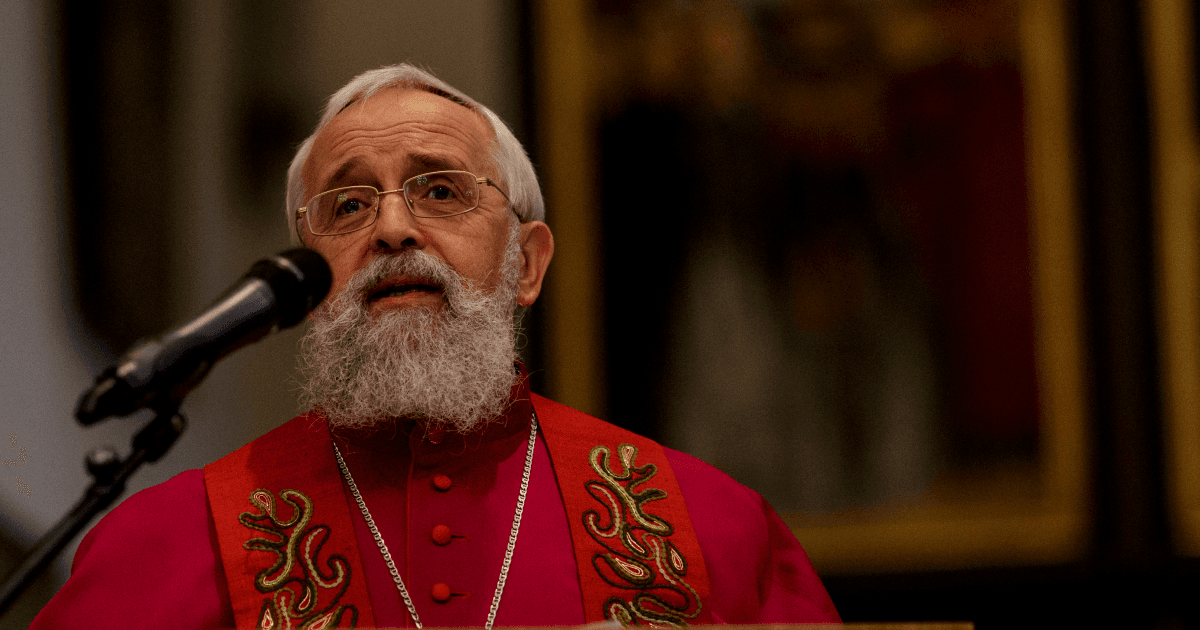
“Over the years,” the accuser testified on Wednesday, “I resigned myself. ‘Do what you want,’ I thought, ‘just hurry up and leave, because I want to sleep because I have school tomorrow’.”

-- Rome -- The accuser in the abuse and coverup trial underway in the criminal court of Vatican City took the stand on Wednesday, testifying for just over three hours during which he gave evidence of repeated abuse at the hands of now-Father Gabriele Martinelli, when both Martinelli and the victim-accuser were minors and students at the St. Pius X preseminary in the Vatican, and to rough treatment from then-rector, Fr. Enrico Radice, who is accused of covering up the abuse.

The witness – identified by his initials, L.G. – offered a detailed account of the facts, which was occasionally at odds with earlier reported claims.

Under oath, L.G. claimed never to have personally seen Martinelli engage in sexual acts with third parties. That claim was at odds with statements in the criminal complaint. “It was known that Martinelli had the propensity to get into bed, at night, in someone else's room,” L.G. said, but he never saw it happen.

L.G. also told the court he never actually suffered abuse in the small bathroom behind the Altar of the Chair in St. Peter’s Basilica – a claim reported by Italy’s muckraking Le Iene television program in 2017 – but not because Martinelli didn’t try.

"Martinelli,” L.G. testified, “had reached the altar,” meaning he had advanced in stature and responsibility. “He came and went, he was responsible for the sacristy,” L.G. explained. “We altar servers were in this corridor behind Bernini’s structure and we weren’t very attentive at Mass,” he went on to say, explaining that they’d talk with each other or stare at their cell phones.

“That time he faced me with his robe open and he was naked underneath,” L.G. told the court, “he invited me to follow him into one of the two bathrooms.” L.G. said he was “shocked” and wondered: “These things even during Mass?”

“I left the corridor,” L.G. testified, “and stood at the altar next to the steps, so that couldn’t tell me, come on over there.”

L.G. also testified that Martinelli tried to abuse him in the third-floor rectory, where the boys would change clothes before Masses in the Basilica. L.G. said that Martinelli would occasionally let himself be found with his pants down – or completely naked – inviting L.G. to perform sexual acts. “He knew my shifts,” L.G. said. “He used to say to me: ‘Come here, let's have a quick one,  come on’.” L.G. said that he managed to “escape” since they occurred during the day.

Fr. Martinelli’s legal counsel, Rita Claudia Baffioni, highlighted the contradictions between L.G.’s statements to prosecutors and his testimony under oath on Wednesday in open court. A picture of a “consensual” relationship was what observers inside the courtroom described as the thrust of Baffioni’s questioning. Some witnesses have in fact spoken of a six-year “relationship” between L.G. and Martinelli.

L.G. tells his story

L.G. testified that the abuse he suffered came to occur regularly: “Two or three times a week,” he told the court – and the kinds of abuse he suffered “evolved” over time.

The first attack was “a direct approach,” L.G. recounted. “ pulled my pants down and started touching my private parts, then masturbated himself. Once finished, he walked away as if nothing had happened. It was a shock, I felt paralyzed.” L.G. claimed that the attacks at first took place in the room he shared with two other preseminary pupils.

Both the court and the lawyers asked L.G. whether he made any attempt to call attention to his danger or otherwise protest while the attacks were underway? L.G. answered that he almost always tried to make noise – by “banging the bedside drawers” or striking the wall – but those efforts availed little. “The noise frightened Martinelli who would go away,” L.G. explained, “but after half an hour he would return.”

L.G. told the court his roommates “either slept or pretended to be asleep. No one ever stood up to say ‘What are you doing?’.”

Martinelli eventually sought L.G. for oral and anal sex, the latter testified, which they performed in a small room called “the pharmacy” and in a single dorm room that Martinelli had taken for his own.

L.G. testified that he suffered abuse for roughly three years, 2006-2009, before bringing his suffering to the rector.

L.G. seeks help from the rector, Fr. Radice

In 2009 L.G. decided to speak with the rector, Radice in his office – but L.G. testified that he was not explicit in his discussion. “I never told him I was a victim of sexual assaults,” L.G. told the court. “I didn't go into details,” but spoke of a general “sense of unease” and said that Martinelli “bothered” him. “At 30,” L.G. said, “I feel guilty, even, for not having been clearer.”

L.G. also recalled Fr. Radice’s reception of his complaints, such as they were.

“His answer left me shocked, it was very harsh,” L.G. said. “You’re just envious,” L.G. recalled Fr. Radice telling him. “Stop it, I’ll call your parish priest, your family.” According to L.G., Radice’s “classic threat” was to say that he would call boys’ parents and kick them out of the preseminary.

Martinelli’s role of superiority in the preseminary is something to which several witnesses have testified – some going so far as to describe Martinelli as “delegate” to Fr. Radice. According to L.G., Martinelli used this power as a tool to blackmail others, even threatening them with being sent away from the preseminary, and for obtaining sexual favors.

Under questioning from the defense, however, L.G. said that he never had direct threats, nor any specific recollection of boys dismissed exclusively "for retaliation,” but said, “in any case, these measures were signed by Radice.”

Given the persistent abuse and the rector’s reaction, L.G. testified that he “resigned” himself to it and decided then not to try to report anything.

Describing his experience of the abuse as it occurred, L.G. described “a detachment between soul and body.” He went on to say his body “was there, like an object,” and that he had “no physical reaction.”

“Over the years,” he went on to testify, “I resigned myself. ‘Do what you want,’ I thought, ‘just hurry up and leave, because I want to sleep because I have school tomorrow’.”

“I liked school,” L.G. told the court. “It was the only moment of freedom and normality, since in the preseminary we lived all muffled up, there was no freedom of movement or thought.”

Subsequent attempts to get help

In 2013, after he had left St. Pius X, L.G. wrote to then-bishop of Como, Diego Coletti, to tell of the psychological violence he had suffered during his first year at the school and the “physical violence” he suffered starting in his second year. Coletti had requested the letter after a meeting between the two at the headquarters of the Italian bishops’ conference in Rome. L.G. explained that he "did not want to stir up trouble” but only needed money to pay for psychological therapy.

L.G. said Bishop Coletti told him he needed written documentation to proceed: “You say these things,” L.G. recalled Coletti as saying to him, “but I need something written and signed.” L.G. also recalled that Coletti recommended that he “get away from the Church” and “live his life” in order to achieve a measure of serenity.

L.G. had some help in drafting the letter, from Fr. Daniele Pinton, who had been L.G.’s spiritual director for a time after L.G. had left the preseminary. The letter – in essence a written transposition of the conversation at CEI headquarters with Bishop Coletti – never received an answer.

Lawyers called attention to the fact that the letter was less explicit than L.G.’s statements from the witness stand and also noted chronological inconsistencies. There also appeared to have been a subsequent telephone conversation between Coletti and L.G., but never any other face-to-face meeting.

L.G. said he had a brief confrontation with another cleric, Monsignor Vittorio Lanzani, with whom L.G. was explicit regarding  the abuse he suffered, but had no reply from Lanzani, either.

Other high-ranking Churchmen have been named in connection with the Vatican's minor seminary, including the former archpriest of St Peter’s Basilica, Cardinal Angelo Comastri, who was the pope’s Vicar for Vatican City at the time. Witnesses have told the court Comastri “knew everything” and “did nothing” to stop the abuse or bring it to light. Cardinal Comastri is not charged in connection with the case, and it is unclear whether he will be called to testify.

Raking the muck

Another former pupil of St. Pius X, Kamil Jarzembowski, figured prominently in the emergence of the preseminary scandal. L.G. testified that he had no particularly strong relationship with Jarzembowski.” We weren’t great friends,” he said. “We were indifferent to each other.”

L.G. had, however, confided in Jarzembowski and another former pre-seminarian regarding his allegations against Martinelli.

“There was no particular surprise,” on Jarzembowski’s part, L.G. told the court, “because they knew that Gabriele did these things.” L.G. testified that he had hosted Jarzembowski for a few days at his house, but “didn't talk about these things.” He said they exchanged a few messages over the next few years, because “the clash with real life after the preseminary was traumatic,” and “I had empathy,” but “the relationship never went further.”

L.G. told the court that Jarzembowski, however, began to insist that “We have to talk,” and asked L.G. countersign a memo he had written. “I didn't want to hear it,” L.G. testified. “For me it was a subject that had ended down the memory hole.”

That, apparently, was where things stood until the TV troupe from Le Iene showed up at the Roman restaurant where L.G. was working, to ask him questions. L.G. agreed to go to Milan for an interview. From that moment, he testified, he was “stormed” by calls from journalists, so in order not to end up “plastered across TV” he sought legal counsel to protect himself. “I wanted to bring this whole situation to an end,” he said.

L.G. testified that he wrote to Pope Francis in 2017, “at the suggestion of Alessandro Flamini,” another former preseminary pupil, from whom the court has heard evidence. Flamini had said that he had already written to the Pope, “to tell what happened at the Preseminary, and that he had delivered his letter to the pope at the end of a general audience.”

“There was also the L’Osservatore Romano photograph,” L.G. said, of Flamini who delivered this letter to the pope. “Flamini then told me: ‘The pope wants a letter from you too.’ I wrote this letter that same evening, by hand, at his home, then Alessandro was supposed to deliver it to the pope.”

“Alessandro was a friend with Monsignor Lanzani,” L.G. explained. “Since Lanzani was mentioned in my letter,” L.G. told the court, “Alessandro decided to throw it away.”

“The letter was destroyed,” L.G. claimed, “and was never delivered to the Pope.” L.G. however, had a photo of the letter, introduced into evidence.

L.G. claimed that he continues to suffer sleep disorders and has serious problems in the sexual and relational spheres. He testified to the effect that he struggles with establishing relationships of trust with others.

L.G. told the court that he did not want to continue on the path of priestly formation because of his “total revulsion and disgust” towards the ecclesiastical environment. “It made me sick to think of entering a seminary,” he said.

subscribe to
the catholic herald

Continue reading your article with a subscription.
Read 5 articles with our free plan.
Subscribe

subscribe to the catholic herald today

Our best content is exclusively available to our subscribers. Subscribe today and gain instant access to expert analysis, in-depth articles, and thought-provoking insights—anytime, anywhere. Don’t miss out on the conversations that matter most.
Subscribe