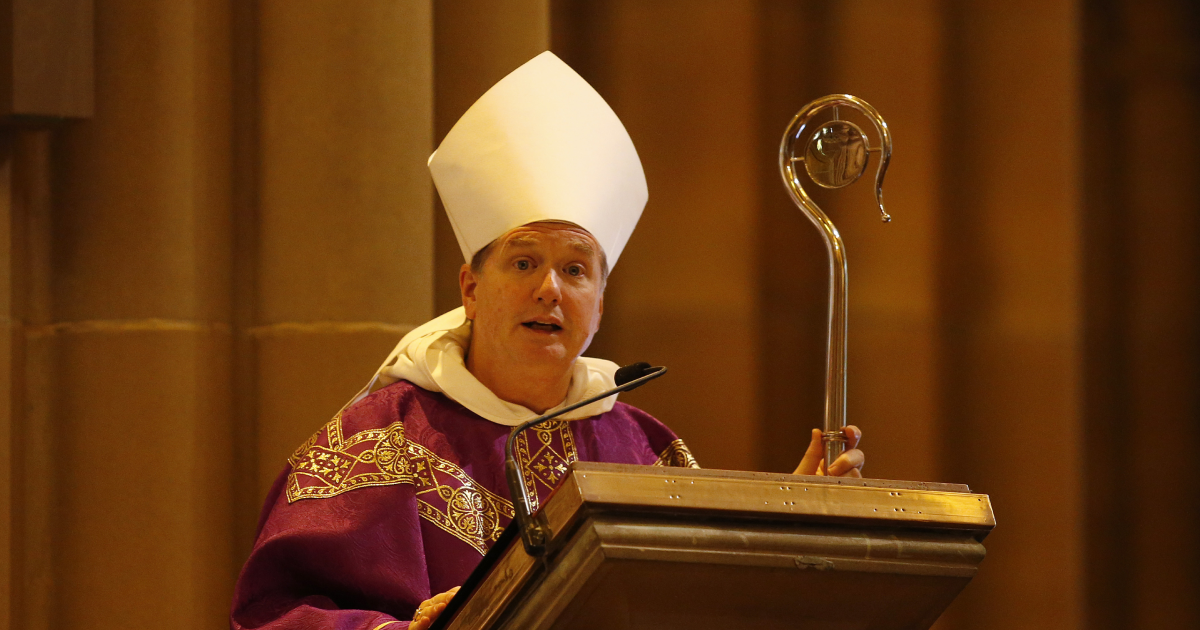


Archbishop Carlo Maria Viganò has said the recent inpouring of around 60,000 migrants into the Spanish exclave of Ceuta was part of a “diabolical plan of ethnic replacement”.
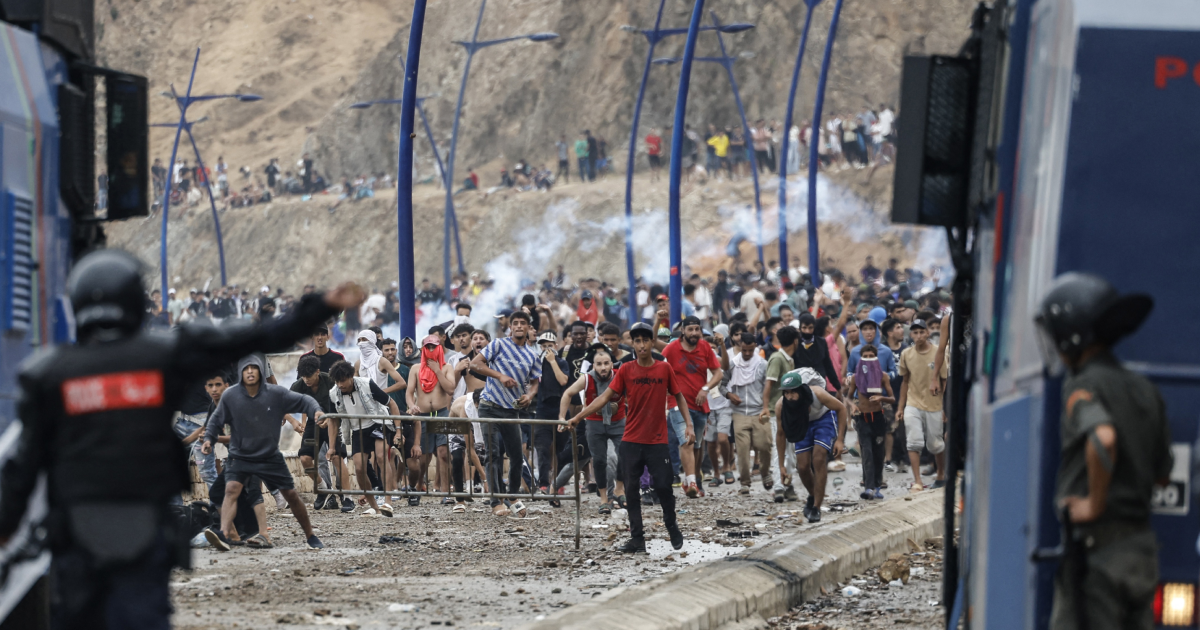
The incident had seen Italy temporarily suspend parts of its Schengen agreement with Spain in response, though the Spanish Government claims that most of the migrants who arrived during the July 30 and 31 influxes have now returned home. The number of migrants who arrived in Ceuta was equivalent to around 70 per cent of Ceuta’s 84,000 population.
Archbishop Viganò said: “The planned invasion of the apostate West is not a spontaneous phenomenon, but a diabolical plan of ethnic replacement, of the deliberate destruction of the social fabric, and of the provocation of disorders and civil war. Peoples without faith, without roots, and without identity are immersed in masses of foreigners who share neither the Faith, nor the culture, nor natural law, with the aim of breaking every cohesion and making any resistance impossible.”
The archbishop, who was excommunicated in 2024, described Rome as the “synodal hierarchy, apostate and traitorous,” stating that it remained silent on the issue of migration and is an “active part of this infernal design".
He said: “With its words of unconditional welcome, with its documents that deny the primacy of the Faith and of Christian civilization, with its complicit silence in the face of the erasure of Christianity from families and from society, it collaborates in the ruin of what remains of Christendom. This is not charity: it is complicity. It is not mercy: it is betrayal. Whoever has ears to hear, let them hear. And whoever wishes to save their soul and their land, let them return to God and to His Law, before it is too late.”
The Dicastery for the Doctrine of the Faith noted its reasons for Viganò’s excommunication as being due to a refusal to recognise the Pope and a rejection of the Second Vatican Council. Last month, Archbishop Viganò reaffirmed his objections to Rome, stating that there was a “schism underway between the Pope and the papacy itself” in what he described as the “conciliar-synodal Church” attempting to eclipse the Catholic Church.
Pope Leo XIV had responded to the incident in Ceuta after his Sunday recitation of the Angelus on August 2, in which he said he was following the “alarming situation” and prayed that a solution of peace, stability and justice could be found.
The Diocese of Ceuta directed its Sunday collections towards the Diocesan Delegation for Migration in order for the funds to be used for a local migrant centre. In a statement, the diocese reiterated its willingness to collaborate with civil institutions to work towards a humanitarian response.
It is believed that between 3,000 and 5,000 migrants remain in Ceuta. More than 70 migrants died during the incident by either drowning or during a stampede, with specialist divers searching the surrounding waters for more bodies in the sea.
Archbishop Luis Argüello of Valladolid, president of the Spanish Bishops’ Conference, called biopolitics the key to the “current world power structure.”
He said: “Life is played with, and people – their dreams, hunger, sexuality, and data – are used in favour of profit and power. Migrations are part of this strategy. The Ceuta invasion is a test. Demography is a weapon.”
On August 3 the Spanish Government denied allegations that it ignored warnings from its intelligence service about the arrival of thousands of migrants. A Government spokesperson said that “no one had anticipated such an unprecedented event”. Spanish Prime Minister Pedro Sánchez called the incident in Ceuta an attack on his nation’s territorial integrity that “deserves our most resounding and energetic condemnation”.