December 9, 2025

We need more people of faith in politics

Min read
share

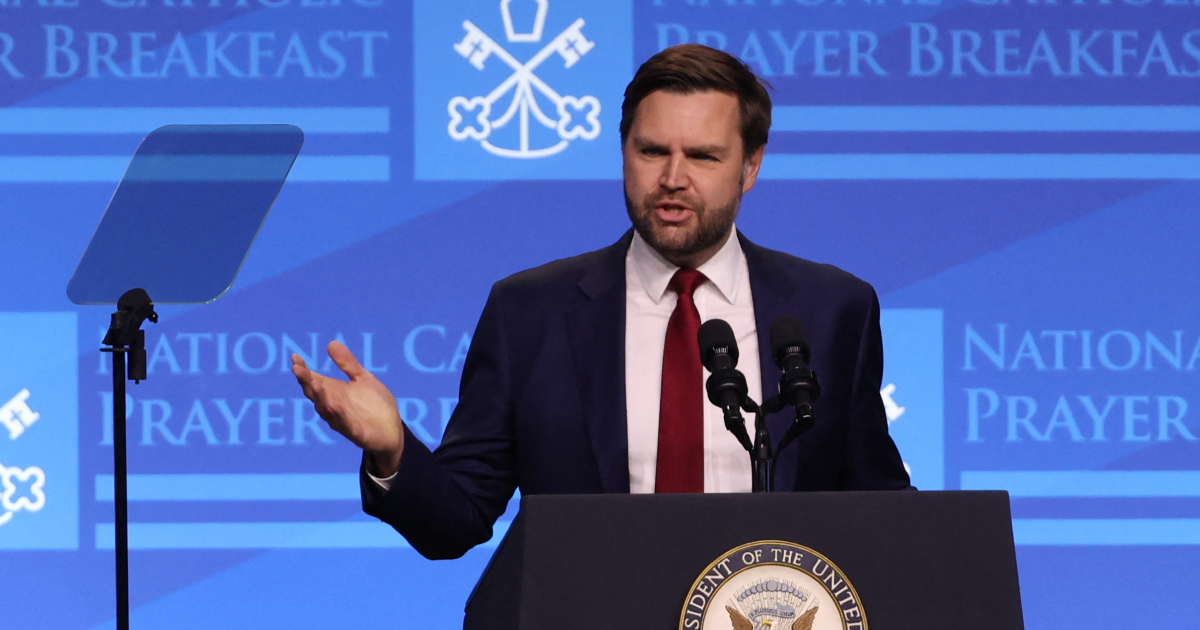
It is a matter of debate whether JD Vance, the self-described geriatric millennial, is the first Catholic vice-president of the United States. He is the third if you, as the Church would, include Mike Pence, who was raised Catholic and even served as a Catholic youth minister, but later abandoned the faith in favour of Evangelicalism. He is the second if you only include Joe Biden, whose open support for positions contrary to the Catholic faith has led some to question his Catholicity. He is the first if you exclude the previous two on grounds of practice and morals.

What is certain is that he is the first Catholic convert to hold the office. Unlike the vast majority of Catholics worldwide, for JD Vance the faith was not a birthright. He was raised primarily by his grandmother, whom he called Mamaw, who practised a deeply personal Protestant faith devoid of any denominational allegiance beyond not being Catholic. His church attendance was intermittent and his schooling entirely secular.

His Catholic faith came to him as a rejection of the moral decadence he saw around him. In the City of God, he read St Augustine’s critique of Roman society as one concerned with enabling citizens to increase their wealth “so as to supply his daily prodigalities, and so that the powerful may subject the weak for their own purposes”, and saw its parallels with life in the 21st century.

In his journey to Catholicism, Vance became convinced of viewpoints that could not easily be confined within a political straightjacket. While maintaining his capitalist instincts regarding profit and private ownership, he deplored the materialism that has left today’s society so vacuous. He kept his sense of patriotism and American sovereignty while showing deference to a foreign pope. He supported border security while emphasising the inherent dignity of migrants as made in the image of God.

Vance has certainly remained loyal to President Trump, even in some of his more controversial stances. During the 2024 vice-presidential debate Vance clearly became uncomfortable when asked directly by Tim Walz whether he thought Trump had lost the 2020 election, presumably knowing that answering in the affirmative would infuriate the Republican leader. He clumsily avoided the question and thus avoided the repercussions.

But it is also clear that, unlike most politicians who remain company men out of survival, Vance is willing to speak above the parapet. His speech at the Munich Security Conference was indicative of an approach to politics that does not serve purely to advance the aspirations of a single political party. He decried the regress in liberties experienced by many across Europe. He highlighted cases of infringement on religious and social liberty across the continent, drawing particular attention to the United Kingdom where “perhaps most concerningly” the backslide away from conscience rights has placed the basic liberties of religious Britons “in the crosshairs”.

He used the case of Adam Smith-Connor, a father and army veteran who was convicted for silently praying in his head within 200 metres of an abortion centre. He also drew attention to the bizarre and almost incomprehensible example of the Scottish Government distributing letters to houses within abortion buffer zones warning them that household private prayer may now amount to breaking the law.

The international delegations stared, shocked: the ridiculousness of their encroachments on freedom of speech laid before them. The reason for their shock was simple. Vance was not sticking to the agreed talking points of the conference – Russia, AI in warfare, defence spending – nor was he a mirror copy of his admittedly inimitable leader. He was speaking from a rare resource in modern politics: his conscience.

Despite Vance’s justified concern “that free speech in Britain and across Europe is in retreat”, particularly concerning matters pertaining to life, there is a member of parliament in the United Kingdom who has tirelessly used his voice to protect society’s most vulnerable from the greedy hands of state-sanctioned eugenics.

Danny Kruger will be known to most for his ferocious defence of the sick and vulnerable when Kim Leadbeater’s Bill was pushed through an inexperienced parliament earlier this year. Leading the charge from the Commons, he unflaggingly spoke up for the disabled, elderly and sick who will fall victim to the ill-thought-out introduction of suicide into the health systems of England and Wales. When the report went to the committee stage, he laboured to tighten the inadequate Bill so that Britain might be spared the full fury of its consequences. Indeed, it is his example that has likely inspired members of the House of Lords – Baroness Hollins, Baroness Coffey and Baroness Grey-Thompson, to name a few – to tear apart the dangerous piece of legislation.

He recently left a promising career in the Conservative Party, where he had the support of political heavyweights like Sir Bill Cash, to join Reform UK, which has just five seats in the House of Commons. His unwavering commitment to the pro-life cause means he has spent much of the past year forgoing more career-enhancing ministerial positions in favour of opposing assisted suicide. And on 17 July this year, to an almost empty House of Commons, he gave an impassioned speech calling Britain to retreat from its present ideology, an amalgamation of “ancient paganism, Christian heresies and the cult of modernism”, which is hostile to “families, communities and nations”, and to return to its Christian heritage.

Why the principled political take? He, like Vance, is motivated first and foremost by his Christian belief.

There are many examples of men and women who are informed by their Christian faith, but they remain the exception rather than the norm. If just two men can be such a disrupting force for good in politics, it indicates that a greater Christian representation could reap remarkable benefits. St Catherine of Siena famously said, “Be who God meant you to be, and you will set the world on fire” (metaphorically, one would hope). By that logic, if our governments were made up of people who sought God rather than party, the world might be set on a course not of decline but of renewal, guided by leaders whose consciences are formed by truth rather than ambition.

It is a matter of debate whether JD Vance, the self-described geriatric millennial, is the first Catholic vice-president of the United States. He is the third if you, as the Church would, include Mike Pence, who was raised Catholic and even served as a Catholic youth minister, but later abandoned the faith in favour of Evangelicalism. He is the second if you only include Joe Biden, whose open support for positions contrary to the Catholic faith has led some to question his Catholicity. He is the first if you exclude the previous two on grounds of practice and morals.

What is certain is that he is the first Catholic convert to hold the office. Unlike the vast majority of Catholics worldwide, for JD Vance the faith was not a birthright. He was raised primarily by his grandmother, whom he called Mamaw, who practised a deeply personal Protestant faith devoid of any denominational allegiance beyond not being Catholic. His church attendance was intermittent and his schooling entirely secular.

His Catholic faith came to him as a rejection of the moral decadence he saw around him. In the City of God, he read St Augustine’s critique of Roman society as one concerned with enabling citizens to increase their wealth “so as to supply his daily prodigalities, and so that the powerful may subject the weak for their own purposes”, and saw its parallels with life in the 21st century.

In his journey to Catholicism, Vance became convinced of viewpoints that could not easily be confined within a political straightjacket. While maintaining his capitalist instincts regarding profit and private ownership, he deplored the materialism that has left today’s society so vacuous. He kept his sense of patriotism and American sovereignty while showing deference to a foreign pope. He supported border security while emphasising the inherent dignity of migrants as made in the image of God.

Vance has certainly remained loyal to President Trump, even in some of his more controversial stances. During the 2024 vice-presidential debate Vance clearly became uncomfortable when asked directly by Tim Walz whether he thought Trump had lost the 2020 election, presumably knowing that answering in the affirmative would infuriate the Republican leader. He clumsily avoided the question and thus avoided the repercussions.

But it is also clear that, unlike most politicians who remain company men out of survival, Vance is willing to speak above the parapet. His speech at the Munich Security Conference was indicative of an approach to politics that does not serve purely to advance the aspirations of a single political party. He decried the regress in liberties experienced by many across Europe. He highlighted cases of infringement on religious and social liberty across the continent, drawing particular attention to the United Kingdom where “perhaps most concerningly” the backslide away from conscience rights has placed the basic liberties of religious Britons “in the crosshairs”.

He used the case of Adam Smith-Connor, a father and army veteran who was convicted for silently praying in his head within 200 metres of an abortion centre. He also drew attention to the bizarre and almost incomprehensible example of the Scottish Government distributing letters to houses within abortion buffer zones warning them that household private prayer may now amount to breaking the law.

The international delegations stared, shocked: the ridiculousness of their encroachments on freedom of speech laid before them. The reason for their shock was simple. Vance was not sticking to the agreed talking points of the conference – Russia, AI in warfare, defence spending – nor was he a mirror copy of his admittedly inimitable leader. He was speaking from a rare resource in modern politics: his conscience.

Despite Vance’s justified concern “that free speech in Britain and across Europe is in retreat”, particularly concerning matters pertaining to life, there is a member of parliament in the United Kingdom who has tirelessly used his voice to protect society’s most vulnerable from the greedy hands of state-sanctioned eugenics.

Danny Kruger will be known to most for his ferocious defence of the sick and vulnerable when Kim Leadbeater’s Bill was pushed through an inexperienced parliament earlier this year. Leading the charge from the Commons, he unflaggingly spoke up for the disabled, elderly and sick who will fall victim to the ill-thought-out introduction of suicide into the health systems of England and Wales. When the report went to the committee stage, he laboured to tighten the inadequate Bill so that Britain might be spared the full fury of its consequences. Indeed, it is his example that has likely inspired members of the House of Lords – Baroness Hollins, Baroness Coffey and Baroness Grey-Thompson, to name a few – to tear apart the dangerous piece of legislation.

He recently left a promising career in the Conservative Party, where he had the support of political heavyweights like Sir Bill Cash, to join Reform UK, which has just five seats in the House of Commons. His unwavering commitment to the pro-life cause means he has spent much of the past year forgoing more career-enhancing ministerial positions in favour of opposing assisted suicide. And on 17 July this year, to an almost empty House of Commons, he gave an impassioned speech calling Britain to retreat from its present ideology, an amalgamation of “ancient paganism, Christian heresies and the cult of modernism”, which is hostile to “families, communities and nations”, and to return to its Christian heritage.

Why the principled political take? He, like Vance, is motivated first and foremost by his Christian belief.

There are many examples of men and women who are informed by their Christian faith, but they remain the exception rather than the norm. If just two men can be such a disrupting force for good in politics, it indicates that a greater Christian representation could reap remarkable benefits. St Catherine of Siena famously said, “Be who God meant you to be, and you will set the world on fire” (metaphorically, one would hope). By that logic, if our governments were made up of people who sought God rather than party, the world might be set on a course not of decline but of renewal, guided by leaders whose consciences are formed by truth rather than ambition.
share

subscribe to the catholic herald today

Our best content is exclusively available to our subscribers. Subscribe today and gain instant access to expert analysis, in-depth articles, and thought-provoking insights—anytime, anywhere. Don’t miss out on the conversations that matter most.
Subscribe