

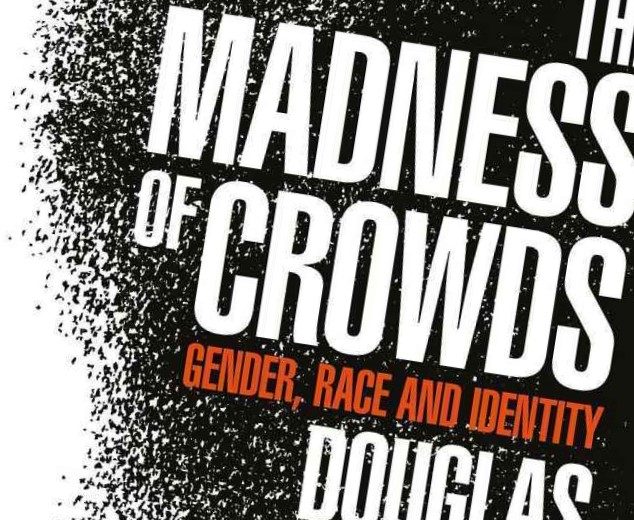
Moving from blogging about Gabriele Kuby’s book, Abuse of Sexuality in the Catholic Church to blogging about Douglas Murray’s new book, The Madness of Crowds: Gender, Race and Identity raises interesting parallels. Kuby is looking at that ancient and most enduring guardian of dogmatic truth, the Catholic Church, and asking what has gone wrong: why the current breakdown of trust, belief, discipline and clear teaching. Murray is looking at our society from an entirely secular perspective yet asking a related question: what are the consequences of living in a period “in which all our grand narratives have collapsed?” Christians would respond that when our understanding of the divine purpose of human life has been abandoned, social and moral anarchy will surely follow. Still, Murray is to be commended for being one of the few sane voices (I count Sir Roger Scruton and Professor Jordan Peterson as others) in a public arena dominated by “madness” or (another word he uses frequently) “derangement.” As with his earlier book, The Strange Death of Europe, Murray’s argument is worth reading for its thoughtfulness, its warning note and its catalogue of inadvertent misdemeanours by public figures not “woke” enough at the time they are interviewed. As he mordantly comments, being “woke” changes so quickly anyone, even those struggling to signal the right virtues, can be caught out and subsequently destroyed in the resulting Twitterstorm. We live in dangerous times. Murray’s book examines four issues particular to our times: “Gay”, “Women”, “Race” and “Trans”. As a self-described gay man, he writes, “Perhaps it requires someone who is gay to say this” before demonstrating how the media, e.g. Google, Twitter and Facebook “aim to embed a new metaphysics into our societies: a new religion, if you will.” As he points out once homosexuals had achieved rightful equality, “the battle went on, morphing into other demands”. Only someone in his position could enquire, “You wonder how heterosexuals feel about the growing insistence with which gay stories are crow-barred into any and all areas.” He brings the same sceptical stance to feminism, to race and to the latest media obsession, transgenderism. “Every day there is a new subject for hate and moral judgement”. Citing instances in which cheeky journalists or academics have submitted spoof articles to supposedly learned journals, Murray points out that “So long as people were willing to claim that we live in a patriarchal society, a “rape culture”, a homophobic, transphobic and racist culture, so long as they indict their own society…then almost anything can be said.” Yet ironically, at the same time, the societies in which permanent rage has become embedded are also the most affluent and the most free. This becomes virtue-signalling at its most toxic and mendacious; instead of virtues being something a person struggles to attain in his own life all his days, in humility and with many failures, they become something you instantly “signal” on the media, to “likes” and applause from your peers. Murray dares to ask: what if people aren’t oppressed? What if they aren’t victims? What about the quiet heroism and stoicism of earlier times? Why have we created an angry world in which “forgiveness has become almost impossible”? He rightly concludes that where we find true meaning in our lives comes from our friends, our families and our loved ones. “Using ourselves up on identity politics, social justice and intersectionality is a waste of a life.” Yes indeed. Unfortunately this well-argued book is likely to be read by those who agree with it rather than the phobia-hunters on Twitter who need to absorb its message most. In a work full of depressing stories showing our civilisation at its nadir - its most irrational, self-destructive and confused - one brief anecdote stands out when Murray cites the American writer Wendell Berry, defending motherhood forty years ago against those who called it “a kind of biological drudgery…using up women who could do better things.” Berry cheerfully reflected: “We all have to be used up by something. Although I will never be a mother, I am glad to be used up by motherhood and what it leads to, just as – most of the time – I gladly belong to my wife, my children and several head of cattle, sheep and horses. What better way to be used up?”
1:00 AM
What if people aren't oppressed?
Francis Phillips

4 min read



Already a subscriber? Sign in
5freearticles every month
Continue reading with a free account. No card needed.
- Five free articles every thirty days, on any device you sign in on
- The Catholic Herald newsletter, every morning
- Subscribe whenever you like for everything: every article and the magazine


subscribe to the catholic herald today
Our best content is exclusively available to our subscribers. Subscribe today and gain instant access to expert analysis, in-depth articles, and thought-provoking insights—anytime, anywhere. Don’t miss out on the conversations that matter most.
Subscribe



