
Last month, Air Chief Marshal Sir Richard Knighton, Chief of the Defence Staff, delivered a lecture at the Royal United Services Institute in which he warned that Russia was developing new and destabilising weapons systems. Arguing that the current Russian leadership’s aim was to “ultimately destroy NATO”, he proposed that UK defence must be the “central organising principle of government”. He urged that: “Sons and daughters. Colleagues. Veterans … will all have a part to play. To build. To serve. And if necessary, to fight. And more families will know what sacrifice for our nation means”.
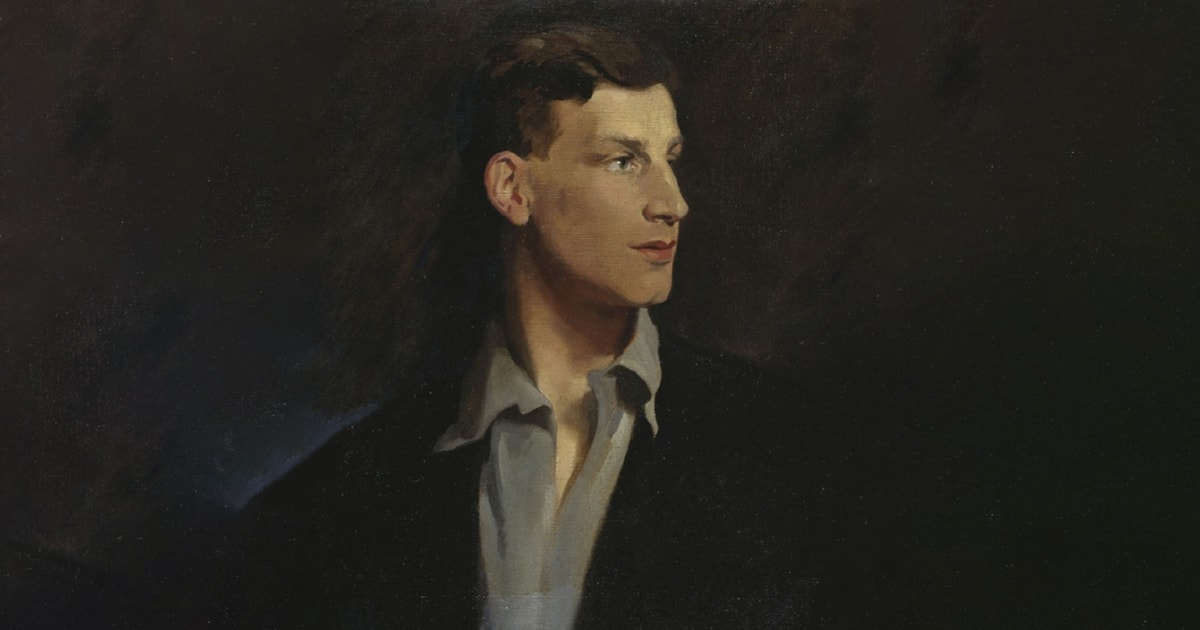
The tone of such comments, just prior to the Christmas season, recalls some of the atmosphere of this country in 1914 – if not that of the famous and inspiring Christmas Truce football match of that year. The same anniversary of Christ’s birth saw one of the great war poets, Siegfried Sassoon, write:
The Prince of Wounds is with us here,
Wearing his crown as he gazes down.
Sad and forgiving and austere.
The writer Charles Glass reminds us, in his compelling book Soldiers Don’t Go Mad, that at this stage Sassoon had not seen combat and harboured no doubts about the justice and necessity of the war.
Yet by 1917 Sassoon had published his poem “Attack”, whose tone is far less subdued:
“Lines of grey muttering faces, masked with fear,
They leave their trenches, going over the top,
While time ticks blank and busy on their wrists,
And hope, with furtive eyes and grappling fists,
Flounders in mud. O Jesu, make it stop!”
The horror of the First World War was to change Sassoon, the earner of a Military Cross, into a pacifist sympathiser and conscientious objector, albeit an eccentric one ready ultimately to return to the battlefield.
Sassoon objected to the Government’s insistence that peace could only be achieved with “the destruction of Kaiserism and Prussianism”, and he mourned for young soldiers “entrapped by the silent conspiracy against them”. He went on in his diary: “Poor heroes! If only they could speak out; and then throw their medals in the faces of their masters; and ask their women why it thrills them to know that they, the dauntless warriors, have shed the blood of Germans.” For Sassoon, “Soldiers conceal their hatred of war//Civilians conceal their liking for it.”
Following his convictions, Sassoon defied the King’s Regulations by writing to his commanding officer, refusing to carry out military duties in protest against “the policy of the Government in prolonging the War by failing to state their conditions of peace”.
That a charismatic and dashing member of the officer class was prepared to publicly question the war was an acute embarrassment for the Government. Determined not to make a martyr out of so dangerous an objector, the authorities, instead of imprisoning Sassoon, sent him for psychiatric treatment at the pioneering mental hospital at Craiglockhart.
The humane and Hippocratic ethos of that institution would assist many shell-shocked officers, including the even greater poet Wilfred Owen, in the recovery of their sanity. That sanity was required in order that they might fight again in a war some were saying was itself insane.
It is, of course, a perversion of medicine to force psychiatric treatment upon someone merely on account of their awkward beliefs – even if this was a rather neat solution to the problem of Sassoon. It is a perennial problem for states, especially those with a tradition of liberal tolerance, to mobilise those who voice their objection to such mobilisation in strongly normative terms. How does one get the mass of the population to have the “right” conscience, lining up with a “central organising principle”? And are states especially good at discerning the moral truth-sensitivity of such beliefs when other pressing concerns are making themselves felt?
A moral story was certainly told by the various sides of the Great War, with each side citing perceived injustices which they took themselves to be duty-bound to resist. And while many would not doubt which side was the aggressor, and which side stood closer to the interests of human civilisation, historians cannot be blind to how obsessions over the needs of empire led to reckless guarantees, diplomatic missteps and provocations on the part of the “righteous” side which helped cause that disastrous war. The very nature of war encourages a self-reinforcing total commitment which de-emphasises certain pricks of conscience for fear of weakening commitment to an overall cause.
The idolatry of power was a common theme of criticism of the Central Powers, especially where “Prussianism” was most influential. The brilliant Austrian satirist Karl Kraus saw in the mania around him what he would capture in his epic play The Last Days of Mankind. He grasped as no one else did how pure militarism had permeated the culture he lived in and how, through the use of journalistic clichés, the enormous machinery of the press inculcated the people with just the right kind of “common sense” to prepare them for a war which had more than an element of moral anarchism about it. This anarchism was married to a blurring of the concepts of Might and Right which German philosophy had prepared the way for in the previous century. That development went in tandem with the idea, which Luther’s confused legacy had opened the door to, that morality and politics stand in essential opposition, with politics understood in strictly non-moral terms.
What morally disgusted Kraus was the way in which fellow Austrian and German writers and poets used heroic verse to cover over the human sufferings at the front. This was, of course, true of all sides during the Great War, but as Kraus’s biographer Edward Timms notes:
“The great strength of English poetry of the First World War is that it is written by men who had direct experience of trench warfare to which they responded with moral as well as imaginative energy. Their finest poems face the full horror of war.”
Sassoon did return to the front still hungry for glory, if now assailed by doubts about how readily he risked the lives of his men, his “children” who were willing to die for him. He reasoned that he returned to the war he no longer believed in because of loyalty to these men. Late in life, Sassoon was to join the Catholic Church, an event movingly recalled in Melanie McDonagh’s recent book Converts.
That Church does not preach pacifism, though it does set the bar for what counts as a just war far higher than many appreciate. An evil will must be met with its opposite and Right does sometimes need to be fought for with Might – but beware of politicians and poets who speak of either without the moral sensitivity required by the objects of their words or without the experience that could give greater weight to what they so confidently assert. And recall the elegiac words on the Great War of that lesser-known war poet Edmund Blunden, on revisiting Ypres in 1929:
“Man in our time, and with our help, became
A pale Familiar; here he struck the Sun,
And for a season turned the Sun to blood;
Many such nights as this his Witch and he
Unmasked their metal, and with poisonous blasts
Broke the fair sanctuary of this world’s rest
And circumvented God. But now misrule
With all its burning rout had gone on the wind
Leaving us with this south-west breeze to whisper
In bushes younger than the brows it cooled;
Foreheads still trenched with feverish wonderings
Of what was once Time’s vast compulsion, now
Incapable to stir a weed or moth.”