
March 31, 2026

What to make of Cardinal Roche’s comments on the Latin Mass

Niwa Limbu
More
Related
Min read
share

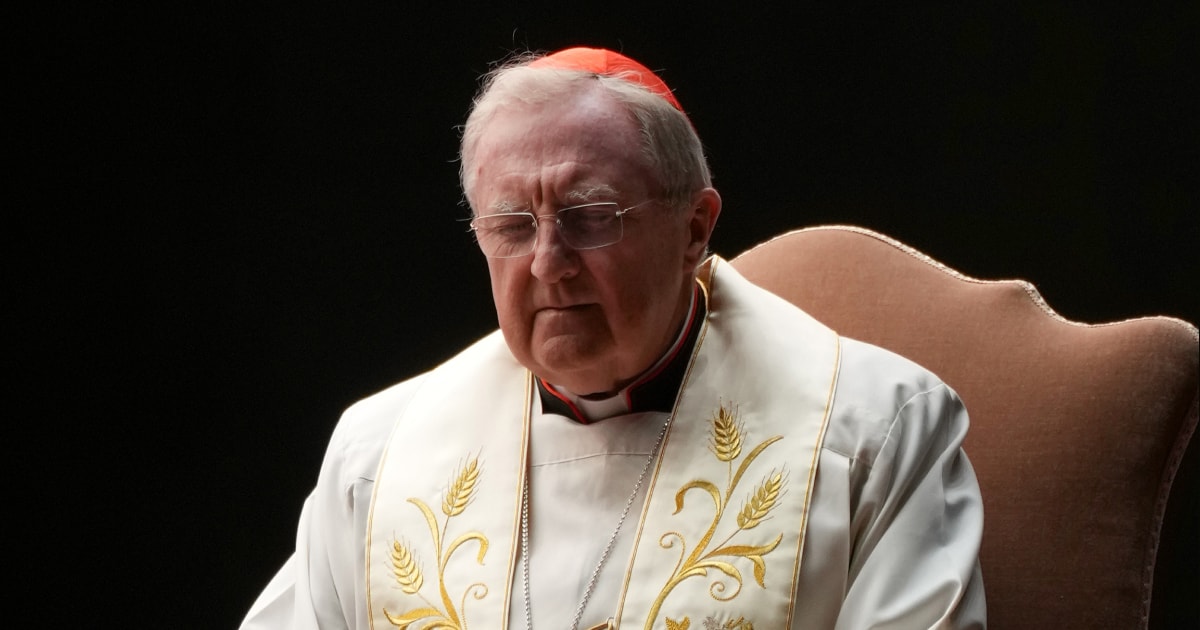
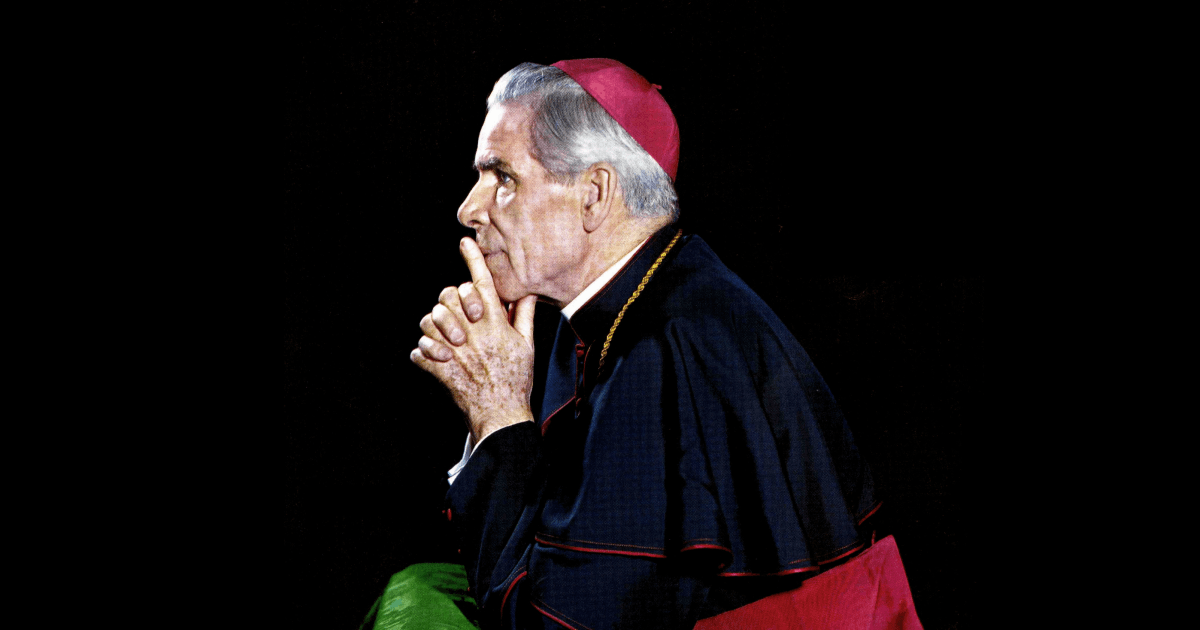
Cardinal Arthur Roche has defended the Vatican’s restrictions on the preconciliar Latin Mass, insisting that the measures introduced under Pope Francis were prompted by concerns about unity.

In an interview with OSV News published on March 27, Cardinal Roche said the motu proprio Traditionis Custodes was rooted in the way the older form of the Mass had come to be used in certain quarters. “What the Holy Father began to realise is that the concession granted to those who found the new rite difficult was being promoted against the reform of the liturgy from the Second Vatican Council,” he said. “And that promotion … is a promotion ultimately against the unity of the Church.”
The cardinal pointed out that earlier permissions granted during the pontificates of Pope John Paul II and Pope Benedict XVI had been conceived as a limited pastoral response. “Pope John Paul II and Pope Benedict XVI – before Pope Francis – also gave this concession to celebrate the old form of the Mass for those who could not adjust to the new form of the Mass,” he said, describing these provisions as a temporary accommodation rather than a permanent parallel.

His remarks follow the circulation of a text he prepared for cardinals ahead of the first extraordinary consistory of Pope Leo XIV in January, in which he set out a theological and historical defence of the post-conciliar liturgical reforms and reiterated the principles behind the current restrictions.

Although the document was distributed to members of the College of Cardinals, it was not formally debated at the meeting, but its subsequent publication prompted renewed criticism.

Cardinal Roche framed the question of the liturgy in explicitly ecclesial terms, rejecting the idea that it could be shaped by individual taste or preference. “When we go to church, we don’t go to church to worship simply as an individual but as a family. We go together as the congregation which is called by God,” he said, emphasising that the Church is formed as a people rather than a collection of private devotional choices.

He drew on the earliest history of Christianity to underline the point, referring to the disputes addressed by St Paul in the First Letter to the Corinthians. “What I gave you to celebrate, I received from Jesus himself,” he said, summarising the apostolic teaching that the Eucharist is not a human invention but something handed down and entrusted to the Church. The implication, he suggested, is that fidelity to what has been received must take precedence over attempts to shape the liturgy according to particular sensibilities.

Addressing the intensity of the current debate, the cardinal questioned why controversy had continued despite the fact that the celebration of the older rite remains possible under papal authority. “So I ask myself: Why is all this so intense going on? Why all this noise, the battering of drums and the blowing of trumpets? What else is going on when they have been given the concession of this Mass? What is the problem? Something else is clearly afoot,” he said.

At the same time, Cardinal Roche acknowledged the evident appeal of the Latin Mass for a growing number of Catholics, suggesting that its attraction cannot be understood in isolation from the wider cultural context. “When people go into a church that’s quiet, they find that quite attractive. [The noise is] cut off,” he said, pointing to the contrast with what he described as the constant noise of contemporary life.

He added that “the music and the reverence” associated with the older form of the liturgy also present a challenge to the celebration of the post-conciliar Mass. “That also should be equally attractive every Sunday,” he said, indicating that the qualities which draw people to the traditional rite ought not to be absent from the ordinary form.

Nevertheless, he warned against setting the two forms of the Roman rite in opposition to one another. “Pitching one rite against the other is to lose a sense of the material you are handling. This is not a game. There needs to be give and take on both sides here,” he said, calling for a more measured approach to the question.

The cardinal also addressed concerns about liturgical abuses, arguing that such problems are not confined to the period following the Second Vatican Council but have recurred throughout the Church’s history. “There have always been abuses and always caused by lack of formation or a deep misunderstanding,” he said, again invoking the example of the early Christian communities to illustrate the point.

His comments defending the 2021 motu proprio Traditionis Custodes reveal more about the fragility of liturgy than about any real threat from the preconciliar Latin Mass. By framing the older form of the Roman rite as a “concession” whose prior permissive use undermined ecclesial unity, Cardinal Roche misrepresents the careful pastoral guidance of his predecessors, particularly Pope John Paul II and Pope Benedict XVI.

Cardinal Roche argues that earlier permissions for the 1962 Missal were merely a “pastoral accommodation” for those who struggled with the post-conciliar rite and that the celebration of this form “was being promoted against the reform of the liturgy from the Second Vatican Council”, ultimately imperilling Church unity.

Yet Pope John Paul II, in measures such as Quattuor Abhinc Annos and the 1988 Ecclesia Dei decree, explicitly sought to integrate those attached to the older forms into the life of the Church. He did so not to tolerate or abrogate Vatican II reforms, but to maintain communion: “To all those Catholic faithful who feel attached to some previous liturgical and disciplinary forms of the Latin tradition I wish to manifest my will to facilitate their ecclesial communion by means of the necessary measures to guarantee respect for their rightful aspirations.”

Benedict XVI built upon this framework, emphasising continuity and harmony rather than opposition. In his 2007 motu proprio Summorum Pontificum, he affirmed that the 1962 Missal “is to be considered as an extraordinary expression of the same ‘lex orandi’ of the Church” and that it “was never juridically abrogated”.

In his accompanying Letter to Bishops, he reiterated that the older form should be honoured for its venerable and ancient usage and may be celebrated freely by any priest, without imposing conditions on groups’ acceptance of Vatican II reforms. Benedict XVI explicitly rejected the idea that the extraordinary form was a temporary concession or a source of division: “These two expressions of the Church’s lex orandi will in no way lead to a division in the Church’s lex credendi; for they are two usages of the one Roman rite.”

By contrast, Cardinal Roche frames the older rite as a concession now to be restricted for reasons of “unity”, requiring verification of groups’ adherence to post-conciliar reforms. He questions the vigour of debate surrounding the Latin Mass, noting the appeal of its quiet, reverent celebration, while calling for compromise “on both sides”. At the same time, he casts the celebration of the 1962 Missal as something contingent upon papal discretion rather than recognising it as a permanent, venerable form of worship fully integrated into the life of the Church.

Cardinal Roche further invokes St Paul to support his position, paraphrasing 1 Corinthians 11: “‘What I gave you to celebrate, I received from Jesus himself.’” Yet his argument, that fidelity to tradition is primarily about avoiding misuse or personal preference, fails to acknowledge that prior popes understood the 1962 Missal as part of the Church’s inheritance, not a loophole to be revoked. John Paul II and Benedict XVI consistently emphasised that the Mass is entrusted to the Church, not to individual bishops or curial officials, and that pastoral accommodation should serve communion, not control.

Historical precedent underlines this point. The 1570 Missal of St Pius V, later revised by John XXIII in 1962, was never abrogated. In Quo Primum, St Pius V explicitly prohibited alteration, under threat of divine penalty: “We likewise declare and ordain that no one whosoever is permitted to alter this notice of Our permission … Would anyone, however, presume to commit such an act, he should know that he will incur the wrath of Almighty God and of the Blessed Apostles Peter and Paul.” Benedict XVI cited this continuity in establishing the extraordinary form as a legitimate and enduring part of the Church’s liturgy, to be celebrated in harmony with the post-conciliar rite.

Cardinal Roche’s focus on perceived abuses similarly distorts history. He notes that “there have always been abuses … caused by lack of formation” and suggests that contemporary celebrations of the 1962 Missal are suspect. Yet John Paul II and Benedict XVI responded to similar concerns by expanding access to the older form, trusting in the prudence of faithful priests and communities rather than imposing unilateral restrictions. The pattern is clear: the 1962 Missal has historically been treated as a stabilising instrument of unity, not a divisive concession.

Thus the 1962 Missal is not a provisional or negotiable “concession”, but a fully legitimate, venerable expression of the Roman rite, intended to foster unity in the Church. In defending Traditionis Custodes as a corrective, Cardinal Roche may have intended to preserve unity, yet he inadvertently obscures the very unity previous popes worked so diligently to cultivate.

Cardinal Arthur Roche has defended the Vatican’s restrictions on the preconciliar Latin Mass, insisting that the measures introduced under Pope Francis were prompted by concerns about unity.

In an interview with OSV News published on March 27, Cardinal Roche said the motu proprio Traditionis Custodes was rooted in the way the older form of the Mass had come to be used in certain quarters. “What the Holy Father began to realise is that the concession granted to those who found the new rite difficult was being promoted against the reform of the liturgy from the Second Vatican Council,” he said. “And that promotion … is a promotion ultimately against the unity of the Church.”
The cardinal pointed out that earlier permissions granted during the pontificates of Pope John Paul II and Pope Benedict XVI had been conceived as a limited pastoral response. “Pope John Paul II and Pope Benedict XVI – before Pope Francis – also gave this concession to celebrate the old form of the Mass for those who could not adjust to the new form of the Mass,” he said, describing these provisions as a temporary accommodation rather than a permanent parallel.

His remarks follow the circulation of a text he prepared for cardinals ahead of the first extraordinary consistory of Pope Leo XIV in January, in which he set out a theological and historical defence of the post-conciliar liturgical reforms and reiterated the principles behind the current restrictions.

Although the document was distributed to members of the College of Cardinals, it was not formally debated at the meeting, but its subsequent publication prompted renewed criticism.

Cardinal Roche framed the question of the liturgy in explicitly ecclesial terms, rejecting the idea that it could be shaped by individual taste or preference. “When we go to church, we don’t go to church to worship simply as an individual but as a family. We go together as the congregation which is called by God,” he said, emphasising that the Church is formed as a people rather than a collection of private devotional choices.

He drew on the earliest history of Christianity to underline the point, referring to the disputes addressed by St Paul in the First Letter to the Corinthians. “What I gave you to celebrate, I received from Jesus himself,” he said, summarising the apostolic teaching that the Eucharist is not a human invention but something handed down and entrusted to the Church. The implication, he suggested, is that fidelity to what has been received must take precedence over attempts to shape the liturgy according to particular sensibilities.

Addressing the intensity of the current debate, the cardinal questioned why controversy had continued despite the fact that the celebration of the older rite remains possible under papal authority. “So I ask myself: Why is all this so intense going on? Why all this noise, the battering of drums and the blowing of trumpets? What else is going on when they have been given the concession of this Mass? What is the problem? Something else is clearly afoot,” he said.

At the same time, Cardinal Roche acknowledged the evident appeal of the Latin Mass for a growing number of Catholics, suggesting that its attraction cannot be understood in isolation from the wider cultural context. “When people go into a church that’s quiet, they find that quite attractive. [The noise is] cut off,” he said, pointing to the contrast with what he described as the constant noise of contemporary life.

He added that “the music and the reverence” associated with the older form of the liturgy also present a challenge to the celebration of the post-conciliar Mass. “That also should be equally attractive every Sunday,” he said, indicating that the qualities which draw people to the traditional rite ought not to be absent from the ordinary form.

Nevertheless, he warned against setting the two forms of the Roman rite in opposition to one another. “Pitching one rite against the other is to lose a sense of the material you are handling. This is not a game. There needs to be give and take on both sides here,” he said, calling for a more measured approach to the question.

The cardinal also addressed concerns about liturgical abuses, arguing that such problems are not confined to the period following the Second Vatican Council but have recurred throughout the Church’s history. “There have always been abuses and always caused by lack of formation or a deep misunderstanding,” he said, again invoking the example of the early Christian communities to illustrate the point.

His comments defending the 2021 motu proprio Traditionis Custodes reveal more about the fragility of liturgy than about any real threat from the preconciliar Latin Mass. By framing the older form of the Roman rite as a “concession” whose prior permissive use undermined ecclesial unity, Cardinal Roche misrepresents the careful pastoral guidance of his predecessors, particularly Pope John Paul II and Pope Benedict XVI.

Cardinal Roche argues that earlier permissions for the 1962 Missal were merely a “pastoral accommodation” for those who struggled with the post-conciliar rite and that the celebration of this form “was being promoted against the reform of the liturgy from the Second Vatican Council”, ultimately imperilling Church unity.

Yet Pope John Paul II, in measures such as Quattuor Abhinc Annos and the 1988 Ecclesia Dei decree, explicitly sought to integrate those attached to the older forms into the life of the Church. He did so not to tolerate or abrogate Vatican II reforms, but to maintain communion: “To all those Catholic faithful who feel attached to some previous liturgical and disciplinary forms of the Latin tradition I wish to manifest my will to facilitate their ecclesial communion by means of the necessary measures to guarantee respect for their rightful aspirations.”

Benedict XVI built upon this framework, emphasising continuity and harmony rather than opposition. In his 2007 motu proprio Summorum Pontificum, he affirmed that the 1962 Missal “is to be considered as an extraordinary expression of the same ‘lex orandi’ of the Church” and that it “was never juridically abrogated”.

In his accompanying Letter to Bishops, he reiterated that the older form should be honoured for its venerable and ancient usage and may be celebrated freely by any priest, without imposing conditions on groups’ acceptance of Vatican II reforms. Benedict XVI explicitly rejected the idea that the extraordinary form was a temporary concession or a source of division: “These two expressions of the Church’s lex orandi will in no way lead to a division in the Church’s lex credendi; for they are two usages of the one Roman rite.”

By contrast, Cardinal Roche frames the older rite as a concession now to be restricted for reasons of “unity”, requiring verification of groups’ adherence to post-conciliar reforms. He questions the vigour of debate surrounding the Latin Mass, noting the appeal of its quiet, reverent celebration, while calling for compromise “on both sides”. At the same time, he casts the celebration of the 1962 Missal as something contingent upon papal discretion rather than recognising it as a permanent, venerable form of worship fully integrated into the life of the Church.

Cardinal Roche further invokes St Paul to support his position, paraphrasing 1 Corinthians 11: “‘What I gave you to celebrate, I received from Jesus himself.’” Yet his argument, that fidelity to tradition is primarily about avoiding misuse or personal preference, fails to acknowledge that prior popes understood the 1962 Missal as part of the Church’s inheritance, not a loophole to be revoked. John Paul II and Benedict XVI consistently emphasised that the Mass is entrusted to the Church, not to individual bishops or curial officials, and that pastoral accommodation should serve communion, not control.

Historical precedent underlines this point. The 1570 Missal of St Pius V, later revised by John XXIII in 1962, was never abrogated. In Quo Primum, St Pius V explicitly prohibited alteration, under threat of divine penalty: “We likewise declare and ordain that no one whosoever is permitted to alter this notice of Our permission … Would anyone, however, presume to commit such an act, he should know that he will incur the wrath of Almighty God and of the Blessed Apostles Peter and Paul.” Benedict XVI cited this continuity in establishing the extraordinary form as a legitimate and enduring part of the Church’s liturgy, to be celebrated in harmony with the post-conciliar rite.

Cardinal Roche’s focus on perceived abuses similarly distorts history. He notes that “there have always been abuses … caused by lack of formation” and suggests that contemporary celebrations of the 1962 Missal are suspect. Yet John Paul II and Benedict XVI responded to similar concerns by expanding access to the older form, trusting in the prudence of faithful priests and communities rather than imposing unilateral restrictions. The pattern is clear: the 1962 Missal has historically been treated as a stabilising instrument of unity, not a divisive concession.

Thus the 1962 Missal is not a provisional or negotiable “concession”, but a fully legitimate, venerable expression of the Roman rite, intended to foster unity in the Church. In defending Traditionis Custodes as a corrective, Cardinal Roche may have intended to preserve unity, yet he inadvertently obscures the very unity previous popes worked so diligently to cultivate.

subscribe to
the catholic herald

Continue reading your article with a subscription.
Read 5 articles with our free plan.
Subscribe

subscribe to the catholic herald today

Our best content is exclusively available to our subscribers. Subscribe today and gain instant access to expert analysis, in-depth articles, and thought-provoking insights—anytime, anywhere. Don’t miss out on the conversations that matter most.
Subscribe