

This piece is a reply to Wouter J Suenens’ opinion piece ‘The traditional Latin Mass does not need the SSPX’.
I am an old woman now, almost as old as Vatican II itself. I was in kindergarten when the Novus Ordo Mass came into force.
Even at five, I knew that something must be very wrong. I remember the worry in our home as my mother sifted through documents, made phone calls, debated and discussed. Why was this happening? Why was this beautiful treasure of the Church, the Holy Sacrifice of the Mass, being torn apart and disfigured? In a sacred place, the sanctuary, there was now a jangling rock band. Where once there had been peace to commune heart to heart with God, there now was a noisy, chatty party. Christ in the Holy Eucharist was no longer the pure white Host, but a Ritz cracker pulled from a box. The cracker crumbs were dusted off dirty hands to fall onto the floor and be trampled.
My mother was a scholar, a college professor and the holder of a doctorate degree, so she turned to what she knew: research. She read everything she could find, including the Council documents and the instructions released with Pope Paul VI’s new Mass, and she discovered that nowhere was the traditional Latin Mass ever banned. Experimentation seemed to be the order of the day back then – if you could call it order – so my mother went to our pastor and proposed an experiment of her own. Our parish already had an English Mass, a Spanish Mass and a Children’s Mass. Couldn’t there be a Latin Mass too?
Our pastor said that he did not see why not if enough people in the parish were in favour. And that is how I, at the age of about seven, found myself trudging from house to house as my mother and her friends presented their petition. Would the parishioners like to have a traditional Latin Mass? The parishioners would like that. By the time we were finished, 90 per cent of the parish had signed the petition.
My mother rejoiced. Soon we would have our precious treasure back. We had done what we were told to do, and our patient obedience would soon be rewarded. But when she presented the petition at the next parish meeting, our pastor was beside himself with fury. He yelled at us right there, in front of everyone present, and then he called my mother when she got home to yell at her some more. I sat by her in the hallway, listening to Father’s voice thunder through the receiver: “WHO DO YOU THINK YOU ARE, A THEOLOGIAN?!!”
My mother spent a few days in shock. Then she thought and read some more. And the next time, she went to our bishop. The bishop turned out to be willing to allow his sheep one Latin Mass per Sunday… in the furthest, most desolate corner of his diocese. I remember sleeping and waking and sleeping again as we drove hours to and from that Mass. It was there that I learned how to use my own Missal and understand the true meaning of Holy Communion. We might not have had much Sunday left when the driving was done, but our whole family was happy to have our Mass.
Until the Sunday a few months later when we stood before a locked door and read the handwritten sign taped to it. Someone had heard about that Latin Mass and gone and fussed at our bishop, and the bishop had ended up feeling embarrassed. So that was an end to it: no more Latin Mass. Another dead end.
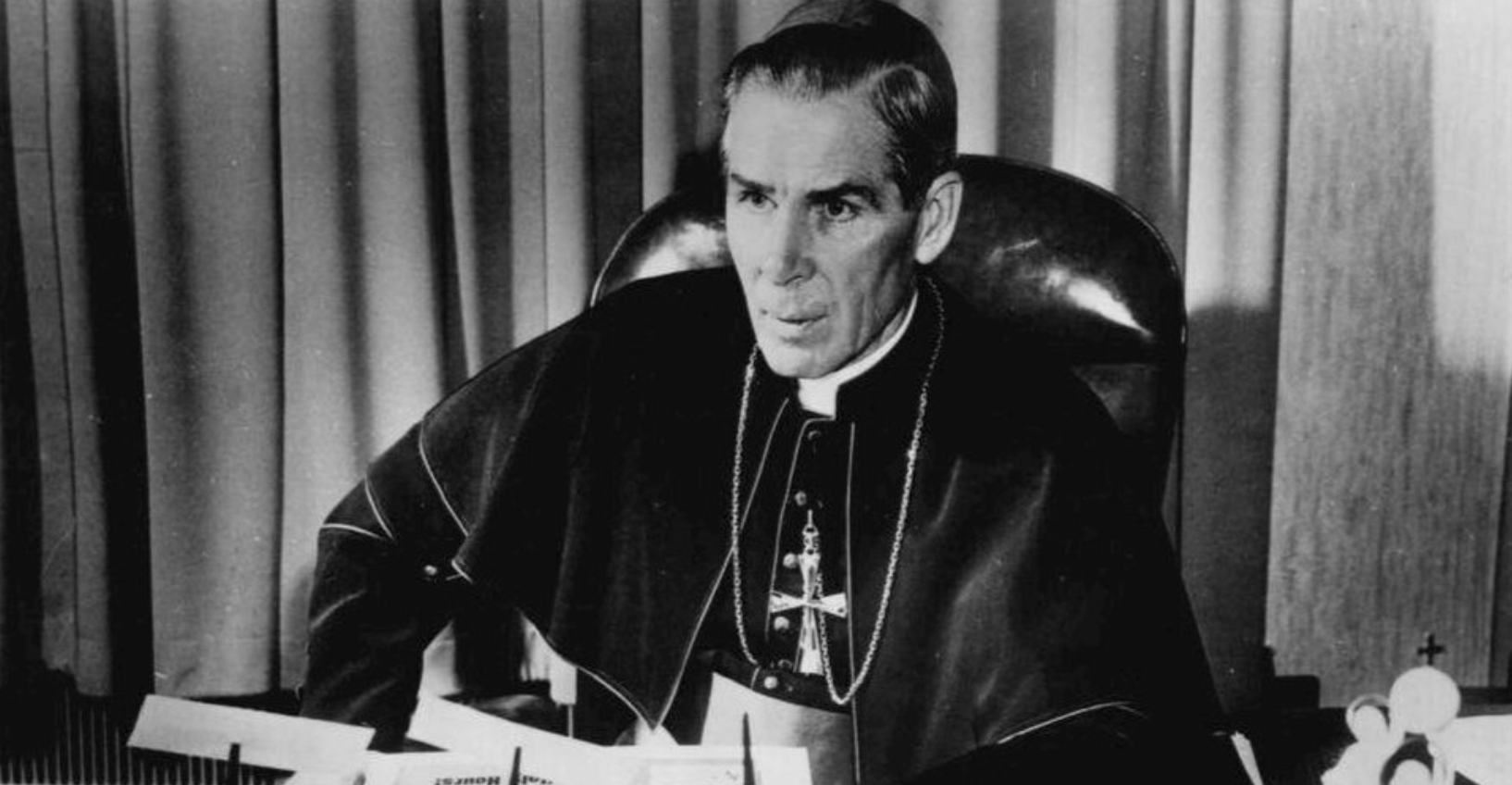
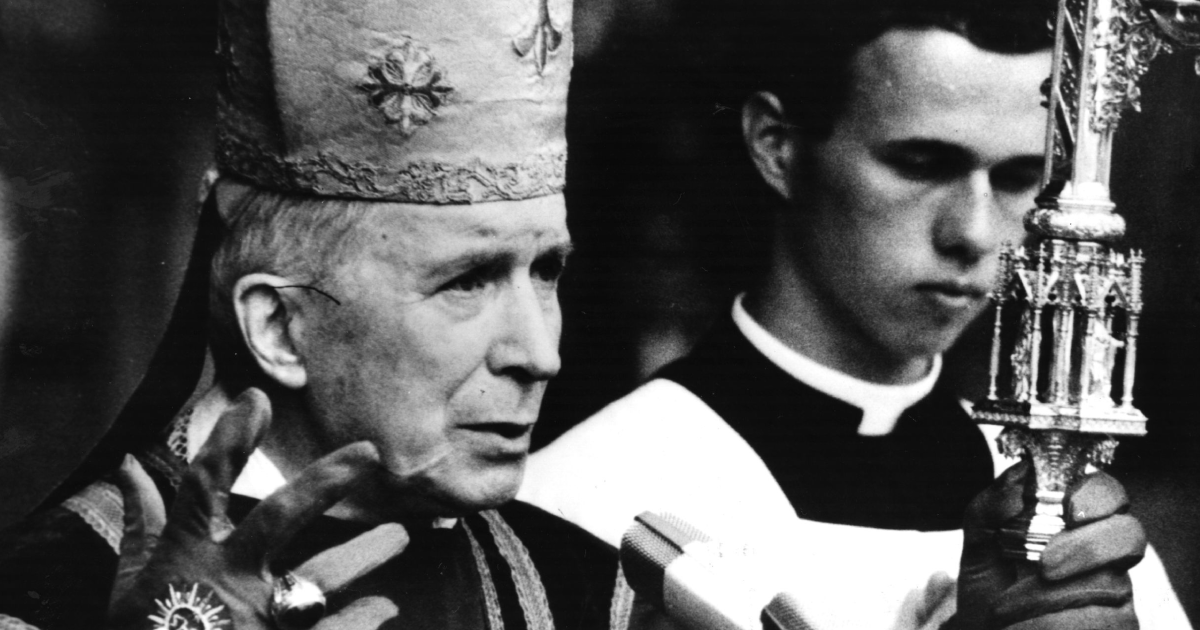
After my mother stopped crying, she started writing letters again. And in the days before the internet, or even free long-distance calling, she learned about Archbishop Lefebvre. He had left his retirement to train the young men who had come to him to beg him to teach them to be priests. He alone, of all the bishops of the world, seemed to understand the value of what we had lost.
From everywhere, letters poured in to that small seminary at Écône, begging the Archbishop for priests. My mother’s letters were among them. And in the spring of 1975, the Archbishop sent his priests to us to bring us the traditional Latin Mass.
I was there week by week as we lived through all the Society’s critical events, through all those anxious years. The Society back then was very small. As my mother and father drove those priests back and forth to the airport, all the talk was about how things were going with Rome. The Archbishop had no delusions of grandeur about saving the Church or saving the Mass. He was just doing what he had been ordained and consecrated to do. He went to the Vatican over and over to beg them for understanding and help, and he told them about the thousands of letters. He even begged help for us from the Pope himself. But the answer was a deafening silence.
The famous SSPX suspension itself made no sense. It was completely irregular, and Archbishop Lefebvre appealed it at once, as was his right under law. I remember the excited talk about the documents the Archbishop’s canon lawyer had prepared, but he never had the chance to present them. The Archbishop was never permitted his hearing. The same post-conciliar Church leadership that talked endlessly about compassion had absolutely no compassion for us.
But Archbishop Lefebvre was a humble and gentle man. Year after year, he continued his begging, first from the Vatican of Pope Paul VI and then from that of Pope St John Paul II. In 1984, the Pope issued permission for the first indult Masses, and we were very hopeful at first. But at our own local indult Mass, all the sermons had to be on the great merits of Vatican II and our own disgrace for questioning any part of it. Everyone had to write down their names at each Mass, and those who had not explicitly requested the indult at the very beginning were told that they had to leave. The Mass itself was a hollow affair, celebrated without reverence or attention. Those who attended it soon came back to us.
By 1988, the Archbishop was 82 years old. He had sacrificed the quiet years of his retirement to look after us, the sheep of Christ’s flock whom no one else would bother to feed. He and we had seen not one crumb of kindness or understanding in all those long years. Rome had strung him along, granting the idea of bishops for his order in theory but always playing for time. They wanted lists. They wanted names. They wanted more lists. They wanted more names. It became obvious that they were just waiting for him to die.
It is not justice to destroy an order established in the Church simply by forcing it to die for lack of clergy, but that is exactly what the post-conciliar leadership was about to accomplish. The Archbishop would die, and then his seminaries would close because there would be no one else to ordain new priests. His current priests would disband, and we, the Catholics attending the SSPX Masses, would all crawl back into whatever holes we had crawled out of. That would be an end to the whole annoying problem. And that end could not be very far off.
Archbishop Lefebvre never pretended that he was the saviour of the Catholic Church. He always said that there would be another council one day that would clear up all the confusion. Instead, on the day of the consecrations, he told us why he had come to this terrible decision. He said: “These bishops are not being consecrated for themselves, nor for me, but for you, for your children, for your grandchildren.” And that came true. Archbishop Lefebvre confirmed me. One of his successors confirmed my children. And please God, one of these four new bishops will confirm my grandchildren when it is time.
The Archbishop died two and a half years later, and many pundits expected the SSPX to follow him in death. But that did not happen at all. The Society has grown as steadily and undramatically as a flight of stairs rises upward. Today, it has 733 priests and 264 seminarians, with a generous number of brothers, sisters and Oblates to help them in their work. It brings the Holy Sacrifice of the Mass to approximately 600,000 people in 77 countries around the world. While other orders have dwindled and aged and died away, the Society cannot stop building new churches and new seminaries because the old ones are bursting at the seams. My own chapel group is just finishing a beautiful neoclassical baroque church that will seat a congregation of 500. The Holy Ghost is fruitful indeed.
But what of my mother and her desperate appeal to the Archbishop? For more than 50 years, the Society has been bringing the Sacraments to her chapel group, first twice a month, and then, for many years now, every week. Her group is in a rural area and only has an attendance of about 150 people. It is not what could be called important by any material measure. Nevertheless, the Society priests have sacrificed their youth, their health and their comfort to bring that little flock the Mass. In all that long time, they have not left these good people without the help the Archbishop promised them; no, not even for a single month. Even during Covid-19, when the diocesan churches were locked up tight, the Society priests worked harder than ever, saying Mass in airplane hangars, in fields and in tents facing parking lots full of families in their cars, adding Mass after Mass to the schedule each Sunday just so that everyone could attend. And when that happened, we faithful were not surprised at all. We knew that the SSPX would never leave us without the Mass.
New people come to us all the time, worn out by the constant swirling chaos and confusion that surrounds the post-conciliar Church, with its bizarre scandals and odd ambiguous statements and actions that no one can quite figure out. These new people find in SSPX chapels the peace of Christ’s sheepfold, universal in place as well as in time. "The post-conciliar Church leadership has ignored the SSPX, then suppressed it, then excommunicated its bishops, then lifted their excommunications, then granted our priests universal faculties for confession and marriage. Meanwhile, the SSPX has not changed at all. The Society is always the same because Christ our Lord is always the same: Jesus Christ yesterday, and today; and the same for ever.
And that is why it does not bother me when I read articles like this one. When I read Mr Suenens’s careless, confident and glaringly obvious statement that good “TLM”ers should just go ask their bishops, in all humility, for “generosity, stability, and justice”, I cannot help laughing a little. But then I remember standing in the fresh morning breeze in front of an empty church and a locked door, watching my mother weep with bewilderment and grief because the most precious treasure this world could possibly hold – a treasure Catholics have died for – a treasure that no one should ever, could ever, take from the people of God – had just been ripped away from us yet again.
“Just maybe, you know, try asking nicely for generosity, stability, and justice.”
Oh, of course! If only we had thought of that!
Mr Suenens declares that he has no need for the bad old SSPX because he has the Society of St Peter. We had good friends among the priests who left in 1988 to form the FSSP, and they told us that they were promised their very own bishop. But that promise was not kept, and so they have found themselves on a very short leash. They have to rely on the somewhat capricious kindness of the post-conciliar hierarchy whenever they want to ordain their seminarians. This means that they have to be very careful about what they say and how they act. They must not give clear answers to certain clear questions. They will always be on thin ice, and they know it. They could fall through at any time.
Mr Suenens also declares that he has the Institute of Christ the King Sovereign Priest to turn to. Well, it is a good thing he does not live in Chicago. The Institute has full canonical status, and they are a lovely order, but none of these things helped them when Traditionis Custodes came out. They have been forbidden to say the traditional Latin Mass at their very own American headquarters since 2022. They appealed directly to the Pope, and I am sure that they asked nicely, but nothing has brought the Holy Sacrifice of the Mass back to their congregation in Chicago for four long years now.
So I will leave authors like Mr Suenens to squint at their canon law codes past and present and strain out their gnats and swallow their camels and state with great assurance that the Latin Mass does not need the SSPX (but maybe the Catholics of Chicago are glad that they are there). Instead of focusing on such punditry, I will think about these statements: By their fruits you shall know them. Common sense never loses her rights. The salvation of souls is the supreme law. And wisdom is justified by her children.
At great personal cost, Archbishop Lefebvre honoured his responsibility to the many thousands of God-fearing people around the world who relied on his priests for the Bread of Life. Now that his successors are old, they too refuse to turn their backs on us. They will not leave us orphans.
But Mr Suenens has no use for such men who think so strangely, and he states with great certainty that he knows where he stands.
He may find himself standing at a locked door.
Clare B. Dunkle is an American author, librarian, wife and mother who has attended SSPX Masses for 51 years, in seven different states and three European countries.