
December 31, 2025
December 31, 2025

Why are Anglican Clergy becoming Catholics?

Min read
share

There are as many reasons as there are people as to why Anglican clergy are being received into the Catholic Church. The report by Professor Bullivant and others shows that about a third of all Catholic priests ordained between 1992 and 2024 had previously been Anglican priests. This is a quite remarkable figure and it also raises questions about how adequate priestly and pastoral provision is being made within the Catholic Church itself. Nor is this phenomenon restricted to England and Wales. Similar accessions to Catholicism are taking place in Scotland, the United States, Canada and elsewhere.

One of the underlying reasons is disenchantment with the Anglican claim to be ‘catholic’ without the papacy. Anglicans were taught that their church did not require them to believe anything that the Church of the Creeds and the Fathers did not believe. This is a very wide claim and can be tested in a number of ways. The Anglican appetite for doctrinal, moral and ecclesial innovation in recent years has raised sharp questions about its sustainability.

The dialogue with the Catholic Church, which began after the historic meeting between Pope Paul VI and Archbishop Michael Ramsey, was at first very positive. The Anglican Roman Catholic International Commission, of which I became a long standing member, produced agreements on the Eucharist and on ministerial priesthood that were eventually endorsed by both communions as consonant with their faith and teaching. There was also important convergence on questions of authority in the Church, on the role of the Blessed Virgin Mary and even on pressing moral issues, such as the nature of marriage and family, abortion and human sexuality.

So far so good, one might say. The problem that reared its ugly head almost immediately was the novel doctrine of ‘provincial autonomy’ promoted by certain provinces in the West, despite the teaching of the Lambeth Conferences regarding the restraints of truth and love on such autonomy. The first signs were the loosening of marriage discipline and the increasing acceptance of further marriage after divorce, even among the clergy. The unilateral decision to ordain women to the priesthood by certain provinces was inevitably followed by their ordination to the episcopate. I have been witness to appeals by three successive popes to the Anglican Communion, in the light of the agreement on ordained ministry in the Church, not to take such steps unilaterally. The response was always, “Even if we wished to do so, we could not prevent this development if the province has canonically made such a decision.”

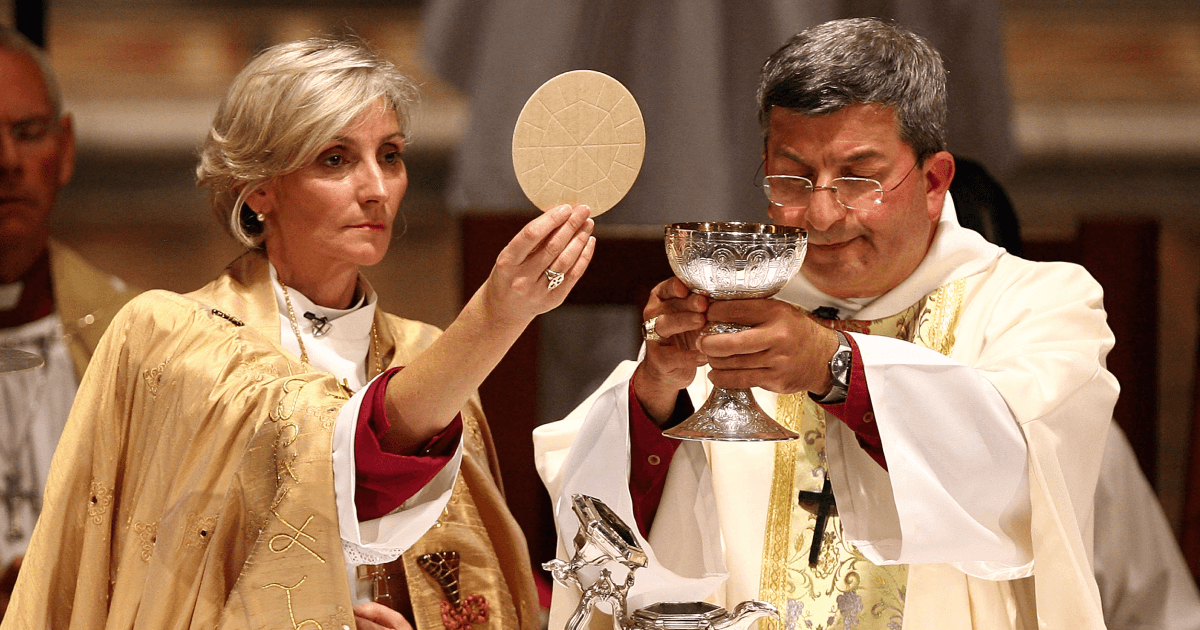
The same logic then led, in the noughties, to the ordination in the United States of a divorced person, who was in a same sex relationship, to the episcopate. The Anglican Communion was unable to take any disciplinary action against the Episcopal Church for such an unprecedented action. While presenting the possibility of a covenant among Anglican churches to prevent such unilateral action by one or other of the churches in the future, I was told on the floor of the Church of England’s General Synod, “If you think we are going to allow anyone outside England to tell us what to do, you have another think coming!” I remember thinking then that whatever the Catholic Church might be, it could not be this.

These innovations have now been added to in relation to questions of gender identity and priesthood, language about God, sacramental discipline in the churches and much else. It is not only the absence of discipline that has concerned some, but also its active prevention.

There have been admiral traits presented in other Christian traditions. Many of us have applauded the way in which the Orthodox and the Ancient Oriental Churches have preserved the Apostolic Tradition down the ages and in the face of severe challenges to their common life. Some of us also value the way in which Evangelicals have upheld biblical authority.

There are, however, some important factors which point to the need for full communion with the Catholic Church. One has to do with the synchronic and diachronic dimensions of catholicity. Given that no church is perfect and that there have been faults and failures on every side, where can we find the Great Tradition being transmitted from generation to generation, from culture to culture, and across the world? Although ethnic and cultural diversity is to be taken seriously, it cannot define the Church, the universality of which should be clear and firmly held.

There is then the question of authority in the Church. It is true, of course, that the Scriptures are, as Dei Verbum teaches, once for all and by which the Church orients all of its teaching. They are also, as St John Paul II wrote in Ut Unum Sint, the highest authority in matters of faith. The question, then, is how they are to be interpreted so that Christian women and men may live according to their teaching. There can be no question that biblical, patristic and credal scholarship must have the fullest say regarding the origins and transmission of the Apostolic Teaching, the sources that lie behind the documents as we have them, and the intentions of the writers, compilers and editors in their work. Nor is there any going back on the laity’s access to the Scriptures and to the sources of Apostolic Tradition as a whole.

When all of this is being done, the issue that presents itself concerns who decides what Scripture and its living out in the life of the Church, that is Apostolic Tradition, mean in this or that situation or in addressing this or that problem that has arisen in the Church’s engagement with the cultures around it. 

That is to say, such engagement must be principled. There must be conservation of the Gospel of redemption itself, conservative action on the past, continuity of principles and an anticipation of the future. This engagement of the Church with the world takes place in different ways, from parish to papacy. The bishops, together with the Bishop of Rome, and the Bishop of Rome himself, have a duty, having taken into account the sensus fidelium of the faithful and the labours of scholars, to declare, with varying degrees of authority, what the Scriptures and Apostolic Tradition mean in this or that context or in relation to this or that question. Without such teaching authority, the Church would be a rudderless ship, tossed to and fro on the billows of changing fashion in an increasingly fragmented world. 

For many of us, the situation of the Church of England and of the Anglican Communion as a whole reveals what happens in an ecclesial community where the provision of such teaching authority is lacking. It should be clear, of course, that the pastors of the Church are only declaring, confirming or clarifying the faith of the Church in relation to particular questions that have arisen for the faithful. They cannot change the faith once for all delivered to the saints, as Jude 1:3 reminds us.

It is for reasons such as those outlined above that significant numbers of Anglican clergy have crossed, and continue to cross, the Tiber, even at the cost of loss of status and friendships and, for many, considerable financial sacrifice.

The provision made by Pope Benedict XVI in Anglicanorum Coetibus for Anglicans to enter into full communion with the Catholic Church, while bringing some of their patrimony with them, signalled that the Catholic Church was willing to recognise not only the common inheritance that Catholics and Anglicans share from before the breach with Rome, but also elements that developed during the time of separation. Such a receiving should not be limited to the Ordinariate but should be seen as gifts to be received by the whole Church. Nor are these confined to iconic events such as choral evensong or the liturgies in the Book of Divine Worship. They also include approaches to pastoral work that emphasise relating to the whole community in which the parish is located, rather than only the gathered congregation, and a greater involvement of lay people in the management of church affairs. Anglican theological method, which is by instinct inductive, biblical, patristic and historical, can also serve as a useful complement to approaches that may be more philosophical, scholastic and allegorical.

Poetry, hymnody and homiletics are other areas in which Anglican patrimony can contribute fruitfully to the treasures of the whole Church. We should see the movement of Anglicans into the Catholic Church in England and Wales as providential in strengthening the identity of the Catholic Church as genuinely rooted in the culture and history of a particular people. As for the Ordinariate, the fullest scope must be allowed for its development, not merely as a variation of the Latin rite but as embodying the spiritual genius of the people of these islands in their expression of the Catholic faith. With the arrival of the Eastern Catholic Churches in the West, we are becoming accustomed to the great diversity of the universal Church. Within this diversity, the Ordinariate must take its proper place.

Given recent developments in the Church of England and the Anglican Communion, many clergy and lay people are perplexed about the future. In this situation, the movement to the Catholic Church will continue. Whether it becomes a flood or remains a steady trickle will depend on whether the denomination moves further towards becoming a liberal Protestant one and on the speed with which this occurs. It will also depend on how welcoming the Catholic Church proves to be and on what provision is made for those who come. The Second Vatican Council’s vision for Christian reunion is coming to fruition, but in a way perhaps not foreseen by the Council Fathers.

There are as many reasons as there are people as to why Anglican clergy are being received into the Catholic Church. The report by Professor Bullivant and others shows that about a third of all Catholic priests ordained between 1992 and 2024 had previously been Anglican priests. This is a quite remarkable figure and it also raises questions about how adequate priestly and pastoral provision is being made within the Catholic Church itself. Nor is this phenomenon restricted to England and Wales. Similar accessions to Catholicism are taking place in Scotland, the United States, Canada and elsewhere.

One of the underlying reasons is disenchantment with the Anglican claim to be ‘catholic’ without the papacy. Anglicans were taught that their church did not require them to believe anything that the Church of the Creeds and the Fathers did not believe. This is a very wide claim and can be tested in a number of ways. The Anglican appetite for doctrinal, moral and ecclesial innovation in recent years has raised sharp questions about its sustainability.

The dialogue with the Catholic Church, which began after the historic meeting between Pope Paul VI and Archbishop Michael Ramsey, was at first very positive. The Anglican Roman Catholic International Commission, of which I became a long standing member, produced agreements on the Eucharist and on ministerial priesthood that were eventually endorsed by both communions as consonant with their faith and teaching. There was also important convergence on questions of authority in the Church, on the role of the Blessed Virgin Mary and even on pressing moral issues, such as the nature of marriage and family, abortion and human sexuality.

So far so good, one might say. The problem that reared its ugly head almost immediately was the novel doctrine of ‘provincial autonomy’ promoted by certain provinces in the West, despite the teaching of the Lambeth Conferences regarding the restraints of truth and love on such autonomy. The first signs were the loosening of marriage discipline and the increasing acceptance of further marriage after divorce, even among the clergy. The unilateral decision to ordain women to the priesthood by certain provinces was inevitably followed by their ordination to the episcopate. I have been witness to appeals by three successive popes to the Anglican Communion, in the light of the agreement on ordained ministry in the Church, not to take such steps unilaterally. The response was always, “Even if we wished to do so, we could not prevent this development if the province has canonically made such a decision.”

The same logic then led, in the noughties, to the ordination in the United States of a divorced person, who was in a same sex relationship, to the episcopate. The Anglican Communion was unable to take any disciplinary action against the Episcopal Church for such an unprecedented action. While presenting the possibility of a covenant among Anglican churches to prevent such unilateral action by one or other of the churches in the future, I was told on the floor of the Church of England’s General Synod, “If you think we are going to allow anyone outside England to tell us what to do, you have another think coming!” I remember thinking then that whatever the Catholic Church might be, it could not be this.

These innovations have now been added to in relation to questions of gender identity and priesthood, language about God, sacramental discipline in the churches and much else. It is not only the absence of discipline that has concerned some, but also its active prevention.

There have been admiral traits presented in other Christian traditions. Many of us have applauded the way in which the Orthodox and the Ancient Oriental Churches have preserved the Apostolic Tradition down the ages and in the face of severe challenges to their common life. Some of us also value the way in which Evangelicals have upheld biblical authority.

There are, however, some important factors which point to the need for full communion with the Catholic Church. One has to do with the synchronic and diachronic dimensions of catholicity. Given that no church is perfect and that there have been faults and failures on every side, where can we find the Great Tradition being transmitted from generation to generation, from culture to culture, and across the world? Although ethnic and cultural diversity is to be taken seriously, it cannot define the Church, the universality of which should be clear and firmly held.

There is then the question of authority in the Church. It is true, of course, that the Scriptures are, as Dei Verbum teaches, once for all and by which the Church orients all of its teaching. They are also, as St John Paul II wrote in Ut Unum Sint, the highest authority in matters of faith. The question, then, is how they are to be interpreted so that Christian women and men may live according to their teaching. There can be no question that biblical, patristic and credal scholarship must have the fullest say regarding the origins and transmission of the Apostolic Teaching, the sources that lie behind the documents as we have them, and the intentions of the writers, compilers and editors in their work. Nor is there any going back on the laity’s access to the Scriptures and to the sources of Apostolic Tradition as a whole.

When all of this is being done, the issue that presents itself concerns who decides what Scripture and its living out in the life of the Church, that is Apostolic Tradition, mean in this or that situation or in addressing this or that problem that has arisen in the Church’s engagement with the cultures around it. 

That is to say, such engagement must be principled. There must be conservation of the Gospel of redemption itself, conservative action on the past, continuity of principles and an anticipation of the future. This engagement of the Church with the world takes place in different ways, from parish to papacy. The bishops, together with the Bishop of Rome, and the Bishop of Rome himself, have a duty, having taken into account the sensus fidelium of the faithful and the labours of scholars, to declare, with varying degrees of authority, what the Scriptures and Apostolic Tradition mean in this or that context or in relation to this or that question. Without such teaching authority, the Church would be a rudderless ship, tossed to and fro on the billows of changing fashion in an increasingly fragmented world. 

For many of us, the situation of the Church of England and of the Anglican Communion as a whole reveals what happens in an ecclesial community where the provision of such teaching authority is lacking. It should be clear, of course, that the pastors of the Church are only declaring, confirming or clarifying the faith of the Church in relation to particular questions that have arisen for the faithful. They cannot change the faith once for all delivered to the saints, as Jude 1:3 reminds us.

It is for reasons such as those outlined above that significant numbers of Anglican clergy have crossed, and continue to cross, the Tiber, even at the cost of loss of status and friendships and, for many, considerable financial sacrifice.

The provision made by Pope Benedict XVI in Anglicanorum Coetibus for Anglicans to enter into full communion with the Catholic Church, while bringing some of their patrimony with them, signalled that the Catholic Church was willing to recognise not only the common inheritance that Catholics and Anglicans share from before the breach with Rome, but also elements that developed during the time of separation. Such a receiving should not be limited to the Ordinariate but should be seen as gifts to be received by the whole Church. Nor are these confined to iconic events such as choral evensong or the liturgies in the Book of Divine Worship. They also include approaches to pastoral work that emphasise relating to the whole community in which the parish is located, rather than only the gathered congregation, and a greater involvement of lay people in the management of church affairs. Anglican theological method, which is by instinct inductive, biblical, patristic and historical, can also serve as a useful complement to approaches that may be more philosophical, scholastic and allegorical.

Poetry, hymnody and homiletics are other areas in which Anglican patrimony can contribute fruitfully to the treasures of the whole Church. We should see the movement of Anglicans into the Catholic Church in England and Wales as providential in strengthening the identity of the Catholic Church as genuinely rooted in the culture and history of a particular people. As for the Ordinariate, the fullest scope must be allowed for its development, not merely as a variation of the Latin rite but as embodying the spiritual genius of the people of these islands in their expression of the Catholic faith. With the arrival of the Eastern Catholic Churches in the West, we are becoming accustomed to the great diversity of the universal Church. Within this diversity, the Ordinariate must take its proper place.

Given recent developments in the Church of England and the Anglican Communion, many clergy and lay people are perplexed about the future. In this situation, the movement to the Catholic Church will continue. Whether it becomes a flood or remains a steady trickle will depend on whether the denomination moves further towards becoming a liberal Protestant one and on the speed with which this occurs. It will also depend on how welcoming the Catholic Church proves to be and on what provision is made for those who come. The Second Vatican Council’s vision for Christian reunion is coming to fruition, but in a way perhaps not foreseen by the Council Fathers.

share

subscribe to the catholic herald today

Our best content is exclusively available to our subscribers. Subscribe today and gain instant access to expert analysis, in-depth articles, and thought-provoking insights—anytime, anywhere. Don’t miss out on the conversations that matter most.
Subscribe