

Churches in Madrid and Innsbruck have hosted large secular events featuring television screenings of football matches and communal suppers in recent weeks, while a group of pilgrims travelling with a priest of the Priestly Fraternity of St Peter (FSSP) were repeatedly denied permission to celebrate the Traditional Latin Mass at prominent Italian shrines, including San Giovanni Rotondo and Assisi, in June 2026.
LifeSiteNews journalist Emily Mangiaracina has drawn attention to this contrast, which many in the traditionalist community regard as illustrative of a persistent double standard in the contemporary Church’s treatment of sacred spaces and liturgical heritage.
The baroque Church of San Antón in central Madrid installed multiple large screens in its nave for visitors to watch Spain’s matches in the 2026 FIFA World Cup, with the tabernacle veiled by a red curtain. The parish, long noted for its outreach to the homeless and veneration of relics, presented the initiative as an extension of its welcoming apostolate.
In Innsbruck’s Cathedral of St James on June 14, more than 800 people gathered for “Pasta per Tutti”, a benefit event of pasta, wine, music and socialising in support of the homeless during the Year of St Francis. Long tables filled the nave while the tabernacle remained visible. Bishop Hermann Glettler described the gathering as a sign of Franciscan encounter and solidarity.
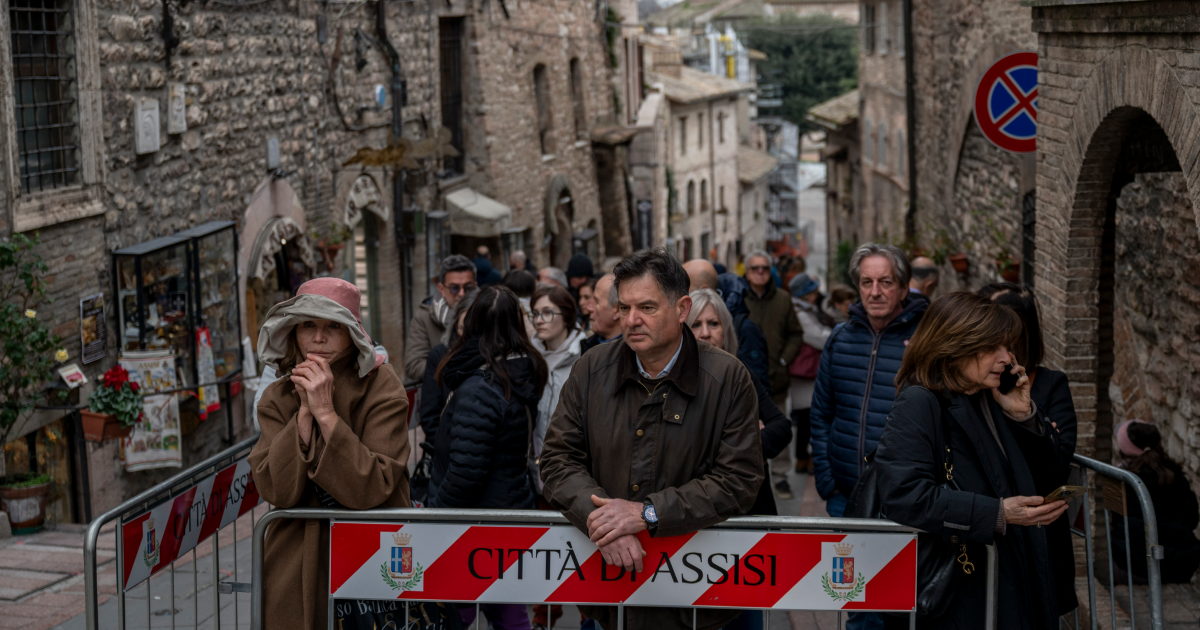
By contrast, the FSSP pilgrims encountered firm refusals. At the Shrine of St Padre Pio in San Giovanni Rotondo, they were denied use of church facilities for the Traditional Latin Mass and had to celebrate in a hotel basement. In Assisi, at the Basilica of St Francis, their request was turned down even as an Orthodox Divine Liturgy took place in the complex. A similar denial occurred in Loreto. Permission was reportedly withdrawn once it became clear that the group sought the usus antiquior.
These incidents highlight an asymmetrical application of norms governing sacred places. Canon 1210 of the Code of Canon Law reserves sacred places for uses serving worship, piety or religion, forbidding anything inconsistent with their holiness. Traditional moral theology has long regarded the conversion of a church into a venue for secular entertainment or dining as a form of profanation. Yet such events proceed with episcopal approval while requests for the rite that formed saints for centuries often meet administrative resistance at the very shrines dedicated to them.
The pattern extends beyond these episodes. The Paris-Chartres pilgrimage, organised by Notre-Dame de Chrétienté, continues to break records, drawing some 20,000 participants in 2025 and prompting 14,000 registrations on the first day for the 2026 edition. Many young pilgrims have discovered the faith through the Traditional Latin Mass, which remains a central feature of the three-day walk. Organisers have nevertheless faced tensions with French bishops over liturgical provisions, even as Pope Leo XIV urged the French episcopate in March 2026 to seek “concrete solutions” for the “generous inclusion” of those attached to the Vetus Ordo.
Some senior clergy have maintained firm opposition. Certain French bishops and others in Europe have continued restrictive policies rooted in Traditionis Custodes, limiting the 1962 Missal to non-parish venues or denying it at prominent sites despite growing demand. The FSSP itself faces an apostolic visitation and case-by-case hurdles, even as attendance at traditional events surges. The 2025 Summorum Pontificum pilgrimage to Rome tripled in size, with more than 3,000 participants and reports of churches running out of hosts.
Cardinal Raymond Burke has publicly appealed to Pope Leo XIV for the lifting of restrictions, describing the faithful attached to the ancient rite as disheartened by the severity of earlier measures. Yet local implementation often lags behind such calls for dialogue, creating the impression that secular or inter-rite accommodations receive a readier welcome than the solemn expression of the Roman Rite’s historic form.
Traditional Catholics note that while declining vocations and attendance have prompted the repurposing of churches in parts of Europe, the enthusiastic participation of thousands of young people at Chartres and similar gatherings demonstrates vitality precisely where the Church’s liturgical patrimony is honoured without compromise. The double standard – expansive hospitality for contemporary events in sacred spaces alongside caution or exclusion towards the usus antiquior – raises questions about consistency in applying the Church’s own canons and pastoral priorities.
Local decisions, shrine policies and ongoing dialogues with traditional communities continue.
The faithful await a clearer resolution under Pope Leo XIV that honours both the sanctity of consecrated places and the legitimate aspirations of those formed by the Church’s ancient worship, as concessions are anticipated to other traditionalists following measures expected to be levelled against the SSPX from July.