


June 9, 2026

Why falling birth rates should concern everyone

David Quinn
More
Related
Min read
share

A topic that is finally receiving some of the attention it deserves is the looming demographic crisis. Britain is facing a “baby bust”, and so is the whole of Europe. They have been for some time now. The situation is even worse in East Asia. Even India’s fertility rate has recently dropped below replacement level.

It might surprise readers of the Catholic Herald, however, to know that Ireland – long associated with big families – has also entered the era of sub-replacement-level fertility rates. Our fertility rate has now dipped to 1.5 children per woman, not much higher than the British rate. A fertility rate this low means 100 people can expect to have around 75 children and 56 grandchildren, and so on. Meanwhile, the population will keep on ageing.


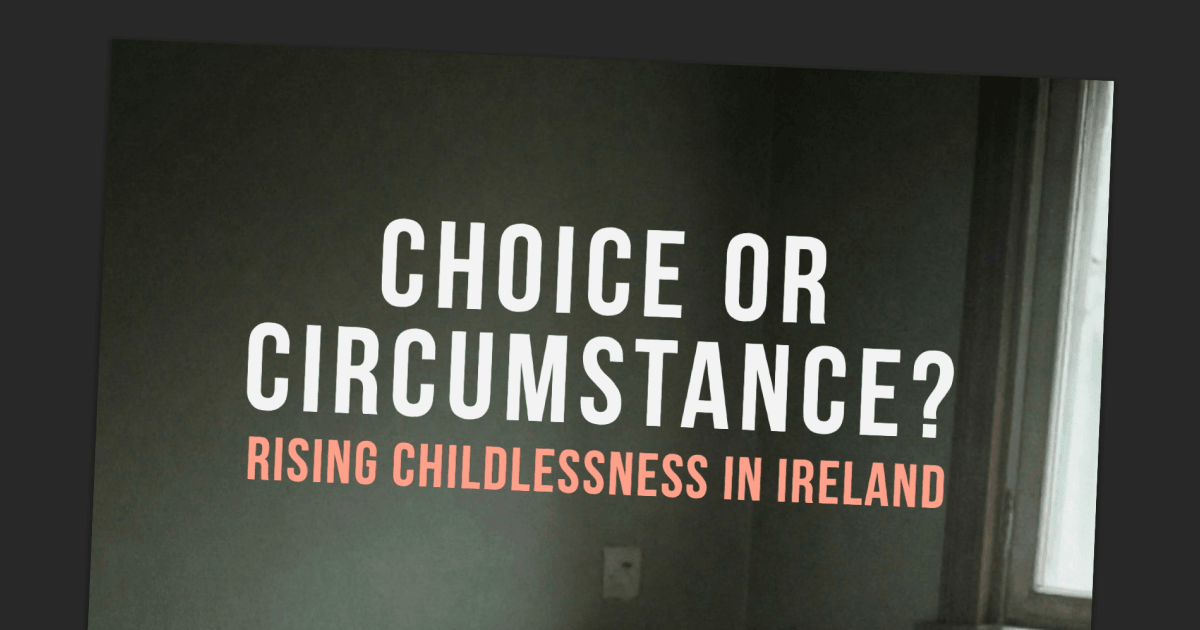
The Iona Institute, a pro-religion and family think tank of which I am the chief executive, has just produced a report called Choice or Circumstance? Rising Childlessness in Ireland. It forecasts that one in four Gen Z women in Ireland will never have a child. To keep the population level without immigration, everyone else will need to have around three children each. This seems unlikely to happen.

There are lots of theories about why fertility rates have plunged nearly everywhere and all at the same time. The old theory was that this was a phenomenon mainly of economic development, and there is a lot of truth in that. Richer countries have had lower fertility rates than poorer countries for a long time.

But now we see rates plunging in middle-income countries like Thailand. China is still basically middle income, and its fertility rate is only half the replacement level. Women becoming better educated is also a big part of the picture, and this is obviously linked to economic development. The cost of living plays its part. Housing in many countries, including Britain and Ireland, has become extremely expensive.

Why, though, would economically developed countries suddenly see a further, fairly steep fall from around 1.8 children on average to around 1.5 in just the last few years? Some people blame the rise of smartphones. If we are meeting each other less, we will be forming relationships less, having sex less and therefore having fewer children.

The decline in religious practice is also connected to what is going on. Religious people tend to marry more often and have more children than their secular counterparts. This is also true of conservatives. Both religion and social conservatism tend to put the family, not personal autonomy, at the top of their priority tree.

The question of whether growing childlessness is happening by choice or circumstance needs to be faced by every country facing the problem.

For years we have been used to hearing about unplanned pregnancies, but what about unplanned childlessness? Few seem to worry about this.

There is plenty of evidence that quite a lot of childlessness is happening because of circumstance. We know, for example, that large numbers of women are reaching their late 30s still childless, but it is also clear that many of them do want to have a child. This explains why lots of people are turning to techniques like IVF. This would not be happening if they were happy to be childless.

We also see people turning to IVF because they managed to have one child but would like another and have left it too late to do so naturally. Therefore, to the growing cohort who will never have any children we need to add a second cohort who will not have as many as they want.

Polling commissioned by the Iona Institute and quoted in our report shows that the average Irish person still wants two or three children. A recent study from the Family Education Trust in Britain shows that the average Briton wants around two. In neither country are younger people achieving this ambition, and in neither country are young people being told to beware of putting off having a family for too long because eventually it will be too late, assuming they can afford to settle down.

Given that unplanned childlessness is becoming a very big issue, those who claim to be “pro-choice” need to wake up to it as well. If liberals really support choice, then should they not support and facilitate the choice to have children every bit as much as the choice not to have them?

The plunging fertility rate is one of the biggest and most worrying developments of our time. Strictly speaking, religious conservatives and secular liberals should be able to join forces to try to reverse the trend. Reversing it will not be easy, but presumably neither side wants to see unplanned childlessness. So how about being on the same side for once? It would be a very novel, and hopefully a very fruitful – in the most literal sense of that term – alliance.

David Quinn is chief executive of the Iona Institute. He tweets at @davquinn.

Continue reading with a free account

Create a free account to read up to five articles each month
Create free account

You have # free articles remaining this month.

Subscribe to get unlimited access.
Sign up

subscribe to the catholic herald today

Our best content is exclusively available to our subscribers. Subscribe today and gain instant access to expert analysis, in-depth articles, and thought-provoking insights—anytime, anywhere. Don’t miss out on the conversations that matter most.
Subscribe