

February 12, 2026

Why politicians are talking past each other

Jack Carrigan
More
Related
Min read
share

Enough Said
by Mark Thompson, Bodley Head, £25

Mark Thompson, former director-general of the BBC and now CEO of the New York Times, has written a scholarly and thoughtful enquiry into, as the subtitle puts it, “What’s Gone Wrong with the Language of Politics”. It is a critical subject and a question that involves us all. Listening to and observing political discourse today, we uneasily sense the truth of the question raised, even if we don’t know the cause.

Thompson, a Catholic educated at Stonyhurst and Oxford, explains that his book arose out of three lectures he gave at St Peter’s College, Oxford, in 2012 on rhetoric, which he defines as “the study of the theory and practice of public language”. Referring to the huge gap between the general public and the “elite” shown by the passionate divide on the EU referendum and the rise of extreme left and right-wing parties in Britain and Europe, Thompson wonders who is to blame for the cacophony of voices we hear all around us. Is it politicians, who surround themselves with spin doctors; the media with its relentless 24-hour coverage and commentary; or the public, mistrustful of what it is told and with its own instant expertise garnered from the internet?
Thompson’s Jesuit education, with its traditional classroom divisions of “grammar”, “syntax” and “rhetoric”, naturally leads him to study Aristotle’s The Art of Rhetoric. Analysing the classical elements of rhetoric, such as ethos, pathos and exaggeration, he demonstrates how little its fundamentals “have changed over the years”.

He looks at some great public speeches, such as Margaret Thatcher’s “The lady’s not for turning” and Ronald Reagan addressing Gorbachev at the Brandenburg Gate in 1987, as well as Churchill’s magnificent wartime rhetoric and Hitler’s own brand of effective but baleful communication. He also discusses Orwell’s essay “Politics and the English Language”, reminding us that even then, according to Orwell, public language had become stale, pretentious, confusing and vague. Clearly there is nothing new under the sun.

Thompson is accurate in his survey of the maelstrom which we now inhabit. The character of Western politics has changed and become polarised; the impact of digital technology has caused more confusion than clarity; and there is an ongoing battle between “rationalists”, who argue about facts, and “authenticists”, who put feelings and emotion centre stage.

It is easier to state what has gone wrong with public discourse than to offer suggestions as to how to change it for the better. Thompson would like politicians to “treat the public like grown-ups”, journalists not to regard questioning politicians as gladiatorial combat, and the public to have more respect for the wisdom of experts.

Yet, despite appreciating Thompson’s conviction and erudition, it is hard to expect change for the better. Indeed, he comments, “If knowledge counts for nothing and everything is a matter of opinion, we’re all experts and no one can persuade us otherwise.” He also quotes from the philosopher Alasdair MacIntyre’s After Virtue: “There seems to be no rational way of securing moral agreements in our culture.”

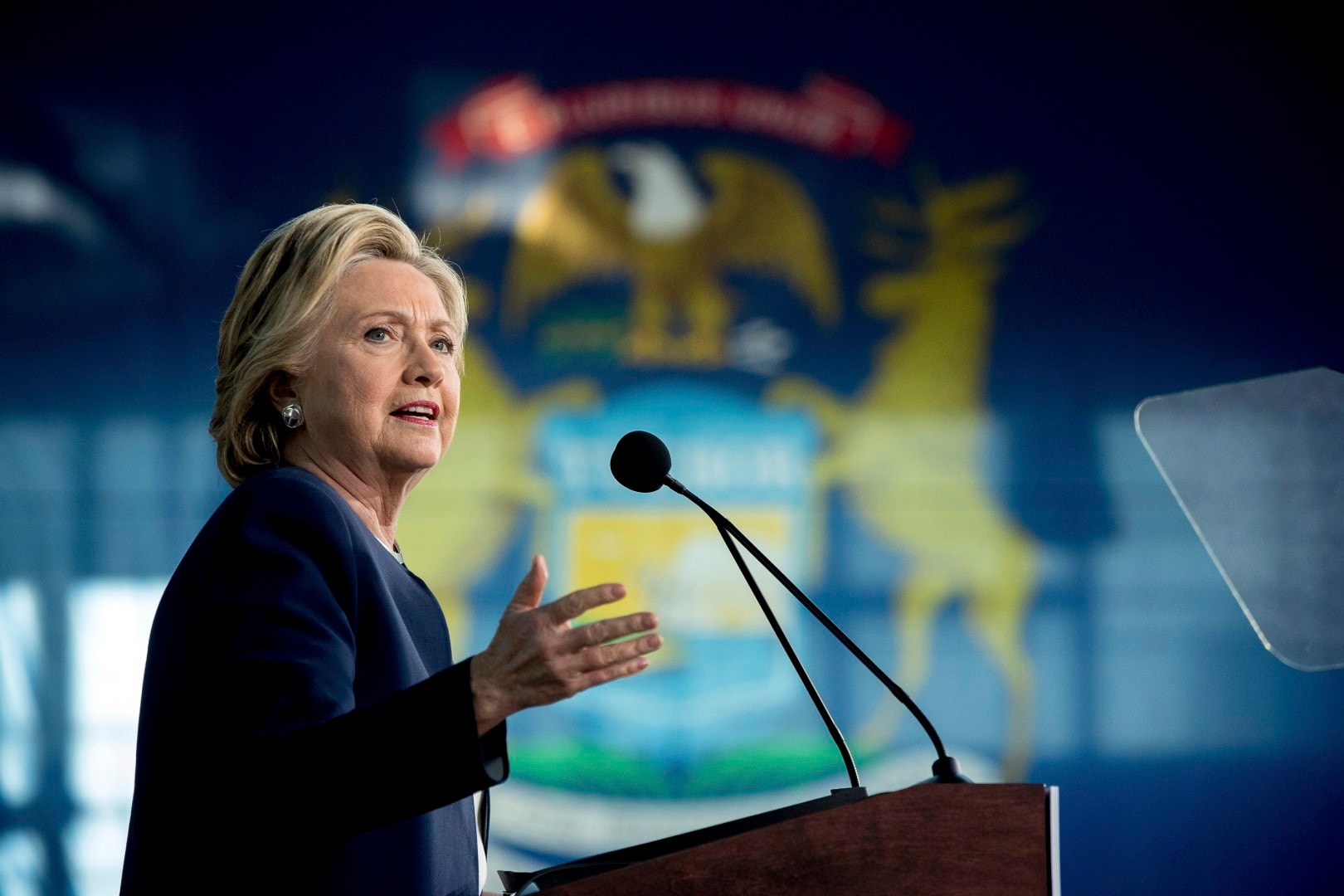
But one thing I object to about this book, for all its stimulating analysis and information, is its patronising tone. It reads like a lecture to the ignorant, whereas I bet almost all its readers hail from a broadly similar intellectual background. What we hear is the voice of the BBC, careful to try to sound objective but conveying, in unguarded asides, that, for example, the Brexit vote was misguided, Hillary Clinton is really charming in private and same-sex marriage is a matter of basic “fairness” – and that those who objected to it “simply ran out of words”.

Enough Said
by Mark Thompson, Bodley Head, £25

Mark Thompson, former director-general of the BBC and now CEO of the New York Times, has written a scholarly and thoughtful enquiry into, as the subtitle puts it, “What’s Gone Wrong with the Language of Politics”. It is a critical subject and a question that involves us all. Listening to and observing political discourse today, we uneasily sense the truth of the question raised, even if we don’t know the cause.

Thompson, a Catholic educated at Stonyhurst and Oxford, explains that his book arose out of three lectures he gave at St Peter’s College, Oxford, in 2012 on rhetoric, which he defines as “the study of the theory and practice of public language”. Referring to the huge gap between the general public and the “elite” shown by the passionate divide on the EU referendum and the rise of extreme left and right-wing parties in Britain and Europe, Thompson wonders who is to blame for the cacophony of voices we hear all around us. Is it politicians, who surround themselves with spin doctors; the media with its relentless 24-hour coverage and commentary; or the public, mistrustful of what it is told and with its own instant expertise garnered from the internet?
Thompson’s Jesuit education, with its traditional classroom divisions of “grammar”, “syntax” and “rhetoric”, naturally leads him to study Aristotle’s The Art of Rhetoric. Analysing the classical elements of rhetoric, such as ethos, pathos and exaggeration, he demonstrates how little its fundamentals “have changed over the years”.

He looks at some great public speeches, such as Margaret Thatcher’s “The lady’s not for turning” and Ronald Reagan addressing Gorbachev at the Brandenburg Gate in 1987, as well as Churchill’s magnificent wartime rhetoric and Hitler’s own brand of effective but baleful communication. He also discusses Orwell’s essay “Politics and the English Language”, reminding us that even then, according to Orwell, public language had become stale, pretentious, confusing and vague. Clearly there is nothing new under the sun.

Thompson is accurate in his survey of the maelstrom which we now inhabit. The character of Western politics has changed and become polarised; the impact of digital technology has caused more confusion than clarity; and there is an ongoing battle between “rationalists”, who argue about facts, and “authenticists”, who put feelings and emotion centre stage.

It is easier to state what has gone wrong with public discourse than to offer suggestions as to how to change it for the better. Thompson would like politicians to “treat the public like grown-ups”, journalists not to regard questioning politicians as gladiatorial combat, and the public to have more respect for the wisdom of experts.

Yet, despite appreciating Thompson’s conviction and erudition, it is hard to expect change for the better. Indeed, he comments, “If knowledge counts for nothing and everything is a matter of opinion, we’re all experts and no one can persuade us otherwise.” He also quotes from the philosopher Alasdair MacIntyre’s After Virtue: “There seems to be no rational way of securing moral agreements in our culture.”

But one thing I object to about this book, for all its stimulating analysis and information, is its patronising tone. It reads like a lecture to the ignorant, whereas I bet almost all its readers hail from a broadly similar intellectual background. What we hear is the voice of the BBC, careful to try to sound objective but conveying, in unguarded asides, that, for example, the Brexit vote was misguided, Hillary Clinton is really charming in private and same-sex marriage is a matter of basic “fairness” – and that those who objected to it “simply ran out of words”.

subscribe to
the catholic herald

Continue reading your article with a subscription.
Read 5 articles with our free plan.
Subscribe

subscribe to the catholic herald today

Our best content is exclusively available to our subscribers. Subscribe today and gain instant access to expert analysis, in-depth articles, and thought-provoking insights—anytime, anywhere. Don’t miss out on the conversations that matter most.
Subscribe