



The Chalcedonian vocabulary which attempts to describe the hypostatic union in Christ may not be perfect, but its tautness does help us to resist emphasizing unduly one nature over and against the other. The ineffable character of our Lord's ontic constitution requires us to resist softening the irreducible strangeness of the God-man. This is true when we approach Christ both in His Gospel and in His Eucharist.
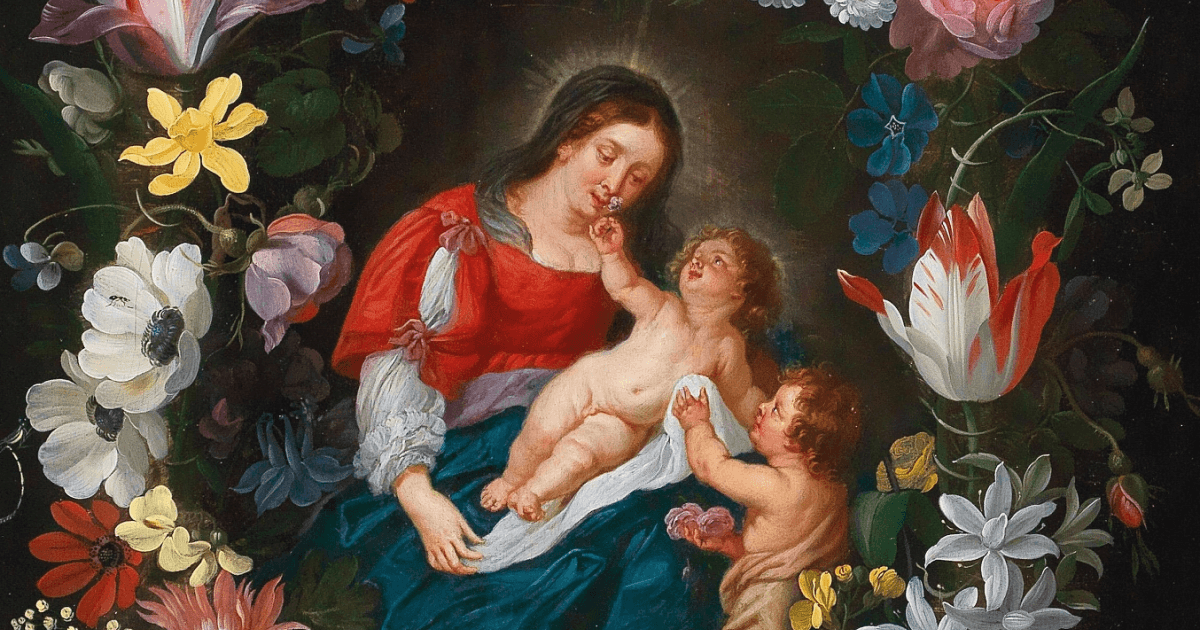
Our proper awe in the face of the Lord's theandric actions in the Gospels should not obscure the fact that the same Person also slept, hungered, loved, had particular friends, both men and women; that He also wept, lamented, agonized and sweated. Conversely, sentimentalizing the Christmas story risks obscuring the transcendence of the One before whom the magi fell down in worship. It is salutary to remember that the hypostatic union also pertains to Messiah's psychological unity: the Baby in the manger knew that He had made the stars. Even though in His humanity the Logos slumbered, the Infant was simultaneously ruling the whole of creation, quarks and galaxies alike. In Father Faber's book Bethlehem there is an insightful chapter entitled The Infant God. Faber's elucidation of the communicatio idiomatum is a useful antidote to anything that inclines us to shy away from the baffling strangeness of Christ's two natures in one single divine Person.