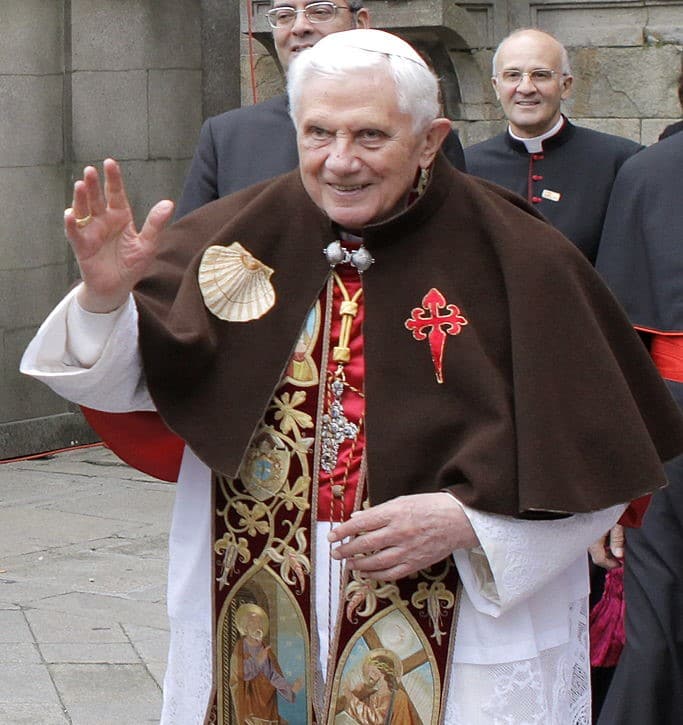
Saints and sinners, miracles and miscreants, and even Old Scratch himself … the literature associated with the pilgrimage to Santiago de Compostela abounds in characters and tales as colorful, instructive and entertaining as anything in Chaucer’s Canterbury Tales. In the Middle Ages, a pilgrim’s life was difficult and entailed considerable suffering. For centuries -- until the advent of motorized transport in the nineteenth century helped transform it into something more closely resembling a religious package holiday -- going on a pilgrimage was a sun-scorched, rain-and-wind-battered, blistery business. It was dangerous, too. Even if you reached your destination, there was no guarantee you would make the return trip safely. You walked, stopped at shrine or two along the way to pay your respects to the local patron saint, rested, and then you walked some more. From time to time, just to break up the monotony, you would fend off an attacking wolf, get mauled by a bear in some forest, or hand over all your money to some brigand skulking in the desolate stretches along your route. When you finally made it to your halt for the night, you ate whatever simple fare the innkeeper or monks had to offer, heard Mass if you could, and collapsed onto whatever passed for a bed until you woke up the next morning and did it all again. There was not much in the way of entertainment or relief from the rigors of the road. But everybody likes a good yarn, and stories of heroic nobility, wicked treachery, and saintly interventions abounded along the Camino de Santiago. Minstrels and bards carried the tales of the great French hero Roland’s mighty battle against the giant Muslim warrior Farragut and his ignominious defeat at the hands of Saracens in the pass at Roncesvalles up and down the pilgrim’s route. Preachers kept pilgrims' minds focused on more heavenly and eternal things with stories of the miracles of St. James and other holy characters, whose shrines they visited along the way. Book II of the Liber Sancti Iacobi, or Codex Calixtinus, the 12th-century manuscript that is the principal source of our knowledge of the medieval pilgrimage and its traditions, contains twenty-two of these miracles, performed by St. James himself in aid of his devoted pilgrims. What follows is a brief sample of a few of the most endearing ones.
12:43 PM
Tales of St James
saints and sinners, miracles and miscreants, and even old scratch himself … the literature associated with the pilgrimage to santiago de com...
Curtis Williams
14 min read



Already a subscriber? Sign in
5freearticles every month
Continue reading with a free account. No card needed.
- Five free articles every thirty days, on any device you sign in on
- The Catholic Herald newsletter, every morning
- Subscribe whenever you like for everything: every article and the magazine

subscribe to the catholic herald today
Our best content is exclusively available to our subscribers. Subscribe today and gain instant access to expert analysis, in-depth articles, and thought-provoking insights—anytime, anywhere. Don’t miss out on the conversations that matter most.
Subscribe