



It gets very dark early now, at this time of year. At the narrow spot of the Kappel Valley where my childhood home stands, the sun disappears behind the ridge just after lunch and sets around 5pm, unseen by us. The cold outside tries to creep in, and we children watch ice flowers grow on the panes of the kitchen window.
But our small kitchen is warm and cosy, heated by a wood-burning stove. The air in the valley and in our house is full of the scents of log fires, and soon there will be others mingling in: the scent of cinnamon, cloves, cardamom and of freshly baked biscuits will fill the air — it is Advent, the time to prepare for Christmas.
During my childhood, this period of preparation and anticipation was a rather intimate time. There were occasional visits to Freiburg with its small, homely Christmas market and snow-crystal streetlights, but due to the early onset of darkness, there was more time indoors — family time spent playing card games and board games, watching
TV together and, of course, preparing food and baking.
In our household, as in most German families, the most wonderful thing about the weeks leading up to Christmas was always the abundance of Christmas biscuits.
Prepared throughout the Advent period, these special biscuits are designed to keep well, and their flavours improve over time.
Pistachio and orange biscuits
100g butter, at room temperature
65g icing sugar
1 egg
zest of one orange
60g plain flour; pinch of salt
75g ground pistachios
Icing
50g icing sugar
2 tsp orange juice
Using an electric mixer, cream the butter and sugar together. Mix in the egg and orange zest, then add the salt, flour, pistachios, mixed peel (chopped) and vanilla paste, and mix again. The dough will be quite soft. Cover with clingfilm and leave in the fridge for at least two hours.
Divide the chilled dough into four equal pieces. On a well-floured surface, use your hands to roll each piece into a log about 3cm in diameter. Wrap each with clingfilm and place in the freezer for at least one hour. When the dough is solid enough to hold its shape, preheat the oven to 170C / gas mark 5 and line two baking sheets with baking
paper.
Take the dough out of the freezer, one piece at a time, and unwrap. Cut into 1cm slices and place on the prepared sheets, spacing them at least 3cm apart as these biscuits spread quite a lot in the oven. Bake for 11–14 minutes, until the edges of the biscuits darken.
Set aside to cool on the baking sheets for a few minutes — they will be quite delicate — before transferring to a wire rack to cool completely. Once cool, prepare the icing. Sift the icing sugar into a bowl. Add the orange juice bit by bit, stirring constantly, until the mixture runs off a fork in thin strands, but will stay on your biscuits. Drizzle the biscuits with icing in a random pattern. Leave to set. If stored in an airtight container, these biscuits will improve in flavour over the first two days, and will keep for two weeks.
St Martin's Day
The German word Vorfreude means joyful anticipation, and for some people, the pleasure of looking forward to Christmas begins on 1 November. St Martin's Day commemorates Martin of Tours, a fourth-century Roman soldier who went on to become a bishop in Gaul. Legend relates a story of Martin’s kindness when he was still a soldier: riding through a snowstorm, he encountered a beggar who had only rags to wear to protect him from the bitter cold. Martin took his sword, split his red wool cloak in half and gave one half to the beggar. Later, in a dream, he sees Christ wearing his half-cloak.
In many predominantly Catholic regions, St Martin's Day is an exciting day for children. In school and at kindergarten, they make paper lanterns of various designs, which they then carry through the village. Back then, the lanterns were illuminated by candles and hung from sticks, so that we could carry them in front of us without burning our fingers. When I was a child, these processions were quite big — 200 people or more — as most of the local children took part, often accompanied by a parent or grandparent. The procession started at the church, and wound its way past the houses to the school, guided by the priest and accompanied by the church choir and the town brass band. They played the special St Martin's Day songs, and everyone sang along. My father was the trombonist in our town band, and every year he would complain about having to play these songs in triple meter, like a slow waltz, and about how confusing it was to play like this while trying to walk in step with the other musicians.
When the procession arrived at the school building, a little play recreating the scene — with St Martin on horseback and the beggar — was performed. Once the beggar had received his half of the cloak, the children were given Weckmänner pastries — sweet bread, shaped like little men. By this point, everyone would be getting a bit cold, and it was time to go home and have supper.
Vanilla crescents
It wouldn’t be Christmas without these; this recipe makes about 40 crescents.
40g vanilla sugar or caster sugar
120g butter at room temperature
120g plain flour
80g ground almonds
1 tsp vanilla bean paste
100g icing sugar, for dusting
Preheat the oven to 170C. Line a baking tin with baking paper. Place all the ingredients except the icing sugar in a bowl and work the dough with your hands until smooth. Roll it into a log about 2cm thick, then slice it width-ways into 2cm rounds. Roll each round between your hands to create a mini log tapered at each end. Place on the prepared sheet and bend the tapered ends inward to get a crescent shape. Make more crescents in the same way, spacing them about 2cm apart.
Bake for ten minutes, until still pale but starting to firm up. Set aside to cool on the sheet for three minutes, then gently transfer to a wire rack. Once cool, dust with icing sugar. If stored in an airtight container, these biscuits will keep for at least six weeks.
St Nicholas' Day
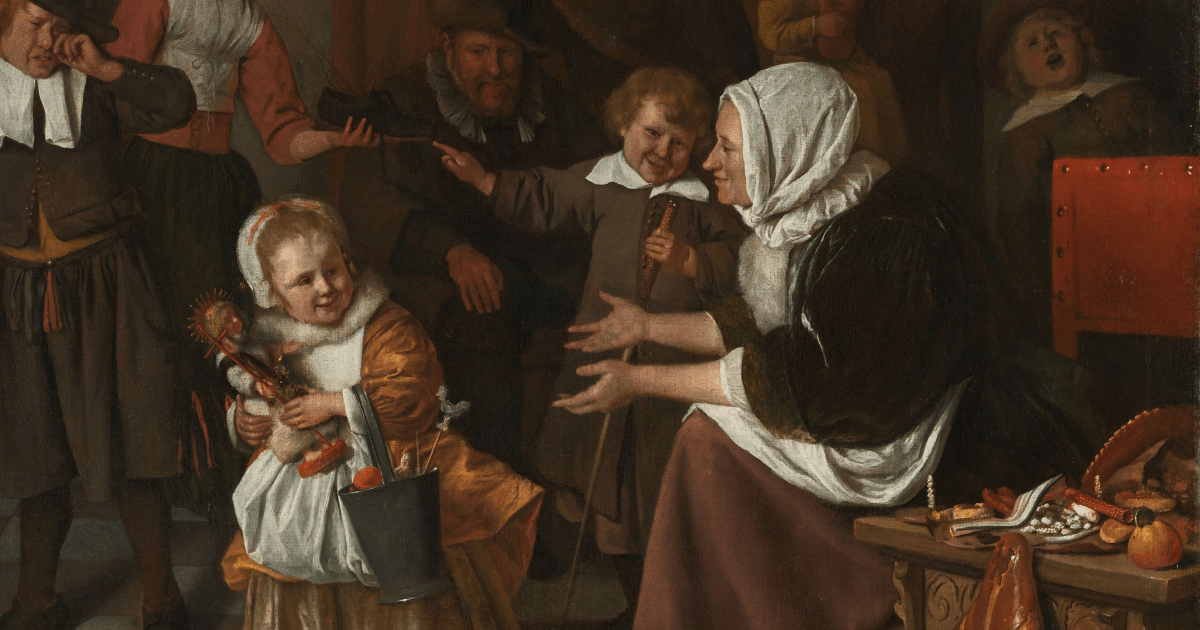
In Germany, 6 December is dedicated to Bishop Nicholas of Myra, the patron saint of sailors, merchants and children, who died on this day nearly 1,800 years ago.Over the centuries, tales of his generosity led to St Nicholas being associated with gift-giving, and so the tradition developed that he comes to people's houses on 6 December, asks the children if they have been well behaved and brings them gifts. This is also true of the Netherlands where the gift-giver is known as Sinterklaas — a name that may sound familiar to English speakers.
In many places, St Nicholas arrives dressed as a bishop, carrying a staff. In ourtown his helper was Knecht Ruprecht, a frightening-looking man who carried a sack full of gifts for the well-behaved children, but also birch canes with which to threaten those who had been naughty.
When I was a boy, the arrival of these characters was met with a mixture of excitement and nervousness. We children were looking forward to getting gifts — mostly sweets and oranges — but there was also the slightly uncomfortable prospect of what St Nicholas might find written in his big golden book, which was filled with all the details of things we'd done throughout the year. If we'd been naughty, there was the threat of Knecht Ruprecht and his canes, although he never actually used them on any children.
In fact, they had little bundles of chocolates tied to the ends, and the canes were available for sale at a local shop. And St Nicholas and Knecht Ruprecht? As I got older, I realised they were just students who had been hired to dress up and play the part.


.png)