
Vatican correspondent Elise Ann Allen has conducted a two-part interview with the United States Ambassador to the Holy See, Brian Burch, covering his arrival in Rome, the election of the first Pope from the United States and a series of pressing international and domestic policy questions shaping relations between Washington and the Vatican.
Burch, who presented his credentials in September, relocated to Rome with his wife, Sarah, and several of their children, leaving behind their parish and Catholic community in the United States to take up the diplomatic post.
Prior to his appointment as Ambassador to the Holy See, Brian Burch was co-founder and president of CatholicVote, a conservative political advocacy group focused on Catholic issues in the United States. The organisation seeks to mobilise Catholic voters and advocate policies aligned with its mission.
Asked how he was adjusting to the role, Burch said: “Transition is probably the right word, because it’s indeed been a transition in many different ways, both for myself professionally, for me personally, and with my wife, Sarah, and our children … it has been an adjustment because we left behind a wonderful life, a wonderful Catholic community, a wonderful parish, schools, friends, all the things that we miss a lot. But we have this extraordinary honour of serving our country now in Rome.”
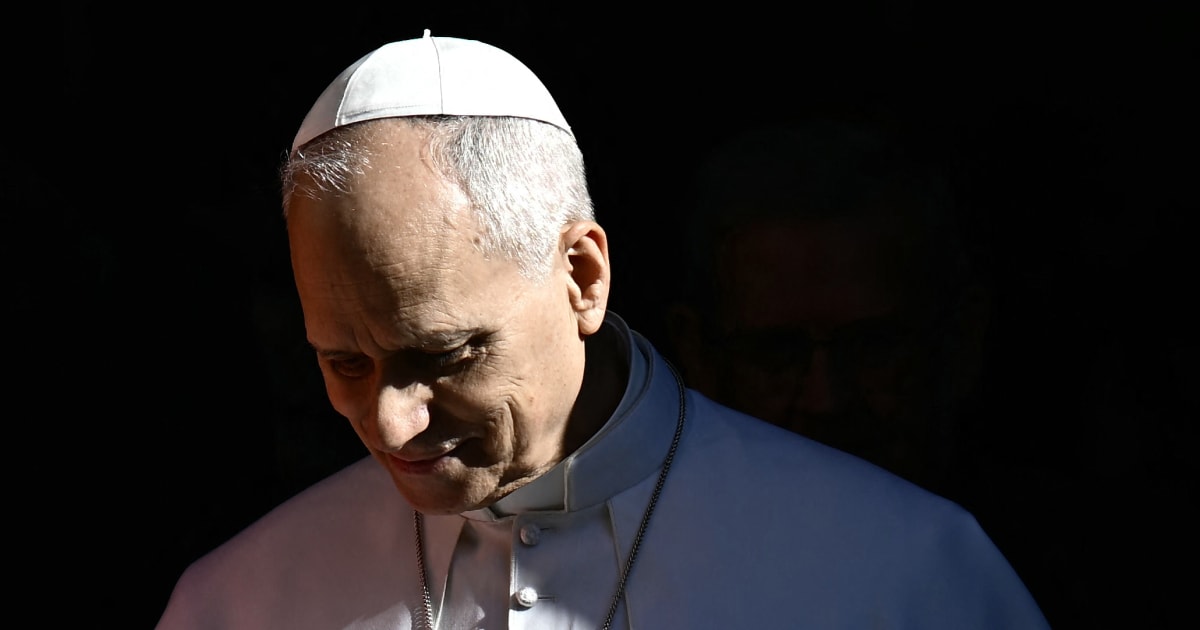
His arrival followed the election of Pope Leo XIV, the first American Pope in history. Describing the moment as “providential in many ways”, Burch noted that when he was first nominated Pope Francis was nearing the end of his pontificate. The election of Leo, he said, created “a wholly unique perspective with the first pope from America at the start of his papacy”.
Recalling their first meeting, Burch said: “My meeting went almost 45 minutes … We had lots of common connections in Chicago. As an American, we had this kind of easy way of talking to each other.” He added that the Pope was “extremely, extremely gracious, very easy to talk to … a very good listener, very reflective”. The initial apprehension of entering the Apostolic Palace, he said, dissolved when the Pope began speaking “in a Chicago accent”.
On immigration, where tensions have arisen between the Holy See and the US administration, Burch insisted there was significant common ground. “The challenge of mass migration is not something that is unique to the United States,” he said. “I think the Holy See and the United States share, in a fundamental sense, a lot in common. They want a legal, orderly process that respects the dignity of migrants and respects the legitimate laws of the country.”
Relations between the Holy See and the United States have been particularly strained amid the Trump administration’s mass deportation campaign and enforcement measures. The Pope has criticised aspects of US immigration policy, describing the treatment of migrants as “extremely disrespectful” and “inhuman”, and inconsistent with Catholic teaching on human dignity.
Burch, however, countered: “The Church is very explicit on this, that nations have a right to enforce their laws, have a right to enforce their border.”
Several US cardinals and bishops, including Cardinals Blase Cupich, Robert McElroy and Joseph Tobin, have voiced concern. The US Conference of Catholic Bishops issued a near-unanimous “special message” in November 2025 opposing mass deportations, dehumanising rhetoric and violence, while calling for comprehensive reform balancing security with dignity. In February, a group of US bishops released statements urging the restoration of asylum processes, an end to intimidation tactics and protections against arbitrary enforcement, framing these as moral imperatives.
Referring to unrest in Minneapolis that led to loss of life during enforcement actions, Burch described the situation as “extraordinarily tragic” and said there was “a deep sense of sadness over the loss of life”. He rejected claims that enforcement policies were rooted in hostility, stating: “This is not a set of evil policies rooted in hate or xenophobia. That is a false claim that has never been true.”
He also said he had worked with the Department of Homeland Security to ensure detainees had access to the sacraments, explaining that procedures were consistent with those in other law enforcement facilities. “The US government is not trying to deny anyone their religious rights,” he said.
On January 3, 2026, US President Trump ordered a large-scale military operation involving a predawn raid in Caracas, striking military targets, capturing former President Nicolás Maduro and his wife, Cilia Flores, and transporting them to New York to face federal charges of narco-terrorism, drug trafficking and related crimes. Following the January 3 raid and Maduro’s capture, the Pope expressed “deep concern” during his Angelus address on January 4. Ambassador Burch said: “Anytime the Pope speaks, he’s taken seriously.” However, he maintained that US action did not violate sovereignty, arguing that Maduro “cheated and stole the election”. He added that there had been efforts, including conversations involving the Vatican, to find a peaceful resolution before action was taken.
Marking the fourth anniversary of Russia’s full-scale invasion of Ukraine, Burch said: “We have to do everything possible to stop the killing.” He stressed that negotiators were working towards a ceasefire and durable settlement and said the scale of loss of life was “beyond comprehension at this point”.
On the prospect of a papal visit to the United States, Burch said: “Pope Leo said to me when I met with him that he wants to go to the US.” While discussions are ongoing, he suggested a visit next year was possible. “When he does go to the US, it will be the largest gathering of Catholics in American history. It will be extraordinary.”