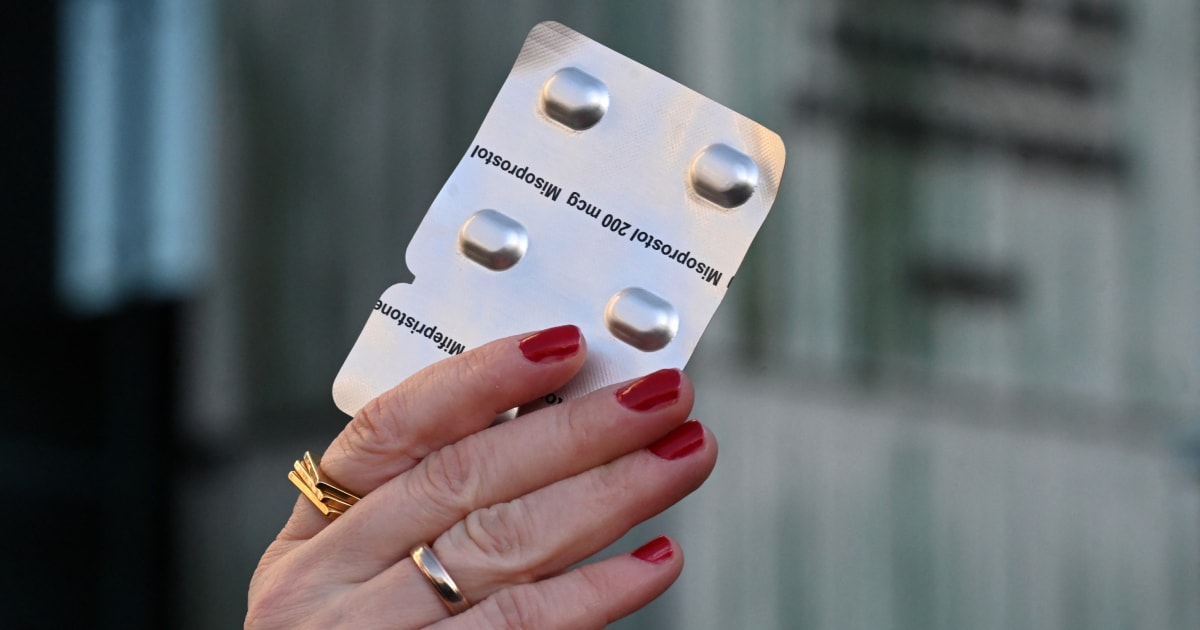


In recent years, the language of ‘medical consensus’ has been invoked to shut down debate over some of the most divisive ethical questions in America. Mounting legal challenges suggest that what is often described by partisans on one side of the debate as ‘settled science’ may, in fact, be shaped as much by politics as it is by evidence. Nowhere is this tension clearer than in the fight over mifepristone.
Pro-abortion activists have spent years downplaying the serious and potentially life-threatening harms associated with mifepristone on the grounds that the medical community says the science of the abortion drug is ‘settled’. Research data is now beginning to suggest otherwise, evidence to which we can add the lived experiences of countless women. A recent report found that the rate of serious adverse events (SAEs) associated with mifepristone is over 20 times higher than what the FDA currently reports and that an estimated 70,000 women likely experienced a mifepristone-related SAE in 2023 alone.
Not only that, but according to the FDA’s own data, one in 25 women taking mifepristone end up in the emergency room. This is likely because, by some estimates, mifepristone’s complication rate is four times that of surgical abortions. If any other drug on the market had these rates of complication, with potentially life-threatening consequences, the FDA would be rushing to investigate and consider additional restrictions to protect American consumers.
Unfortunately, since mifepristone is used in over 60 per cent of US abortions, pro-abortion activists are doing everything possible to prevent further investigation and keep the drugs on the market. Activists have placed enormous pressure on the FDA – which is currently ‘slow-walking’ its long-awaited review of mifepristone – arguing that women will die without the drug, the science of which is ‘settled’.
These disingenuous justifications were trotted out a few years ago when the Biden administration rolled back regulations on mifepristone during the Covid-19 pandemic. As a result, Americans are no longer required to have an in-person doctor’s visit to acquire the drugs, which they can also obtain via the mail.
Tele-abortions have since skyrocketed with alarming results. The so-called ‘medical consensus’ has enabled women to order mifepristone with a few clicks of a button – without ensuring women know the risks beforehand, without verifying their gestational age to determine whether they are too far along to take mifepristone, without an ultrasound to check for life-threatening ectopic pregnancies, and without even photo ID to verify who is actually ordering the drugs.
The lack of informed consent and the absence of a licensed medical professional has resulted in women learning the risks too late – bleeding out alone on their bathroom floors in excruciating pain, some even reporting with horror that nobody told them they would see the tiny body of their aborted child in the toilet.
Some women have faced even more horrifying realities in the form of abortion coercion or abuse. Mail-order abortions have reduced the ability for abortion coercion screening, enabling abusive partners to force women to take the pills free from interference. Not only that, but numerous men have used women’s personal information to order mifepristone with ease. There have been several instances in recent months in which men secretly poisoned their wife or girlfriend with mifepristone, endangering their lives and the life of their unborn child.
It is difficult to regard this as anything other than textbook medical malpractice. The consequences are real, dangerous and happening all around the country.
Even still, medical organisations such as the American College of Obstetricians and Gynecologists (ACOG) have the gall to tout the ‘medical consensus’ on mifepristone, the science of which they claim is ‘settled’ enough to mass-mail these pills nationwide.
Ironically, recent precedent has highlighted how quickly the ideologically driven ‘medical consensus’ narrative crumbles when confronted by the truth in the form of a lawsuit.
Indeed, all it took to dismantle the ‘medical consensus’ around transgender surgeries for minors was one successful medical malpractice lawsuit from a detransitioner named Fox Varian who underwent a double mastectomy at 16 years old. Varian’s victory seems to have undone years of medical gaslighting on transgender surgeries for minors.
Now, pro-life advocates are hopeful that a lawsuit could evoke a similar awakening on chemical abortion. The boyfriend of Rosalie Markezich allegedly obtained mifepristone online and forcibly administered it to the Louisiana resident. The state, on behalf of itself and Rosalie, has now filed a lawsuit against the U.S. Food and Drug Administration which may force the agency to end the mail-ordering of the drug.
Yet a victory in this case would go far deeper than merely reinstating basic safeguards on dangerous drugs if, like Fox Varian, Rosalie became the first of her kind to win a lawsuit against those who weaponised ‘medical consensus’ to justify medical malpractice.