
March 2, 2026

Jacob Rees-Mogg: why institutions still matter

Jan C. Bentz
More
Related
Min read
share

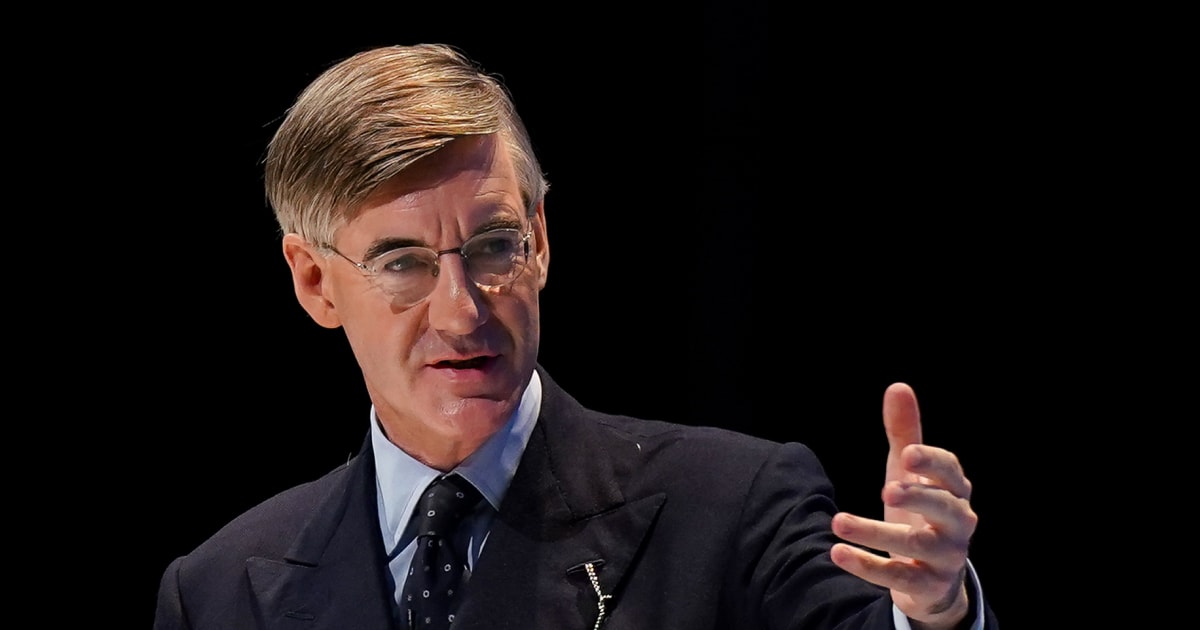
Sir Jacob Rees-Mogg is one of the very few British politicians prepared to speak unapologetically in explicitly Christian terms about the life of the nation. In a wide-ranging conversation with the Catholic Herald – touching on monarchy and migration, Brexit and Trump, the Latin Mass and the role of Catholic politicians – he returned repeatedly to a single governing conviction. The thread running through his answers was not nostalgia, nor partisan provocation, but a defence of institutions: of the Crown, of Parliament, of the jury system, of NATO and of the papacy itself. For Rees-Mogg, these are not decorative survivals from a more confident age. They are the concrete forms within which liberty, order and faith endure. At a time when Britain seems unsure of its moral inheritance and politically febrile, his reflex is neither rhetorical alarm nor cultural despair, but a disciplined inquiry into what remains structurally sound – and whether the country still has the will to inhabit it.

Asked whether Great Britain is approaching a societal tipping point – particularly in light of migration and the emergence of parallel societies – Rees-Mogg begins not with alarmism, but with first principles.

‘I think the United Kingdom is still a fundamentally Christian country,’ he says. ‘Our law and our culture draw very heavily on Christianity. We still have an established Church, and we have an anointed monarch. Other than the Pope, the King of England is the last anointed monarch left.’

The structures, in other words, remain. What has changed is the vitality within them.

‘A lot of it has been hollowed out,’ he concedes. ‘Fewer people go to church. Fewer people say they believe in God – though those polls are often misleading. Many people who say they do not believe in God still say they believe in the supernatural or in an afterlife. So when you look at the matter in totality, Britain is not as secular as it sometimes feels.’

The underlying concern, he notes, is usually directed towards the growth of the Muslim population. Approximately seven per cent of the country now identifies as Muslim. Yet he cautions against distortion.

‘That means ninety-three per cent are not Muslim. Christianity remains the main religion. Most of the festivals people observe are Christian festivals.’

Paradoxically, the weakening of cultural Christianity may be generating its own counter-movement.

‘The martyr’s blood is the seed of faith,’ he remarks. ‘In easy times, nobody worries very much about being Christian. It is all normal; men may not go to church, but they do not need to be aggressive about it. When things are tougher – when there is pressure – faith suddenly becomes important.’

He points to signs of renewed interest among the young.

‘We are beginning to see some encouragement there. Particularly among young people, there is more seriousness about Christianity. That, I think, is hopeful.’

If Christianity remains foundational, what of freedom – especially freedom of speech? Rees-Mogg acknowledges tension but resists hysteria.

‘There was recently a rather marvellous policewoman in London who encountered a case of minor disorder. A man was preaching a Christian message in a predominantly Muslim area. Someone complained to her, saying, “Don’t you know this is a Muslim area?” She replied, “Don’t you know this is England?” People are allowed to say these things.’ Such clarity, he implies, is not universal.

‘I do worry that our laws make it too easy to prohibit freedom of speech. The laws restricting private prayer outside abortion clinics, for example, are extraordinarily onerous. They verge on creating thought crimes. That is not merely a freedom of speech issue – it is a freedom of thought issue. And that is unprecedented in British history.’

He attributes this tendency to a broader ideological disposition. ‘Left-wing governments are instinctively inclined to control what people say. It is in their nature.’

Yet he rejects the claim that Britain has descended into systematic repression. ‘It is not as bad as some suggest. There is a tendency to exaggerate. There are bad cases, certainly. But one of the great benefits of trial by jury is that juries seem unwilling to convict people for speech offences, whereas magistrates often are.’

His advice is characteristically practical. ‘If you are charged for exercising freedom of speech, make sure you go before a jury.’ The jury system, in his view, remains one of the quiet bulwarks of British liberty – an institutional check against ideological overreach.

Turning to the monarchy, Rees-Mogg places current controversies around the Duke of York in historical perspective. ‘The royal family has always had scandals. One can look at George IV and Queen Caroline, or the abdication crisis of Edward VIII. Scandal is not new.’ What matters is not the absence of difficulty, but the constitutional principle underlying the Crown.

‘The British monarchy is not purely hereditary; it is, in a sense, an elected hereditary monarchy. The Act of Settlement in 1701 excluded fifty-six better claimants than George I because they were Catholic. That tells you something about how the system works. It depends upon legitimacy and public support.’

History shows, he argues, that when monarchs fail fundamentally, they are removed. ‘James II was forced out. Edward VIII was forced to abdicate. When we have bad kings, we get rid of them.’ The key question is whether the monarchy functions well as a constitutional institution. His answer is unambiguous. ‘Yes – provided the King and the Prince of Wales rise above politics.’ They are not meant to reshape the nation’s culture, nor to intervene in partisan debates. ‘They should embody the nation. They are not there to change its culture, but to represent it.’ In this sense, the monarchy is not an engine of reform, but a stabilising presence – a visible continuity that stands above ideological flux.

If the monarchy represents continuity within the nation, Brexit represents, for Rees-Mogg, the restoration of national self-government. He defends it without hesitation. ‘Again and again, yes. Brexit is one of the most important things the United Kingdom has done in decades.’

His objection to the European Union is not only political but also philosophical: ‘I think the European Union is an ungodly state. If you remember what Pope John Paul II said about the proposed European Constitution – which became the Lisbon Treaty – it deliberately excluded reference to God. That is telling.’

More fundamentally, he sees the EU as anti-democratic. ‘It centralises power in institutions that are not directly accountable to voters. It diminishes the ability of people to determine their own government.’

Economically, too, he believes the European model has failed. He cites a remark by Angela Merkel from 2012: ‘Europe is seven per cent of the world’s population, twenty-five per cent of the world’s GDP, and fifty per cent of the world’s welfare spending. In that single sentence, you have the diagnosis of a failed economic model.’

Brexit, therefore, was not merely about trade. It was about restoring the link between vote and outcome. ‘Politicians must be close to their voters. For too long, people in Western countries have felt that it does not matter who they vote for – they get the same thing. That breeds anger.’

Donald Trump, he argues, tapped into precisely this phenomenon.

‘Whatever one thinks of his style, Trump demonstrated that you can vote for something genuinely different and receive something different. That revitalises democracy.’ Rees-Mogg does not endorse every Trump policy – particularly tariffs, which he opposes on economic grounds – nor does he believe Trump’s style would translate well into Britain. But he sees the broader significance. ‘He reminded politicians that voters must be listened to.’ Brexit, in his telling, belongs to the same democratic correction.

The conversation turns to Germany and the policy of isolating the Alternative für Deutschland (AfD) behind a so-called ‘firewall’. Rees-Mogg approaches the issue cautiously but clearly: ‘I am not an expert in German politics, but from what I observe, putting firewalls around democratically elected parties is often counterproductive.’

The problem, he suggests, is perception. ‘When opposition parties form coalitions solely to exclude another party, it can appear as though there is a single political class – what some call “the blob” – determined to maintain control regardless of voter sentiment.’ This reinforces the very resentment such policies aim to suppress. ‘You create the impression of a uniparty. That encourages support for the excluded party rather than diminishing it.’

He draws a parallel with Britain’s own political shifts. ‘Reform emerged because the Conservative Party abandoned ground that many of its voters regarded as traditional. When voters feel unrepresented, they look elsewhere.’ He does not equate Reform with AfD – indeed, he notes that AfD is a more extreme formation in a historically sensitive German context. Yet the structural logic is similar. ‘These movements arise when people feel that decisions are no longer in the hands of politicians accountable to them, but in bureaucracies – particularly at the European level.’ When political sovereignty appears remote, protest intensifies. ‘The more power is transferred away from elected representatives, the more voters seek dramatic alternatives.’

Thus, for Rees-Mogg, the question is not whether one approves of every position taken by such parties. It is whether democratic systems can afford to treat substantial segments of the electorate as permanently illegitimate. Institutions endure, he suggests, not by suppressing dissent but by absorbing it.

Rees-Mogg takes evident pride in Britain’s early role in supporting Ukraine in 2022. ‘When the invasion began, we were told Ukraine might last a fortnight. It has lasted years – and it lasted because it was armed.’ He credits both Boris Johnson and then defence secretary Ben Wallace for their decision to send arms when others hesitated. ‘We did not even fly those arms over German airspace, because we did not want to place the German government in the awkward position of refusing permission.’

At the time, he recalls, many European leaders hoped to revive the Minsk framework and negotiate a settlement. ‘That would have been appeasement. We judged that Ukraine needed arms.’ In that early phase, Britain played what he calls a ‘key role’. He is less satisfied with Britain’s present posture. ‘European defence expenditure is rising sharply. British expenditure has been comparatively stagnant. That is a mistake.’

As for NATO, he offers an unexpected assessment of Donald Trump. ‘In a curious way, Trump has done more for NATO than anyone since Ronald Reagan. He forced European states to take defence spending seriously.’ The rhetoric may have sounded hostile, but the effect was reinvigoration. ‘The institution is stronger because it was challenged.’

If monarchy and Parliament embody constitutional continuity in Britain, the papacy performs a similar function in the Church – though of a different order.

Asked for his assessment of Pope Leo XIV, Rees-Mogg answers with characteristic loyalty: ‘I am a very loyal Catholic. I always think the Pope is marvellous.’ Yet he offers a distinction that is central to his broader philosophy of authority. ‘What strikes me about Pope Leo XIV, as far as I can observe, is that he appears to understand that the institution of the papacy is more important than the individual pope.’ That, in his view, is decisive.

‘He seems to believe in the office – in the continuity of the institution – rather than in a more personalist approach. That creates stability. It enhances the authority of the papacy.’ Without speaking ill of his predecessor, he implies that such stability had not always been evident. ‘When the office is clearly placed above the personality, the Church gains in coherence.’ Institutional continuity, for Rees-Mogg, is not rigidity. It is credibility.

The conversation turns to the delicate relationship between ecclesial authority and political questions. Rees-Mogg draws a careful distinction. ‘Matters of faith are matters of truth – absolute truth. When the Holy Father defines a dogma, such as the Immaculate Conception or the Assumption, those are truths that Catholics must believe.’

Public policy, however, operates in a different register. ‘Whether immigration should be one hundred thousand or one hundred and fifty thousand, whether people should arrive by small boats or through bureaucratic channels – those are matters of prudential judgment. There is no single revealed answer.’

The danger arises when these categories are confused: ‘When clerics involve themselves deeply in the details of public policy, they risk undermining the authority attached to matters of doctrine. People may conclude: if he is mistaken about this, might he not also be mistaken about something fundamental?’

It is not that bishops or popes have nothing to say about moral principles. Rather, political mechanics demand nuance. ‘Dogma concerns truth. Public policy concerns application and judgment.’ For Rees-Mogg, preserving the distinction protects both Church and state from confusion.

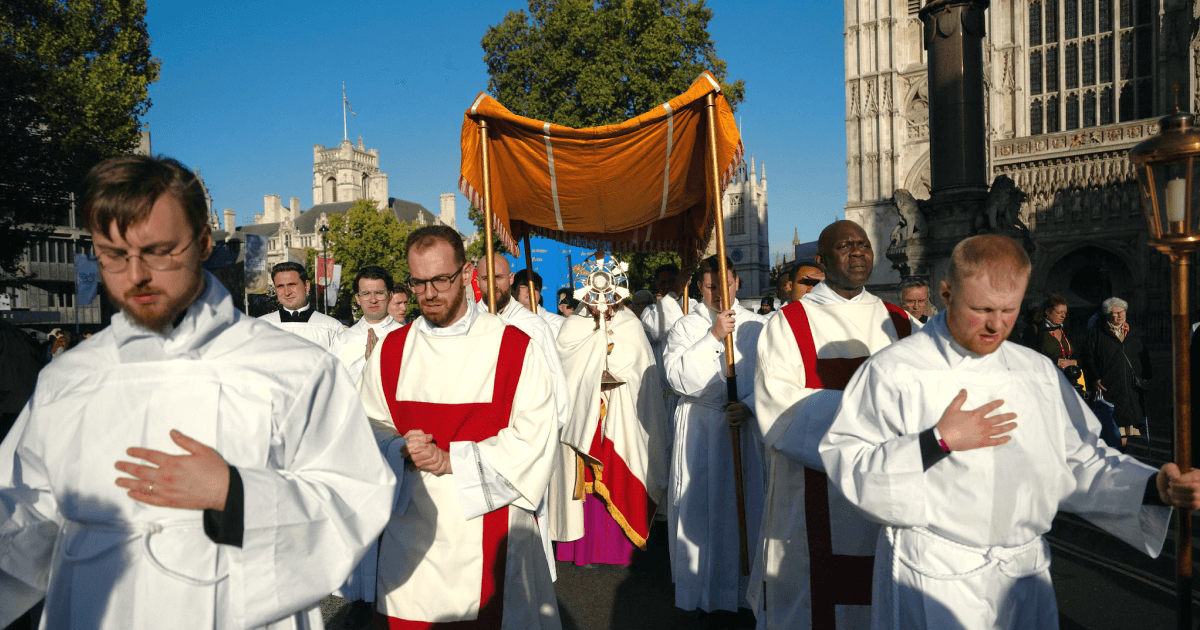
On the question of the Latin Mass, he speaks with visible concern. ‘I hope Pope Leo will be generous regarding the extraordinary form. I could never understand the hostility shown towards those who prefer the old rite.’ Sir Jacob rejects the assumption that attachment to the traditional liturgy necessarily signals ideological dissent.

‘Most people who love the old rite simply love the old rite. It does not mean they harbour political axes to grind within the Church.’ Excessive restriction, he warns, risks unintended consequences.

‘What one would not want is to push people who have no sympathy for schism into the arms of those who do.’ He credits Pope Benedict XVI’s earlier approach as constructive. ‘Benedict’s generosity brought people back. That was surely a good thing.’

Drawing on his long familiarity with Reformation history, he offers a cautionary reflection. ‘When one studies the Reformation, there are many moments when reconciliation might have been achieved, but the wrong decisions were made – and division deepened.’

The implication is clear: prudence in ecclesial governance can prevent unnecessary fracture. Before the interview concluded, the discussion briefly returns to American politics.

Rees-Mogg welcomes the presence of Catholic politicians in positions of influence, particularly given the moral weight of life issues: ‘It is good to have Catholic politicians around. Questions of life are foundational.’ Yet he resists any confusion of ecclesial loyalty with political identity. ‘A vice-president is not taking orders from the Pope. He must be a politician exercising secular judgment.’

Catholic faith, he suggests, should underpin core convictions — not dictate every policy detail. Again, the distinction between truth and prudential governance surfaces. ‘Faith informs. It does not replace judgment.’

Across monarchy, jury trial, Brexit, NATO and the papacy, a single pattern emerges in Rees-Mogg’s thinking: institutions matter. They are not merely ornamental, but rather the actual condition in which freedom, order and the faith can endure. Britain, he insists, remains Christian in structure even if hollowed in practice. Its jury system still restrains overreach. Its monarchy still embodies continuity. Brexit restored democratic accountability. NATO, properly funded, remains vital. The papacy, when understood as an office rather than a personality, stabilises the Church.

Institutions do not eliminate crisis. They enable continuity. And for Rees-Mogg, that endurance – not ideological novelty – is what ultimately sustains civilisation.

The interview was conducted for publication in full, in German translation, in the print journal CATO: Magazin für neue Sachlichkeit.

Sir Jacob Rees-Mogg is one of the very few British politicians prepared to speak unapologetically in explicitly Christian terms about the life of the nation. In a wide-ranging conversation with the Catholic Herald – touching on monarchy and migration, Brexit and Trump, the Latin Mass and the role of Catholic politicians – he returned repeatedly to a single governing conviction. The thread running through his answers was not nostalgia, nor partisan provocation, but a defence of institutions: of the Crown, of Parliament, of the jury system, of NATO and of the papacy itself. For Rees-Mogg, these are not decorative survivals from a more confident age. They are the concrete forms within which liberty, order and faith endure. At a time when Britain seems unsure of its moral inheritance and politically febrile, his reflex is neither rhetorical alarm nor cultural despair, but a disciplined inquiry into what remains structurally sound – and whether the country still has the will to inhabit it.

Asked whether Great Britain is approaching a societal tipping point – particularly in light of migration and the emergence of parallel societies – Rees-Mogg begins not with alarmism, but with first principles.

‘I think the United Kingdom is still a fundamentally Christian country,’ he says. ‘Our law and our culture draw very heavily on Christianity. We still have an established Church, and we have an anointed monarch. Other than the Pope, the King of England is the last anointed monarch left.’

The structures, in other words, remain. What has changed is the vitality within them.

‘A lot of it has been hollowed out,’ he concedes. ‘Fewer people go to church. Fewer people say they believe in God – though those polls are often misleading. Many people who say they do not believe in God still say they believe in the supernatural or in an afterlife. So when you look at the matter in totality, Britain is not as secular as it sometimes feels.’

The underlying concern, he notes, is usually directed towards the growth of the Muslim population. Approximately seven per cent of the country now identifies as Muslim. Yet he cautions against distortion.

‘That means ninety-three per cent are not Muslim. Christianity remains the main religion. Most of the festivals people observe are Christian festivals.’

Paradoxically, the weakening of cultural Christianity may be generating its own counter-movement.

‘The martyr’s blood is the seed of faith,’ he remarks. ‘In easy times, nobody worries very much about being Christian. It is all normal; men may not go to church, but they do not need to be aggressive about it. When things are tougher – when there is pressure – faith suddenly becomes important.’

He points to signs of renewed interest among the young.

‘We are beginning to see some encouragement there. Particularly among young people, there is more seriousness about Christianity. That, I think, is hopeful.’

If Christianity remains foundational, what of freedom – especially freedom of speech? Rees-Mogg acknowledges tension but resists hysteria.

‘There was recently a rather marvellous policewoman in London who encountered a case of minor disorder. A man was preaching a Christian message in a predominantly Muslim area. Someone complained to her, saying, “Don’t you know this is a Muslim area?” She replied, “Don’t you know this is England?” People are allowed to say these things.’ Such clarity, he implies, is not universal.

‘I do worry that our laws make it too easy to prohibit freedom of speech. The laws restricting private prayer outside abortion clinics, for example, are extraordinarily onerous. They verge on creating thought crimes. That is not merely a freedom of speech issue – it is a freedom of thought issue. And that is unprecedented in British history.’

He attributes this tendency to a broader ideological disposition. ‘Left-wing governments are instinctively inclined to control what people say. It is in their nature.’

Yet he rejects the claim that Britain has descended into systematic repression. ‘It is not as bad as some suggest. There is a tendency to exaggerate. There are bad cases, certainly. But one of the great benefits of trial by jury is that juries seem unwilling to convict people for speech offences, whereas magistrates often are.’

His advice is characteristically practical. ‘If you are charged for exercising freedom of speech, make sure you go before a jury.’ The jury system, in his view, remains one of the quiet bulwarks of British liberty – an institutional check against ideological overreach.

Turning to the monarchy, Rees-Mogg places current controversies around the Duke of York in historical perspective. ‘The royal family has always had scandals. One can look at George IV and Queen Caroline, or the abdication crisis of Edward VIII. Scandal is not new.’ What matters is not the absence of difficulty, but the constitutional principle underlying the Crown.

‘The British monarchy is not purely hereditary; it is, in a sense, an elected hereditary monarchy. The Act of Settlement in 1701 excluded fifty-six better claimants than George I because they were Catholic. That tells you something about how the system works. It depends upon legitimacy and public support.’

History shows, he argues, that when monarchs fail fundamentally, they are removed. ‘James II was forced out. Edward VIII was forced to abdicate. When we have bad kings, we get rid of them.’ The key question is whether the monarchy functions well as a constitutional institution. His answer is unambiguous. ‘Yes – provided the King and the Prince of Wales rise above politics.’ They are not meant to reshape the nation’s culture, nor to intervene in partisan debates. ‘They should embody the nation. They are not there to change its culture, but to represent it.’ In this sense, the monarchy is not an engine of reform, but a stabilising presence – a visible continuity that stands above ideological flux.

If the monarchy represents continuity within the nation, Brexit represents, for Rees-Mogg, the restoration of national self-government. He defends it without hesitation. ‘Again and again, yes. Brexit is one of the most important things the United Kingdom has done in decades.’

His objection to the European Union is not only political but also philosophical: ‘I think the European Union is an ungodly state. If you remember what Pope John Paul II said about the proposed European Constitution – which became the Lisbon Treaty – it deliberately excluded reference to God. That is telling.’

More fundamentally, he sees the EU as anti-democratic. ‘It centralises power in institutions that are not directly accountable to voters. It diminishes the ability of people to determine their own government.’

Economically, too, he believes the European model has failed. He cites a remark by Angela Merkel from 2012: ‘Europe is seven per cent of the world’s population, twenty-five per cent of the world’s GDP, and fifty per cent of the world’s welfare spending. In that single sentence, you have the diagnosis of a failed economic model.’

Brexit, therefore, was not merely about trade. It was about restoring the link between vote and outcome. ‘Politicians must be close to their voters. For too long, people in Western countries have felt that it does not matter who they vote for – they get the same thing. That breeds anger.’

Donald Trump, he argues, tapped into precisely this phenomenon.

‘Whatever one thinks of his style, Trump demonstrated that you can vote for something genuinely different and receive something different. That revitalises democracy.’ Rees-Mogg does not endorse every Trump policy – particularly tariffs, which he opposes on economic grounds – nor does he believe Trump’s style would translate well into Britain. But he sees the broader significance. ‘He reminded politicians that voters must be listened to.’ Brexit, in his telling, belongs to the same democratic correction.

The conversation turns to Germany and the policy of isolating the Alternative für Deutschland (AfD) behind a so-called ‘firewall’. Rees-Mogg approaches the issue cautiously but clearly: ‘I am not an expert in German politics, but from what I observe, putting firewalls around democratically elected parties is often counterproductive.’

The problem, he suggests, is perception. ‘When opposition parties form coalitions solely to exclude another party, it can appear as though there is a single political class – what some call “the blob” – determined to maintain control regardless of voter sentiment.’ This reinforces the very resentment such policies aim to suppress. ‘You create the impression of a uniparty. That encourages support for the excluded party rather than diminishing it.’

He draws a parallel with Britain’s own political shifts. ‘Reform emerged because the Conservative Party abandoned ground that many of its voters regarded as traditional. When voters feel unrepresented, they look elsewhere.’ He does not equate Reform with AfD – indeed, he notes that AfD is a more extreme formation in a historically sensitive German context. Yet the structural logic is similar. ‘These movements arise when people feel that decisions are no longer in the hands of politicians accountable to them, but in bureaucracies – particularly at the European level.’ When political sovereignty appears remote, protest intensifies. ‘The more power is transferred away from elected representatives, the more voters seek dramatic alternatives.’

Thus, for Rees-Mogg, the question is not whether one approves of every position taken by such parties. It is whether democratic systems can afford to treat substantial segments of the electorate as permanently illegitimate. Institutions endure, he suggests, not by suppressing dissent but by absorbing it.

Rees-Mogg takes evident pride in Britain’s early role in supporting Ukraine in 2022. ‘When the invasion began, we were told Ukraine might last a fortnight. It has lasted years – and it lasted because it was armed.’ He credits both Boris Johnson and then defence secretary Ben Wallace for their decision to send arms when others hesitated. ‘We did not even fly those arms over German airspace, because we did not want to place the German government in the awkward position of refusing permission.’

At the time, he recalls, many European leaders hoped to revive the Minsk framework and negotiate a settlement. ‘That would have been appeasement. We judged that Ukraine needed arms.’ In that early phase, Britain played what he calls a ‘key role’. He is less satisfied with Britain’s present posture. ‘European defence expenditure is rising sharply. British expenditure has been comparatively stagnant. That is a mistake.’

As for NATO, he offers an unexpected assessment of Donald Trump. ‘In a curious way, Trump has done more for NATO than anyone since Ronald Reagan. He forced European states to take defence spending seriously.’ The rhetoric may have sounded hostile, but the effect was reinvigoration. ‘The institution is stronger because it was challenged.’

If monarchy and Parliament embody constitutional continuity in Britain, the papacy performs a similar function in the Church – though of a different order.

Asked for his assessment of Pope Leo XIV, Rees-Mogg answers with characteristic loyalty: ‘I am a very loyal Catholic. I always think the Pope is marvellous.’ Yet he offers a distinction that is central to his broader philosophy of authority. ‘What strikes me about Pope Leo XIV, as far as I can observe, is that he appears to understand that the institution of the papacy is more important than the individual pope.’ That, in his view, is decisive.

‘He seems to believe in the office – in the continuity of the institution – rather than in a more personalist approach. That creates stability. It enhances the authority of the papacy.’ Without speaking ill of his predecessor, he implies that such stability had not always been evident. ‘When the office is clearly placed above the personality, the Church gains in coherence.’ Institutional continuity, for Rees-Mogg, is not rigidity. It is credibility.

The conversation turns to the delicate relationship between ecclesial authority and political questions. Rees-Mogg draws a careful distinction. ‘Matters of faith are matters of truth – absolute truth. When the Holy Father defines a dogma, such as the Immaculate Conception or the Assumption, those are truths that Catholics must believe.’

Public policy, however, operates in a different register. ‘Whether immigration should be one hundred thousand or one hundred and fifty thousand, whether people should arrive by small boats or through bureaucratic channels – those are matters of prudential judgment. There is no single revealed answer.’

The danger arises when these categories are confused: ‘When clerics involve themselves deeply in the details of public policy, they risk undermining the authority attached to matters of doctrine. People may conclude: if he is mistaken about this, might he not also be mistaken about something fundamental?’

It is not that bishops or popes have nothing to say about moral principles. Rather, political mechanics demand nuance. ‘Dogma concerns truth. Public policy concerns application and judgment.’ For Rees-Mogg, preserving the distinction protects both Church and state from confusion.

On the question of the Latin Mass, he speaks with visible concern. ‘I hope Pope Leo will be generous regarding the extraordinary form. I could never understand the hostility shown towards those who prefer the old rite.’ Sir Jacob rejects the assumption that attachment to the traditional liturgy necessarily signals ideological dissent.

‘Most people who love the old rite simply love the old rite. It does not mean they harbour political axes to grind within the Church.’ Excessive restriction, he warns, risks unintended consequences.

‘What one would not want is to push people who have no sympathy for schism into the arms of those who do.’ He credits Pope Benedict XVI’s earlier approach as constructive. ‘Benedict’s generosity brought people back. That was surely a good thing.’

Drawing on his long familiarity with Reformation history, he offers a cautionary reflection. ‘When one studies the Reformation, there are many moments when reconciliation might have been achieved, but the wrong decisions were made – and division deepened.’

The implication is clear: prudence in ecclesial governance can prevent unnecessary fracture. Before the interview concluded, the discussion briefly returns to American politics.

Rees-Mogg welcomes the presence of Catholic politicians in positions of influence, particularly given the moral weight of life issues: ‘It is good to have Catholic politicians around. Questions of life are foundational.’ Yet he resists any confusion of ecclesial loyalty with political identity. ‘A vice-president is not taking orders from the Pope. He must be a politician exercising secular judgment.’

Catholic faith, he suggests, should underpin core convictions — not dictate every policy detail. Again, the distinction between truth and prudential governance surfaces. ‘Faith informs. It does not replace judgment.’

Across monarchy, jury trial, Brexit, NATO and the papacy, a single pattern emerges in Rees-Mogg’s thinking: institutions matter. They are not merely ornamental, but rather the actual condition in which freedom, order and the faith can endure. Britain, he insists, remains Christian in structure even if hollowed in practice. Its jury system still restrains overreach. Its monarchy still embodies continuity. Brexit restored democratic accountability. NATO, properly funded, remains vital. The papacy, when understood as an office rather than a personality, stabilises the Church.

Institutions do not eliminate crisis. They enable continuity. And for Rees-Mogg, that endurance – not ideological novelty – is what ultimately sustains civilisation.

The interview was conducted for publication in full, in German translation, in the print journal CATO: Magazin für neue Sachlichkeit.

subscribe to
the catholic herald

Continue reading your article with a subscription.
Read 5 articles with our free plan.
Subscribe

subscribe to the catholic herald today

Our best content is exclusively available to our subscribers. Subscribe today and gain instant access to expert analysis, in-depth articles, and thought-provoking insights—anytime, anywhere. Don’t miss out on the conversations that matter most.
Subscribe