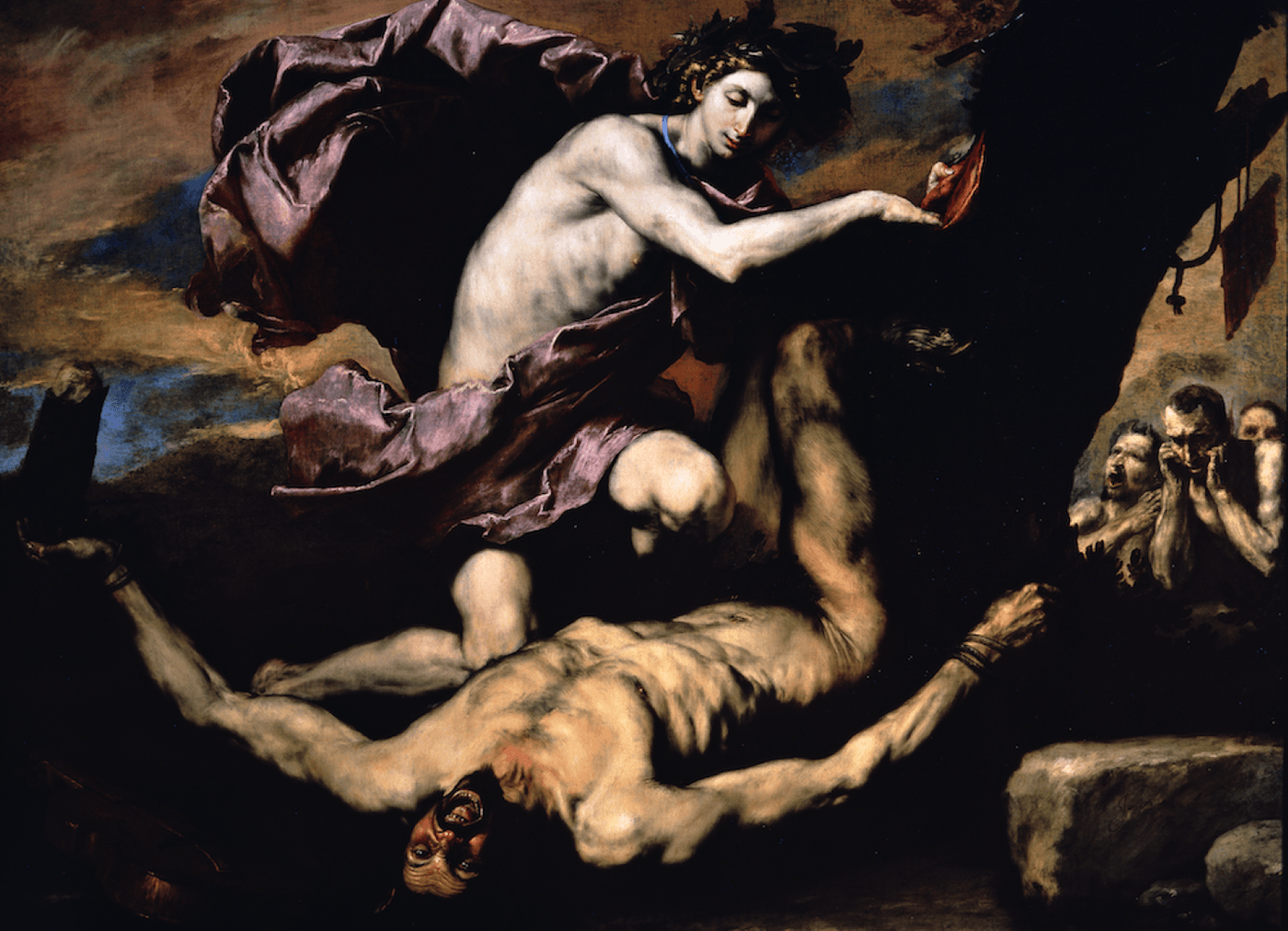



'They look a bit like Caravaggio.” That’s what most people say about the paintings of Jusepe de Ribera. It’s impossible not to see the influence of the wild Italian in Ribera’s best known works, with dramatic chiaroscuro revealing violent religious scenes populated by gnarled characters, who all look desperately in need of a hot bath and a square meal.
The evidence isn’t there just in the aesthetic either, but in the chronology, too. As a young man, Ribera moved from Valencia to Rome around 1612, and probably absorbed the early masterpieces Caravaggio had painted in the city just a few years earlier. His subsequent move to Naples in 1616, another city where Caravaggio lived and worked, must have increased his indebtedness.