

In the early 2000s, singer-songwriter Helen Orr was walking down a familiar street in Notting Hill when a painting in a gallery window stopped her in her tracks. It was a bright field of sunflowers, rendered in saturated yellows, greens, and blues. The work radiated light. On a grey London pavement it returned her, unexpectedly, to the warmth of the African sun under which she had recently lived. More than that, it reminded her of something she felt had vanished from much of contemporary art: beauty.
The painting, Sunflowers Provence, was by the French artist Marcel Gatteaux, who works under a pseudonym for privacy. Orr bought the piece, and over the years she noticed how visitors in her home were drawn to it, almost as if sunlight had been smuggled indoors. Its presence awakened joy, steadiness, and delight. The experience convinced her that beauty is not decorative but nourishing, something the soul quite literally hungers for.
Gatteaux’s landscapes helped crystallise that conviction. Classically trained and working exclusively in oil, he paints France with a Mediterranean clarity: sun-warmed colours, long shadows, open brushwork, and compositions in which every mark is purposeful. His works, such as Sunflowers Avignon, contain a kind of quiet order. Beauty presented without pretence.
Encountering Gatteaux set Orr on a path. She began seeking out contemporary artists whose work reflected the beauty of God's creation and who offered an alternative to the shock-driven and self-referential art dominating many galleries. Her belief that art belongs in ordinary homes, not only in museums, was shaped early on by Jim Ede, a close friend. In his Cambridge home, Kettle’s Yard, Ede arranged objects with intention: a lemon near a Miró, skeleton leaves beside Venetian mirrors. He taught Orr that beauty is not merely viewed; it is lived with.
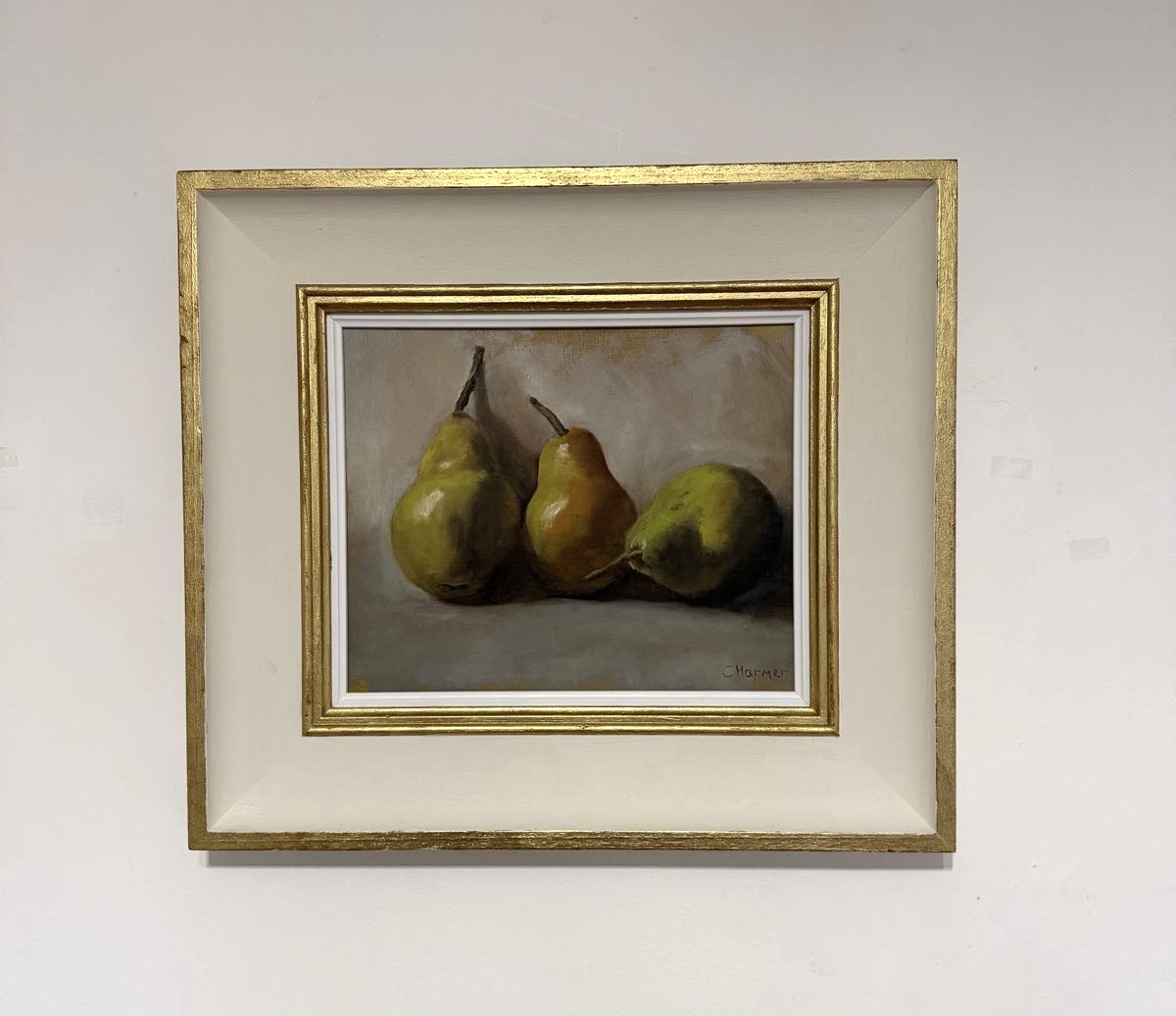
It was this same sensitivity to light that led Orr to discover the Norfolk-based Catholic artist Charlotte Harmer. A former wedding and portrait photographer, Harmer turned to painting after a period of personal sorrow, using her work as a form of meditative prayer. Her still lifes recall the Dutch masters, while her landscapes open into vast skies, as in Free As A Bird Over Walsingham. Though the subjects may be everyday objects—a vase, a piece of fruit—Harmer’s compositions reveal quiet narratives of redemption and grace. Her canvases seem to allow the deeper light of reality, the thumbprint of the Creator, to shine through.
Orr saw this again in the work of Katherine Leckie, whose atmospheric abstract landscapes, created in ink and acrylic, evoke both memory and imagination. A former archaeologist and museum professional, Leckie returned to painting while raising five children. Her works capture the fleeting sensations one experiences in nature—the moment when landscape becomes luminous and one senses something greater beyond it. With smooth, layered surfaces and blurred horizons, paintings such as Woodland Lake carry an ethereal, almost eternal quality. Orr likens her to a modern-day Turner, pointing in her work to the layered, mysterious presence of light.
Nearly twenty-five years after she first encountered Sunflowers Provence, Orr believes more firmly than ever that beauty is essential for the flourishing of the human person. It consoles, steadies, elevates, and restores. And it belongs in every home.
On December 8th, Orr will auction works by Gatteaux, Harmer, and Leckie to support the launch of a new cultural hub and gallery, The Cambridge Salon. The project is founded on a simple belief that every work of true art carries within it a trace of the divine, echoing the moment when God spoke light into the void. In an art market that often forgets beauty’s purpose, Orr hopes to help reclaim it.