


February 20, 2026

Why beauty belongs at the heart of worship

Jan C. Bentz
More
Related
Min read
share

Walk into Chartres and the building begins to speak before the priest ever does. The light, the proportions, the saints in glass and stone, the very direction of the space – all conspire to move the soul towards God. Walk into many modern churches and the silence is of a different kind: not contemplative, but empty. The architecture says little, the walls teach nothing, and the faithful sit in a space that could just as easily host a lecture, a concert or a town meeting.

Art historian and author Dr Elizabeth Lev has spent decades teaching celebrities, pilgrims, students and sceptics alike how to ‘read’ churches in the way previous generations once did instinctively. For her, sacred art is not decoration but theology made visible. In this conversation, she explains when Catholics lost the ability to read their own churches, why modern ecclesiastical architecture often feels spiritually mute, and how beauty can once again become one of the Church’s most powerful teachers.
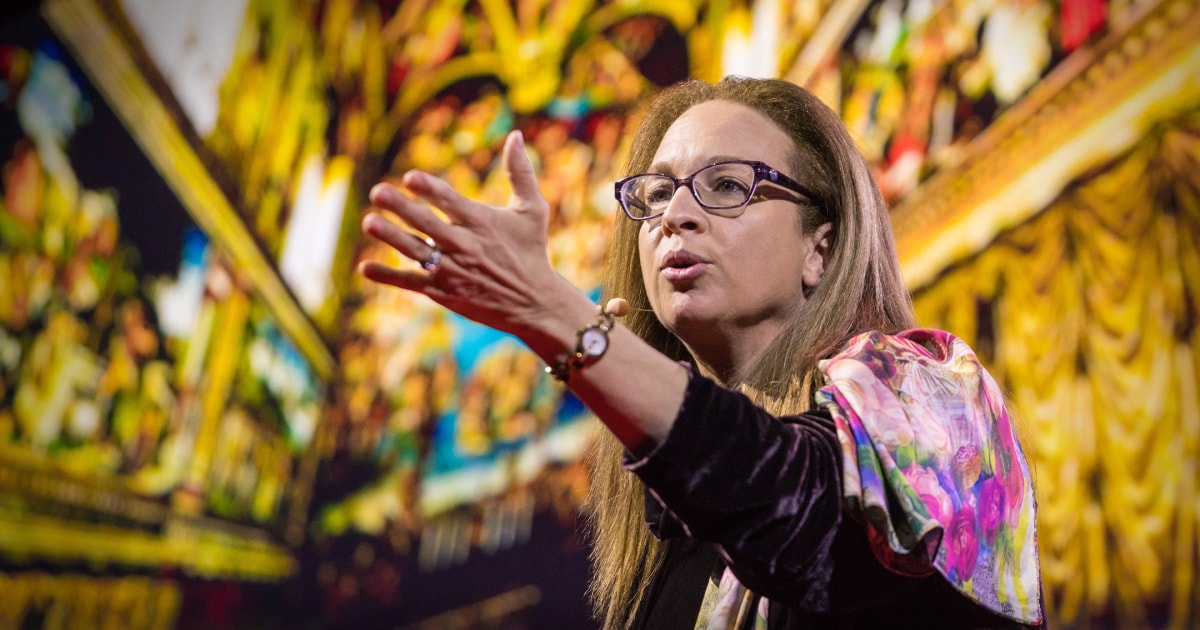
Jan C Bentz: For most of Christian history, a church was not merely a place for worship, but also a catechism in stone, paint and light. Today, many Catholics walk through Rome – or through their own parish, for that matter – without being able to read what they see. When did the Church lose this kind of visual literacy, and what has that loss done to the spiritual life?

Elizabeth Lev: These are exactly the kinds of conversations we should be having in an age when beauty often feels so elusive to the human eye.

The short answer, in my view, is the Enlightenment. For all its virtues and the many important developments it brought about, it also contributed to a diminishing of what we might call the Catholic imagination. It weakened the sense of community formed around the shared space of the church. Early Christian churches were, in many ways, designed to resemble a Roman home – an atrium, a gathering place, a house – large spaces where people could assemble as a family. That space formed community by recounting a common story, and that common story was the story of salvation, populated by the great heroes we know as the saints.

The Enlightenment, however, preferred to offer practical, rational and distinctly human-centred explanations for the world. People were gently but steadily turned away from seeking the transcendent – from using the world around them as a means of glimpsing the divine – and encouraged instead to focus on the here and now.

This shift was also deliberate artistically. Instead of telling stories of the saints, the Passion, the Incarnation or the miracles of Christ – the great subjects of art for centuries – artists were encouraged to turn to increasingly obscure Roman heroes or Greek thinkers. Those narratives were far less compelling to ordinary people. An educated elite might learn them, but the rest were left behind because these were no longer stories that nourished the soul or spoke to the universal human longing for salvation.

If you walk through an 18th-century history painting gallery in a French museum, you almost need a digital assistant at your side to decipher the obscure episodes being depicted. That is very telling. The substitution of stories rooted in reason, politics and warfare for stories rooted in salvation gradually eroded people’s instinctive ability to read churches and to encounter the transcendent through what they saw.

JCB: You have often written and spoken about how Renaissance and Baroque churches were consciously designed to move the soul towards God. Modern churches, to put it bluntly, often feel ugly, empty or sterile – almost architecturally mute. Do you think this silence is accidental, or is there a deeper reason behind it?

EL: My sense is that it comes from a misguided idea of humility. On both sides of the Atlantic, though in slightly different ways, there developed the notion that the richness, splendour and visual density of Catholic churches looked excessive, even embarrassing.

In the American context, this often grew out of a Protestant ethos of modesty and restraint, where the ‘glitz’ of Catholic art could seem too extravagant, almost theatrical. In order to assimilate, the Church began to tone itself down. In Europe, something slightly different happened: beauty and magnificence came to be associated with an establishment people were trying to reject. In both cases, stripping things back was mistaken for humility.

True humility was reinterpreted as austerity, simplification and abstraction. The idea took hold that if we removed imagery, ornament and richness, we would be more faithful to the Gospel because we would no longer be ‘distracted’. Arguments about excess have existed throughout history – from Bernard of Clairvaux to Gabriele Paleotti – but what we see today is not careful correction. It is something far more utilitarian.

What has been lost is that overwhelming sense of awe people once felt when they entered places such as Chartres, St Peter’s in Rome or San Vitale in Ravenna. Those spaces ignited the Catholic imagination. They opened the soul. They created the awareness that one was stepping into something not of this world. We cannot put four walls around heaven, and we cannot depict the ineffable, but great Catholic art and architecture help open that door.

That loss is very serious. Modern churches often feel utilitarian: we gather people together, but for what? Many resemble sound stages or theatres, subtly suggesting that the Mass is something to be watched or evaluated. People say, ‘I go to this priest because I like his homily,’ or ‘I prefer this parish because of the music.’ The architecture reinforces the idea that we are spectators.

Older churches did not allow for that complacency. They funnelled us, physically and visually, towards a goal. We were not waiting to be entertained; we were being directed towards heaven.

JCB: It almost feels impossible today to speak about beauty at all. The word itself has become polemical, with many insisting that it is purely subjective. Would you say there is an absence of beauty in many modern churches?

EL: I would say there is certainly a dearth of it. I would not make a sweeping judgement about every modern church. There have been successful attempts to recover or reinterpret beauty – some neo-Gothic churches, and some more recent buildings where space, colour and materials are genuinely harmonious.

But in many cases there is almost a pride taken in brutality, as though the ‘truth’ of the human condition were best expressed in raw concrete and oppressive forms. What I often do not see – apart from the presence of the sacrament itself – is hope.

We come to church because we know the world is fallen, and because we are looking beyond it. We come with hope. That upward pull often feels absent in contemporary design.

JCB: You teach people to ‘read’ a church almost as if it were a text, dense with meaning. Why do you approach it this way?

EL: Because that is what the building is for. It exists for a purpose. If I reduce it to technical explanations – who made it, when, in what style – it is like placing it on an autopsy table. I show the parts, but not the life.

These works are alive because the stories they tell are alive. The sacraments are alive. Our faith is alive. They must be understood in that living context. This often opens a spiritual level even for those who claim not to be religious at all, because people want to know what things mean.

If you simply invite someone to keep looking, they begin to see that there is more there than first meets the eye. That changes their attitude. It is like meeting a person: spend time with them and they become more complex than your first impression allowed.

JCB: Finally, if a priest or parish committee asked you how to build a church that teaches the Faith through beauty, what would you tell them?

EL: First, do not make it about you. Ask instead how you will make it unmistakably clear that this is the house of God, not a multipurpose hall.

Second, do not install art that nobody understands. Abstract decoration that requires a decoder ring is a distraction. And do not decorate your church like a hotel lobby. Beige blandness is not humility. This is where God is present.

Finally, do not simply copy the past. Instead, seek artists working within living traditions today. Ask how to foster the next Raphael, and how to tell the story of faith in a way that speaks powerfully to our own time.

Walk into Chartres and the building begins to speak before the priest ever does. The light, the proportions, the saints in glass and stone, the very direction of the space – all conspire to move the soul towards God. Walk into many modern churches and the silence is of a different kind: not contemplative, but empty. The architecture says little, the walls teach nothing, and the faithful sit in a space that could just as easily host a lecture, a concert or a town meeting.

Art historian and author Dr Elizabeth Lev has spent decades teaching celebrities, pilgrims, students and sceptics alike how to ‘read’ churches in the way previous generations once did instinctively. For her, sacred art is not decoration but theology made visible. In this conversation, she explains when Catholics lost the ability to read their own churches, why modern ecclesiastical architecture often feels spiritually mute, and how beauty can once again become one of the Church’s most powerful teachers.
Jan C Bentz: For most of Christian history, a church was not merely a place for worship, but also a catechism in stone, paint and light. Today, many Catholics walk through Rome – or through their own parish, for that matter – without being able to read what they see. When did the Church lose this kind of visual literacy, and what has that loss done to the spiritual life?

Elizabeth Lev: These are exactly the kinds of conversations we should be having in an age when beauty often feels so elusive to the human eye.

The short answer, in my view, is the Enlightenment. For all its virtues and the many important developments it brought about, it also contributed to a diminishing of what we might call the Catholic imagination. It weakened the sense of community formed around the shared space of the church. Early Christian churches were, in many ways, designed to resemble a Roman home – an atrium, a gathering place, a house – large spaces where people could assemble as a family. That space formed community by recounting a common story, and that common story was the story of salvation, populated by the great heroes we know as the saints.

The Enlightenment, however, preferred to offer practical, rational and distinctly human-centred explanations for the world. People were gently but steadily turned away from seeking the transcendent – from using the world around them as a means of glimpsing the divine – and encouraged instead to focus on the here and now.

This shift was also deliberate artistically. Instead of telling stories of the saints, the Passion, the Incarnation or the miracles of Christ – the great subjects of art for centuries – artists were encouraged to turn to increasingly obscure Roman heroes or Greek thinkers. Those narratives were far less compelling to ordinary people. An educated elite might learn them, but the rest were left behind because these were no longer stories that nourished the soul or spoke to the universal human longing for salvation.

If you walk through an 18th-century history painting gallery in a French museum, you almost need a digital assistant at your side to decipher the obscure episodes being depicted. That is very telling. The substitution of stories rooted in reason, politics and warfare for stories rooted in salvation gradually eroded people’s instinctive ability to read churches and to encounter the transcendent through what they saw.

JCB: You have often written and spoken about how Renaissance and Baroque churches were consciously designed to move the soul towards God. Modern churches, to put it bluntly, often feel ugly, empty or sterile – almost architecturally mute. Do you think this silence is accidental, or is there a deeper reason behind it?

EL: My sense is that it comes from a misguided idea of humility. On both sides of the Atlantic, though in slightly different ways, there developed the notion that the richness, splendour and visual density of Catholic churches looked excessive, even embarrassing.

In the American context, this often grew out of a Protestant ethos of modesty and restraint, where the ‘glitz’ of Catholic art could seem too extravagant, almost theatrical. In order to assimilate, the Church began to tone itself down. In Europe, something slightly different happened: beauty and magnificence came to be associated with an establishment people were trying to reject. In both cases, stripping things back was mistaken for humility.

True humility was reinterpreted as austerity, simplification and abstraction. The idea took hold that if we removed imagery, ornament and richness, we would be more faithful to the Gospel because we would no longer be ‘distracted’. Arguments about excess have existed throughout history – from Bernard of Clairvaux to Gabriele Paleotti – but what we see today is not careful correction. It is something far more utilitarian.

What has been lost is that overwhelming sense of awe people once felt when they entered places such as Chartres, St Peter’s in Rome or San Vitale in Ravenna. Those spaces ignited the Catholic imagination. They opened the soul. They created the awareness that one was stepping into something not of this world. We cannot put four walls around heaven, and we cannot depict the ineffable, but great Catholic art and architecture help open that door.

That loss is very serious. Modern churches often feel utilitarian: we gather people together, but for what? Many resemble sound stages or theatres, subtly suggesting that the Mass is something to be watched or evaluated. People say, ‘I go to this priest because I like his homily,’ or ‘I prefer this parish because of the music.’ The architecture reinforces the idea that we are spectators.

Older churches did not allow for that complacency. They funnelled us, physically and visually, towards a goal. We were not waiting to be entertained; we were being directed towards heaven.

JCB: It almost feels impossible today to speak about beauty at all. The word itself has become polemical, with many insisting that it is purely subjective. Would you say there is an absence of beauty in many modern churches?

EL: I would say there is certainly a dearth of it. I would not make a sweeping judgement about every modern church. There have been successful attempts to recover or reinterpret beauty – some neo-Gothic churches, and some more recent buildings where space, colour and materials are genuinely harmonious.

But in many cases there is almost a pride taken in brutality, as though the ‘truth’ of the human condition were best expressed in raw concrete and oppressive forms. What I often do not see – apart from the presence of the sacrament itself – is hope.

We come to church because we know the world is fallen, and because we are looking beyond it. We come with hope. That upward pull often feels absent in contemporary design.

JCB: You teach people to ‘read’ a church almost as if it were a text, dense with meaning. Why do you approach it this way?

EL: Because that is what the building is for. It exists for a purpose. If I reduce it to technical explanations – who made it, when, in what style – it is like placing it on an autopsy table. I show the parts, but not the life.

These works are alive because the stories they tell are alive. The sacraments are alive. Our faith is alive. They must be understood in that living context. This often opens a spiritual level even for those who claim not to be religious at all, because people want to know what things mean.

If you simply invite someone to keep looking, they begin to see that there is more there than first meets the eye. That changes their attitude. It is like meeting a person: spend time with them and they become more complex than your first impression allowed.

JCB: Finally, if a priest or parish committee asked you how to build a church that teaches the Faith through beauty, what would you tell them?

EL: First, do not make it about you. Ask instead how you will make it unmistakably clear that this is the house of God, not a multipurpose hall.

Second, do not install art that nobody understands. Abstract decoration that requires a decoder ring is a distraction. And do not decorate your church like a hotel lobby. Beige blandness is not humility. This is where God is present.

Finally, do not simply copy the past. Instead, seek artists working within living traditions today. Ask how to foster the next Raphael, and how to tell the story of faith in a way that speaks powerfully to our own time.

subscribe to
the catholic herald

Continue reading your article with a subscription.
Read 5 articles with our free plan.
Subscribe

subscribe to the catholic herald today

Our best content is exclusively available to our subscribers. Subscribe today and gain instant access to expert analysis, in-depth articles, and thought-provoking insights—anytime, anywhere. Don’t miss out on the conversations that matter most.
Subscribe