



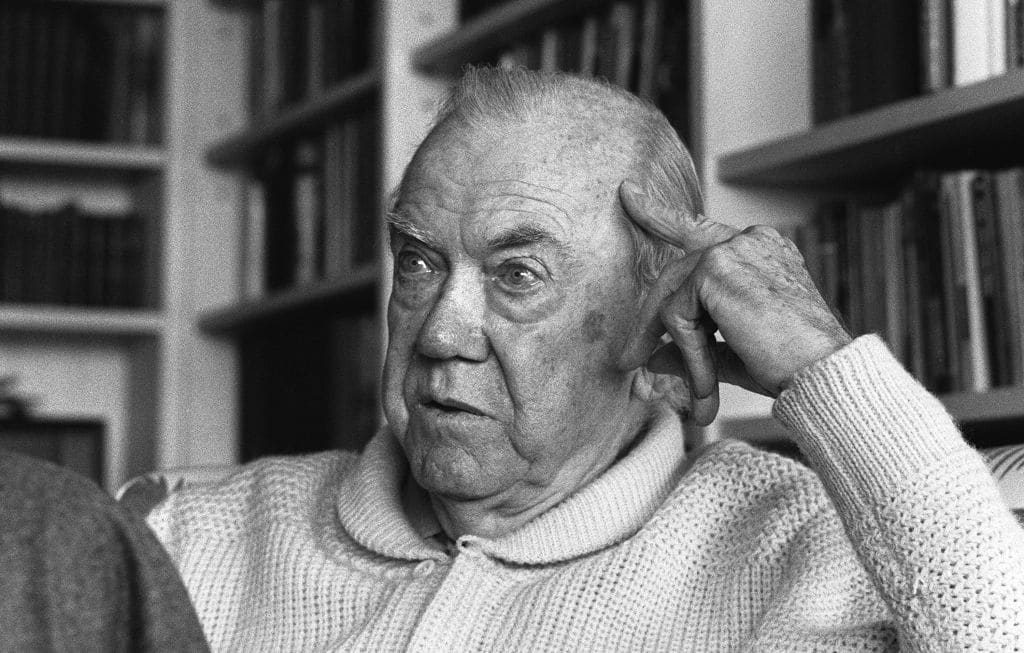
This, I am afraid, is a pompous apology for a novel which will soon in any case be swept away on the tide that bears most contemporary writing to oblivion. But in case, during the few weeks before that happens, a few fellow Catholics may question my motives in drawing the portrait, in The Power and the Glory, of a whisky priest – a kind of priest more common than they would like to believe in parts of the world where heat, disease, isolation and ignorance demand heroic virtues of unheroic men, I should like to print a few hurried notes on what I wanted to convey. Magic Nature of Faith It isn’t very easy: one lives for a long time too close to a book, and then when it is published it is too far away: it seems dead: one feels impatient with people for spending time looking closely at a corpse. But one main object I think I had in choosing as my “ hero “ the kind of priest who supplies anti-Catholics with so much ammunition, and that was to emphasise the irrelevance of their accusations, the magic nature of our Faith, so that a corrupt heart, just as much as spittle and clay, may be the medium of a miracle. I wanted, too, by comparing this wavering, drunken and yet heroic life with the conventional hagiology a mother reads to her children to suggest that there may exist a worse corruption in the pious mind which feels no mercy toward human weakness and has never sinned because it has had the luck never to love unsuitably. And I wanted to draw a clear distinction – which piety concerned with guild accounts, medals, ribbons, CTS pamphlets often neglects – between right and wrong, and good and evil. The laws of the State represent right, the new schools, the prohibition – all perhaps admirable things – the lieutenant of police who hunts the whisky priest to his death is by natural standards a good man, his motives are beyond reproach, and the violence of his methods is justified by his theory of justice and equity. The Hero or the Saint The priest by that ethical standard is a bad and useless character; his divided heart carries the stamp of a different standard of good and evil, a standard which is not his own and is not primarily concerned with those values the lieutenant pursues, sobriety, social justice. The fact that the priest knowingly commits evil never tempts him to alter his standard; the lieutenant can alter his by simply altering the law. He is capable of dying like a hero, but the evil man is capable of dying like a saint. As for the objections which have been raised to one scene in my novel, describing a night in a prison cell, I remain a little puzzled and quite unrepentant; Hell has often been drawn by Catholic theologians in far coarser lines than I have used. To say that the coarseness is “unnecessary” (a favourite word with reviewers) is to me meaningless. One cannot indicate filth by a cypher; one must describe. . Reading this through, I feel a little disingenuous. Were these really my objects? They were certainly not all present in my mind when I began to write, but gathered later like barnacles round the characters. I was aware at first only of a small middle-aged man whom fear had driven to drink, a good man but he didn’t know it, and a saint perhaps, but the world had been taught to find their saints only in the pages of the pious pamphlets; he came bobbing up in conversation one stifling day in Tabasco – he had been drunk when he christened a child. And behind him, of course, all the time was the motive which drives most men to write, of showing the world as it is up against the world as it might have been (the lieutenant of police would have phrased it differently – the world as it is and the world as it may be).
10:00 AM
An author explains
Graham Greene begs pardon for his latest book – taken from the Herald on 29 March 1940
Ferdie Rous

4 min read



Already a subscriber? Sign in
5freearticles every month
Continue reading with a free account. No card needed.
- Five free articles every thirty days, on any device you sign in on
- The Catholic Herald newsletter, every morning
- Subscribe whenever you like for everything: every article and the magazine
Related articles
 Newsroom
Church leaders urge Drumcree dialogue: ‘Too much is at stake’
The Catholic and Church of Ireland Archbishops of Armagh have urged a renewed commitment to peace and reconciliation amid the Drumcree stand-off
Corrie Douglas-Young Newsroom
Thousands of Irish children to join global Rosary campaign
Corrie Douglas-Young Newsroom
TikTok priest urges young people to stand with persecuted Christians
Nathalie Raffray Newsroom
Baby born at 25 weeks reunites with neonatologist two years after leaving hospital
The Catholic Herald Newsroom
Joe Biden honoured by Planned Parenthood after defending abortion rights
Christine Rousselle
subscribe to the catholic herald today
Our best content is exclusively available to our subscribers. Subscribe today and gain instant access to expert analysis, in-depth articles, and thought-provoking insights—anytime, anywhere. Don’t miss out on the conversations that matter most.
Subscribe



