
December 4, 2025
December 2, 2025

An interview with our new Editor in Chief

Min read
share

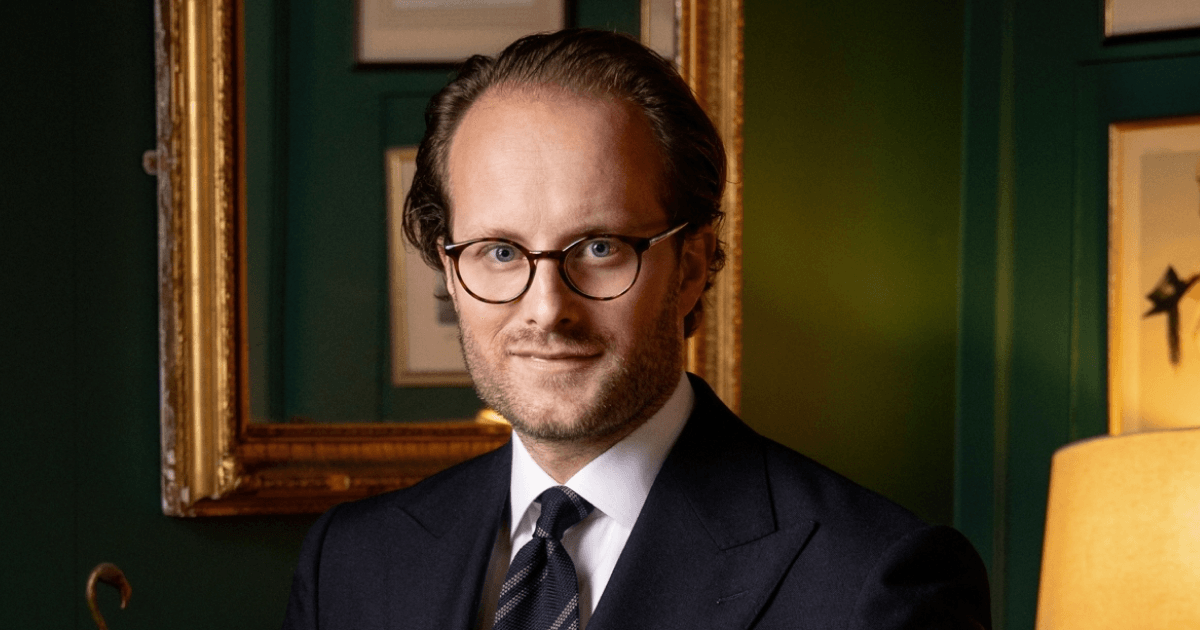
Last week, The Catholic Herald had the pleasure of announcing that Edward Barrett-Shortt would be taking over as Editor-in-Chief.

Edward has founded several successful ventures, including Arcadia Digital, a global marketing agency serving ministries and nonprofits, and Called to More, a Catholic new-media platform with a large following across YouTube and podcast channels. Above all, he is a devout Catholic who believes deeply in the mission of the Church and is devoted to his wife and young family.
A convert to the faith, Edward was once drawn to the “new atheism” of the early 2000s, but came to find it intellectually thin. In his mid-twenties, his love of history opened to him the intellectual seriousness and inner coherence of Christianity, a discovery that, in time, would draw him into the Church.

For 18 months, Edward has worked behind the scenes with The Herald as a consultant, guiding its digital growth. An Englishman of Anglo-Irish stock with considerable experience in the American Catholic sphere, he reflects The Herald’s own journey, from an English print publication known for its illustrious writers to a digital platform with a global audience.

In this interview, at the outset of his editorship, Edward offers readers an insight into the path that led him to the editor’s chair and the vision he holds for The Herald’s future.


Tom Edwards
: How did you become a Catholic?

Edward Barrett Shortt: I grew up in what you might call a mixed household. My father had once been a very devout Catholic (even a Capuchin seminarian) but after leaving the seminary to marry my mother, an Anglican, faith gradually faded from our family life. By the time I arrived in the late 1980s, religion was more a cultural memory than a lived reality. There were the occasional spurts of church attendance and the usual rites of passage, but little in the way of real belief behind them.

My parents separated when I was young, and I was raised largely by my mother. She would take me either to the local Anglican church or the Catholic parish, depending on where she felt drawn at that particular time. To my young eyes, the difference between the two in the 1990s wasn’t especially clear, so much so that I can’t fully recall at which denomination I served at the altar; it was probably both. By eleven or twelve I stopped going altogether, happily left at home on Sunday mornings.

We later moved to rural Ireland, and whatever loose ties we had to the Church weakened further, despite the presence of a kind priest chaplain in my school. By that time I had become, in my own mind, a convinced atheist. A disciple of Dawkins, Hitchens, and the “new atheism” that flourished in the early 2000s.

It wasn’t until my mid-twenties that things began to shift. I was living in Dublin, running a business, and outwardly doing well. But inwardly I felt hollow. Success, as I had imagined it, wasn’t delivering any real sense of meaning, and I was filling the void with too much drinking and other worldly distractions.

Always an avid reader, I became increasingly absorbed by the history of Western civilisation. In tracing its story, I could no longer overlook the decisive role Christianity had played in forming the very world I inhabited. Slowly, my atheism began to crumble: atheist became agnostic, agnostic became reluctant believer. That realisation drew me back, tentatively, into church life. Initially to an Anglican parish, where the social atmosphere felt familiar. But the more I read, the more evident it became that the historical path before me led, inescapably, to the fullness of truth in Catholicism.

That realisation was the easy part; living it was harder. In my local Catholic parish, I often found myself sitting alone at the back, sometimes surrounded by a few elderly parishioners, quietly hoping someone (perhaps the priest) might speak to me. Looking back, I wish I’d had the courage to seek out community myself.

For a couple of years I believed quietly, attended Mass dutifully, but lived my faith in isolation. That changed in 2017, when I began working with the Pro-Life Campaign during the referendum effort to keep the 8th Amendment. I met, for the first time, young Catholics who were alive in their faith. Confident, committed, mission-driven. Being around them brought something in me to life.

It was during that campaign that I met Katie, who would become my wife a few years later. Her faith, and that of her family, was lived, joyful, and practical, expressed in mission work, homeschooling, catechetical initiatives, and countless acts of service. Seeing Catholicism lived like that changed everything for me.

Losing the abortion referendum in Ireland was painful, but through it I found my vocation. I left the branding and communications business I had built and began working with Christian organisations instead. What started as a small consultancy eventually grew into Arcadia Digital, a global agency I still run today.

My path into the Church wasn’t sudden. It was slow, sometimes reluctant, but ultimately transformative, a rediscovery of Christianity’s intellectual depth, its living community, and its outward mission.

TE: You said you met your wife on the campaign trail in the 2018 Irish abortion referendum. What was your journey to marriage and how has it impacted your work today?

EBS: When my wife and I first began dating, she had already committed to a year of missionary work in the United States with FOCUS (Fellowship of Catholic University Students). As a result, about a month after we decided we were officially a couple, we entered what was described as a “dating fast.” A prerequisite for first year missionaries. For much of that year we spoke only once a week, for an hour, while she served in a parish chaplaincy at the student centre in Stillwater, Oklahoma.

We agreed to view that year apart as a year of discernment and a chance to grow individually in our faith. She joined FOCUS primarily to deepen her own relationship with God, and I saw it as an opportunity to become the sort of man worthy of marrying her. During that time, I focused intensely on my spiritual life. Exodus 90 had just launched and played a major role in shaping my understanding of discipline, prayer, reading of Scripture, and the importance of fraternity. It was also during that year that I discovered the Traditional Latin Mass. Katie and I began attending together when she returned and have been doing so now for seven years.

We both felt a strong sense of mission, and we were deeply troubled by the cultural direction of the society around us. That shared conviction led us to start Called to More, a media platform designed to help young people develop a living, thinking, missionary faith. What began as a simple YouTube channel and podcast has, by God’s grace, grown into the most-watched Catholic media platform in the UK and Ireland.

We were married in 2020 and have been blessed with three children so far. Our running joke is that we’d love to field a family cricket team. Five players down, six to go, but entirely in God’s hands. We home educate our eldest, and because my work is largely remote, I am at home almost every day. Being present with my family in that way is one of the greatest blessings of my life.

TE: You have been with The Herald for 18 months now, helping the publication grow into the position it is in today. How did that first come about?

EBS: I was first approached by a former editor who, I believe, was familiar with some of the Catholic media work we were doing in the United States. After a few conversations, I presented a growth plan focused on strengthening The Herald’s presence in the UK and laying the groundwork for a serious expansion into the US market. It was clear that there were major opportunities in the digital space, but also areas that needed attention: the website, the tech stack, the underlying systems, and some of the internal structures that weren’t yet in place for digital-first publishing.

Over the past 18 months, those improvements have borne fruit. Website traffic has almost quadrupled and the publication is profitable for the first time in many years. Online subscriptions continue to grow month after month as more readers discover The Catholic Herald digitally.

Working closely with the team and gaining a deeper understanding of the operation helped me see what was working and what needed some help. I articulated a vision to the owners for what The Catholic Herald could be: a historic English Catholic title with the potential to become a genuinely global voice. After sharing my plan for executing that vision, I was invited to take on the editorship.

It has been an incredibly fruitful period, and I’m excited to continue building on the momentum we’ve established.

TE: What are your plans for The Herald in this new position?

EBS: One of the first things to recognise is that English Catholic media cannot thrive in a single market. The Herald already has a significant and growing readership in the United States, more than half of our online audience is now American. So our ambition is to become a genuinely transatlantic publication: rooted in our English heritage, but with a strong, intentional presence in the US. There is something about The Herald’s intellectual and cultural character that resonates deeply with American Catholics, and we want to build on that.

My aim is to take what The Herald has always done well: its thoughtful analysis, its cultural literacy, its depth, and expand that in the States, bringing in some distinctively American voices and perspectives while maintaining all that is unique about Catholic England. The goal is a brand that feels at home on both sides of the Atlantic.

A large part of that growth will be in new media. People consume content in many different ways now: not only print, and not only written articles online, but podcasts, YouTube series, and short-form video. Any publication that wants to operate as a real media house has to deliver across every platform.

I also want to round out The Herald’s editorial offering. Historically we’ve been strong on news, guides, arts and book reviews, and that will continue. But I think there’s an opportunity to offer readers a more universal experience. That means introducing more comment, opinion, and lifestyle writing, along with reflections on culture, both high and low. And while there are real gems in our devotional section, my aim is to develop it into a space for broader spiritual and human formation.

My hope is that whether readers come to us in print, online, through podcasts, or on YouTube, they find content that informs them, forms them, and supports them in living the Catholic faith more deeply. That is, ultimately, my purpose: to help our readers become better Catholics.

TE: We are seeing Catholic media grow as Catholics increasingly choose it in favour of secular media. Why do you think this is and what opportunities do you see arising from it?

EBS: I think what you’re describing is, in large part, a consequence of the accelerating secularisation of Western culture. There was a time when people working in mainstream media were men and women of faith. Today, many major institutions (the BBC is an obvious example) have become so thoroughly secular in outlook that religious voices are pushed to the margins, confined to narrow segments while the wider narrative is shaped by a single, increasingly ideological worldview.

For practising Catholics, that worldview feels shallow or even antagonistic to what we believe about the human person, human dignity, and the moral structure of the world. And so Catholics are turning toward media that speaks to them, rather than past them.

But the response cannot be simply to critique secular culture from a distance. The opportunity, and responsibility, is to offer something richer: cultural commentary, lifestyle writing, arts, reviews, and analysis that arise naturally from the Catholic vision of the world. People crave meaning, coherence, beauty, and truth; Catholicism has all of those in abundance.

A major part of this is normalising a Catholic understanding of the human person. Catholic anthropology is profound and time-tested, and it speaks directly to many of the questions dominating public debate today: questions about dignity, embodiment, family, sexuality, and identity. Publications like The Catholic Herald have a real opportunity to articulate these truths clearly and charitably, offering an alternative to the assumptions that now govern much of secular media.

The more well-formed and confident Catholic media becomes, the more obvious the limits of the mainstream narrative will appear, and the more people will look to the Church for depth, for clarity, and for a more coherent vision of life.

TE: As editor, you will be in the position to shape the cultural landscape and give a voice to particular Catholic causes. Which are most important to you?

EBS: It’s certainly important for Catholics to advocate for policies that uphold the dignity of the human person and reflect a Catholic vision of society. Issues such as the defence of preborn life, the persecution of Christians around the world, and the protection of religious freedom are all matters I care deeply about and which deserve a clear, confident Catholic voice.

But for me, the priority has to be the same one the Church has always had: salvation. That is the ultimate horizon of every Catholic endeavour. I want readers to remember that heaven is real, eternity matters, and that how we live now has consequences that endure.

If The Herald can help people think more clearly, pray more deeply, live more faithfully, and from that foundation engage the great moral questions of our age, then we will be doing what a Catholic publication is meant to do. The political, cultural, and social questions are important, of course, but they flow from that deeper reality. They are not ends in themselves.

TE: Who are your favourite past and present The Catholic Herald writers?

EBS: Given that my wife has written for the Herald on several occasions, I should say (without any hesitation) that Katie is by far my favourite.

Among others, I’ve previously enjoyed the work of Dan Hitchens, who I consider one of the finest Catholic writers working today. Melanie McDonagh is also a writer of beautiful prose and insight.

We are fortunate to have a remarkable cast of contributors, both established voices and emerging ones. Looking ahead, there are many writers I hope to invite to The Herald so that it continues to be a home for the best Catholic writing in the English-speaking world.

And I think we have a responsibility to the next generation as well. A publication like The Herald should be a place where younger journalists can learn their craft, an apprenticeship in a sense, in what it means to write as a Catholic in the public square.

Last week, The Catholic Herald had the pleasure of announcing that Edward Barrett-Shortt would be taking over as Editor-in-Chief.

Edward has founded several successful ventures, including Arcadia Digital, a global marketing agency serving ministries and nonprofits, and Called to More, a Catholic new-media platform with a large following across YouTube and podcast channels. Above all, he is a devout Catholic who believes deeply in the mission of the Church and is devoted to his wife and young family.
A convert to the faith, Edward was once drawn to the “new atheism” of the early 2000s, but came to find it intellectually thin. In his mid-twenties, his love of history opened to him the intellectual seriousness and inner coherence of Christianity, a discovery that, in time, would draw him into the Church.

For 18 months, Edward has worked behind the scenes with The Herald as a consultant, guiding its digital growth. An Englishman of Anglo-Irish stock with considerable experience in the American Catholic sphere, he reflects The Herald’s own journey, from an English print publication known for its illustrious writers to a digital platform with a global audience.

In this interview, at the outset of his editorship, Edward offers readers an insight into the path that led him to the editor’s chair and the vision he holds for The Herald’s future.


Tom Edwards
: How did you become a Catholic?

Edward Barrett Shortt: I grew up in what you might call a mixed household. My father had once been a very devout Catholic (even a Capuchin seminarian) but after leaving the seminary to marry my mother, an Anglican, faith gradually faded from our family life. By the time I arrived in the late 1980s, religion was more a cultural memory than a lived reality. There were the occasional spurts of church attendance and the usual rites of passage, but little in the way of real belief behind them.

My parents separated when I was young, and I was raised largely by my mother. She would take me either to the local Anglican church or the Catholic parish, depending on where she felt drawn at that particular time. To my young eyes, the difference between the two in the 1990s wasn’t especially clear, so much so that I can’t fully recall at which denomination I served at the altar; it was probably both. By eleven or twelve I stopped going altogether, happily left at home on Sunday mornings.

We later moved to rural Ireland, and whatever loose ties we had to the Church weakened further, despite the presence of a kind priest chaplain in my school. By that time I had become, in my own mind, a convinced atheist. A disciple of Dawkins, Hitchens, and the “new atheism” that flourished in the early 2000s.

It wasn’t until my mid-twenties that things began to shift. I was living in Dublin, running a business, and outwardly doing well. But inwardly I felt hollow. Success, as I had imagined it, wasn’t delivering any real sense of meaning, and I was filling the void with too much drinking and other worldly distractions.

Always an avid reader, I became increasingly absorbed by the history of Western civilisation. In tracing its story, I could no longer overlook the decisive role Christianity had played in forming the very world I inhabited. Slowly, my atheism began to crumble: atheist became agnostic, agnostic became reluctant believer. That realisation drew me back, tentatively, into church life. Initially to an Anglican parish, where the social atmosphere felt familiar. But the more I read, the more evident it became that the historical path before me led, inescapably, to the fullness of truth in Catholicism.

That realisation was the easy part; living it was harder. In my local Catholic parish, I often found myself sitting alone at the back, sometimes surrounded by a few elderly parishioners, quietly hoping someone (perhaps the priest) might speak to me. Looking back, I wish I’d had the courage to seek out community myself.

For a couple of years I believed quietly, attended Mass dutifully, but lived my faith in isolation. That changed in 2017, when I began working with the Pro-Life Campaign during the referendum effort to keep the 8th Amendment. I met, for the first time, young Catholics who were alive in their faith. Confident, committed, mission-driven. Being around them brought something in me to life.

It was during that campaign that I met Katie, who would become my wife a few years later. Her faith, and that of her family, was lived, joyful, and practical, expressed in mission work, homeschooling, catechetical initiatives, and countless acts of service. Seeing Catholicism lived like that changed everything for me.

Losing the abortion referendum in Ireland was painful, but through it I found my vocation. I left the branding and communications business I had built and began working with Christian organisations instead. What started as a small consultancy eventually grew into Arcadia Digital, a global agency I still run today.

My path into the Church wasn’t sudden. It was slow, sometimes reluctant, but ultimately transformative, a rediscovery of Christianity’s intellectual depth, its living community, and its outward mission.

TE: You said you met your wife on the campaign trail in the 2018 Irish abortion referendum. What was your journey to marriage and how has it impacted your work today?

EBS: When my wife and I first began dating, she had already committed to a year of missionary work in the United States with FOCUS (Fellowship of Catholic University Students). As a result, about a month after we decided we were officially a couple, we entered what was described as a “dating fast.” A prerequisite for first year missionaries. For much of that year we spoke only once a week, for an hour, while she served in a parish chaplaincy at the student centre in Stillwater, Oklahoma.

We agreed to view that year apart as a year of discernment and a chance to grow individually in our faith. She joined FOCUS primarily to deepen her own relationship with God, and I saw it as an opportunity to become the sort of man worthy of marrying her. During that time, I focused intensely on my spiritual life. Exodus 90 had just launched and played a major role in shaping my understanding of discipline, prayer, reading of Scripture, and the importance of fraternity. It was also during that year that I discovered the Traditional Latin Mass. Katie and I began attending together when she returned and have been doing so now for seven years.

We both felt a strong sense of mission, and we were deeply troubled by the cultural direction of the society around us. That shared conviction led us to start Called to More, a media platform designed to help young people develop a living, thinking, missionary faith. What began as a simple YouTube channel and podcast has, by God’s grace, grown into the most-watched Catholic media platform in the UK and Ireland.

We were married in 2020 and have been blessed with three children so far. Our running joke is that we’d love to field a family cricket team. Five players down, six to go, but entirely in God’s hands. We home educate our eldest, and because my work is largely remote, I am at home almost every day. Being present with my family in that way is one of the greatest blessings of my life.

TE: You have been with The Herald for 18 months now, helping the publication grow into the position it is in today. How did that first come about?

EBS: I was first approached by a former editor who, I believe, was familiar with some of the Catholic media work we were doing in the United States. After a few conversations, I presented a growth plan focused on strengthening The Herald’s presence in the UK and laying the groundwork for a serious expansion into the US market. It was clear that there were major opportunities in the digital space, but also areas that needed attention: the website, the tech stack, the underlying systems, and some of the internal structures that weren’t yet in place for digital-first publishing.

Over the past 18 months, those improvements have borne fruit. Website traffic has almost quadrupled and the publication is profitable for the first time in many years. Online subscriptions continue to grow month after month as more readers discover The Catholic Herald digitally.

Working closely with the team and gaining a deeper understanding of the operation helped me see what was working and what needed some help. I articulated a vision to the owners for what The Catholic Herald could be: a historic English Catholic title with the potential to become a genuinely global voice. After sharing my plan for executing that vision, I was invited to take on the editorship.

It has been an incredibly fruitful period, and I’m excited to continue building on the momentum we’ve established.

TE: What are your plans for The Herald in this new position?

EBS: One of the first things to recognise is that English Catholic media cannot thrive in a single market. The Herald already has a significant and growing readership in the United States, more than half of our online audience is now American. So our ambition is to become a genuinely transatlantic publication: rooted in our English heritage, but with a strong, intentional presence in the US. There is something about The Herald’s intellectual and cultural character that resonates deeply with American Catholics, and we want to build on that.

My aim is to take what The Herald has always done well: its thoughtful analysis, its cultural literacy, its depth, and expand that in the States, bringing in some distinctively American voices and perspectives while maintaining all that is unique about Catholic England. The goal is a brand that feels at home on both sides of the Atlantic.

A large part of that growth will be in new media. People consume content in many different ways now: not only print, and not only written articles online, but podcasts, YouTube series, and short-form video. Any publication that wants to operate as a real media house has to deliver across every platform.

I also want to round out The Herald’s editorial offering. Historically we’ve been strong on news, guides, arts and book reviews, and that will continue. But I think there’s an opportunity to offer readers a more universal experience. That means introducing more comment, opinion, and lifestyle writing, along with reflections on culture, both high and low. And while there are real gems in our devotional section, my aim is to develop it into a space for broader spiritual and human formation.

My hope is that whether readers come to us in print, online, through podcasts, or on YouTube, they find content that informs them, forms them, and supports them in living the Catholic faith more deeply. That is, ultimately, my purpose: to help our readers become better Catholics.

TE: We are seeing Catholic media grow as Catholics increasingly choose it in favour of secular media. Why do you think this is and what opportunities do you see arising from it?

EBS: I think what you’re describing is, in large part, a consequence of the accelerating secularisation of Western culture. There was a time when people working in mainstream media were men and women of faith. Today, many major institutions (the BBC is an obvious example) have become so thoroughly secular in outlook that religious voices are pushed to the margins, confined to narrow segments while the wider narrative is shaped by a single, increasingly ideological worldview.

For practising Catholics, that worldview feels shallow or even antagonistic to what we believe about the human person, human dignity, and the moral structure of the world. And so Catholics are turning toward media that speaks to them, rather than past them.

But the response cannot be simply to critique secular culture from a distance. The opportunity, and responsibility, is to offer something richer: cultural commentary, lifestyle writing, arts, reviews, and analysis that arise naturally from the Catholic vision of the world. People crave meaning, coherence, beauty, and truth; Catholicism has all of those in abundance.

A major part of this is normalising a Catholic understanding of the human person. Catholic anthropology is profound and time-tested, and it speaks directly to many of the questions dominating public debate today: questions about dignity, embodiment, family, sexuality, and identity. Publications like The Catholic Herald have a real opportunity to articulate these truths clearly and charitably, offering an alternative to the assumptions that now govern much of secular media.

The more well-formed and confident Catholic media becomes, the more obvious the limits of the mainstream narrative will appear, and the more people will look to the Church for depth, for clarity, and for a more coherent vision of life.

TE: As editor, you will be in the position to shape the cultural landscape and give a voice to particular Catholic causes. Which are most important to you?

EBS: It’s certainly important for Catholics to advocate for policies that uphold the dignity of the human person and reflect a Catholic vision of society. Issues such as the defence of preborn life, the persecution of Christians around the world, and the protection of religious freedom are all matters I care deeply about and which deserve a clear, confident Catholic voice.

But for me, the priority has to be the same one the Church has always had: salvation. That is the ultimate horizon of every Catholic endeavour. I want readers to remember that heaven is real, eternity matters, and that how we live now has consequences that endure.

If The Herald can help people think more clearly, pray more deeply, live more faithfully, and from that foundation engage the great moral questions of our age, then we will be doing what a Catholic publication is meant to do. The political, cultural, and social questions are important, of course, but they flow from that deeper reality. They are not ends in themselves.

TE: Who are your favourite past and present The Catholic Herald writers?

EBS: Given that my wife has written for the Herald on several occasions, I should say (without any hesitation) that Katie is by far my favourite.

Among others, I’ve previously enjoyed the work of Dan Hitchens, who I consider one of the finest Catholic writers working today. Melanie McDonagh is also a writer of beautiful prose and insight.

We are fortunate to have a remarkable cast of contributors, both established voices and emerging ones. Looking ahead, there are many writers I hope to invite to The Herald so that it continues to be a home for the best Catholic writing in the English-speaking world.

And I think we have a responsibility to the next generation as well. A publication like The Herald should be a place where younger journalists can learn their craft, an apprenticeship in a sense, in what it means to write as a Catholic in the public square.

share

subscribe to the catholic herald today

Our best content is exclusively available to our subscribers. Subscribe today and gain instant access to expert analysis, in-depth articles, and thought-provoking insights—anytime, anywhere. Don’t miss out on the conversations that matter most.
Subscribe