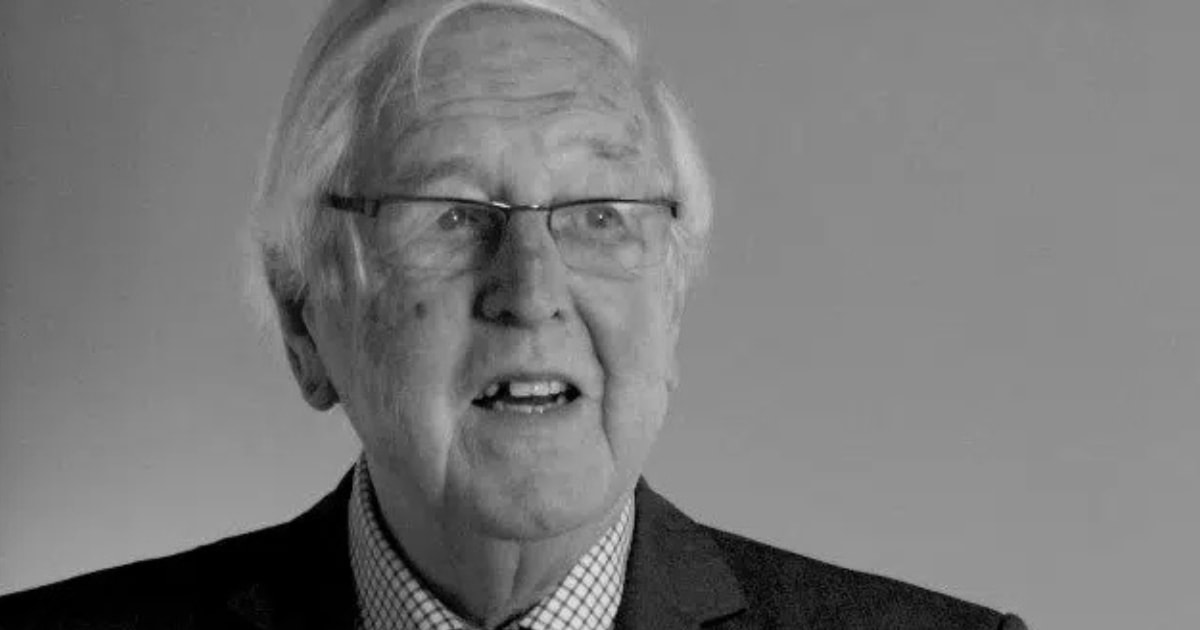
Professor Jack Scarisbrick (1928-2026) belonged to a generation of English Catholic intellectuals for whom scholarship and public action were twin obligations rather than rival vocations. For students of history he was the author of Henry VIII (1968), the still-commanding study that reshaped understanding of England’s most disruptive monarch. His later The Reformation and the English People (1984) extended that revisionist scholarship into the religious experience of ordinary men and women. To a wider public he was the co-founder of Life, the charity that for more than half a century has placed practical support for vulnerable pregnant women at the centre of the pro-life cause.
Those two achievements – one academic, one civic – were not separate chapters but cohesive expressions of Professor Scarisbrick’s temperament: historically serious, morally earnest and fundamentally unafraid of controversy.
Born in London in 1928, the fifth child of a Catholic family, John Joseph Scarisbrick’s early life was marked by loss. His father, disabled by wounds sustained in the First World War, died when Jack was five. The war, he later recalled, ‘hung like a pall over the whole family’: three uncles had been killed while three more survived badly wounded. Educated at the John Fisher School in Purley and inspired by an admired teacher, Fr Freddie Hunt, after National Service in the RAF Scarisbrick proceeded to Christ’s College, Cambridge, where he studied under Dom David Knowles – ‘a spellbinder’, as he remembered him – and completed his doctorate in 1953.
It was at Cambridge that Scarisbrick absorbed the habits of archival seriousness and intellectual combat that would define his scholarship. Commissioned to write a biography of Henry VIII, he produced in 1968 a work that sold more than 80,000 copies in Britain alone and remains the standard single-volume account. Allergic to romanticism, Scarisbrick resisted the pious Catholic’s temptation to produce a confessional caricaturisation of the Tudor monarch. The book treated Henry not as a cipher of impersonal forces but as an impulsive, interventionist ruler whose personality was itself an engine of history.
He became a leading figure in what came to be known as Catholic revisionism, challenging the Whiggish Protestant narrative of a late medieval Church sinking into terminal corruption and decline. Scarisbrick was also wary of counter-mythology: he warned the Catholic Herald in 2007 that highlighting England’s flourishing piety sometimes risked making the Reformation ‘inexplicable’: ‘I would take the view that there was no sign of total Church corruption. But there were of course serious weaknesses. The Church is always corrupt, always failing, because it is made up of human beings.’
On its own, Henry VIII would have secured his academic reputation. Appointed Professor of History at the University of Warwick in 1969 and a Fellow of the Royal Society of Literature the same year, Scarisbrick taught generations of students not only Tudor politics but the colonisation of Africa and the slave trade. His later The Reformation and the English People confirmed his range and seriousness.
In 1966, Scarisbrick and his wife, Nuala, welcomed the birth of their first child. The following year, Parliament voted in favour of David Steel’s Bill effectively legalising abortion. ‘When she was born it was so clear to me that this wasn’t when her life had begun. Birth was just an incident along the way.’ The Abortion Act spurred the Scarisbricks to join the solicitor Martin Mears in founding the charity Life. The purpose was unambiguous: to assert the right to life of the unborn from conception and to provide practical help for women facing unplanned pregnancies.
Within 10 years, Life had grown from the modest beginnings of letters to the press and public meetings into a nationwide network of branches and volunteers. In the intervening decades, Life developed supported housing, counselling services and educational outreach for vulnerable women and their offspring. Scarisbrick was appointed MBE for his services to vulnerable people in 2015.
His style was, at times, abrasive. Even sympathisers conceded that his rhetoric could be absolutist and his temper quick. He was capable of describing opponents as ‘idiots’ or ‘buffoons’, and critics argued that Life never fully escaped its largely Catholic and evangelical base. Politically, the movement did not reverse the 1967 Act nor prevent the creation of the Human Fertilisation and Embryology Authority. The measure of his work, however, was not confined to legislative outcomes. Since its foundation, more than 12,000 vulnerable mothers have been housed through Life’s services, and thousands more each year continue to receive counselling and support. As Catherine Robinson of Right to Life observed: ‘Thousands of people are alive today right across the UK because of the work that Jack pioneered to support women facing unplanned pregnancies.’
The peer and campaigner David Alton counted it ‘one of the great privileges of my life to have known Jack’. He described him as ‘a brilliant historian: his powerful intellect and profound compassion were underpinned by remarkable energy and drive’. In ‘charting a path to create a coherent and effective pro-life movement – based on an insistence that the lives of a woman and her child both mattered – he redefined and reshaped the arguments around what Jack called “the supreme human rights question”. He was a colossus of the pro-life movement.’
In his later years Scarisbrick spoke candidly of the social climate he believed he was resisting. Abortion ‘was a taboo subject’ at the high table of academia. ‘I was constantly disappointed by the cowardice of my colleagues.’ He felt he was regarded as ‘a nice chap in many respects but with this strange bee in his bonnet.’ Yet he also discerned opportunity: Life speakers addressed tens of thousands of young people each year. ‘We are creating a new pro-life generation.’
Scarisbrick united the habits of the scholar with the stamina of the campaigner. Announcing his death, his daughter Emma wrote that ‘a mighty oak has fallen’. Grounded in historical truth, strengthened by conviction and expressed in practical help to those in need, Scarisbrick’s life stands as a monument in itself.