April 17, 2026

Rocamadour, the Black Madonna and Houellebecq's crisis of belief

James Jeffrey
More
Related
Min read
share

It is thanks to the controversial French writer Michel Houellebecq that I discovered the fabled Vierge Noir – Black Madonna – of Rocamadour, which features in his (in)famous novel Submission.

Published – by a macabre coincidence – in France on the same day as the Islamist terrorist attack against the offices of Charlie Hebdo in 2015, Houellebecq’s startling novel portrays France coming under an Islamic government. Amid all this, the novel’s protagonist makes a pilgrimage to Rocamadour in south-western France to see its Black Virgin in an attempt to rekindle his faith.
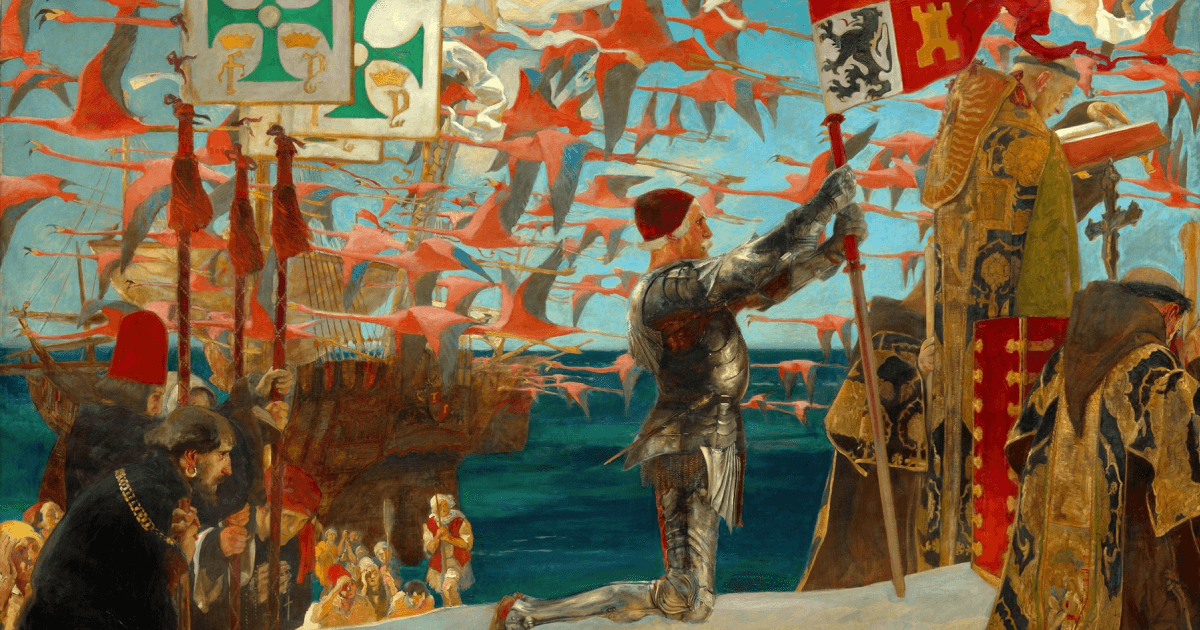
It doesn’t work, but the passage is remarkably powerful and, when I first read it, it was hard not to be impressed – even shaken – by Houellebecq’s description of this strange and beguiling rendition of the Virgin holding the Christ Child that has inspired cult-like devotion across the centuries. It eventually resulted in me finding myself sitting in front of the same Black Virgin, just as François, the protagonist of Submission, does.

‘Every day I went and sat for a few minutes before the Black Virgin – the same one who for a thousand years inspired so many pilgrimages, before whom so many saints and kings had knelt,’ says François. ‘It was a strange statue. It bore witness to a vanished universe…’

‘What this severe statue expressed was not attachment to a homeland, to a country; not some celebration of the soldier’s manly courage; not even a child’s desire for his mother. It was something mysterious, priestly and royal…’

But for François, it proves not enough: ‘The Virgin waited in the shadows, calm and timeless. She had sovereignty, she had power, but little by little I felt myself losing touch, I felt her moving away from me in space and across the centuries while I sat there in my pew, shrivelled and puny. After half an hour, I got up, fully deserted by the Spirit, reduced to my damaged, perishable body, and I sadly descended the stairs that led to the car park.’

It seems an apt description for the current state of Christianity in the United Kingdom, stuck ever deeper in its spiritual malaise, and with political Islam becoming ever more relevant – as highlighted by the recent Gorton and Denton by-election in which the Muslim vote helped the Greens take the seat from Labour, which previously held a significant majority.

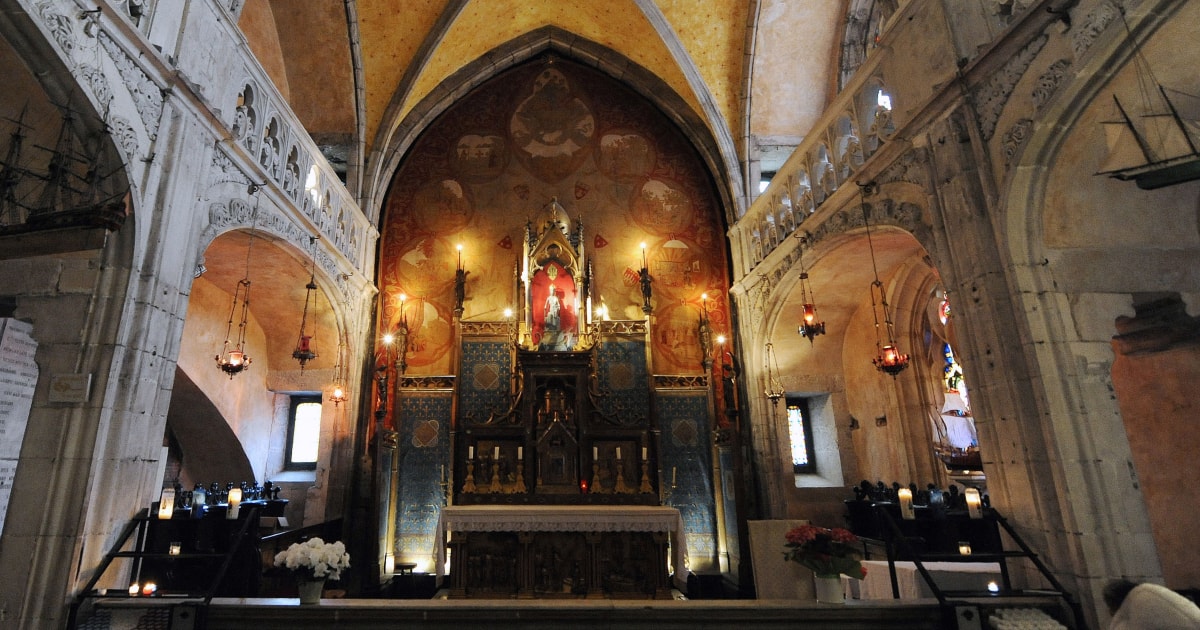
Most people, if they have heard of Rocamadour, know it in connection with the goat’s milk cheese of the same name, which rather understates the location’s spiritual significance. Coming face to face with the mysterious statue in the small chapel built into the cliffside at Rocamadour feels like an encounter with extraterrestrial life. The languid, long limbs and face of the Virgin carved into the wood look human – while also not.

Just as unsettling is the Christ Child, described by François as thus: ‘The baby Jesus – who looked nothing like a baby, more like an adult or even an old man – sat on her lap, equally erect; his eyes were closed, too, his face sharp, wise and powerful… There was no tenderness, no maternal abandon in their postures. This was not the baby Jesus; this was already the king of the world. His serenity and the impression he gave of spiritual power – of intangible energy – were almost terrifying.’

Flanking the statue are six angels, three on either side, each holding a staff with a lantern atop, glowing red amid the chapel’s gloom. Each angelic head is bowed, with its forehead touching the staff, and the wings are folded back behind regimentally. Gazing at these haunting sentinels brought to mind the astonishing Völkerschlachtdenkmal monument in Germany I had discovered outside the city of Leipzig, about 1,700 km earlier in my long-haul Camino across the spiritually ravaged interior of Europe.

Completed in 1913, the ‘Monument to the Battle of the Nations’ is dedicated to the 1813 Battle of Leipzig, in which a coalition of Prussian, Austrian, Swedish and Russian forces defeated Napoleon, paving the way for the creation of modern Germany.

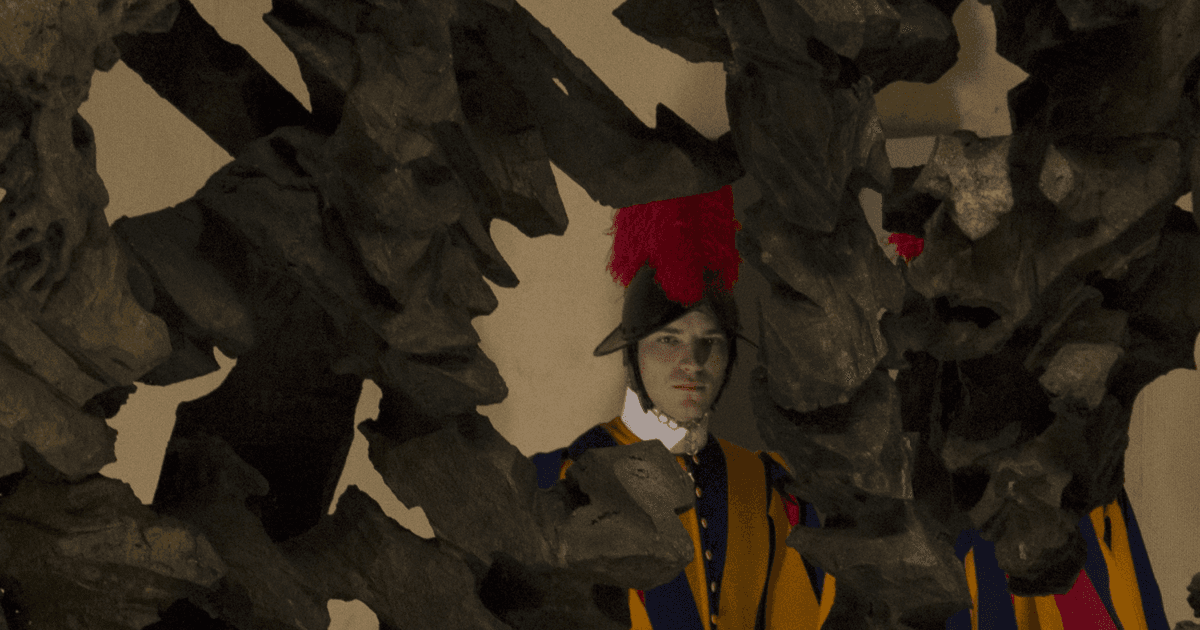
The colossal structure looks straight out of Valhalla. Though, like the diminutive chapel in Rocamadour, it exudes a quiet sense of expectation and watchfulness. Arrayed around the monument’s dome are giant statues of warriors, each standing with his head bent down over his upturned sword. Similarly, inside the monument, its central atrium is encircled by a group of stone medieval knights, their arms folded over their upturned shields, their heads bent forward, eyes closed. They are divided into pairs, and behind each pair is the face of an old man, though if you look closely, the eyes of each face are closed or slightly open to a different degree.

Again, there is this sense of differing states of alertness, of being subdued but also watchfully conscious, of being ready to, and having the means to, fight if necessary. Given Germany’s history, some might find these sorts of overtures in the monument troubling. But that does not cancel out the value and need to be vigilant and willing to protect what matters to you.

And the monument certainly is not triumphalist. In front of it is a long rectangular man-made body of water (similar to that of the Lincoln in Washington, DC). Known as the ‘Lake of Tears’, it represents the huge losses suffered on both sides during the terrible slaughter of the battle.

So much warfare, bloodshed and sacrifice lie behind, and have nourished, our nation states and borders. There must be a better way. And yet the passive approach of modern liberal secularism does not appear to be working much better either, while its obfuscation over – if not refusal to acknowledge – the impacts of unlimited migration and of an ascendant Islam on the nature and integrity of countries like the UK is disingenuous to the point of irresponsibility (not to mention irreversibility). Right or wrong, these are powerful trends with serious implications for one’s home, if one considers the UK home.

Though perhaps, as Houellebecq suggests, we have it all wrong when it comes to ‘attachment to a homeland, to a country’ and are hence missing something of far greater value. Another French writer, the political activist and mystic Simone Weil, was no fan of the modern nation-state and how it had vanquished the spiritual dimension in countries such as France.

In The Need for Roots – written during the Second World War while exiled in London working for the Free French movement – Weil argued that France’s ‘moral incoherence’ had contributed to its downfall when the German army invaded in 1940.

Weil warned: ‘[I]f morality itself is debased, no other system is offered as a substitute. Because the higher prestige of the nation is linked to the glorification of war. It provides no motivation in peacetime, except in a regime that is on a permanent war footing, like that of the Nazis.’

‘Other than in such a regime, it would be dangerous to remind too many people that this country, which demands its children’s lives, has another face: the state, with its taxes, customs and police.’

Maintaining her theme of the dark side of blind devotion to one’s country and of elevating the state above all else, she says: ‘Our patriotism derives directly from the Romans… They really were an atheist, idolatrous people, worshipping not stone or bronze statues, but also themselves.’

‘It is this self-idolatry that they bequeathed to us under the name of patriotism.’

Continue reading with a free account

Create a free account to read up to five articles each month
Create free account

You have # free articles remaining this month.

Subscribe to get unlimited access.
Sign up

subscribe to the catholic herald today

Our best content is exclusively available to our subscribers. Subscribe today and gain instant access to expert analysis, in-depth articles, and thought-provoking insights—anytime, anywhere. Don’t miss out on the conversations that matter most.
Subscribe