



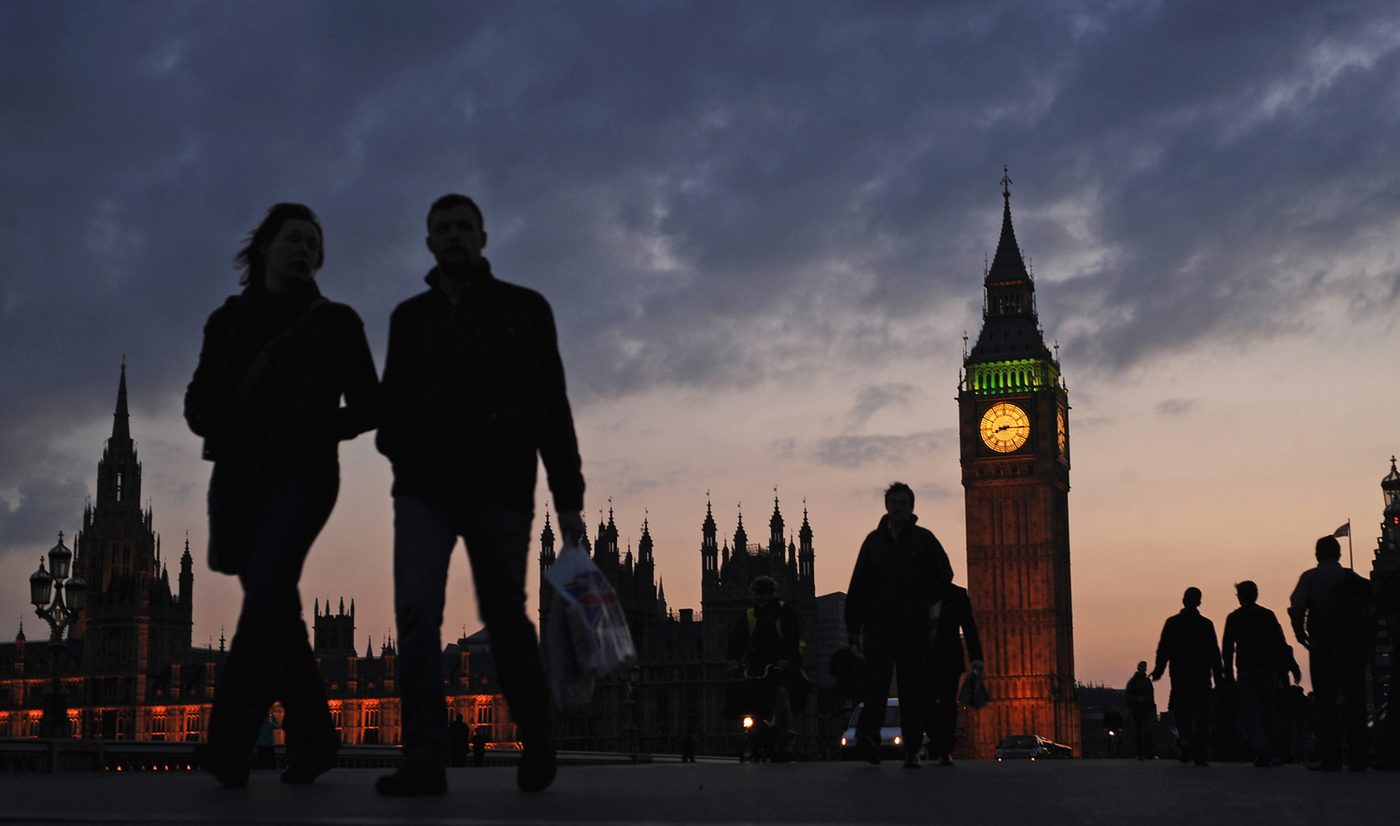
There was a time when it was not perceived as at all odd for politicians to quote Scripture or mention God when debating the merits of a cause. Indeed it is only comparatively recently that a tacit Berlin Wall has been erected between theology and political discourse. Wilberforce, for example, never concealed the part played by Christian belief in his campaign against slavery, but that of course was at a time when the majority of the electorate also professed Christianity. Now both the secular nature of our society and its plethora of religions render anybody who says he is doing something for Christ as a bit of an amiable nutcase. When asked to select a speech for the Hansard centenary collection, I chose Enoch Powell’s on embryo experiments at the end of which he quoted the Talmud in the original Hebrew. But these days, despite the continued existence of an Established Church, politicians tend to shy away from overt statements of faith. So it was refreshing to read Michael Forsyth’s speech in the House of Lords during the recent debate on classifying the atrocities perpetrated against Christians in Syria and Iraq as genocide. Speaking in committee, he pointed out that some of the victims “speak in the language of our Saviour”. In the chamber itself he referred not only to Christ but to the parable of the Good Samaritan. He appealed to the Government to take action on behalf of our “brothers and sisters in Syria and Iraq”. He reminded their Lordships that Britain is a Christian country. The speech was an unashamed rallying call to Christians such as I have never heard even from the bishops in the Lords, who too often carefully eschew any direct mention of God. I have been criticised for being overtly religious but St Paul summed it up when he wrote that we believe and therefore speak. Christ put it even more bluntly when he told his disciples not to hide their light under a bushel. My enemies have accused me of many things but never yet of hiding my light under a bushel. I am often asked whether it was hard being a Christian in Parliament or whether we should allow politics and religion to mix or whether there should be a separation of church and state, and behind all these questions is the same assumption: that there is a tension between religion and politics. There is not. Political engagement involves passion which in turn involves a source of that passion: life experiences, perhaps, or creed. A committed Christian should not be hesitant in admitting the source of his own light. It seems to me not only his duty as a Christian but also as a politician, for in a democracy electors have every right to know what drives or inspires the candidates seeking their votes. That is not to suggest that every speech should be turned into a sermon. St Paul was quick to capitalise on the unknown God when he arrived in Athens, and any sensible politician will try to connect with the concerns, needs and fears of voters and to persuade them in turn to trust him. Nor can Christians in Parliament eschew compromise. David Alton introduced a Bill to lower the upper age limit for abortions to 18 weeks and it does not take the Brain of Britain to work out that was in itself quite some compromise, since none of the sponsors believed in abortions at 18 weeks, but had we simply proposed nil weeks we would have made nil progress and no unborn life would have been saved. For a certainty, too, we would have made no progress had we justified the Bill only on religious grounds. To convince the electorate at large we had to focus on the medical, emotional, physiological and psychological aspects of the issue and to make sure we involved pro-life thinkers who were not believers at all. There is, however, a distinction between broadening appeal and forming alliances, and shirking one’s duty of witness – and it is into that latter trap that too many Christians now fall, which in turn is why the name of Almighty God is heard much less often than it used to be in public discourse. Yet Christian politicians should grab the opportunity to bear witness because at least they still can when so many others cannot. It is now everyday fare for people to be disciplined at work for saying “God bless you” or offering to pray for someone or displaying a Christian symbol. Many so fear for their livelihoods that they preserve silence – which is the exact opposite of that which the Gospels command. So, thank you, Michael Forsyth. I haven’t trawled Hansard but I would be interested to know the last time anybody else referred to “our Saviour” in the Mother of Parliaments. Ann Widdecombe is a novelist, broadcaster and former prisons minister
1:00 PM
An unashamed rallying call to Christians
Ann Widdecombe

5 min read



Already a subscriber? Sign in
5freearticles every month
Continue reading with a free account. No card needed.
- Five free articles every thirty days, on any device you sign in on
- The Catholic Herald newsletter, every morning
- Subscribe whenever you like for everything: every article and the magazine
Related articles
 Newsroom
Church leaders urge Drumcree dialogue: ‘Too much is at stake’
The Catholic and Church of Ireland Archbishops of Armagh have urged a renewed commitment to peace and reconciliation amid the Drumcree stand-off
Corrie Douglas-Young Newsroom
Thousands of Irish children to join global Rosary campaign
Corrie Douglas-Young Newsroom
TikTok priest urges young people to stand with persecuted Christians
Nathalie Raffray Newsroom
Baby born at 25 weeks reunites with neonatologist two years after leaving hospital
The Catholic Herald Newsroom
Joe Biden honoured by Planned Parenthood after defending abortion rights
Christine Rousselle
subscribe to the catholic herald today
Our best content is exclusively available to our subscribers. Subscribe today and gain instant access to expert analysis, in-depth articles, and thought-provoking insights—anytime, anywhere. Don’t miss out on the conversations that matter most.
Subscribe



