

Archbishop John Wilson has pointed to a “growing sense of confidence” among Catholics in Great Britain, saying that there is a movement to have once again the “Catholic faith in our country at the very heart of everything”.
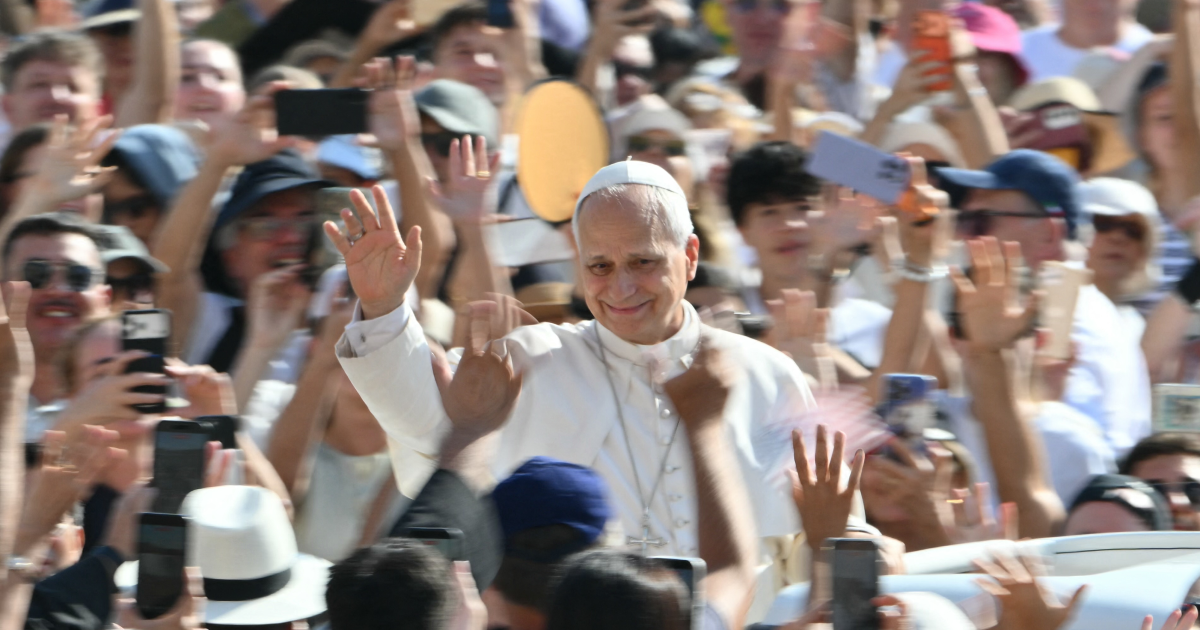
The Archbishop of Southwark is well known for his charismatic personality, and the lines of people queuing to greet him at the recent WeBelieve festival were ample testimony to that.
Speaking exclusively to the Catholic Herald on the sidelines of the event, Archbishop Wilson praised the festival for drawing together “all the facets of the Church in England and Wales”, while also demonstrating a newfound vitality among British Catholics.
“We often talk about Christian unity in terms of ecumenical unity, but actually the need for unity within the Church is really important,” the Archbishop explained. “How can we be a credible sign that evangelises without unity within?”
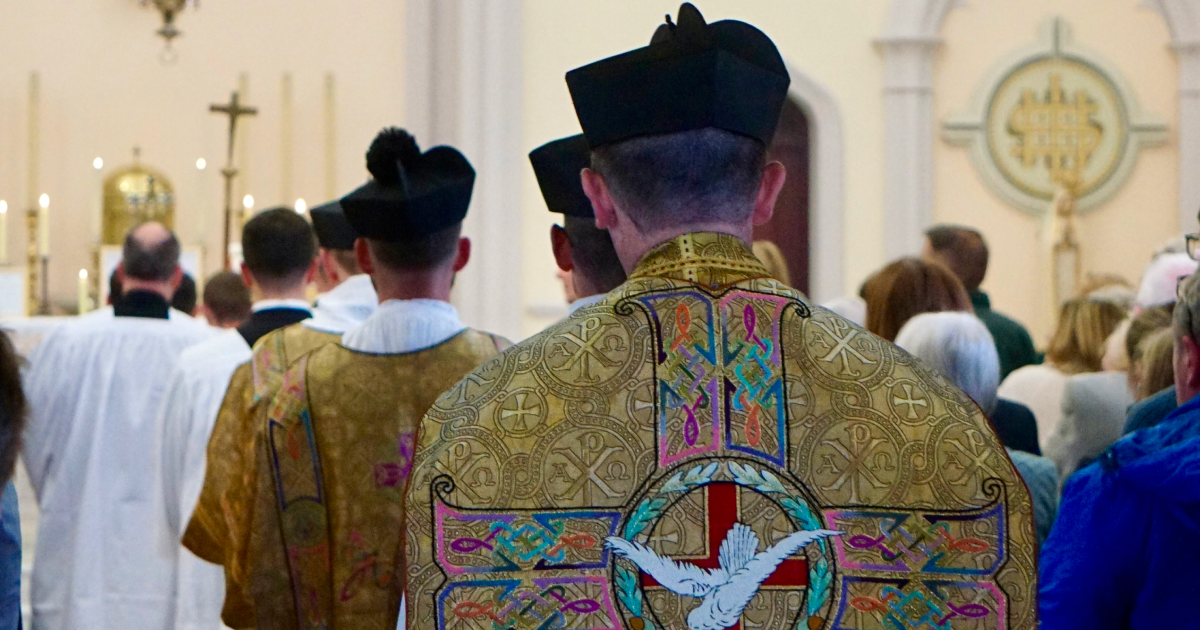
Held in the historic and beautiful grounds of Oscott College and seminary, WeBelieve exceeded its own expectations for attendance in only its second year. Some 2,700 people flocked to Birmingham over the course of the weekend, and young families side by side with Religious of all kinds represented a microcosm of the Church in the nation. For the Archbishop of Southwark, this was a “great encouragement to be in a place where the Church not only feels alive” and to be emboldened to bring the fullness of Catholicism back into daily life.
Numerous participants told the Herald of their own sense of encouragement at seeing the youthful vitality of the Church on display at Oscott, and Archbishop Wilson was no exception. “There is a kind of sense of expectancy around at the moment in the Church – particularly in England and Wales – that the Lord is doing something, that the Holy Spirit is at work. And this is a sign of that, I think, and it’s also an encouragement for all of us.”
WeBelieve organisers Therese and John Withers told the Herald that they were keen to focus on promoting Catholic culture at the festival, rather than allowing it to be diverted by liturgical wars. Consequently, the traditional Mass was on offer side by side with the Novus Ordo, and the Syro-Malabar rite with the Ordinariate, meaning that Catholics of varying backgrounds and liturgical sensibilities were appropriately catered for.
Archbishop Wilson welcomed the opportunity for Catholics in the nation to gather in that manner, saying that “there’s nothing complicated about being here. There’s no magic formula to anything.”
“It really is these people who love the Lord and love His Church, desiring to step up and return in a sense to a time when Catholic faith in our country was at the very heart of everything,” he said of the event.
Catholicism in the United Kingdom has for many decades, perhaps even centuries, suffered from a widespread impostor syndrome. There is a sense, identified by many, that Catholics have been desperately intent on proving to Protestant society that one can be both a good Englishman and a Catholic. But in so doing, the Church in England and Wales has largely set aside the bold defence of Catholic teaching which the Church demands. Catholics have been so busy trying to be friendly that we have forgotten how to be firm.
This, however, is gradually changing. Not least because – thanks to the relentless advances in abortion and euthanasia laws, and the arrest of pro-life campaigners for silently praying – UK Catholics have realised that being “friendly” at the cost of defending the Faith is simply not working. Anti-Catholic legislation and persecution of varying kinds continue apace. In the face of this reality, a newfound courage to be boldly and unashamedly Catholic is spreading.
Catholicism is once again becoming counter-cultural and also greatly appealing. Record numbers of converts joined the Church at Easter this year. Archbishop Wilson’s archdiocese saw around 600 people enter, the highest number since the archdiocese’s record in 2011.
Highlighting this, Anglican commentator and vicar David Roseberry wrote last year that people “are looking for something robust and obvious, rooted and real. And they are finding it not in denominational flexibility but in the ancient, global, and unyielding structure of the Roman Catholic Church.”
Archbishop Wilson commented on this too. “Suddenly there’s more of a sense of interest, of joy, of belonging,” he said at WeBelieve. “We’re seeing new people, we’re seeing new beginnings, people asking questions.”
For the Church truly to live out Her identity, She must return to Her roots, to the style of the Apostles. “I think it’s also true that the acts of the apostles is a constant reality in the life of the Church. And what we are being more attuned to is the apostolic reality of our age. This is an age for the Church to return back to its apostolic identity and to live that apostolicity as did the apostles.”
It was in Oscott College’s chapel that St John Henry Newman delivered his famous sermon on the Second Spring. “Have we any right to take it strange,” he asked, “if, in this English land, the spring-time of the Church should turn out to be an English spring, an uncertain, anxious time of hope and fear, of joy and suffering – of bright promise and budding hopes, yet withal, of keen blasts, and cold showers, and sudden storms?”
Newman added: “It is the coming in of a Second Spring; it is a restoration in the moral world, such as that which yearly takes place in the physical.”
Those words of Newman remain significant today for the Catholic Church in the UK, especially for Archbishop Wilson and those gathered for WeBelieve inside the very church where Newman spoke them.
“We’ve got to have confidence that the apostolic age is alive and that we are the apostles, disciples, and missionaries of the apostolic age,” said Archbishop Wilson.
Michael Haynes is an English journalist in the Holy See Press Corps. He serves as Vatican Correspondent for the Catholic Herald, while readers can follow him at Per Mariam and on X/Twitter @MLJHaynes.