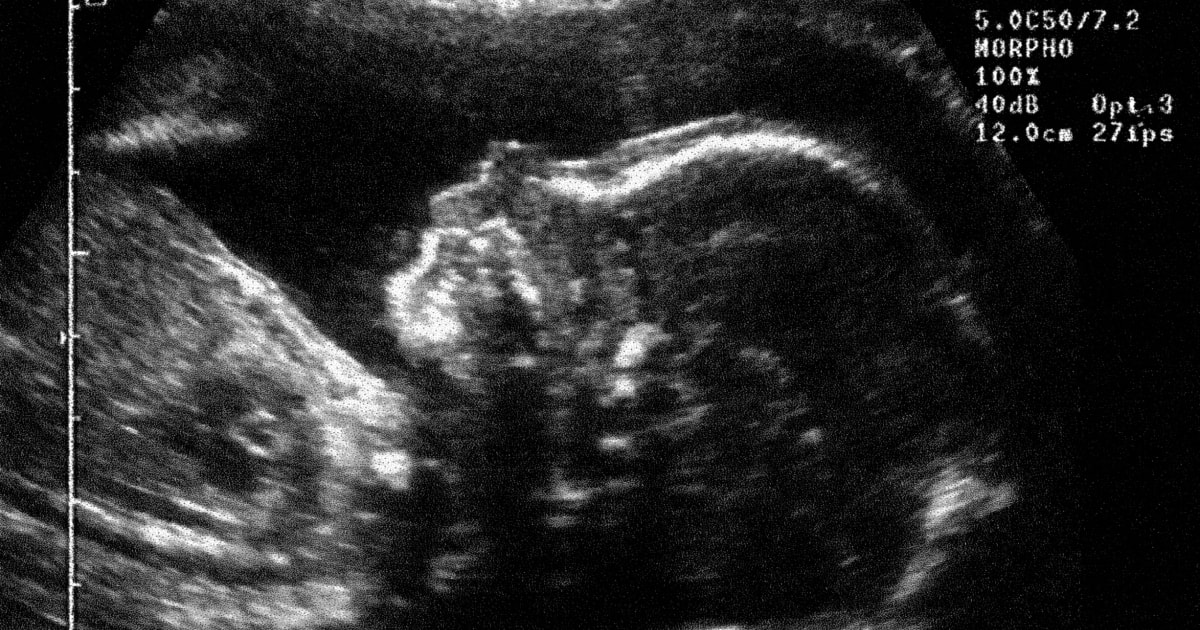



The recent vote in the House of Lords to decriminalise abortion self-performed by the woman up to birth confirms that “viability” was never really the point when it comes to abortion liberalisation. It is worth remembering that already, the law does not reflect the contemporary point of viability, while disabled babies can be aborted by doctors right up to or during birth.
If babies can, at a certain point in gestation, survive outside the womb, why may they be terminated when they might otherwise be born alive, preferably after waiting just a few more weeks? Why give birth alone to a dead baby, with all the guilt and risk that this involves, rather than delivering a live baby with full medical support?
With this question in mind, it is worth reflecting on the future possibility of artificial wombs and the light this can shed on the abortion debate and on motherhood and the meaning of the human body. In 1971, the Manifesto of the Gay Liberation Front was published in England. The unashamedly radical document declared:
“The oppression of gay people starts in the most basic unit of society, the family … The very form of the family works against homosexuality.”
Under the subheading “We Can Do It”, we learn that:
“further advances are on the point of making it possible for women to be completely liberated from their biology by means of the development of artificial wombs.”
The document proclaims a utopian vision of a future fit for genderless individuals unburdened by unchosen roles. It captures the importance of reproductive technology in assisting the ongoing sexual revolution. The artificial womb, explicitly mentioned in the document, is now, decades later, in the headlines.
Talk of being “liberated” from biology should lead us to reflect on the biological and social nature of human beings. Pregnancy is a unique bodily and personal relationship, towards which every woman as well as every child is in some way oriented. Whether or not an individual woman becomes pregnant, in that she is female, her body inevitably “points in that direction”. Pregnancy is also, of course, the normal way in which human beings come into the net of relations which form who they are.
In considering the woman’s nature there should be no suggestion that this nature is defective relative to a man’s. Fundamental equality goes hand in hand with appreciation of human dignity as the bodily beings we are. We should not be using an ultra-independent male paradigm, against which female biology, especially female fertility, is seen as a hindrance or even a disability.
Pregnancy is one striking way in which the relationality of human nature is expressed – a way exclusive to female human beings. That said, male nature is also relational: although men’s bodies are not oriented to pregnancy they are oriented to causing it and to the fundamental familial roles created by it. That orientation too has a moral dimension.
Decades after the publication of the Manifesto, news that lamb foetuses have been gestated in “biobags” has prompted speculation that one day human babies will be brought to term via a similar form of “partial ectogenesis”, supplementing human pregnancy. What happened with the lambs was something of this type and not, as the authors of the Gay Liberation Manifesto seem to have hoped, ectogenesis from conception which would bypass pregnancy altogether.
Although technologically innovative, a womb-like device does not raise any ethical issues in itself that an incubator does not already raise. In principle, positive innovations to meet the needs of premature babies are to be welcomed.
That said, use of partial ectogenesis, as with the lambs in biobags, raises some challenging issues surrounding abortion. Leaving aside the use of biobags in cases of medical need, if a biobag is designed such that it can artificially gestate, say, a 20-week-old foetus, the question arises whether a pregnant woman who wants her baby removed electively (i.e. for social reasons) could be permitted or even required to have the foetus removed alive and placed in a biobag.
The abortion activist may object that it is an outrage to ask a woman to submit to an unwanted intervention to save her baby. And it is true that we do not enforce caesareans at term where there is a physical threat to the baby, since the woman, as guardian of the pregnancy, is tasked with the decision whether or not to accept the surgery.
However, it is especially difficult to argue that a woman may demand the non-medical procedure of abortion as an alternative to a procedure that allows her baby to live. This does not mean that she may demand, without some serious reason, removal followed by placing the baby in a biobag.
Why not? Why might a woman not, in order to relieve herself of the very real burdens of pregnancy, elect to have that pregnancy “terminated” by removal of the live unborn baby if this would not pose any serious risk to the baby’s survival and wellbeing? Clearly any moral problems with such a procedure are not the kind we associate with abortion. And it may be hard at first glance to see why the woman needs a “serious” reason to justify her in the safe and mutually non-harmful removal of her baby.
If, however, we see pregnancy as a unique and morally important relationship between the woman and her child it will be odd if even the most trivial of reasons can justify the ending of that relationship months before it would otherwise end. Just as marriage is undermined by easy divorce, or even easy separation, so might the importance of pregnancy be undermined by introducing a radical notion of autonomy rights into the web of rights and duties the mother has with respect to her child. Elective transfer to a biobag unnecessarily curtails a meaningful aspect of their relationship – a relationship that signifies in a uniquely powerful way motherhood and acceptance of the most intimate kind.
A doctor should not agree to such elective removal: it is no part of medicine to treat normal human functioning as though it were pathological, let alone to take an unnecessary risk of harming a second patient. But if abortion is sought where this alternative exists – just as with current abortion where a baby is viable – we have to ask what is the motive. Clearly the motive is not simply the avoidance of the burdens of pregnancy, but is, rather, the ending of the child’s life.
If an unborn child can exist in isolation from his or her mother, whether naturally or with artificial support, then it seems abortion defenders have to supply us with an additional justification for ending his or her life. What might such a justification be? The legal scholar Kate Greasley suggests that the more significant interest protected by abortion rights is the interest in “procreative control”; that is, “the right to decide whether and when one will become a parent”.
But why could such a right to procreative control justify ending the life of one’s newborn – or even that of an older child? Greasley would doubtless fault such an argument on account of the fact that the woman has already become a parent. Thus, the appeal to procreative control to defend abortion must assume that a woman has not already become a parent once conception has taken place – or at least, by the time of the proposed abortion.
But is that assumption correct? Even those like Peter Singer who believe that newborn babies are not “persons” in moral terms are often happy to refer to babies as the children of their parents. After all, in the animal world there is no controversy in referring to the parents of puppies or kittens, for example.
So whether or not the foetus has personal status, it may be too late for the mother to avoid parenthood: if she is already a parent, the time for her to exercise her right to procreative control – to decide “whether and when” she will become a parent – has passed.
It is by no means unknown for those who defend abortion or even infanticide to say that these are allowable precisely as a matter of parental choice. We might think of parents who choose abortions for their late-term disabled babies and who may feel deeply that they are indeed parents, as may those around them.
When thinking about parental rights as opposed to duties, however, there is surely something odd about according serious moral importance to a biological bond, not in the sense of recognising the claims of existing offspring to protection, but rather in the sense of avoiding claims the offspring will make on a parent (or parents) in the future. So opposed is the parent to being a parent that the offspring must be not just removed but purposely destroyed.
Appeals to procreative control also raise another question: can a father legitimately demand that his offspring be destroyed if he decides not to be a father, overriding the objections of the mother? Clearly not if the offspring is still in her womb, as this would involve a forced abortion, violating the woman’s right to freedom from coercive bodily invasions.
However, in the United Kingdom, a man with embryo offspring in the freezer can prevent the mother, or anyone else, from gestating the embryos and bringing them to term. So could a father perhaps insist on having a foetus in a biobag – even a nine-month-old foetus – destroyed, if he does not want to be the father of a born child? Or should we perhaps distinguish between the parental right to protect and the supposed right to destroy?
We certainly do not grant the latter to a parent, male or female, who feels burdened by the presence of a newborn infant, or foresees that infant causing future burdens. In such cases, parents are expected to use their bodies to benefit the child – by feeding him or her, for example – even when the burdens are greater than those of many a pregnancy (as with a constantly crying infant who drives parents, particularly those with no support, to the point of exhaustion and desperation). So it is not just the burdens doing the work here: at least until new parents can be found, birth parents are expected, reasonably, to offer basic care.
Complete ectogenesis would only be achieved through the alienating production process of in vitro fertilisation (IVF) and would compound the disruption of bonding that IVF already involves. In the case of partial ectogenesis, there will still be a birth mother who has a presumptive claim to raise the baby. Babies are not taken away (or should not be taken away) from birth mothers without an extremely good reason; nor do we randomly distribute babies to women who have just given birth. Birth is, after all, hugely significant for visibly grounding a person’s identity and sense of place in the world.
Gestation has a crucial role in offering potential protection to the child who has one very clear presumptive protector. To accord greater rights to a woman who has already gestated a child is to acknowledge the sui generis maternal significance of gestation. That said, reflection on gestation and what brings it about, and the needs of pregnant women and new mothers, should also lead us to a renewed appreciation of the importance of fathers.
Those opposing abortion have often upheld the moral significance of the body, holding pregnancy to be a unique state calling for special consideration and special moral principles, in addition to those applying to human beings generally. (Consistent concern for bodily integrity forms part of the anti-abortion case, for it reaches to concern for the bodily integrity of the foetus: “procreative control” cannot trump such concern, not least because the parents have already procreated.)
It is not only birth – the end of pregnancy – but pregnancy itself that is normally the beginning of motherhood (leaving IVF aside). Deny this, and it is hard to see how gestation creates special rights and duties vis-à-vis a child who will be born. And if gestation does not create special rights and duties even when followed by (premature) birth, then it is hard to see why the father cannot exercise his own procreative control through a lethally destructive act on the formerly naturally gestated baby who is now in an artificial womb.
Indeed, the whole concept of procreative control in relation to abortion, as put forward by Greasley and others, seems to have in mind a paradigmatic rational agent who is both male (i.e. unencumbered by a womb and all that represents) and also within his rights to abandon and even destroy the child he helped to conceive. Equality for women here means becoming as much like such a radically uncommitted man as possible. This, apparently, is what is now called feminism, at least in some pro-abortion circles.
Remove the body from such areas of ethics as these and one removes protections from born as well as unborn children in the form of the biological family with a given, role-specific commitment to their welfare. Such experiments have only ever had disastrous results, as must any experiment that denies significance to our bodily being and the flourishing that relates to it.
Just read those words from the Manifesto or more recent works that toy with the idea of dismantling family structures based around a biological mother and father. For what now determines what is ethical here? Contracts? Utilitarian calculus? Such theories have not been doing too well of late, not least because they are ways of avoiding the deepest moral questions.
Reflection on the possibility of artificial wombs can help us face such questions head-on, leading us to consider the place of the body in ethics and with it maternity, paternity, and those other “given” biological roles that make moral sense of our lives. In the meantime, the push by Stella Creasy MP and others for further expansion of abortion, to include social abortion up to birth performed by doctors, presents a clear and present danger.
Anthony McCarthy is director of the Bios Centre. This article includes some material which appeared in Public Discourse.